IC Markets

 3:09
 2:39
 2:10
 2:18
 3:43
 8:42
ECB Account Shows "A Large Number" of Policymakers Could Have Backed an October Rate Hike, and Says Another Rise Is Likely Unless Inflation Improves
The record of the 28-29 October meeting says the only issue for those members was timing, three weeks before the 17 December decision and new forecasts.
 WriterNafish PialJournalist & FX WriterJournalist · forex news and market writing View profileAbout Nafish →

 ReportingJawad Bin GoniPR & ReporterPR and reporting · media enquiries and press coverage View profileAbout Jawad →

 Market analysisTanbir Habib RiyadForex & Crypto AnalystForex and crypto analyst · technical and fundamental analysis View profileAbout Tanbir →

 EditingAbir KhanWriterWrites the guides · checks every figure against primary sources View profileAbout Abir →

 Fact-checking & riskJannatul FerdaushFact-Checker & Risk AnalystFact-checks every figure · risk analysis · Applied Statistics, University of Dhaka View profileAbout Jannatul →

 Trading reviewJowel RanaForex TraderForex trader · reviews guides from a trader's view View profileAbout Jowel →

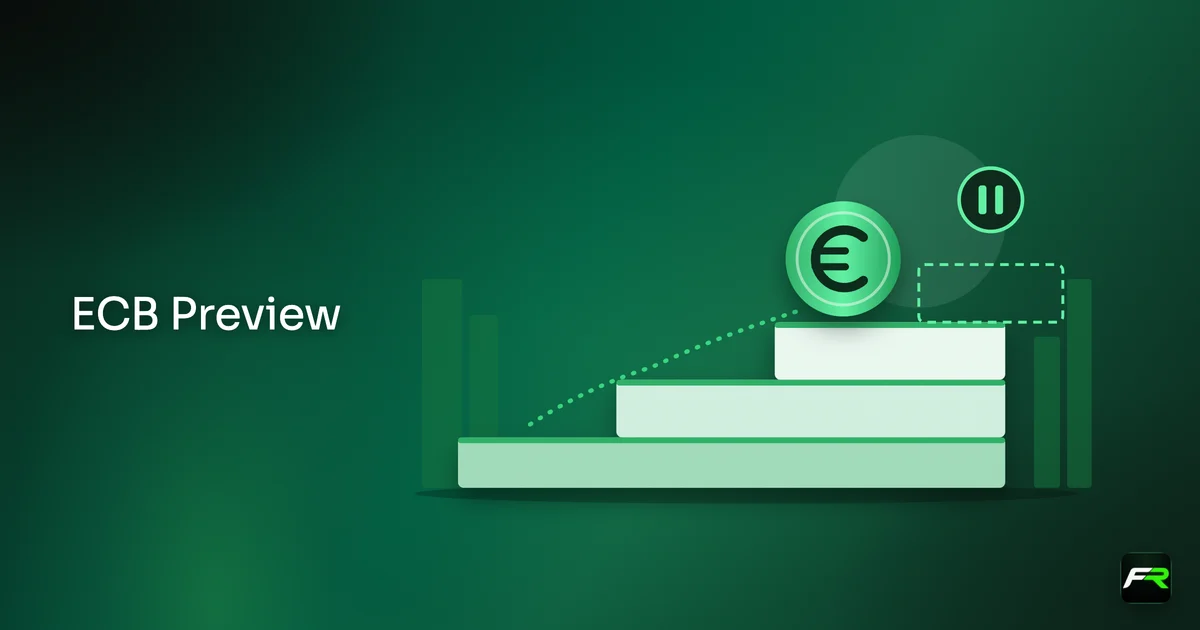
The European Central Bank's Governing Council came closer to raising rates in October than its unanimous decision suggested. The account of its 28-29 October monetary policy meeting, which the ECB published on Thursday 26 November, says "a large number of members" could have supported a rate rise at that meeting.
The account is the ECB's official record of the council's discussion; it does not name members or give a vote count.
All members still backed keeping the deposit facility rate at 2.50%, but on a condition: the ECB had to signal that more tightening was coming. The account says communication needed to convey "that another rate hike would likely be necessary unless the inflation outlook improved significantly." For euro traders, that turns the 17 December meeting into the next real chance of a third rise this year.
| Deposit facility rate (ECB) | 2.50%, held on 29 October (September meeting 2.50%) |
|---|---|
| Euro area HICP inflation, annual (cited in the account) | 3.8% in September (August 3.2%) |
| Energy inflation, annual (cited in the account) | 18.9% in September (August 14.3%) |
| EUR/USD (ECB reference rate) | 1.0975 on 26 November (previous day 1.0935) |
What the account says about a hike
The key passage describes the members who wanted to move. "A large number of members noted that, as the incoming data since the September Governing Council meeting had confirmed the case for further policy tightening, they could have supported raising interest rates at the current meeting," the account says. These members saw energy inflation "broadening and becoming more persistent" and concluded: "Since a further interest rate hike was necessary, unless the inflation outlook improved significantly, the only issue was timing."
They also played down the benefit of waiting. "According to these members, the option value of waiting was assessed to be rather small, as a durable resolution of the conflict in the Middle East had become less likely," the account reads. They added that "the deposit facility rate, at 2.50%, still lay within the range of point estimates of neutral rates provided by ECB staff, suggesting that interest rates were not restraining the economy." In their view, "A hike at the current meeting would simply frontload the necessary monetary policy tightening."
That last point matters for the rate outlook. If 2.50% is still inside the range of neutral estimates, then two rises this year have only brought policy to a level that neither speeds up nor slows down the economy. Members who hold that view are likely to want more than one further step if inflation stays near 4%.
Why the council still waited
The other side of the debate rested on uncertainty and on what December will bring. Members noted that "further tightening was likely necessary", but said there was "not enough evidence to support a gear shift away from a measured reaction towards a more forceful response." They pointed to tighter financial conditions, partly from global factors, and to the supply-side nature of the energy shock, which pushes inflation up while weakening growth.
December offers a fuller picture. "A new round of Eurosystem staff projections would be available in December, including a projection for 2029, and there would be additional information on wage negotiations, third quarter GDP numbers and two further inflation releases," the account says. Members also argued that waiting was "consistent with rational behaviour, as currently also priced in by markets."
The compromise is spelled out. All members, "including those seeing a case for acting at the current meeting, supported the decision to keep policy rates unchanged provided that communication stressed" the ECB's commitment to its 2% target, and that "without pre-committing to a rate hike, the direction of travel was clear, unless the inflation outlook improved significantly."
What changed since Lagarde's press conference
On 29 October President Christine Lagarde told reporters that the council "debated whether a hike was appropriate" and then "unanimously decided that we were well positioned enough at this stage to hold". She said that if the current assessment "is not infirmed by significant developments, the direction of travel is clear." Our story on that meeting covers her remarks in full.
The account adds two things her answers did not. First, scale: it was "a large number of members", not a few, who could have backed a rise straight away. The account does not give a number. Second, the condition: the unanimous hold was conditional on guidance that a hike was the likely next step. Markets heard Lagarde's "direction of travel" line in October; the account shows it was the price of unanimity.
The account also shows how far markets had already moved. It records that market pricing adjusted for term premia "pointed to an expected peak in the deposit facility rate at around 3%", while the median participant in the ECB's Survey of Monetary Analysts "foresaw only one more hike." Two further quarter-point rises would take the rate to 3.00%, close to that market peak.
The inflation backdrop
Philip Lane, the Executive Board member who presents the economic assessment, told the meeting that headline inflation "had risen to 3.8% in September, from 3.2% in August", driven by energy inflation that "had increased markedly to 18.9% from 14.3%." Core inflation "had edged up to 2.5% in September, from 2.4% in August", with services at 3.2%. The account adds that "headline inflation could peak above 4%." Eurostat's flash estimate for October, published on 4 November, has since put headline inflation at 4.0%.
Market moves since the September meeting were large. Lane's review said Brent crude "had increased by 13% to USD 115 per barrel" and gas prices "by 22% to €97 per MWh". It added that "The euro had depreciated by 4.0% against the US dollar since the September meeting, and by 2.2% in nominal effective terms." A weaker euro raises import costs, which is one more reason the hawks gave for acting sooner.
| Figure in the account | Value |
|---|---|
| Headline HICP inflation, September | 3.8% |
| Energy inflation, September | 18.9% |
| Core inflation, September | 2.5% |
| Services inflation, September | 3.2% |
| Euro's fall against the dollar since September meeting | 4.0% |
| Deposit facility rate | 2.50% |
EUR/USD levels
The account came out at 13:30 Frankfurt time on Thursday. The ECB's euro reference rate, set at about 14:15 the same afternoon, was 1.0975, up 40 pips from Wednesday's 1.0935, which was the lowest reference rate since April 2025. The fix came after the account, but official data cannot show how much of the move was a reaction to it; US markets were also closed for Thanksgiving, which kept trading thin. These levels come from the ECB's daily reference rates, not intraday prices.
| Level | Why it matters |
|---|---|
| 1.1267 | 4 Nov reference-rate swing high |
| 1.1083 | 20-day average of reference rates |
| 1.0992 | 19 Nov reference rate, the last lower high |
| 1.0975 | 26 Nov reference rate, the latest |
| 1.0935 | 25 Nov reference rate, lowest since April 2025 |
| 1.0900 | Round number below the low |
A reference rate above 1.0992 would be the first higher high since the slide began in early November, and the 20-day average near 1.1083 would come into view. A return below 1.0935 would show the hawkish account has not changed the trend, which has been driven as much by the dollar as by the ECB. Our EUR/USD analysis has the daily plans.
What it means for traders
The account makes the ECB's December meeting more important for the euro than the guidance alone suggested. Points to keep in mind:
- A large group was ready to hike in October. Unless November inflation data or the December projections improve markedly, a rise on 17 December is the base case set by the ECB's own words.
- The bar for not hiking is high. The account's condition is that the inflation outlook must improve "significantly", not just stop getting worse.
- Euro area flash inflation for November, one of the two inflation releases the account says the council will see before December, is the next big test. A reading above October's 4.0% would strengthen the hawks.
- The Federal Reserve decides on 9 December. EUR/USD reflects both banks, so a hawkish Fed can offset a hawkish ECB.
- Watch the 2029 projection. If staff see inflation back at 2% only late in the horizon, the case for more than one further rise grows.
Say you buy EUR/USD at 1.0975 after the account, with a stop at 1.0925, just under the 25 November low and 50 pips away. Risking 1% of a $5,000 account, or $50, means a position of 10,000 euros (one mini lot), worth about $1 a pip. A target at 1.1075, near the 20-day average, is 100 pips away, twice the risk. A strong US data surprise could hit the stop first, so size the trade for that.
Currency prices can move sharply around central bank meetings, and leverage magnifies losses as well as gains. Only trade money you can afford to lose. This is news and education, not a recommendation to buy or sell.
Quotations are from the ECB's account of the Governing Council's monetary policy meeting of 28-29 October 2026, published on 26 November 2026, and from President Lagarde's press conference of 29 October 2026. Exchange rates are ECB euro reference rates. October inflation is Eurostat's flash estimate of 4 November 2026.
Cite this guide
FX Recap, "ECB Account Shows 'A Large Number' of Policymakers Could Have Backed an October Rate Hike, and Says Another Rise Is Likely Unless Inflation Improves", updated 27 November 2026, https://fxrecap.com/forex-news/market-voices/ecb-account-october-hike-support-december
Free to quote with a link. Journalists: data and comment in our press room.
Frequently asked
What does the ECB account of the October 2026 meeting say?
It says "a large number of members" could have supported raising rates in October, but all agreed to hold at 2.50% provided the ECB signalled that another hike would likely be necessary unless the inflation outlook improved significantly.
Will the ECB raise rates in December 2026?
The ECB has not pre-committed. Its account says the direction of travel is clear unless the inflation outlook improves significantly, and the 17 December meeting brings new staff projections, including 2029.
What is the ECB deposit rate now?
The deposit facility rate is 2.50%, the main refinancing rate 2.65% and the marginal lending rate 2.90%, unchanged since the September rise.
How did EUR/USD react to the ECB account?
The ECB's reference rate on 26 November, set about 45 minutes after the account came out, was 1.0975, up from 1.0935 the day before. Official data do not show how much of that move came from the account.
Sources: ECB: Account of the monetary policy meeting, 28-29 October 2026 · European Central Bank: euro foreign exchange reference rates · European Central Bank: key ECB interest rates · Eurostat: euro indicators (flash HICP)
The team behind this guide
Reported, written, edited and checked by five FX Recap specialists
Every guide is written, fact-checked and edited before it goes live, and updated when the facts change. Spotted an error? Tell us.