 IC Markets





























Forex Spread in Trading and how to Calculate
Forex spread is the difference between the bid price (sell) and the ask price (buy) quoted by a broker. It is one of the primary trading costs every forex trader pays and it has a direct bearing on the profitability. Spread sizes vary depending on market liquidity, volatility, and the broker’s pricing model. Some brokers offer fixed spreads, while others provide floating spreads that change with market conditions. Spreads insights assist traders to choose brokers and trading conditions to use their strategies.
 WriterAbir KhanWriterWrites the guides · checks every figure against primary sources View profileAbout Abir →
 Market analysisTanbir Habib RiyadForex & Crypto AnalystForex and crypto analyst · technical and fundamental analysis View profileAbout Tanbir →
 Fact-checking & riskJannatul FerdaushFact-Checker & Risk AnalystFact-checks every figure · risk analysis · Applied Statistics, University of Dhaka View profileAbout Jannatul →
 Trading reviewJowel RanaCo-Founder & Forex TraderCo-founder · forex trader · reviews guides from a trader's view View profileAbout Jowel →
 Final approvalRanjan NiskrityFounder, Owner & Forex TraderFounder and owner · forex trader · signs off every guide View profileAbout Ranjan →
In a forex trade, the cost of what you pay for isn’t just what the market says it is. There’s extra price built into both buy and sell prices; we call it spread. For a forex trader, it’s a basic concept.
What Is a Forex Spread?
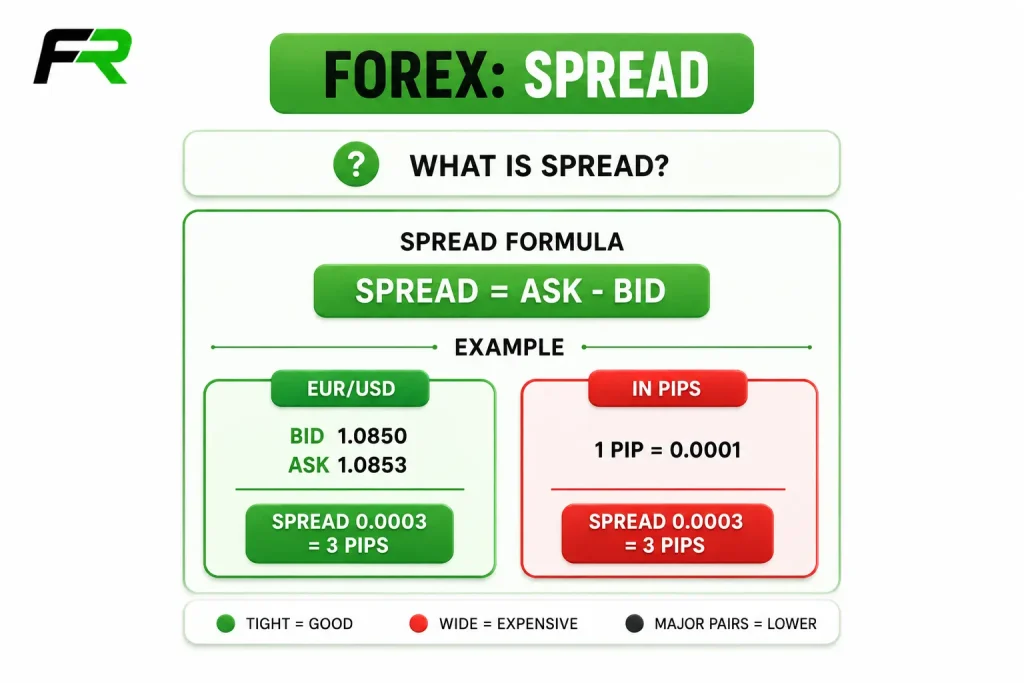
The spread in forex is the difference between an ask price and a bid price. For instance, if the EUR/USD pair is quoted as 1.1051/1.1053 this represents a spread of 2 pips.
Some brokers earn through the spread, while others charge a separate commission depending on the account type. Generally, lower spreads reduce entry costs but total trading cost also depends on commissions.
[modern_toc_animated]How to Calculate Forex Spread
You can calculate the spread using a simple formula:
Spread = Ask Price – Bid Price
For example:
- EUR/USD: 1.1053 (Ask) – 1.1051 (Bid) = 0.0002 or 2 pips
- GBP/USD: 1.3000 (Ask) – 1.2995 (Bid) = 0.0005 or 5 pips
Understanding this calculation helps traders assess the cost of entering and exiting trades.
Types of Forex Spreads
There are different types of spreads that forex brokers offer:
Fixed Spreads: generally remain unchanged during normal market conditions but may widen under exceptional market events depending on broker policy.
Variable Spreads: fluctuate in line with market volatility and liquidity.
Raw spreads: accounts provide interbank-style pricing plus a commission.
Zero-spread: Some accounts offer spreads from 0.0 pips rather than permanently zero spreads. But they usually charge a commission instead.
Each type has its own advantages and is suitable for distinct trading strategies. For example, raw or zero spreads with scalpers can trim transaction costs.
Factors Affecting Forex Spread
Several factors influence forex spreads.:
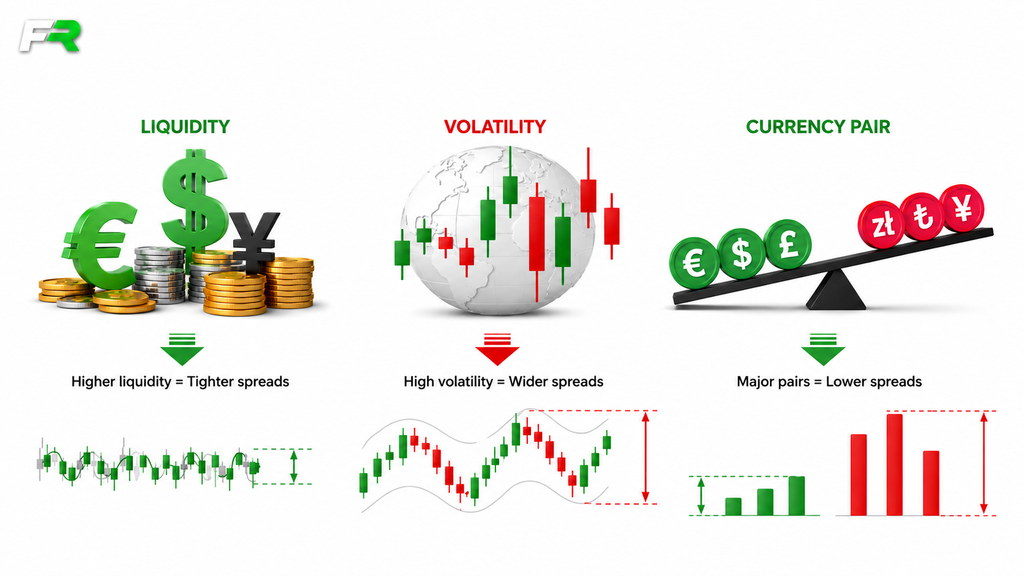
1. Liquidity of the Market : Higher liquidity generally results in tighter spreads.
2.Volatility: High volatility may cause spreads to widen.
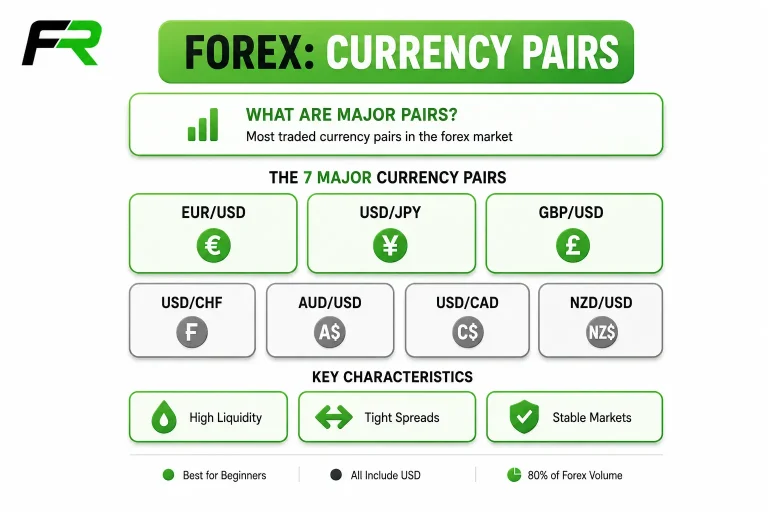
3. Currency Pair : Major currency pairs usually have lower spreads than minor or exotic pairs because of higher trading volume.
Forex Brokers with Low & Zero Spreads
Choose the right broker and you can reduce your trading costs dramatically. IC Markets and Tickmill offer Raw accounts with spreads from 0.0 pips under normal market conditions. These accounts may suit high-frequency traders depending on their strategy.
Tips to Reduce Forex Spread Costs:
In order to reduce the cost of spread: Major sessions such as London and New York often provide higher liquidity and tighter spreads. Concentrate Always on major currency pairs with narrower spreads and brokers that offer low or zero spreads are the ones to approach. Spreads often widen during major economic announcements because liquidity can decrease temporarily.
Spreads often widen during major economic announcements because liquidity can decrease temporarily.
Conclusion
Understanding how spreads work helps you estimate trading costs and manage your strategy more effectively. It is not simply a fee- it can
affect both your trading plan and how profitable you will be. Therefore, through understanding how
spreads function in forex trading under various conditions and what factors affect them so you can make better-informed decisions on your trading and managing trading costs.
Spread is one of the main trading costs, although commissions and swaps may also apply. By choosing the right broker and trading strategies, this cost can be minimized to some extent and more improved overall trading performance will also result.
Compare spreads, commissions, swaps, execution quality and regulation before choosing a broker. Remember, learning how spreads affect every trade is an important step toward becoming a more informed forex trader.
The team behind this guide
Researched, checked and approved by five forex specialists
Every guide is written, fact-checked and edited before it goes live, and updated when the facts change. Spotted an error? Tell us.
Related Articles
 Education
10 min read
Education
10 min read

 Education
20 min read
Education
20 min read
 Education
9 min read
Education
9 min read
 Education
9 min read
Education
9 min read
 Education
9 min read
Education
9 min read
 Education
7 min read
Education
7 min read