 IC Markets


























Best Forex Brokers with Islamic Accounts: Swap-Free Trading Guide 2026
Eight brokers compared on how their swap-free accounts really work: which account types qualify, whether an admin fee replaces the swap and when it starts, and which instruments are excluded. Before trading, hold a small position overnight on a demo or micro account and check your statement for any charge.
 WriterAbir KhanWriterWrites the guides · checks every figure against primary sources View profileAbout Abir →
 Market analysisTanbir Habib RiyadForex & Crypto AnalystForex and crypto analyst · technical and fundamental analysis View profileAbout Tanbir →
 Fact-checking & riskJannatul FerdaushFact-Checker & Risk AnalystFact-checks every figure · risk analysis · Applied Statistics, University of Dhaka View profileAbout Jannatul →
 Trading reviewJowel RanaCo-Founder & Forex TraderCo-founder · forex trader · reviews guides from a trader's view View profileAbout Jowel →
 Final approvalRanjan NiskrityFounder, Owner & Forex TraderFounder and owner · forex trader · signs off every guide View profileAbout Ranjan →


Exness
XM

IC Markets

LiteFinance

FP Markets

AvaTrade

Octa

RoboForex
Disclosure: "Visit Broker" links are partner (affiliate) links. FX Recap may earn a commission at no cost to you. Trading involves significant risk of loss. T&Cs apply.
These accounts structurally bypass the traditional interest accrual mechanisms of spot forex that normally apply when positions remain open after the trading day ends. To offset financing costs, certain brokers limit leverage or exclude specific high-volatility instruments, leverage, promotions, or account features on Islamic accounts.
The differences between Islamic accounts become clearer when you analyze the regulatory terms and conditions rather than promotional materials. The structural details governing holding limits and asset exclusions are detailed within the client agreement.
This guide explains how swap-free structures operate while comparing the fee schedules of top-tier brokers offering them.
Risk Notice: Forex and CFD trading involves a high level of risk, and you could lose part or all of your invested capital. Choosing a swap-free account does not reduce the market risks associated with trading. Between 70 and 80 percent of retail CFD traders lose money, based on figures disclosed by regulated brokers. Speculative trading carries inherent financial risk; capital exposure should be limited to disposable funds.
How Islamic Forex Accounts Actually Work?
Fundamentally, an Islamic account removes overnight swap charges from eligible positions. In a standard forex trading account, keeping a position open past the daily close triggers an overnight swap calculation. The swap reflects the interest rate difference between the two currencies in the pair and can be positive or negative depending on direction and market conditions.
An Islamic account eliminates that entire mechanism. Overnight swap interest is removed, but some brokers replace it with fixed administration or handling fees after a defined period. Instead of applying swap interest, the position remains open under the broker’s swap-free policy.
The alternative fee structures applied in lieu of interest vary widely across the industry and requires diligent comparison. Three distinct fee structures dominate the swap-free brokerage sector across the industry:
| Broker Model | Swap Fees | Admin Fee | When It Applies |
| No swap, no admin fee | Removed | None | Octa applies this model across all account types by default |
| No swap, admin after grace | Removed | Fixed fee per lot per night on select instruments | AvaTrade (after 5 days); IC Markets (from night 1 on exotics/energy; zero on majors) |
| Wider spread model | Removed | Cost priced into spread from open | Some brokers apply this across all instruments; check broker’s Islamic terms |
Traders seeking simplicity often prefer accounts that eliminate both swaps and administrative fees entirely offers the transparent fee arrangements. Octa provides this swap-free structure automatically on all MT4, MT5, and OctaTrader accounts, including MT4, MT5, and OctaTrader, without requiring formal religious verification during onboarding and no conversion process needed.
AvaTrade’s average EUR/USD spread is kept at 0.9 pips, identical to its standard accounts. Flat administrative fees are applied starting on the sixth consecutive calendar day. IC Markets applies a tiered structure based on asset class rather than a blanket grace period. On most major currency pairs and metals, no holding fee applies at all. But on a defined list of instruments, including exotic pairs, Brent crude, natural gas, and WTI, a flat financing charge starts from the first night the position is open. Traders should check IC Markets’ official page for the current rate schedule, as these figures are subject to change.
Under this model, the broker recovers its costs through slightly wider spreads instead of overnight fees. Plus500 uses this approach, so there is no separate nightly charge, but the spread itself is broader to compensate.
FX Recap Note: These differences become more important the longer you keep trades open. Day traders are generally less affected because overnight financing usually does not apply to positions closed before rollover. A swing trader holding positions for several days could face additional costs once the broker’s administration fee begins.
The Four Sharia Principles That Shape These Accounts
Islamic finance follows a set of principles that influence how financial products are designed and used. Forex trading raises questions around several of these principles, so brokers offering Islamic accounts should clearly explain how their products are structured. The table below breaks down what each principle means in a practical trading context.
| Principle | What It Means | How Islamic Forex Accounts Address It |
| Riba (Interest) | Earning or paying interest is prohibited | Swap fees are removed; administrative fees replace them only if non-interest-based and disclosed |
| Gharar (Uncertainty) | Excessive speculation or ambiguity in contracts is forbidden | Brokers must provide transparent pricing, clear terms, and no hidden charges |
| Maysir (Gambling) | Gambling-like behaviour in financial transactions is not allowed | Trades should be based on analysis and asset value, not pure chance |
| Haram Assets | Investments tied to alcohol, gambling, or other prohibited industries are not permissible | Islamic accounts typically restrict or flag instruments connected to haram sectors |
Among these principles, the prohibition of riba is the one most directly reflected in Islamic Forex accounts. Gharar is also relevant because some Islamic scholars consider excessive uncertainty when assessing Forex trading. Excessive speculation may conflict with this principle regardless of whether swap charges apply.
Some brokers also appoint independent Sharia advisory boards to review their Islamic account structures. This is separate from financial regulation and provides additional religious oversight for traders seeking Sharia-compliant products. Traders seeking additional religious assurance may prefer brokers that disclose oversight from a recognised Sharia advisory board.
Broker Comparison: Islamic Accounts in 2026
The table below compares eight brokers offering Islamic accounts in 2026. The comparison highlights each broker’s account structure, fee policy and the type of trader it may suit. All regulatory information was cross-checked against the brokers’ official disclosures at the time of publication.
| Broker | Regulation | Platforms | Islamic Structure | Admin Fee After | Best For | Notable Point |
| Exness | FCA, CySEC, FSCA, FSC (Seychelles) | MT4, MT5, Exness Terminal | All account types available as swap-free; Standard from $10, Pro/Zero/Raw from $500 | Admin fee may apply on exotic pairs and some indices | Scalpers, swing traders | Unlimited leverage option; 600,000+ active clients; instant withdrawals |
| XM | CySEC, ASIC, FSC (Belize), DFSA | MT4, MT5, XM WebTrader | Swap-free on Micro, Standard, Ultra Low accounts; request via Members Area; no extra charges or wider spreads | No admin fee reported; XM absorbs cost | Beginners, cost-conscious traders | 15M+ clients worldwide; $5 min deposit; extensive education library; 90-day inactivity fee of $5/month applies |
| FP Markets | ASIC (AFSL 286354), CySEC (371/18), FSCA, FSC (Mauritius) | MT4, MT5, cTrader, TradingView | Available on Standard and Raw accounts; email request required; proof of faith may be required | Admin fee applies overnight; amount varies by instrument | Active & professional traders | $100 min deposit; Raw spreads from 0.0 pips + $6/round lot; 900+ instruments; cTrader available |
| AvaTrade | CBI (Ireland), ASIC (AFSL 406684), FSCA, BVI FSC, FSA (Japan), FSRA (Abu Dhabi) | MT4, MT5, AvaTradeGO, AvaOptions | Swap-free by request; full verification and funding required before activation; ZAR/TRY/RUB/MXN pairs excluded | After 5 days; rate varies by instrument | Multi-asset and beginner traders | $100 min deposit; 400,000+ registered traders; founded 2006; crypto not available on Islamic accounts |
| HFM (HotForex) | FCA, CySEC, FSCA, DFSA, FSA (Seychelles) | MT4, MT5 | Swap-free conversion available on Micro, Premium, Zero, Pro, Pro Plus accounts; Top-Up Bonus account excluded | Carry charges may apply on certain instruments after sequential days | Intermediate and bonus-seeking traders | $0 minimum on Micro/Cent accounts; ~$100 for Pro accounts; founded 2010; Islamic accounts on 5 account types |
| Octa | CySEC (EU entity); VFSC (Vanuatu); FSCA (South Africa) | MT4, MT5, OctaTrader | All accounts are swap-free by default; no conversion required; no proof of faith needed | None — no substitute admin fees charged | Beginners, mobile-first traders, cost-sensitive traders | $25 min deposit; zero commissions; spreads from 0.6 pips; 300+ instruments; fastest execution in independent testing (81ms) |
| IC Markets | ASIC, CySEC, FSA (Seychelles), SCB (Bahamas), CMA (Kenya) | MT4, MT5, cTrader | Available on Raw Spread and Standard accounts; all three platforms supported; documentation may be required | From night 1 on exotic pairs, Brent, Natural Gas, WTI; no charge on most major currency pairs and metals | High-volume, ECN, and algorithmic traders | $200 min deposit; raw spreads from 0.0 pips; 2,250+ instruments; Equinix NY4 and LD5 servers |
| Admirals | FCA, ASIC, CySEC, FSCA, EFSA (Estonia), JSC (Jordan) | MT4, MT5 | Islamic account available on Trade.MT5 account only; admin fee applies after 3 days for most instruments; after 1 day for crypto and exotic pairs | After 3 days (most); after 1 day (crypto, exotics) | Traders seeking regulated multi-asset access | Strong mobile platform; bonds and ETFs available on Islamic account; multi-jurisdiction regulation |
Here are a few important points traders should keep in mind:
- According to Octa’s published policy, eligible accounts are swap-free by default. Traders should confirm the latest regional terms before opening an account.
- IC Markets publishes the current administration fee schedule for eligible instruments on its official Islamic Account page. Traders should verify the latest list before trading. Major currency pairs and metals carry no holding fee.
- AvaTrade requires complete account verification and an initial deposit before the interest-free conversion is activated. ZAR, TRY, RUB, and MXN pairs are excluded from the scheme entirely.
- FP Markets may request supporting documentation when assessing Islamic account applications, depending on the client’s circumstances and regulatory entity. cTrader is supported alongside MT4 and MT5.
- XM states that eligible Islamic accounts do not incur swap charges. The broker’s published terms should be checked for any applicable conditions or exclusions. The $5 minimum deposit applies to Micro and Ultra Low tiers.
- At the time of publication, Admirals offers its Islamic account on the Trade.MT5 account. Confirm current availability on the official website before applying. Holding fees begin after 3 days on most instruments, but after just 1 day on crypto and exotic pairs.
- These brokers state in their Islamic account terms that swap-free status may be reviewed or withdrawn if the account no longer meets their published conditions. This is disclosed in their account agreements and worth reading before depositing.
Important Note: Broker policies and account conditions can change over time. Always review the latest account terms on the broker’s official website before making a deposit. The information was verified at the time of publication, but brokers may update spreads, fees and account policies without prior notice.
Why Demand for Swap-Free Accounts Has Grown?
Islamic Forex accounts were first introduced to meet the needs of traders seeking an account structure aligned with Islamic finance principles, particularly in Muslim-majority markets. Since then, demand has expanded well beyond its original markets. Today, Islamic accounts are offered to eligible traders across many regions, including Southeast Asia, South Asia, Africa and Europe.
Industry reports suggest demand for Islamic trading accounts continues to grow in regions where Islamic finance is widely used. Demand is driven by both religious considerations and the preference for more predictable overnight trading costs.
For traders who carry positions for multiple days, knowing that no interest will accumulate overnight removes a variable from their cost calculation. That predictability appeals across a range of backgrounds, not only among those following Islamic finance principles.
Many regulated brokers now offer Islamic accounts, although some require traders to submit an application before activation. Many regulated brokers now support Islamic account options. The main differences between brokers are their trading costs, execution quality and the transparency of their account terms
Strategy Fit: Which Approaches Work Best on These Accounts
Removing swap charges does not affect market movements or trading performance. It changes how trading costs build over time, especially for positions held overnight.
| Strategy | Typical Hold Time | Islamic Account Fit | Key Cost to Watch |
| Day Trading | Intraday only | Excellent — no overnight exposure | Spread on each trade |
| Scalping | Minutes | Good — zero swap concern | Spread frequency across many lots |
| Swing Trading | Days to weeks | Good — check grace period | Admin fee trigger date |
| Position Trading | Weeks to months | Requires careful broker selection | Long-term admin fees can accumulate |
Day Trading
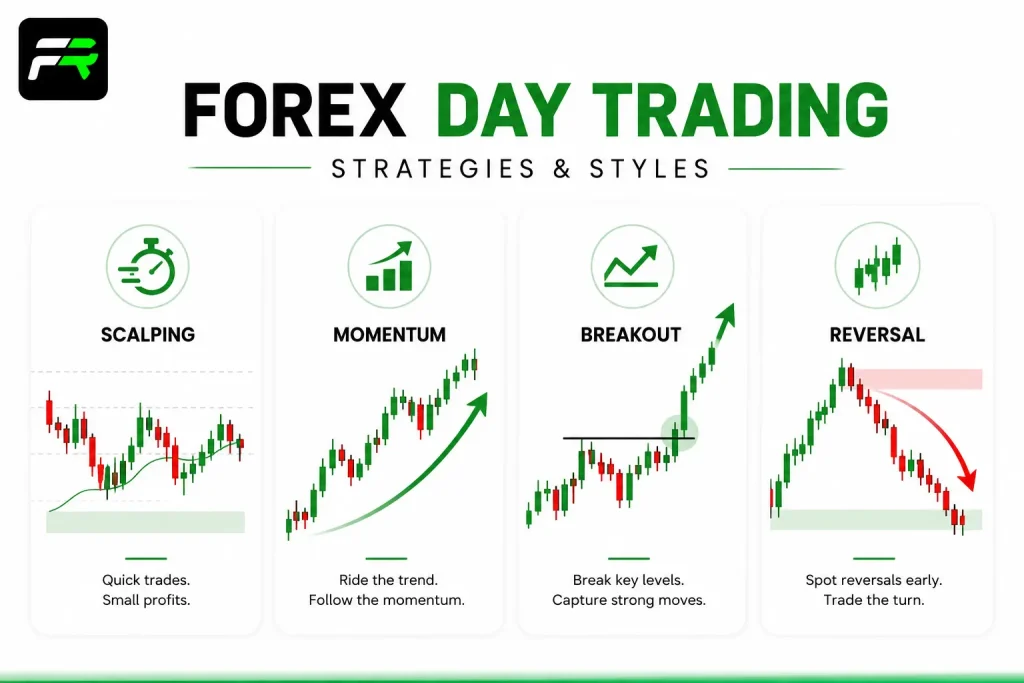
All positions close within the same session, so overnight fees never enter the calculation. The dominant cost is the spread on each entry. IC Markets and Exness both offer low-latency execution and competitive spreads, making them popular choices among many active traders.
Scalping
Since scalpers hold positions for seconds to a few minutes, overnight costs are irrelevant. For scalpers, the total spread paid across many trades is often the most important trading cost. Even a half-pip wider spread compounds quickly at high volume. Testing execution quality and slippage on a demo account is recommended before trading with real funds.
Swing Trading
This is where account structure starts to matter more directly. Trades held for four to ten days sit right around the grace period threshold for providers like IC Markets and AvaTrade. Swing traders should know exactly when administration fees begin because they affect the overall cost of each trade.
Position Trading
Multi-week holds require the most careful provider selection. On a structure where nightly charges apply from day one on certain instruments, a long position in an exotic pair can accumulate meaningful fees over several weeks. Traders holding positions for longer periods should compare each broker’s administration fee policy before choosing an account.
Common Observation: Some traders report that swap-free accounts encourage a more patient trading approach, although individual experiences differ. Without overnight swap charges, trade management depends more on a trader’s own risk management plan. That shift in accountability tends to separate consistent traders from inconsistent ones over time.
Risk Management in a Swap-Free Environment
Sound risk management principles do not change because an account carries no overnight interest. What does change is that the nightly holding cost is no longer a mechanical prompt to close a position. Traders who previously used accumulating swap fees as a soft deadline for exits need to replace that signal with a deliberate rule.
The 1-to-2 percent rule remains the most widely cited position sizing guideline among experienced traders: never put more than two percent of total account capital at risk on a single trade. This keeps individual losses small enough that a string of losing positions does not end a trading run before any adjustment can be made.

Beyond position sizing, there are cost risks specific to this account type:
- Underestimating spread costs on high-frequency strategies. The spread is the primary cost driver on these accounts, and it compounds fast when trade count is high.
- Overlooking instrument-level exclusions. Several providers limit interest-free access on specific pairs or asset classes. Opening a position on an excluded instrument can result in unexpected overnight charges.
- Treating all providers as structurally identical. As the fee structure table shows, cost outcomes diverge substantially across account types, particularly at longer holding durations.
- Missing the exact date when holding fees activate on swing positions. Begins at day five versus day seven is a meaningful cost difference depending on average trade length.
Research on retail Forex outcomes consistently shows that traders who apply strict position sizing perform better over time than those focused mainly on entry and exit signals. The account type does not reduce the need for that decipile.
Regulation, Trust, and What to Verify Before Opening an Account
Regulatory oversight is the baseline check for any provider, and it carries extra weight when the account structure is tied to personal values. Firms regulated by the FCA (UK), ASIC (Australia), or CySEC (EU) are required to segregate client funds, publish transparent pricing, and maintain formal dispute resolution procedures.
Regulatory status is not the same as Sharia certification. A fully FCA-regulated firm can still offer a poorly designed interest-free account. The two things need to be checked independently.
Before funding any account of this type, these are the terms worth confirming directly from official disclosures:
- Scope of coverage: does the interest-free status apply to all instruments or only a defined subset?
- Grace period length: how many days before holding fees activate, if any?
- Fee rate and basis: is the charge per lot, per contract, or percentage-based, and what is the rate per instrument?
- Revocation clause: can the provider withdraw interest-free status, and on what grounds?
- Faith documentation: is proof of religion required and what is accepted?
Providers with dedicated Sharia advisory boards offer an additional layer of accountability that licensing bodies do not provide. It is not a universal requirement, but it gives more grounded assurance for traders who need formal religious compliance rather than a self-declared label.
FX Recap Guidance: Open a demo account before funding. Test the platform, check spread consistency across different sessions, and verify the withdrawal process. Friction at the demo stage is a reliable early warning sign.
The Psychology Angle: Discipline, Values, and Decision-Making
Forex trading is as much a psychological challenge as a technical one. Emotional noise, revenge entries after losses, and overtrading during slow market conditions account for a substantial share of retail account drawdowns.
Traders who feel their financial activity conflicts with their values tend to carry an extra layer of cognitive friction. That friction does not pause mid-trade. It adds to the pressure. Operating from an account that aligns with personal ethics removes that particular source of interference, which can meaningfully improve decision clarity.
Research in trading psychology shows that traders with fewer but more clearly defined personal rules are less likely to seek out losses they feel they deserve or overreact after a drawdown. An interest-free account structure does not deliver this outcome automatically, but it encourages fewer impulsive overnight decisions and longer planning horizons. That kind of deliberate thinking tends to produce steadier results over time.
Several experienced traders have noted that operating this way felt like less internal conflict and more concentrated preparation. Removing the ongoing overnight charges took away a source of false urgency that had previously pushed them toward premature exits or entries they would not otherwise have taken.
Common Mistakes Traders Make with Islamic Accounts
The most frequent error is treating all interest-free accounts as structurally equivalent. The comparison table earlier in this page illustrates why that assumption is wrong. A position held for eight days on IC Markets, AvaTrade, and Octa produces three different cost outcomes.
Other issues that show up regularly:
Trading exotic pairs or commodity CFDs without confirming that interest-free coverage extends to those instruments. Several providers charge overnight financing fees on specific asset classes even within an Islamic account structure.
Raising trade frequency under the assumption that removing swap fees creates major savings. For short-duration positions, the spread is the dominant cost. Overnight interest rarely represents a large share of total costs for active traders.
Skipping withdrawal reliability testing. How easily and quickly funds can be withdrawn is relevant to all traders, but particularly to those on account types that require special processing.
Not reading the account agreement before funding. Providers that reserve the right to revoke interest-free status or adjust holding fee terms are required to disclose this. Most do. The trader still needs to read it.
Matching the Right Provider to Your Trading Style
The setup that works for a scalper trading EUR/USD twenty times a day is not the same setup that works for a swing trader holding GBP/JPY for a week. Start with the variables specific to your own approach:
Average position hold time. This determines whether grace periods and overnight fee begins will affect your cost calculations.
Primary instruments. Confirm that interest-free status covers the pairs and asset classes you trade most often.
Trade volume. High-frequency strategies are more sensitive to spread costs. Look for providers offering ECN or Raw spread tiers on these account types.
Automation. If you use expert advisors or algorithmic systems, verify that the provider permits automated trading on its interest-free accounts.
Platform preference. MT4 and MT5 are available across all eight providers covered here. Proprietary platforms like AvaTradeGO or OctaTrader may offer workflow features worth evaluating on your own.
Testing on a demo or micro account first remains the most reliable way to assess real-world conditions. Spread consistency under news events, execution quality during volatile sessions, and withdrawal turnaround time are all things that need to be experienced rather than read about.
Final Thoughts from FX Recap
Interest-free trading does not make the Forex market easier. It removes one specific cost mechanism and replaces the closing pressure that mechanism created with a need for more deliberate planning. For traders who manage that shift well, the result is a cleaner cost structure and a more consistent approach over time.
The eight providers covered here were selected based on regulatory standing, verified account structures, and the quality of real-world trading conditions. None of them appear for commercial reasons. All comparison data has been cross-referenced against official disclosures at the time of publishing.
If the terms on your current account are unclear, test them. Open a demo, hold a position overnight, and check what appears on your statement. That single step tells you more than any marketing page.
If you have direct experience with any of the providers covered here and your real-world costs or conditions differ from what is advertised, share it. Trader observations are the most useful input this kind of research can receive.
- 1
 IC MarketsTop pick★★★★★★★★★★4.7/5
 - 2
 Exness★★★★★★★★★★4.7/5
 - 3
 XM★★★★★★★★★★4.7/5
 - 4
 RoboForex★★★★★★★★★★4.6/5
 - 5
 FP Markets★★★★★★★★★★4.6/5
Your capital is at risk. FX Recap rates brokers available in each country on regulation, trading conditions and user trust. How we rank
 Unlimited cashback on your XM tradesUnlimited XM cashbackAdT&Cs apply. Your capital is at risk.T&Cs apply · Capital at riskStart earning