IC Markets

 3:09
 2:39
 2:10
 2:18
 3:43
 8:42
US 5-Year Note Auction: Treasury Sells $70 Billion Today After the 2-Year Drew Its Strongest Demand Since July
Monday's 2-year sale cleared at 4.700% with a 2.65 bid-to-cover and dealers left with just 10.4%. The 5-year test comes with its yield at 4.74%.
 WriterNafish PialJournalist & FX WriterJournalist · forex news and market writing View profileAbout Nafish →

 ReportingJawad Bin GoniPR & ReporterPR and reporting · media enquiries and press coverage View profileAbout Jawad →

 EditingAbir KhanWriterWrites the guides · checks every figure against primary sources View profileAbout Abir →

 Fact-checking & riskJannatul FerdaushFact-Checker & Risk AnalystFact-checks every figure · risk analysis · Applied Statistics, University of Dhaka View profileAbout Jannatul →

 Trading reviewJowel RanaForex TraderForex trader · reviews guides from a trader's view View profileAbout Jowel →

The US Treasury sells $70 billion of new 5-year notes on Tuesday 24 November, with competitive bids due by 1:00 pm New York time (18:00 UTC), according to its auction announcement, and the notes will be issued on Monday 30 November. It is the second of three note sales this week, after Monday's $69 billion 2-year auction and before Wednesday's $44 billion 7-year sale.
Monday's sale set a firm tone. The 2-year notes cleared at a high yield of 4.700%, a touch below October's 4.708%, and investors bid $2.65 for every dollar on offer, the highest bid-to-cover ratio for the 2-year since July's 2.66, according to TreasuryDirect. Primary dealers, the banks that must bid at every auction, were left with only 10.4% of the competitive awards, down from 13.0% in October.
| 2-year auction high yield (US Treasury) | 4.700% on 23 November (October 4.708%) |
|---|---|
| 2-year auction bid-to-cover (US Treasury) | 2.65 on 23 November (October 2.59) |
| 5-year Treasury yield (US Treasury) | 4.74% on 23 November (previous day 4.71%) |
| 5-year auction high yield (US Treasury) | 4.845% on 27 October (September 5.033%) |
What Monday's 2-year result told the market
An auction result has three parts worth reading. The high yield is the rate at which the last accepted bid was filled; every winning bidder receives it. Bid-to-cover compares total bids with the amount sold. The buyer split shows who took the paper: indirect bidders, a group that includes foreign central banks and funds bidding through dealers; direct bidders, which buy for their own accounts; and primary dealers, which take whatever is left.
On all three counts Monday's sale was solid. The ratio of 2.65 compares with 2.59 in October, 2.63 in September and 2.60 in August. Indirect bidders took 51.5% of the competitive awards, up from 45.7% in October, and direct bidders 38.1%. A small dealer share matters because dealers that are stuck with notes often sell them in the days after an auction, which can push yields up.
The yield itself also cleared close to the market. By the Treasury's count, the 2-year par yield was 4.63% at Monday's close, according to the Treasury, against an auction coupon of 4.625%. Strong demand at these levels suggests investors are content to lock in 2-year rates near 4.7% even as Federal Reserve officials talk about raising rates further.
Who has bought the 5-year notes
The 5-year note has a different buyer base and a weaker record than the 2-year this year. Its bid-to-cover ratios have sat between 2.21 and 2.37 since July, and September's sale, when yields jumped above 5%, drew the lowest ratio of the four and left dealers with almost 16% of the awards. October's sale went better, with indirect bidders taking 60%.
| 5-year auction | Indirect | Direct | Primary dealers |
|---|---|---|---|
| July | 59.2% | 27.2% | 13.5% |
| August | 61.5% | 28.4% | 10.0% |
| September | 54.3% | 29.9% | 15.8% |
| October | 60.0% | 29.4% | 10.6% |
These shares are FX Recap calculations from the Treasury's own award figures: each group's competitive awards divided by the total competitive amount accepted. October's high yield was 4.845% with a bid-to-cover of 2.33; September's was 5.033% at 2.21. With the 5-year par yield at 4.74% on Monday, today's notes are likely to clear below October's rate unless the market moves sharply before 18:00 UTC.
Two other sales close today. The Treasury is also reopening $28 billion of a floating rate note, which now has one year and 11 months to run, and selling $54 billion of 52-week bills and $90 billion of 6-week bills. Bills rarely move currencies, but the size of the week's borrowing is a reminder of how much paper investors must absorb before the holiday. Counting Monday's 2-year notes and Wednesday's 7-year notes, the Treasury is selling $183 billion of fixed-rate notes this week, the same total as in October. Supply on that scale is routine, yet it arrives in a short week, when many investors are already winding down for Thanksgiving. A thinner pool of buyers is one reason auctions in holiday weeks sometimes clear at a small discount to the market, and why Monday's firm result stood out.
Why the 5-year matters for the dollar
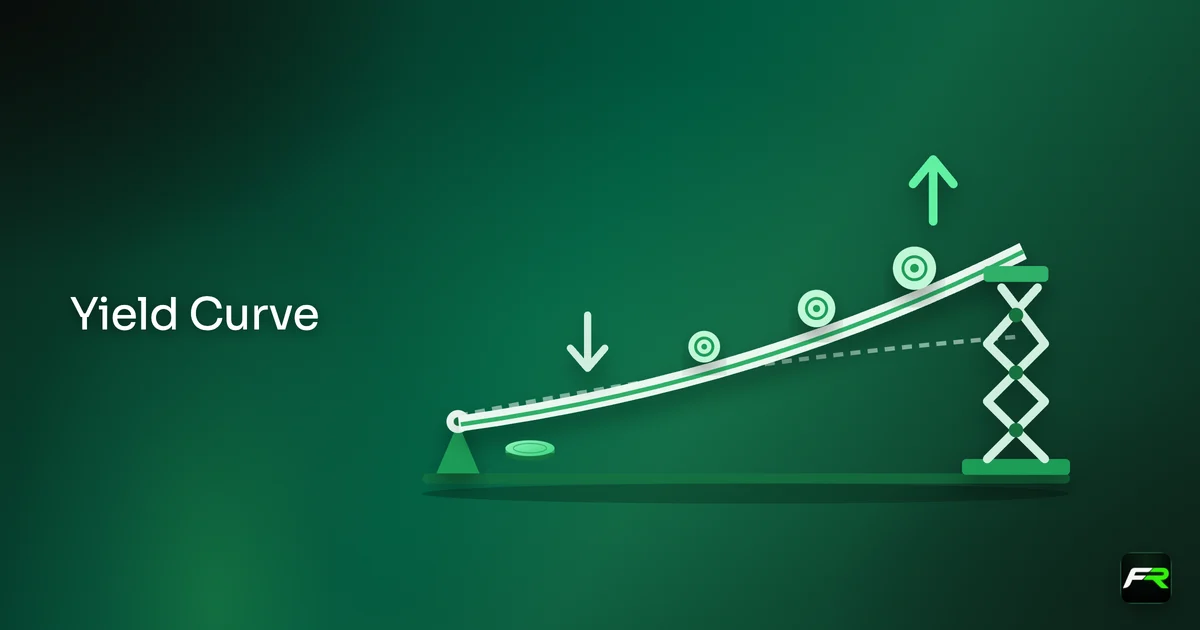
The 5-year yield sits at the point of the curve where expectations for Fed policy meet longer-term views on growth and inflation. A weak sale, where the notes clear above the market yield, tells you investors want more compensation to hold US debt. That usually lifts yields across the curve and supports the dollar, especially against the yen, which tracks US-Japan yield gaps closely.
This month the dollar has needed little help. USD/JPY's European Central Bank (ECB) reference rate was 159.07 on Monday, up from 158.64 on Friday, and the dollar has risen against every major currency since the end of October, as our story on the dollar's November rally sets out. A soft auction would add to that move; a strong one, like Monday's, would ease some of the upward pressure on yields.
5-year yield levels to watch
These levels come from the US Treasury's daily par yield curve, one closing figure per day, and from its auction results.
| Level | Why it matters |
|---|---|
| 5.033% | September 5-year auction high yield |
| 4.98% | 13 Nov close, the November high |
| 4.845% | October 5-year auction high yield |
| 4.74% | 23 Nov close, the latest |
| 4.71% | 20 Nov close, after Friday's drop |
| 4.59% | 5 Nov close, the November low |
A result well above Monday's 4.74% close would show buyers demanding a discount for the extra supply, while one below it would extend the bond rally that began on Friday, when the 5-year yield fell 15 basis points to 4.71% from 4.86%. Above, October's auction rate of 4.845% and the 13 November high of 4.98% are the markers; below, the November low of 4.59% is the nearest.
What it means for traders
Auction results land at 18:00 UTC, late in the London afternoon, and can move the dollar within minutes. Points to keep in mind:
- Compare the high yield with the 5-year yield in the minutes before 18:00 UTC. Clearing above it is a sign of soft demand; clearing below it is a sign of strong demand.
- Check the bid-to-cover against October's 2.33 and the dealer share against 10.6%. A ratio above 2.4 with dealers near 10% would match Monday's strength.
- USD/JPY reacts most to US yields. A weak sale tends to lift the pair; a strong one can trim the dollar's gains.
- Wednesday brings more. October personal consumption expenditures (PCE) inflation and revised third-quarter GDP come out at 13:30 UTC, three hours before the 7-year auction closes at 11:30 am New York time (16:30 UTC).
- Daily levels are on our USD/JPY analysis page, and our 2-year auction preview explains how these sales work.
Say the 5-year yield is 4.75% at 17:58 UTC and the notes clear at 4.78%. That 3 basis point gap means the Treasury paid more than the going rate to sell all $70 billion. A USD/JPY trader might read it as support for the dollar, but one auction is not a trade signal on its own. Wait to see whether yields hold the move into the New York close, and keep in mind that Wednesday's PCE data can wipe it out.
Bond yields and currencies can move sharply around auctions and data releases, and leverage magnifies losses as well as gains. Only trade money you can afford to lose. This is news and education, not a recommendation to buy or sell.
Auction amounts, times and results are from TreasuryDirect, the US Treasury's auction site. Buyer shares are FX Recap calculations from the Treasury's competitive award figures. Yields are from the US Treasury's daily par yield curve. USD/JPY is derived by FX Recap from ECB euro reference rates.
Cite this guide
FX Recap, "US 5-Year Note Auction: Treasury Sells $70 Billion Today After the 2-Year Drew Its Strongest Demand Since July", updated 24 November 2026, https://fxrecap.com/forex-news/top-stories/us-5-year-note-auction-november-2026-70-billion
Free to quote with a link. Journalists: data and comment in our press room.
Frequently asked
When is the US 5-year note auction in November 2026?
Tuesday 24 November 2026. The Treasury sells $70 billion of 5-year notes, with competitive bids due by 1:00 pm New York time (18:00 UTC). The notes are issued on 30 November.
How did the 2-year auction go on 23 November?
Well. The $69 billion of 2-year notes cleared at a high yield of 4.700%, with a bid-to-cover ratio of 2.65, the highest since July. Primary dealers took only 10.4% of the competitive awards.
What yield did the last 5-year auction clear at?
The 27 October 2026 auction cleared at a high yield of 4.845% with a bid-to-cover ratio of 2.33. September's auction cleared at 5.033%.
Why do Treasury auctions matter for forex?
Weak auctions can push Treasury yields higher, which tends to support the dollar, especially against the yen. Strong auctions, where demand is high and dealers take little, usually have the opposite effect.
Sources: TreasuryDirect: upcoming auctions · TreasuryDirect: auction query (past results) · US Treasury: daily par yield curve rates · European Central Bank: euro foreign exchange reference rates · BEA: release schedule
The team behind this guide
Reported, written, edited and checked by five FX Recap specialists
Every guide is written, fact-checked and edited before it goes live, and updated when the facts change. Spotted an error? Tell us.