IC Markets













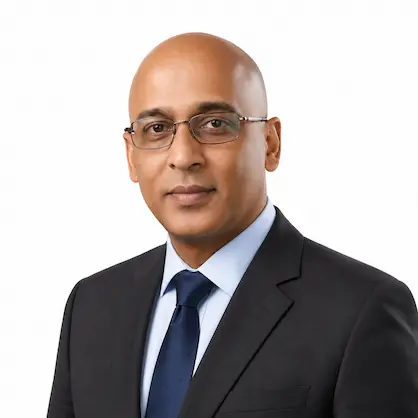



Best Forex Broker in Philippines
No broker is licensed in the Philippines for retail forex, but trading with a regulated broker abroad is not a crime for individuals. Here is how to choose one, fund it with GCash and handle the tax.
 WriterAbir KhanWriterWrites the guides · checks every figure against primary sources View profileAbout Abir →
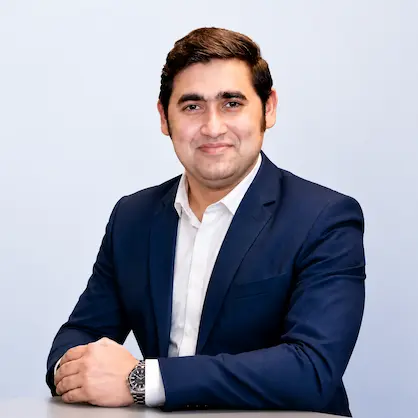
 Market analysisTanbir Habib RiyadForex & Crypto AnalystForex and crypto analyst · technical and fundamental analysis View profileAbout Tanbir →
 Fact-checking & riskJannatul FerdaushFact-Checker & Risk AnalystFact-checks every figure · risk analysis · Applied Statistics, University of Dhaka View profileAbout Jannatul →
 Trading reviewJowel RanaCo-Founder & Forex TraderCo-founder · forex trader · reviews guides from a trader's view View profileAbout Jowel →
 Final approvalRanjan NiskrityFounder, Owner & Forex TraderFounder and owner · forex trader · signs off every guide View profileAbout Ranjan →
Forex is popular in the Philippines and the funding is easy: GCash, Maya and local bank transfers land in minutes. The part people skip is the legal context. Neither the Bangko Sentral ng Pilipinas nor the Securities and Exchange Commission licenses retail online forex brokers, so every broker a Filipino trader uses is regulated abroad, if at all. That makes checking the overseas licence your job.
Is forex trading legal in the Philippines?
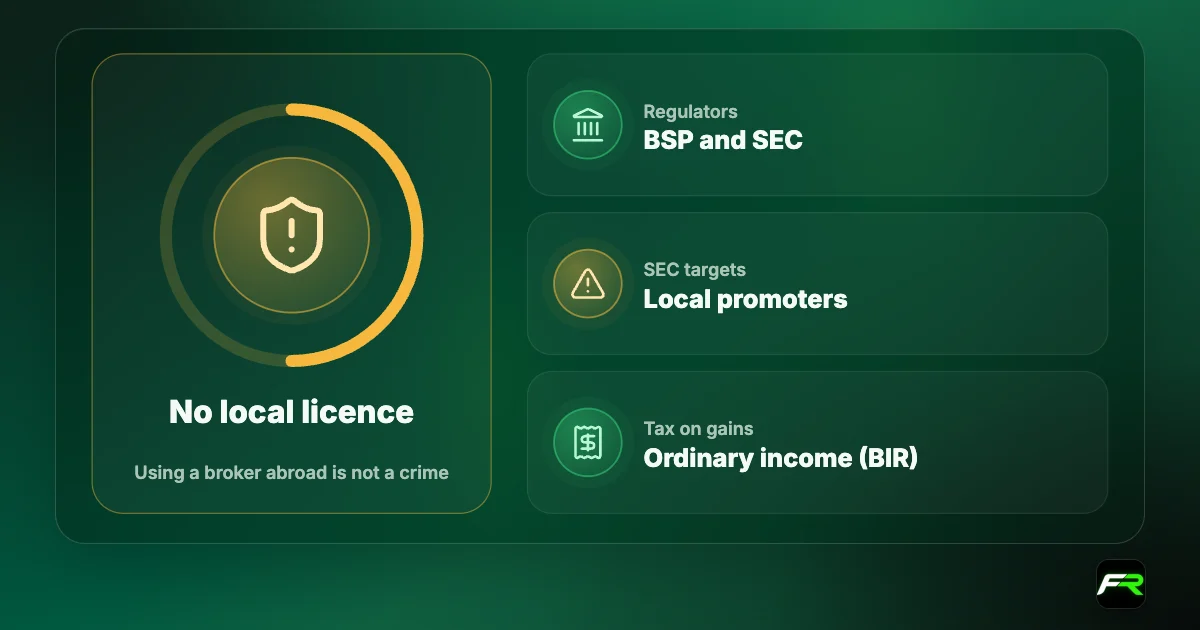
Yes, for individuals trading their own money. There is no local licence for retail forex or CFD brokers, and the SEC and BSP discourage using unregistered firms, but neither has ruled against individuals trading with a legitimate broker abroad. What the SEC does target is local promotion: people and companies soliciting investments or "managed trading" without registration. Its public advisory list names many of them.
Before funding any broker, search its name and website on the SEC's advisory list. A well-regulated broker abroad being absent is normal; a broker or promoter being on it is a hard stop.
What to look for in a broker as a Filipino trader
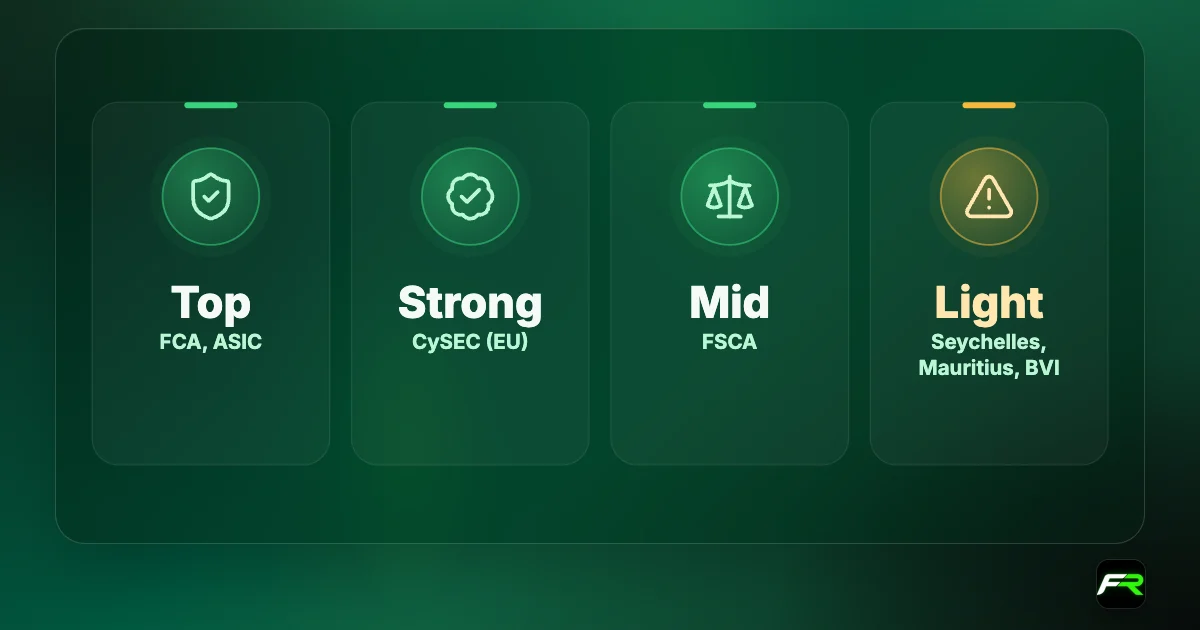
- A licence you can verify with ASIC, CySEC or the FCA, and confirmation of which entity will hold your account.
- GCash, Maya or local bank funding in pesos, with withdrawals back to the same method.
- MT4 or MT5, with plenty of free learning material in English.
- Low minimum deposit or a cent account, so you can learn with small amounts.
- A clean withdrawal record in detailed reviews, not star ratings.
The Top Brokers panel beside this article is our starting shortlist. Here is how the highest-rated compare. Open a demo on two or three before you commit.
| Broker | Our rating | Regulation | Platforms | Support |
|---|---|---|---|---|
1
 XM
XM
|
4.8 | ASIC, CySEC +3 | MT4, MT5, cTrader +1 | 24/7 · live chat |
2
 Exness
|
4.8 | FCA, CySEC +2 | MT4, MT5, WebTrader +1 | 24/7 · live chat |
3
 FP Markets
|
4.8 | ASIC, CySEC +4 | MT4, MT5, cTrader +1 | 24/7 · live chat |
4
 IC Markets
|
4.5 | ASIC, FSA | MT4, MT5, cTrader +1 | 24/7 · live chat |
5
 AvaTrade
|
4.5 | ASIC, CySEC +5 | MT4, MT5, WebTrader | 24/7 · live chat |
Deposits and withdrawals: GCash, Maya and banks
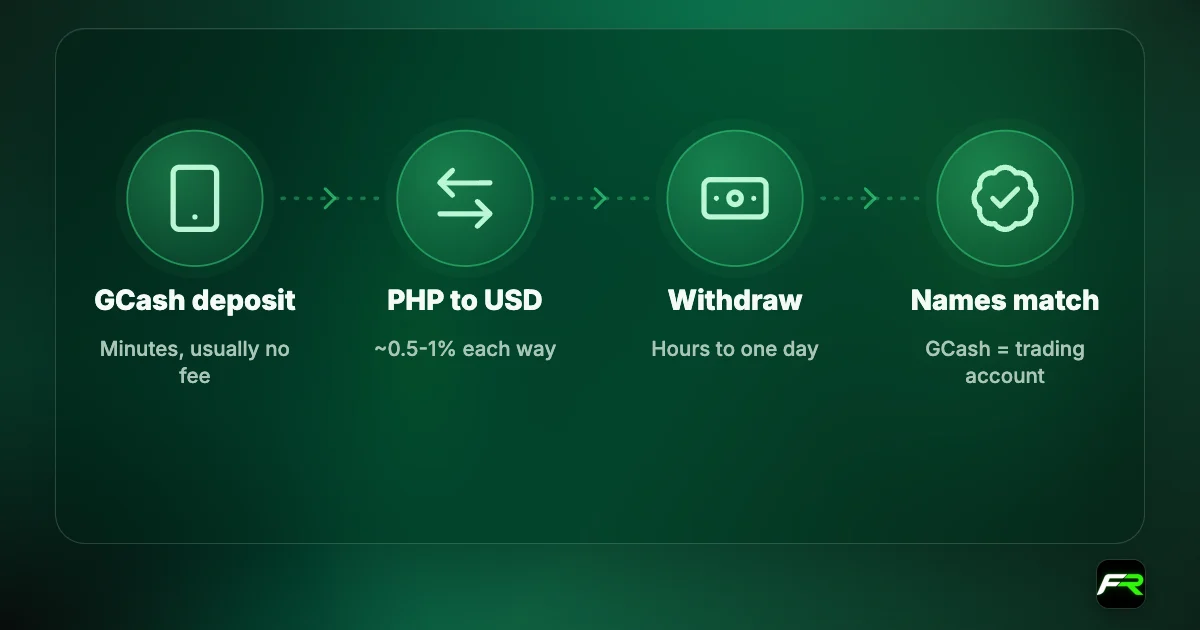
- Speed: GCash and Maya deposits usually arrive in minutes; withdrawals take a few hours to a day once approved.
- Cost: often free or a small fixed fee on the broker's side, plus 0.5 to 1 per cent on the peso-to-dollar conversion each way.
- The name rule: your GCash or bank name must match the trading account exactly. A shortened name or missing middle name is the most common reason payouts stall.
- Return path: brokers send your original deposit back to its source first, and only the profit may go elsewhere.
Start with ₱1,000 to ₱2,000. Place one trade, withdraw it to GCash, and only fund properly once the round trip works.
Leverage
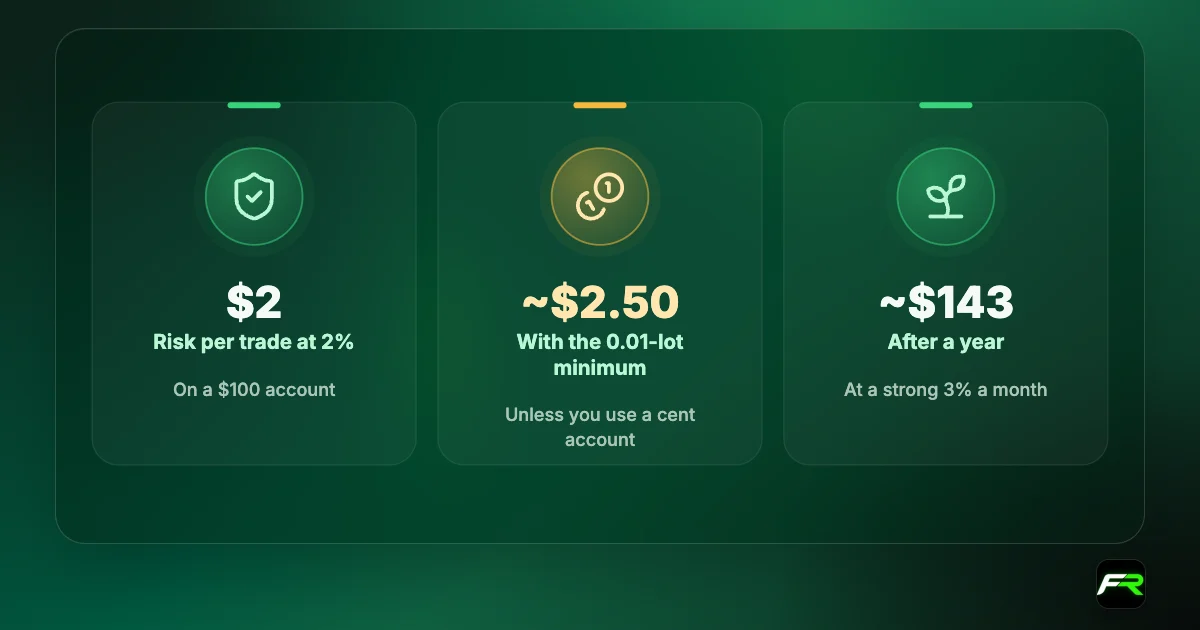
The leverage you get depends on the broker's entity, not the Philippines. ASIC or CySEC entities cap retail forex at 1:30; offshore entities offer 1:500 or more. High leverage lets a small account take a position that an ordinary move can wipe out. Risk 1 to 2 per cent of the account per trade, and treat any trade that needs more leverage than that as too big.
Tax on forex profits in the Philippines
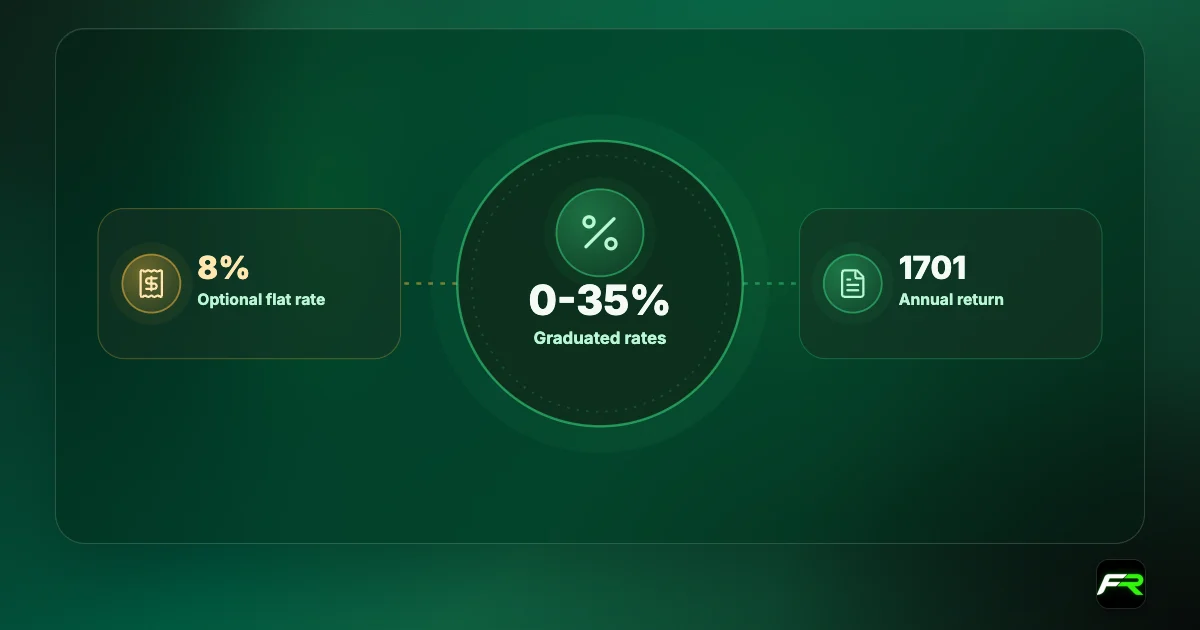
For a resident, trading profit is ordinary income. It is taxed at the graduated rates from 0 to 35 per cent, or at 8 per cent on gross receipts if you qualify and elect that option as a self-employed individual. The capital-gains tax regime for shares does not apply to forex. You file on Form 1701 or 1701A each year, and quarterly on 1701Q if you are registered for business. No broker withholds anything, so keep your statements and a record of every GCash transfer.
General information only. A BIR-accredited tax agent can confirm your filing.
Best times to trade from the Philippines
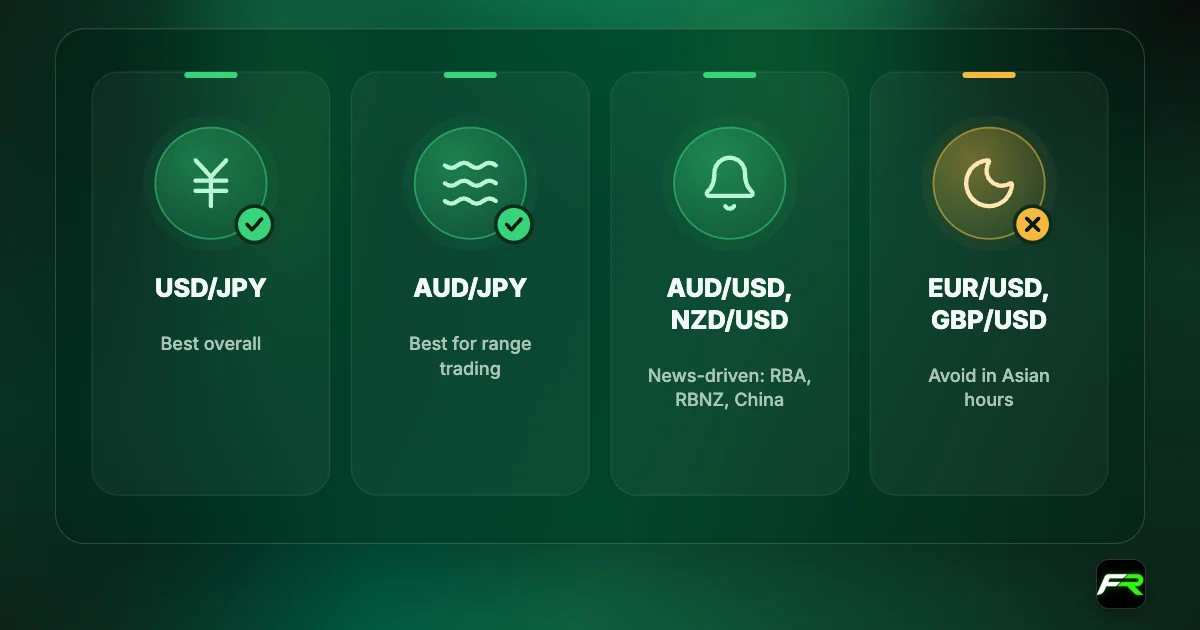
Manila is GMT+8. The Tokyo session runs from about 8:00 am to 5:00 pm, London opens around 3:00 to 4:00 pm, and the London and New York overlap, the busiest window, is roughly 8:00 pm to midnight. Many Filipino traders with day jobs trade the evening overlap, and those with free mornings favour USD/JPY and AUD/USD in the Tokyo session.
Scams aimed at Filipino traders
- "Forex investment" schemes that pay fixed monthly returns, often on Facebook.
- Account managers who ask for your login to trade for you.
- Deposits requested into a personal GCash number rather than the broker's page.
- Withdrawal fees or "tax" that must be paid before a payout.
If you are asked to send money to release a withdrawal, it is a scam. Report it to the SEC and the PNP Anti-Cybercrime Group.
How to open an account, step by step
- Shortlist two or three brokers with a verifiable ASIC, CySEC or FCA licence that accept GCash or local bank transfer.
- Check each against the SEC advisory list.
- Try each platform on a demo account for a week.
- Open the live account, complete verification with your ID and proof of address, and fund a small amount.
- Withdraw once to confirm the money comes back to your own GCash or bank account.
Account types: cent, standard and raw
| Type | How it prices | Suits |
|---|---|---|
| Cent | Balance shown in cents; tiny position sizes | Learning live with ₱500 to ₱2,000 |
| Standard | Spread only, no commission | Most beginners and swing traders |
| Raw or ECN | Very tight spread plus a commission per lot | Active traders placing many trades |
Start on a cent or standard account. A raw account only saves money once you trade often enough for the commission to be smaller than the spread you would otherwise pay, which for most beginners takes months.
Mistakes Filipino traders make
- Topping up by GCash after every loss because funding takes seconds.
- Signing up with a name that does not match the GCash account, then waiting days for a payout.
- Joining "forex investment" groups that pay fixed returns, which the SEC treats as unregistered securities.
- Forgetting to file trading income with the BIR because no tax was withheld.
Is XM or Exness legal in the Philippines?
No broker holds a Philippine retail forex licence, so the practical question is whether a broker's overseas licence is real and whether it is on the SEC's advisory list. Check the regulator named in the client agreement on that regulator's own website. A famous brand that onboards you through an offshore entity gives you that offshore regulator's protection, not an Australian or European one.
What happens if you do not declare trading income
Some Filipino traders assume the BIR cannot see profits from an overseas broker. The money still lands in a GCash or bank account in your name, and unexplained deposits can surface in a bank review or audit. Under the Tax Code, unpaid tax attracts a surcharge of 25 per cent, or 50 per cent for wilful failure, plus interest of 12 per cent a year. Filing each year is far cheaper than explaining several years of inflows later.
How much money do you need to start?
Brokers will open an account for a few hundred pesos, but the useful question is how much you can afford to lose while learning. With a cent account, ₱1,000 to ₱5,000 lets you trade live at very small size and still risk only 1 to 2 per cent per trade. Anything promising to turn ₱5,000 into a monthly income is selling a dream, not a plan.
Filipino traders have it easy on funding, and that is part of the risk. When a deposit takes ten seconds, it is tempting to top up after every loss. Set a monthly limit before you start and keep to it.
Carla opened an account with a CySEC-regulated broker, funded ₱3,000 by GCash and traded EUR/USD in the evening overlap. Her first withdrawal was held for two days because her trading account lacked her middle name. Once support updated it, payouts arrived the same day. She files her profit on Form 1701A using the broker's monthly statements.
| Legal for individuals? | Yes, with a legitimate broker abroad |
|---|---|
| Local licence available? | No |
| Regulators | BSP, SEC |
| Funding | GCash, Maya, local bank transfer |
| Tax | Ordinary income, 0% to 35%, or 8% option |
| Busiest window | About 8:00 pm to midnight Manila time |
Nearby markets work in similar ways: see our guides for Thailand, Malaysia and Indonesia.
Frequently asked
Is forex trading legal in the Philippines?
Yes, for individuals trading their own money with a legitimate broker abroad. There is no local retail forex licence, and the SEC targets unregistered local promoters rather than individual traders.
Which is the best forex broker in the Philippines?
One with a verifiable ASIC, CySEC or FCA licence, GCash or bank funding in pesos, MT4 or MT5, and a clean withdrawal record. Test two or three with a demo and a small live deposit.
Can I use GCash for forex trading?
Yes, many international brokers accept GCash through payment partners. Deposits arrive in minutes; withdrawals usually take a few hours to a day, and the GCash name must match your trading account.
How is forex taxed in the Philippines?
As ordinary income at graduated rates from 0 to 35 per cent, or 8 per cent on gross receipts if you qualify and elect it. You file on Form 1701 or 1701A.
What is the minimum to start forex trading in the Philippines?
Many brokers accept deposits from about ₱500 to ₱1,000. Start small, test a withdrawal, and use a cent account if you want to trade live at tiny size.
Is XM legal in the Philippines?
No broker holds a Philippine retail forex licence. XM and other brands accept Filipinos under their overseas licences; check which entity you are onboarded to and search it on the SEC advisory list.
What is the penalty for not declaring forex income in the Philippines?
Unpaid tax attracts a 25 per cent surcharge, or 50 per cent for wilful failure, plus 12 per cent annual interest under the Tax Code, on top of the tax itself.
Is forex gambling in the Philippines?
Legally it is treated as trading income, not gambling, and taxed as ordinary income. Financially, trading without a tested plan and risk limits behaves very much like gambling.
The team behind this guide
Researched, checked and approved by five forex specialists
Every guide is written, fact-checked and edited before it goes live, and updated when the facts change. Spotted an error? Tell us.