Best Forex Broker In Bangladesh (2026)
Compare top forex brokers regulated by international authorities with low minimums, competitive spreads, and Islamic accounts. This guide reviews Exness, XM, IC Markets, Pepperstone, and Vantage to help Bangladeshi traders choose safely and profitably. Learn about regulation, trading conditions, account types, and real fees, no hidden costs.

Exness

IC Markets

LiteFinance

FP Markets

AvaTrade

RoboForex
Disclosure: "Visit Broker" links are partner (affiliate) links. FX Recap may earn a commission at no cost to you. Trading involves significant risk of loss. T&Cs apply.
Forex trading in Bangladesh can be rewarding, but only if you pick the right broker. Too many traders lose money simply because they chose an unverified platform or one that lacks proper regulation. This guide cuts through the noise and shows you exactly which brokers meet international standards, deliver competitive spreads, and actually support Bangladeshi traders.
Why Regulation Matters for Bangladeshi Traders?
Bangladesh doesn’t have strict local oversight of retail forex trading. That’s why choosing a broker with international licenses from tier-1 regulators like CySEC, ASIC, or FSA is critical. These licenses mean your deposits are protected, trades are executed fairly, and if something goes wrong, there’s actual recourse. Beyond safety, regulated brokers provide lower minimums, demo accounts for practice, and transparent fee structures.
Top Forex Brokers for Bangladeshi Traders
Below are the brokers most trusted by traders in Bangladesh. Each one features Islamic accounts, competitive spreads, and multiple trading platforms.
| Broker | Year Established | Islamic Account | Minimum Deposit |
| Exness | 2008 | Yes | $50 |
| XM | 2009 | Yes | $5 |
| IC Markets | 2007 | Yes | $200 |

| Pepperstone | 2010 | Yes | $200 |
| Vantage Markets | 2009 | Yes | $50 |
What Makes These Brokers Stand Out?
Exness leads with unlimited leverage and competitive spreads from 0.2 pips, plus a $50 minimum to start trading. XM combines accessibility with reliability, accepting traders with just $5 and providing zero commissions on most account types, making it ideal for beginners building capital. Both operate through multiple regulated entities across different continents. IC Markets takes a different approach, operating as a single focused entity specializing in ECN trading. If you want direct market access with tight spreads and professional tools like cTrader, IC Markets delivers that without the complexity of multiple regulatory entities. Pepperstone appeals to active traders who want multiple platforms and fast execution, backed by seven major regulatory authorities, though it’s best for experienced traders who understand CFDs. Vantage provides a middle ground: accessible to beginners with a $50 minimum, but backed by serious regulators in South Africa, the UK, and Australia.
About Exness: The Broker Behind the Platform
Founded in 2008, Exness operates as a multi-asset, technology-focused broker with over 2,000 employees across 13 offices spanning five continents. The company was built on a simple principle: balance ethics with technology to create a genuinely better trading experience. While most brokers copy features, Exness pioneered innovations like instant withdrawals and stop-out protection that give traders a real edge.
What sets Exness apart is how seriously they take client protection. Every platform update, every feature, every decision goes through a lens of trader benefit first. They employ sophisticated models and use data-driven approaches to keep clients protected while offering better-than-market conditions. The company values are straightforward: be bold, prioritize good people, stay tech-focused, and maintain absolute reliability.
Why Exness’s Regulation Matters?
The difference between a regulated and unregulated broker comes down to oversight. A regulated broker holds a license that shows a governmental or independent authority is actively monitoring its operations. That monitoring ensures the broker follows fair trading practices, protects your deposits, and maintains compliance with financial laws. Exness holds multiple licenses across different continents, which means different regulatory bodies are all checking that the company operates honestly and protects traders.
Exness Global Regulatory Licenses
Exness operates through multiple regulated entities, each licensed by different authorities across continents. Here’s the complete breakdown:
Africa
- South Africa: Authorized by the Financial Sector Conduct Authority (FSCA) as a Financial Service Provider (FSP) with FSP number 51024. Exness (SC) Ltd is also authorized as an Over-The-Counter Derivatives Provider (ODP) by the FSCA.
- Kenya: Authorized by the Capital Markets Authority (CMA) as a non-dealing online foreign exchange broker with license number 162.
Europe
- Cyprus: Authorized and regulated by the Cyprus Securities and Exchange Commission (CySEC) with license number 178/12. *Does not offer services to retail clients.
- United Kingdom: Authorized and regulated by the Financial Conduct Authority (FCA) under Financial Services Register number 730729. *Does not offer services to retail clients.
Caribbean
- Seychelles: Authorized by the Financial Services Authority (FSA) with license number SD025. Registration number 8423606-1.
- Curaçao: Authorized by the Central Bank of Curaçao and Sint Maarten (CBCS) with license number 0003LSI. Registration number 148698(0).
Atlantic/Americas
- British Virgin Islands: Authorized by the Financial Services Commission (FSC) with registration number 2032226 and investment business license number SIBA/L/20/1133.
- Belize: Forexite Ltd. is authorized and regulated by the Financial Services Commission (FSC) under License/Registration Number 9110312.
Middle East
- Jordan: Registered with the Companies Control Department under registration number 51905 and regulated by the Jordan Securities Commission (JSC).
Asia-Pacific
- Mauritius: Authorized by the Financial Services Commission (FSC) with registration number 176967 and Investment Dealer license number GB20025294.
All entities above are duly authorized to operate under the Exness brand and trademarks. Important disclaimer: Exness (Cy) Ltd and Exness (UK) Ltd do not offer trading services to retail clients, as they are institutional entities regulated for professional traders only.
Exness Account Types: Choosing What Works for You
Exness provides commission-free trading accounts designed for all experience levels. The two main account types are Standard and Standard Cent, both with the same $50 minimum deposit and unlimited leverage. The difference is primarily in lot sizing and available instruments.
Standard Account
The Standard account is Exness’s most popular option and great for all types of traders. It features the tightest spreads starting from just 0.2 pips with zero commission. You get access to the full range of instruments: forex, metals, cryptocurrencies, energies, stocks, and indices. The account supports up to 200 lot maximum (though this drops to 60 during lower liquidity hours 21:00-6:59 GMT+0), with unlimited open positions. Both hedged margin and margin call are set at 0%, and the stop-out level is 0%, meaning you retain maximum control over your positions. Order execution is market-based, and swap-free trading is available for Islamic accounts.
Standard Cent Account
The Standard Cent account is specifically designed for new traders who want to trade with micro lots while getting started. Spreads are slightly wider at 0.3 pips minimum (compared to 0.2 on Standard), still with zero commission. This account is limited to forex, metals, and cryptocurrencies only (no energies, stocks, or indices), making it more focused for currency traders. Maximum lot size is capped at 200, with a hard limit of 10,000 maximum open positions. Like the Standard account, it provides 0% hedged margin, 60% margin call, 0% stop-out, market execution, and swap-free options.
For Bangladesh traders, the choice is straightforward: If you have $50–$100 to start and want maximum flexibility across all asset classes, choose Standard. If you want to practice with smaller micro-lots and focus only on forex, metals, and crypto, Standard Cent is your answer. Both accounts provide real trading with no practice restrictions, so you can transition to larger position sizes once you’ve built confidence and capital.
About XM: Multi-Regulated Global Broker
XM operates as a subsidiary of the Trading Point Group with licensed entities across several regions globally. The company focuses on making forex trading accessible to all experience levels, from complete beginners to seasoned professionals. XM delivers competitive spreads, zero commissions on most accounts, comprehensive educational resources, and 24/7 multilingual support. The group maintains consistent standards across all entities to ensure clients receive the same quality service regardless of which licensed entity they trade through.
XM Regulatory Licenses
XM operates through multiple regulated entities licensed by recognized financial authorities:
- Mauritius: XM International MU Limited is regulated by the Financial Services Commission (FSC) under Investment Dealer’s License number GB23202700.
- Seychelles: XM (SC) Limited is regulated by the Seychelles Financial Services Authority (FSA) under Securities Dealer’s License number SD190.
- Belize: XM Global Limited is regulated by the Financial Services Commission (FSC) under the Securities Industry Act 2021 (license number 8557558).
- Cyprus: Trading Point of Financial Instruments Limited is authorized and regulated by Cyprus Securities and Exchange Commission (CySEC) under license number 120/10.
All entities referenced are part of the Trading Point Group and are duly authorized to operate under the XM brand. Important disclaimer: XM does not provide services to citizens of the United States, Canada, Israel, Iran, or other sanctioned countries.
About IC Markets: Professional ECN Trading
IC Markets operates under the trading names IC and IC Markets Global, both brands of Raw Trading Ltd. Unlike brokers that operate through multiple entities, IC Markets maintains a single licensed entity focused entirely on providing professional-grade trading conditions. The company specializes in ECN (Electronic Communication Network) trading, which means orders are routed directly to liquidity providers rather than being handled as counterparty trades. This approach appeals to serious traders who want tight spreads, fast execution, and transparency in how their orders are processed.
IC Markets’ commitment to compliance and client protection is evident in their client fund segregation practices and anti-money laundering procedures. All client deposits are held in segregated accounts with top-tier banking institutions, ensuring your funds are protected separately from the broker’s operational funds. This level of protection is mandatory under the Seychelles Financial Services Authority regulations that govern IC Markets.
IC Markets Regulatory License
IC Markets operates through a single regulated entity:
- Seychelles: Raw Trading Ltd (trading as IC and IC Markets Global) is authorized by the Seychelles Financial Services Authority (FSA) as a Securities Dealer under License number SD018.
Important disclaimer: IC Markets does not provide services to residents of the United States, Canada, New Zealand, Iran, North Korea, or other countries where distribution would violate local laws. Users must be at least 18 years old to open an account.
About Pepperstone: Multi-Regulated Platform for Active Traders
Pepperstone Markets Limited is a global forex and CFD broker headquartered in Nassau, The Bahamas. The company specializes in serving active traders with fast execution, competitive spreads, and access to several trading platforms. Pepperstone takes a different approach to regulation by holding licenses from seven major authorities across different continents, rather than operating through separate subsidiary entities. This means one cohesive company answers to multiple top-tier regulators simultaneously, providing layered oversight and protection for clients.
The company is transparent about the risks of CFD trading. Pepperstone publicly states that 80.1% of retail investor accounts lose money when trading CFDs with their platform. This isn’t a hidden statistic but a prominent disclosure on their website, which reflects their commitment to ensuring traders understand what they’re getting into. CFDs involve leverage, and leverage amplifies both gains and losses. For this reason, Pepperstone is best suited for traders who already understand how leverage works and have risk management discipline.
Pepperstone Regulatory Licenses
Pepperstone Markets Limited (Registration number 177174 B) holds licenses from the following regulatory authorities:
- United Kingdom: Financial Conduct Authority (FCA)
- Australia: Australian Securities and Investments Commission (ASIC)
- United Arab Emirates: Dubai Financial Services Authority (DFSA)
- Cyprus: Cyprus Securities and Exchange Commission (CySEC)
- Kenya: Capital Markets Authority (CMA)
- The Bahamas: Securities Commission of The Bahamas (SIA-F217)
- Germany: Bundesanstalt für Finanzdienstleistungsaufsicht (BaFin)
Important disclaimer: Pepperstone is not suitable for traders who don’t fully understand CFDs or can’t afford the risk of losing their investment. The company does not provide services to residents of countries where distribution would violate local laws or regulations.
About Vantage: Accessible Trading with Multi-Regulatory Oversight
Vantage was established in 2009 and has grown into a globally recognized forex and CFD broker. The company specializes in currency pair trading (forex CFDs), providing access to major, minor, and exotic pairs like EUR/USD, GBP/USD, and USD/JPY. Vantage positions itself as accessible to all trader types, from beginners to professionals, with flexible minimum deposits starting at $50. The forex market is the largest in the world, operating 24 hours, 5 days a week, and Vantage gives traders global opportunities whether they’re from South Asia, Southeast Asia, or anywhere else.
What sets Vantage apart is transparency about both opportunities and risks. The company emphasizes that while leverage allows you to control larger positions with less capital, it amplifies both gains and losses. Vantage includes essential risk management tools such as stop-loss orders and negative balance protection, recognizing that managing risk is more important than chasing profits. The platform supports various trading strategies, from day trading (short-term, same-day positions) to swing trading (days or weeks) to position trading (weeks, months, or longer), allowing traders to choose an approach that fits their lifestyle and risk tolerance.
Vantage Forex Trading Conditions
Vantage provides competitive spreads on major currency pairs:
| Currency Pair | Spread | Commission | Min Leverage |
| EUR/USD | 0.08 pips | 6.0 USD/lot | 1:1 |
| GBP/USD | 0.20 pips | 6.0 USD/lot | 1:1 |
| USD/JPY | 0.31 pips | 6.0 USD/lot | 1:1 |
| AUD/USD | 0.24 pips | 6.0 USD/lot | 1:1 |
| USD/CAD | 0.12 pips | 6.0 USD/lot | 1:1 |
| USD/CHF | 0.11 pips | 6.0 USD/lot | 1:1 |
| AUD/NZD | 0.39 pips | 6.0 USD/lot | 1:1 |
| EUR/AUD | 0.32 pips | 6.0 USD/lot | 1:1 |
| EUR/JPY | 0.18 pips | 6.0 USD/lot | 1:1 |
| GBP/JPY | 1.49 pips | 6.0 USD/lot | 1:1 |
Commission is consistent at 6.0 USD per lot across all pairs, making costs transparent and predictable. Spreads range from 0.08 pips on EUR/USD (the most traded pair) to 1.49 pips on GBP/JPY (a less liquid pair). This reflects real market conditions where major pairs with higher trading volume have tighter spreads than exotic combinations.
Vantage Regulatory Licenses
Vantage holds licenses from the following regulatory authorities:
- South Africa: Financial Services Provider (FSP) regulated by FSCA (Financial Sector Conduct Authority)
- United Kingdom: Regulated by the Financial Conduct Authority (FCA)
- Australia: Regulated by the Australian Securities and Investments Commission (ASIC)
- Leverage range: 1:1 to 30:1, allowing flexible risk management for conservative to aggressive traders.
Important disclaimer: Vantage does not provide services to residents of countries where such distribution would violate local laws or regulations. Always verify Vantage’s current restrictions before attempting to open an account.
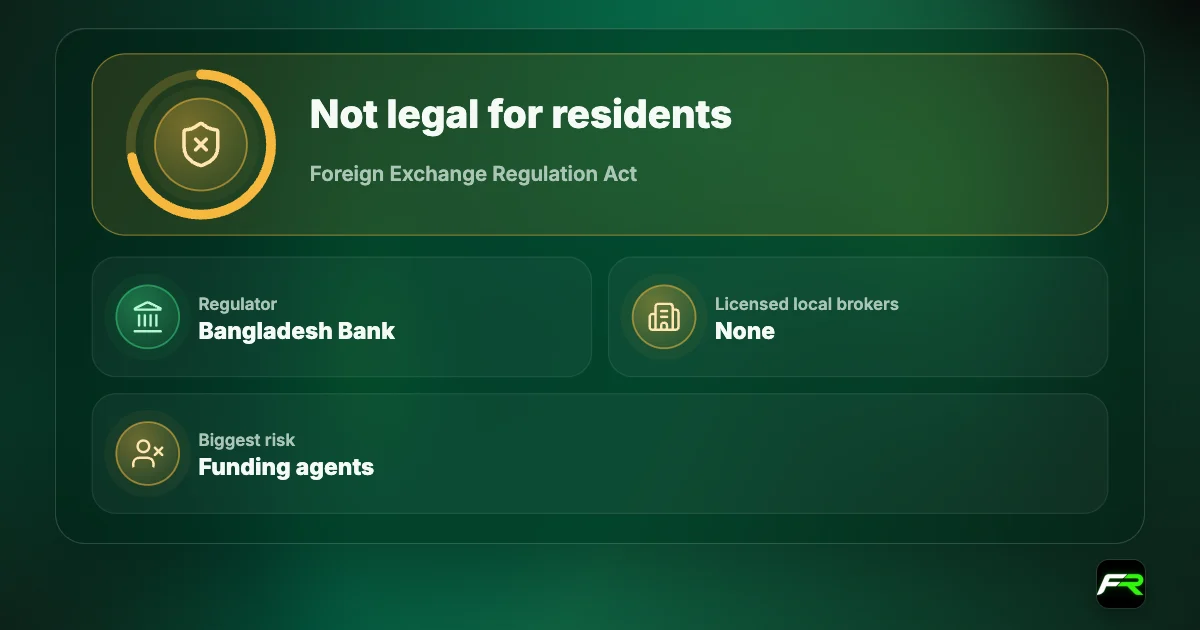
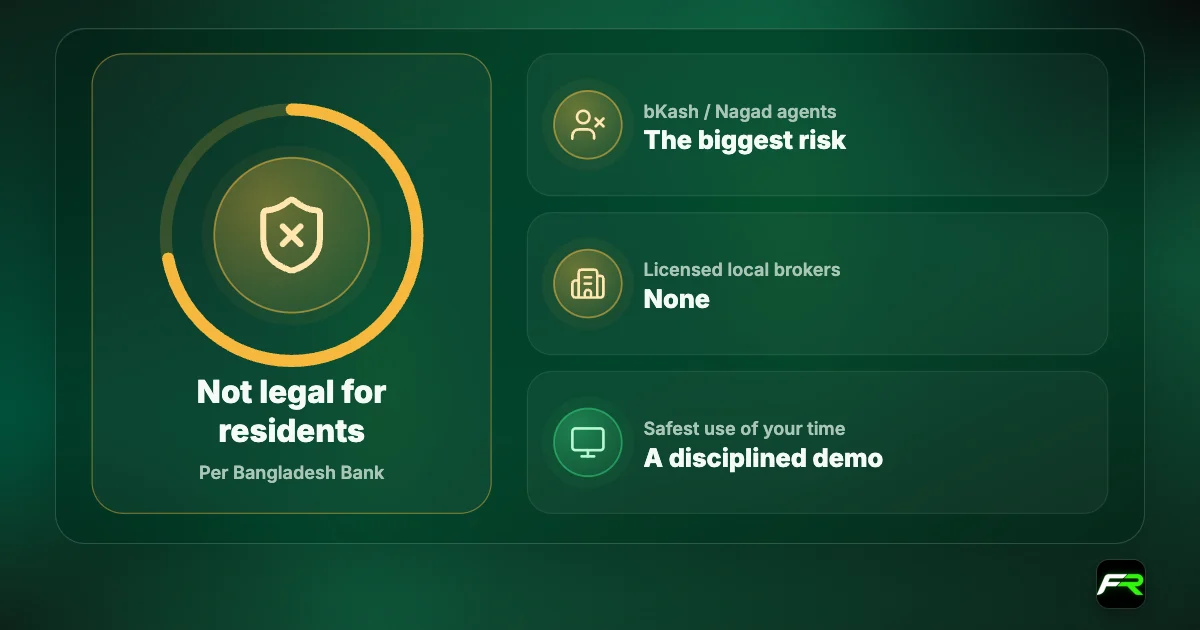
Is Forex Trading Legal in Bangladesh?
Yes, forex trading is legal but heavily regulated. The Bangladesh Bank manages institutional forex trading through authorized banks and money changers. Retail online forex trading, however, exists in a gray zone. Since Bangladesh doesn’t regulate retail traders directly, Bangladeshis can trade on international platforms, but any profits are taxable under the National Board of Revenue (NBR).
Regulation Breakdown by Broker
Each broker holds licenses from multiple regulators. Here’s the full picture:
| Broker | Regulation |
| Exness | FSA (Seychelles), CBCS (Curaçao), FSC (BVI), FSC (Mauritius), CySEC (Cyprus)*, FCA (UK)*, FSCA (South Africa), CMA (Kenya), JSC (Jordan) |
| XM | FSC (Mauritius), FSC (Belize), FSA (Seychelles), CySEC (Cyprus) |
| IC Markets | FSA (Seychelles) |
| Pepperstone | FCA (UK), ASIC (Australia), DFSA (UAE), CySEC (Cyprus), CMA (Kenya), SCB (Bahamas), BaFin (Germany) |
| Vantage | FSP (South Africa), FCA (UK), FSCA (South Africa), ASIC (Australia) |
Leverage: How Much Control Do You Actually Get?
Leverage lets you control larger positions with less capital. It’s powerful, but it’s also a double-edged sword. Higher leverage amplifies both gains and losses.
| Broker | Leverage |
| Exness | 1:Unlimited |
| XM | 1:1000 |
| IC Markets | 1:1000 |
| Pepperstone | 1:400 |
| Vantage | 1:1 to 30:1 |
Exness stands apart here with unlimited leverage on certain pairs, though most traders don’t need that much. For beginners, lower leverage (1:100 to 1:200) is actually safer and forces better risk discipline.
Trading Platforms
Your trading platform is where you spend your time, so it matters. MetaTrader 4 and 5 dominate for good reason: they’re stable, have thousands of indicators, and work on every device. cTrader appeals to ECN traders with faster execution. WebTrader versions let you trade without downloading anything.
| Broker | Platforms Available |
| Exness | MT4, MT5, WebTrader |
| XM | MT4, MT5, WebTrader |
| IC Markets | MT4, MT5, cTrader, TradingView |
| Pepperstone | MT4, MT5, cTrader, WebTrader |
| Vantage | MT4, MT5, WebTrader, MobileTrader |
The Cost of Trading: Spreads and Fees
This is where small differences add up. A 0.1 pip difference on EUR/USD doesn’t sound like much, but over 100 trades, it costs real money. All these brokers keep fees transparent, with zero withdrawal fees.
| Broker | Commission | Withdrawal Fees |
| Exness | $0–$3.5 | $0 |
| XM | $0 | $0 |
| IC Markets | $0–$3.5 | $0 |
| Pepperstone | $0–$3 | $0 |
| Vantage | $6.0/lot | $0 |
Islamic (Swap-Free) Accounts: Trading the Halal Way
In Islam, riba (interest) is forbidden. That means overnight swap charges (interest paid on open positions) violate Shariah principles. Every broker listed here offers swap-free Islamic accounts that eliminate these charges while keeping trading Shariah-compliant. This is non-negotiable for Muslim traders in Bangladesh.
When to Actually Trade: Best Times in Bangladesh Time
The forex market never sleeps, but it moves differently depending on which trading session is active. Bangladesh operates on BST (GMT+6), so here’s what matters for you:
- Asian Session (7 AM–4 PM): The market is calm here. Yen and Australian dollar move most, but spreads stay wide. Best for beginners practicing discipline rather than chasing big moves.
- European Session (2 PM–11 PM): Volume picks up noticeably. EUR/USD and GBP/USD start moving with real volume. More opportunity, but also more risk.
- New York Session (7 PM–4 AM): The dollar dominates. Best opportunity is between 7 PM and 11 PM when both Europe and New York overlap. Spreads tighten and volatility spikes. Advanced traders profit here; beginners watch from the sidelines.
Pros and Cons: Real Talk About Forex Trading in Bangladesh
Advantages
- Trade global currency markets from your phone or laptop. No capital requirements, no middlemen.
- Spreads are competitive. Most major pairs cost under 1 pip in today’s market.
- Islamic accounts exist everywhere. Swap-free trading is standard, not a special request.
- Account options for every trader. Cent accounts with $50 total in margin, standard accounts, ECN accounts for professionals, and demo accounts for learning.
- 24/7 support in your language. Good brokers have live chat, email, and phone support around the clock.
Disadvantages
- Retail forex in Bangladesh has no local regulator watching. You must choose international brokers, and choose carefully.
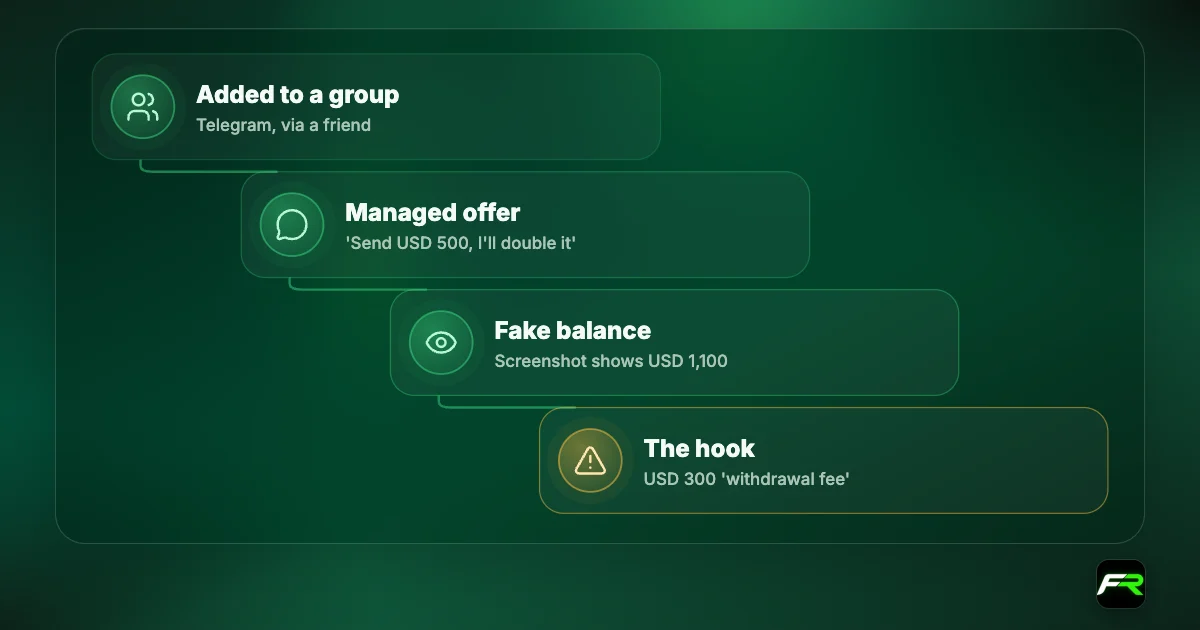
- Scams exist. Many unregulated forex platforms steal money. Never trade with a broker you haven’t verified.
- Leverage cuts both ways. What makes you $500 on a good day can wipe your account on a bad day. Beginners often underestimate this.
- Deposits and withdrawals sometimes slow down. Bangladesh Bank currency controls can create banking delays. Know this before you start.
Important Risk Warning
Forex trading involves complex derivative products traded outside an exchange. These products carry a high risk of losing money rapidly due to leverage and are not appropriate for all investors. You can lose more than your initial investment. This is not investment advice. Before trading, ensure you understand the risks fully and only risk money you can afford to lose completely.
How to Pick Your Broker: A Checklist
- Verify regulation. Check the broker’s website for licenses. Visit the regulator’s site directly (CySEC.eu, ASIC.gov.au, etc.) to confirm.
- Compare spreads. Open an account with your top 2–3 choices and compare the actual spreads they quote. Test with a demo first.
- Test the platform. Do you like MetaTrader? cTrader? Mobile trading? Spend an hour on their demo to feel the platform.
- Check account types. Islamic account available? Minimum deposit that fits your budget? Can you scale up later?
- Confirm local payment methods. Can you deposit via Nagad, bKash, or your bank? Some brokers don’t support local methods.
- Contact support. Ask a simple question via live chat. Response speed and quality say everything about the broker.
Common Questions
Is forex trading halal?
Yes, if you follow Islamic finance rules. No riba (interest), no gambling, no excessive uncertainty. Swap-free accounts handle this automatically. Make sure your strategy isn’t pure speculation.
Is Exness legal in Bangladesh?
Yes. While Exness isn’t regulated locally by Bangladesh Bank or BSEC, the company operates through multiple entities licensed by tier-1 international regulators including the Seychelles Financial Services Authority (FSA), Cyprus Securities and Exchange Commission (CySEC), Financial Conduct Authority (FCA) in the UK, South Africa’s Financial Sector Conduct Authority (FSCA), Central Bank of Curaçao and Sint Maarten (CBCS), Financial Services Commission (FSC) in the British Virgin Islands, Capital Markets Authority (CMA) in Kenya, and Jordan Securities Commission (JSC). These regulatory bodies ensure Exness adheres to international financial standards and fair trading practices. Bangladeshis can legally trade on Exness because it holds proper international licenses and maintains transparent operations monitored by recognized authorities.
Do swap-free accounts cost more?
Sometimes spreads are slightly wider on Islamic accounts, but the difference is minimal. You save far more in overnight swap charges than you pay in wider spreads if you hold positions overnight.
What’s the difference between MetaTrader 4 and 5?
MT5 is newer with more features and better performance, but MT4 is more popular and has more indicators available. For most traders, either works fine. Many professionals use both.
Can I start with $5?
Yes, XM accepts $5 minimums and Exness accepts $10. But $5 doesn’t give you much margin to work with. $100–$500 is more realistic to practice without wiping out immediately.
Final Thoughts
Forex trading in Bangladesh is entirely feasible if you approach it seriously. Find a regulated broker, use a demo account to practice without risk, and start with real money only when you’re profitable on demo. Risk management beats luck every single time. Stick to that, and you’ve already beaten most traders.Pick your broker from the list above, verify their regulation, and take your first step. The currency markets are open