Best Forex Brokers in Thailand (2026)
Thailand’s forex market is growing fast, and so is the number of brokers competing for local traders. This page breaks down the top-rated options available to residents in Thailand, covering regulation, costs, platforms, and local payment support. Every broker listed has been checked against official data so you can compare and decide with confidence.

Exness

IC Markets

LiteFinance

FP Markets

AvaTrade

RoboForex
Disclosure: "Visit Broker" links are partner (affiliate) links. FX Recap may earn a commission at no cost to you. Trading involves significant risk of loss. T&Cs apply.
Thailand’s retail forex market has grown sharply over the past six years. Better smartphone access, cheaper data, and more locally produced trading content have pulled a new generation into the market, and the brokers targeting them have noticed. The ones worth your time go well beyond a low-spread headline. They offer local payment rails, Thai-language support that actually answers questions, and accounts that work with the currency movement restrictions the Bank of Thailand enforces.
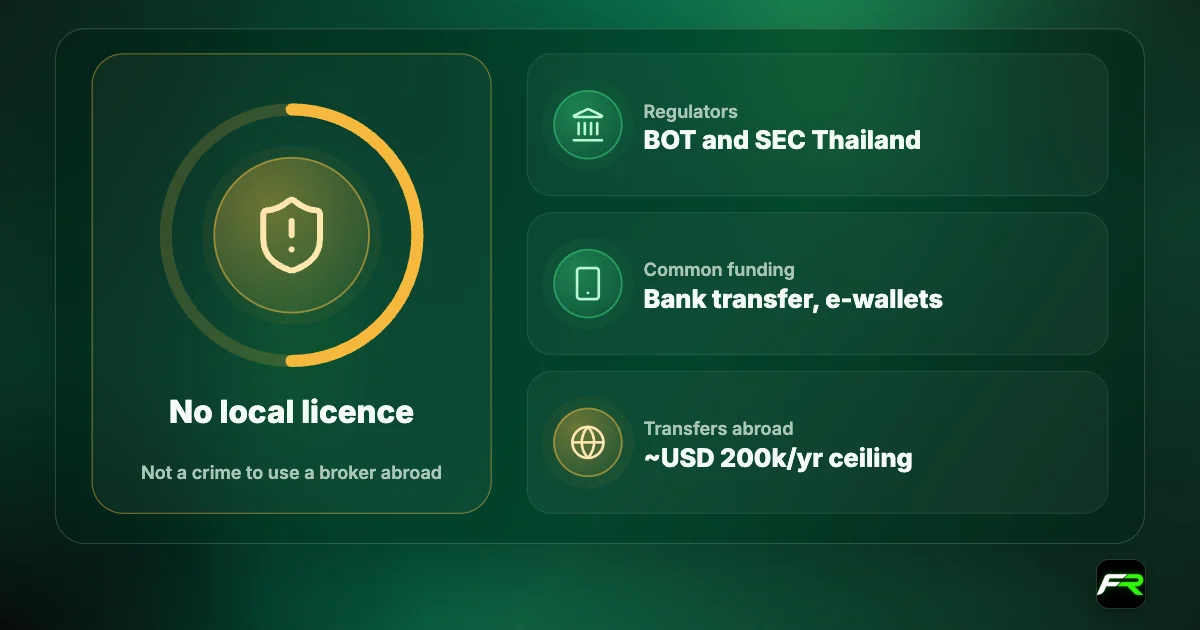
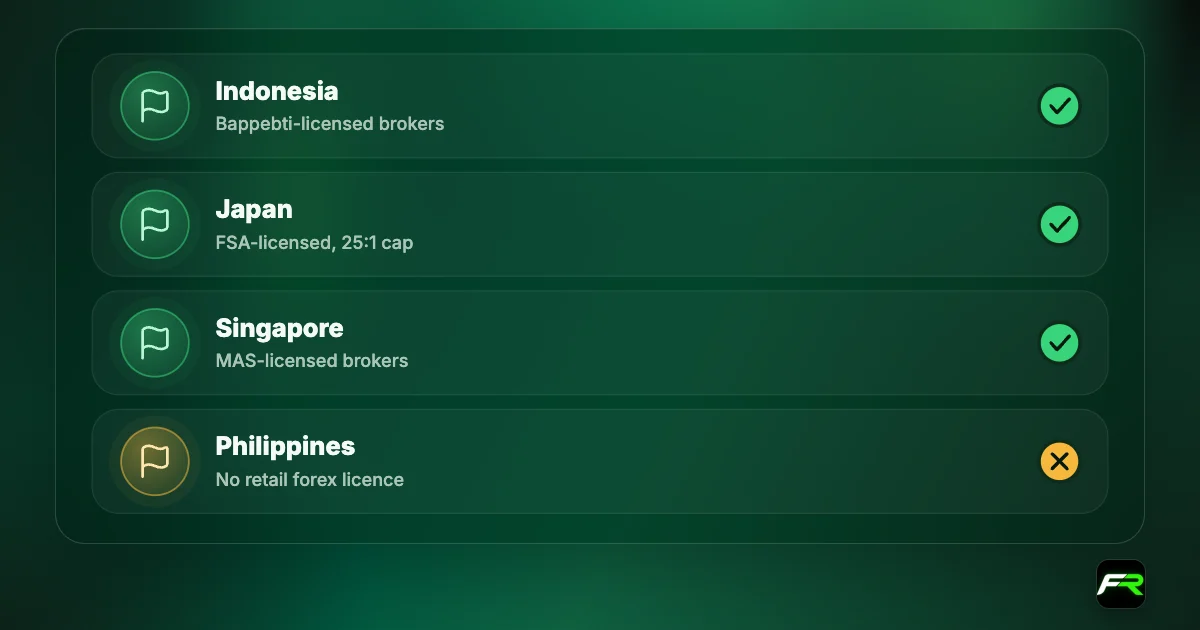
One point worth clarifying upfront: Thailand does not have a large pool of domestically licensed retail forex firms. The Securities and Exchange Commission (SEC Thailand) oversees capital markets and derivatives, while the Bank of Thailand (BOT) governs currency transactions. Residents trade forex legally, mainly through internationally licensed offshore brokers regulated by credible bodies such as the FCA, ASIC, or CySEC. That is the normal structure here, not a grey area.
FX Recap reviewed and cross-checked each entry on this list against official regulatory registers, live account data, and the factors that matter most to residents specifically: payment methods, support quality, platform access, spreads, and deposit requirements that fit typical Thai account sizes.
Quick Comparison: Top Forex Brokers for Thailand
| Broker | Regulation | Min. Deposit | EUR/USD Spread | Platforms | Thai Support |
| Exness | FCA, CySEC, FSA | $10 (Standard) | From 0.3 pips | MT4, MT5, Exness Terminal | Yes |
| IC Markets | ASIC, CySEC, FSA (Sey) | $200 | From 0.0 pips (Raw) | MT4, MT5, cTrader | Yes |
| Pepperstone | ASIC, FCA, CySEC, DFSA | $0 | From 0.0 pips (Razor) | MT4, MT5, cTrader, TradingView | Yes |
| XM | ASIC, CySEC, IFSC | $5 | From 1.6 pips (Micro) | MT4, MT5 | Yes |
| FP Markets | ASIC, CySEC, FSCA | $100 | From 0.0 pips (Raw) | MT4, MT5, cTrader, IRESS | Yes |
| IUX | FSA (Seychelles) | $1 | From 0.1 pips | MT5, IUX Platform | Yes |
| LiteFinance | CySEC, FSA (SVG) | $50 | From 0.0 pips (ECN) | MT4, MT5, LiteFinance Web | Yes |
| RoboForex | FSC (Belize) | $10 | From 0.0 pips (ECN) | MT4, MT5, R StocksTrader | Yes |
| IG Group | FCA, ASIC, MAS, CFTC | $250 | From 0.6 pips | IG platform, MT4, ProRealTime | English/Regional |
| FxPro | FCA, CySEC, FSCA, SCB | $100 | From 0.0 pips (Raw+) | MT4, MT5, cTrader, FxPro Edge | Yes |
Spread figures are indicative and shift with market conditions. Verify current rates directly on each broker’s official site before opening a position.
Forex Trading in Thailand: The Legal Landscape
Forex trading is legal for Thai residents. The framework rests on two pillars: the Bank of Thailand manages monetary policy and currency transaction rules, while SEC Thailand regulates capital markets, derivatives, and brokerage licensing. The Securities and Exchange Act B.E. 2535 is the statutory foundation.
A few practical rules every trader in Thailand should be clear on:
- Speculative positions on the Thai baht (THB) are prohibited. Thai nationals cannot open leveraged trades that bet on their own domestic currency, so pairs like USD/THB on retail margin accounts are off-limits.
- Residents may invest in foreign securities and foreign exchange up to USD 5 million per person per calendar year without going through a local agent. That is the BOT’s current capital outflow ceiling for individuals.
- Domestically licensed retail forex firms are rare. Most residents use internationally licensed brokers, which is a legitimate and widely accepted practice under current rules.
- Forex profits are taxable as personal income. Rates are progressive, reaching up to 35% at the highest bracket. Speak with a Thai tax professional for guidance specific to your situation.
- The Thai SEC publishes a public register of authorized entities and regularly issues warnings about unlicensed platforms. Checking that register before funding an account takes two minutes.
As of early 2026, the Thai SEC has been reviewing leverage limits and suitability requirements for retail traders. The direction points toward tighter guardrails on margin products. Internationally based platforms remain outside direct Thai supervision but may face increased scrutiny on cross-border solicitation targeting residents here.
Detailed Broker Profiles
1. Exness — Best Overall for Thai Traders
Founded in 2008 and headquartered in Cyprus, Exness has built one of the largest retail forex operations globally, processing over $3.5 trillion in monthly trading volume. Its appeal for residents in Thailand comes down to three things: a very low starting deposit of $10, support for 75+ funding currencies, and swap-free conditions on many popular instruments at no extra charge.
Regulation: FCA (UK), CySEC (Cyprus), FSCA (South Africa), CMA (Kenya), FSA (Seychelles), plus additional entities.
Minimum Deposit: $10 on the Standard account. Professional-tier options (Raw Spread, Zero, Pro) require $200.
Spreads: Standard averages around 1.0 pip on EUR/USD during active sessions. The Zero account delivers 0.0-pip pricing with a $0.40 commission per round lot.
Platforms: MT4, MT5, the proprietary Exness Terminal (web/desktop), and the Exness Trade mobile app.
Local Highlights: 24/7 support in Thai. Local bank transfers and THB-compatible funding options. 90+ currency pairs. Negative balance protection across all standard accounts. No overnight swap charges on many instruments.
Good for: Traders who want a minimal starting amount, no overnight financing on popular assets, and a support team that speaks Thai when something goes wrong.
More information: FX Recap Exness Review.
FX Recap Offer: Exness currently has active promotions available. See the Exness promotions page on FX Recap for current offers.
2. IC Markets — Best for Low Spreads and High-Volume Trading
IC Markets launched in Sydney in 2007 and has earned a strong reputation among scalpers and automated strategy users. Its Raw Trader accounts deliver pricing from 0.0 pips with a $3.50 per lot commission, making the all-in cost very competitive. Residents in Thailand open accounts through IC Markets’ Raw Trading Ltd entity, licensed by the Financial Services Authority of Seychelles under SD018.
Regulation: ASIC (Australia), CySEC (Cyprus), FSA (Seychelles).
Minimum Deposit: $200 across all account types.
Spreads: Raw accounts from 0.0 pips; Standard accounts average 0.8–1.0 pips on EUR/USD with no commission. Leverage up to 1:500 is available on the Seychelles entity.
Platforms: MT4, MT5, and cTrader. The cTrader setup is particularly well-suited to algorithmic traders who need depth-of-market visibility.
Local Highlights: Thai-language support team. Funding options include credit/debit cards, PayPal, Neteller, Skrill, bank wire, RapidPay, and Klarna. Social trading available via IC Social.
Good for: Active traders, scalpers, and those running EAs who put execution quality above a low opening balance.
More information: FX Recap IC Markets Review.
FX Recap Offer: IC Markets is offering a 30% welcome bonus for new accounts. Check the FX Recap promo page for terms and eligibility.
3. Pepperstone — Best Platform Variety and Execution
Pepperstone, founded in Melbourne in 2010, stands out for the sheer range of trading environments it supports. Clients connect to MT4, MT5, cTrader, and TradingView, with 28 additional MT4/MT5 plugins included, among them Autochartist and Smart Trader Tools. There is no minimum opening balance on standard accounts.
Regulation: ASIC (Australia), FCA (UK), CySEC (Cyprus), DFSA (Dubai), SCB (Bahamas). Holds four Tier-1 licenses.
Minimum Deposit: None on Razor and Standard accounts.
Spreads: Razor account from 0.0 pips plus a $6.00 per lot commission. Standard from around 1.0 pip on EUR/USD. No inactivity charges.
Platforms: MT4, MT5, cTrader, TradingView, and a proprietary mobile app. Capitalise AI enables rule-based automated strategies without any coding.
Local Highlights: Thai-language support. Extensive learning library: articles, video courses, and live webinars. VPS hosting available. Negative balance protection on all retail-tier accounts.
Good for: Traders who want multi-environment access, strong educational resources, and confidence in an established Tier-1 regulatory record.
4. XM — Best Low Entry Point and Thai Community Presence
XM has one of the most visible presences in the Thai trading community, running daily webinars in Thai and keeping the minimum opening balance at just $5. ASIC, CySEC, and the IFSC provide regulatory oversight. The firm serves a large global client base and keeps the sign-up process deliberately straightforward for newcomers.
Regulation: ASIC (Australia), CySEC (Cyprus), IFSC (Belize).
Minimum Deposit: $5 on both the Micro and Standard tiers.
Spreads: Micro and Standard: from 1.6 pips on EUR/USD. Zero: from 0.0 pips with a per-lot commission charge. Negative balance protection on all standard accounts.
Platforms: MT4 and MT5 on desktop, web, and mobile.
Local Highlights: Daily webinars broadcast in Thai. Fully localized website and customer service. Loyalty points system. Practice account loaded with $100,000 in virtual funds. No fees on deposits or withdrawals charged by XM.
Good for: Newcomers who want the smallest possible opening balance and access to structured, locally produced educational content.
More information: FX Recap XM Review.
FX Recap Offer: XM currently offers a $50 deposit bonus alongside other active offers. Browse the full XM promotions listing and XM Group promo offers on FX Recap for full terms.
5. FP Markets — Best for Professional Conditions and Platform Depth
FP Markets has been operating out of Australia since 2005, holding licenses from ASIC and CySEC. It runs ECN-style raw pricing alongside a deeper asset selection than most, including the IRESS environment for share CFDs. Accounts can be funded in THB, and Asian payment methods are supported.
Regulation: ASIC (Australia), CySEC (Cyprus), FSCA (South Africa), FSA (Seychelles).
Minimum Deposit: $100.
Spreads: Raw pricing from 0.0 pips with a $3.00 per lot per side charge. Standard accounts from around 1.0 pip on EUR/USD at no commission.
Platforms: MT4, MT5, cTrader, and IRESS for equities. Autochartist bundled in at no cost.
Local Highlights: Thai-language support. THB funding and Asian payment rails available. Automated mirroring of signals via Myfxbook AutoTrade.
Good for: Experienced traders who want tight raw pricing, a wide selection of trading environments, and access to asset classes that go beyond currency pairs.
More information: FX Recap FP Markets Review.
6. IUX — Best Entry-Level Option for Thai Beginners
IUX is a Thailand-focused broker with a $1 minimum opening balance, giving it the lowest barrier to entry among the options reviewed here. It carries a strong local following, particularly among newer traders who want a simplified sign-up process and full support in Thai. The firm operates under FSA Seychelles licensing.
Regulation: FSA (Seychelles).
Minimum Deposit: $1.
Spreads: From 0.1 pips on the Standard account. Tighter ECN-style pricing is available on premium tiers with a commission.
Platforms: MT5 and the IUX proprietary app, which is designed with a mobile-first layout.
Local Highlights: Deep local presence. Fully localized onboarding, support, and learning materials. Thai bank transfers accepted. Well-regarded within Thai trading communities online.
Good for: Anyone just starting out who wants to fund with a small amount and have full local-language support from day one.
More information: FX Recap IUX Review.
FX Recap Offer: IUX has active promotional offers for new and existing clients. Check the IUX promotion page on FX Recap for current availability.
7. LiteFinance — Best for Social Trading and Low Starting Capital
LiteFinance (formerly LiteForex) has been active since 2005 and has a well-established following across Southeast Asia. Its social trading feature is wired directly into the platform, meaning you can follow other traders or publish your own results without needing a third-party service. CySEC licensing covers the main entity.
Regulation: CySEC (Cyprus), FSA (Saint Vincent and the Grenadines).
Minimum Deposit: $50.
Spreads: From 0.0 pips with a $5 per lot commission on the pro tier. Classic accounts from around 1.8 pips on EUR/USD with no commission.
Platforms: MT4, MT5, and LiteFinance’s own web-based trading environment.
Local Highlights: Localized interface and support in Thai. Built-in trader performance statistics for transparent signal following. Cryptocurrency accepted for funding.
Good for: Traders drawn to signal-following or those who want to monetize their own track record, without the cost and complexity of a dedicated copy-trading platform.
More information: FX Recap LiteFinance Review.
FX Recap Offer: LiteFinance offers a no-deposit bonus for new accounts. See the LiteFinance no-deposit bonus details on FX Recap for terms and conditions.
8. RoboForex — Best for Account Variety and Algorithmic Traders
RoboForex has been running since 2009 and offers one of the widest account-type selections you will find anywhere, from cent-sized positions suitable for testing ideas with real money to full professional ECN conditions. The firm is especially popular with EA developers thanks to tight pricing, fast fill speeds, and broad compatibility across MT4, MT5, and its proprietary R StocksTrader environment.
Regulation: FSC (Belize).
Minimum Deposit: $10 on most tiers.
Spreads: From 0.0 pips with a $4 per lot commission on the prime ECN tier. Pro accounts from 1.3 pips on EUR/USD at no commission.
Platforms: MT4, MT5, cTrader, and R StocksTrader for equities.
Local Highlights: Thai-language support. Local bank transfer funding available. Cashback and rebate programs running year-round. Signal-mirroring via CopyFX.
Good for: Strategy developers, EA users, and anyone who wants to move between cent-sized testing and full-volume ECN trading without switching firms.
More information: FX Recap RoboForex Review.
9. IG Group — Best for Broad Market Access and Institutional Credibility
IG Group is publicly listed, holds licenses in more than a dozen jurisdictions, and scored 99/100 on ForexBrokers.com’s Trust Score assessment in 2025. For residents in Thailand, IG operates through its Asia-Pacific structure. The firm’s breadth of market access, 18,000+ instruments spanning indices, equities, commodities, and digital assets, is difficult to match.
Regulation: FCA (UK), ASIC (Australia), MAS (Singapore), CFTC (US), and others.
Minimum Deposit: Approximately $250 (around THB 8,750 at typical exchange rates).
Spreads: From 0.6 pips on EUR/USD. No per-lot commission on standard forex positions.
Platforms: IG’s own web-based environment, MT4, and ProRealTime for backtesting and advanced charting.
Local Highlights: English and regional language support via Asia-Pacific operations. Comprehensive research and educational materials. Publicly verifiable multi-decade track record.
Good for: Traders who place regulatory credibility and access to a wide range of global markets ahead of all other criteria.
10. FxPro — Best for Multi-Platform Flexibility
FxPro is a UK-founded firm with FCA, CySEC, FSCA, and SCB licenses. Four distinct trading environments are available across the entire account range, and all positions are filled through a no-dealing-desk model. For residents in Thailand who want real choice in execution environment, FxPro is among the more accommodating options on this list.
Regulation: FCA (UK), CySEC (Cyprus), FSCA (South Africa), SCB (Bahamas).
Minimum Deposit: $100.
Spreads: Raw+ tier from 0.0 pips with commission. Standard from around 1.2 pips on EUR/USD.
Platforms: MT4, MT5, cTrader, and the proprietary FxPro Edge app. All four are accessible on desktop, web, and mobile.
Local Highlights: Thai-language support. Educational library including CME Group materials, video walkthroughs, and written guides.
Good for: Traders who want the freedom to switch between four distinct execution environments without moving to a different firm, and who value FCA-level oversight.
How to Evaluate Any Forex Broker as a Thai Trader
Regulatory Standing
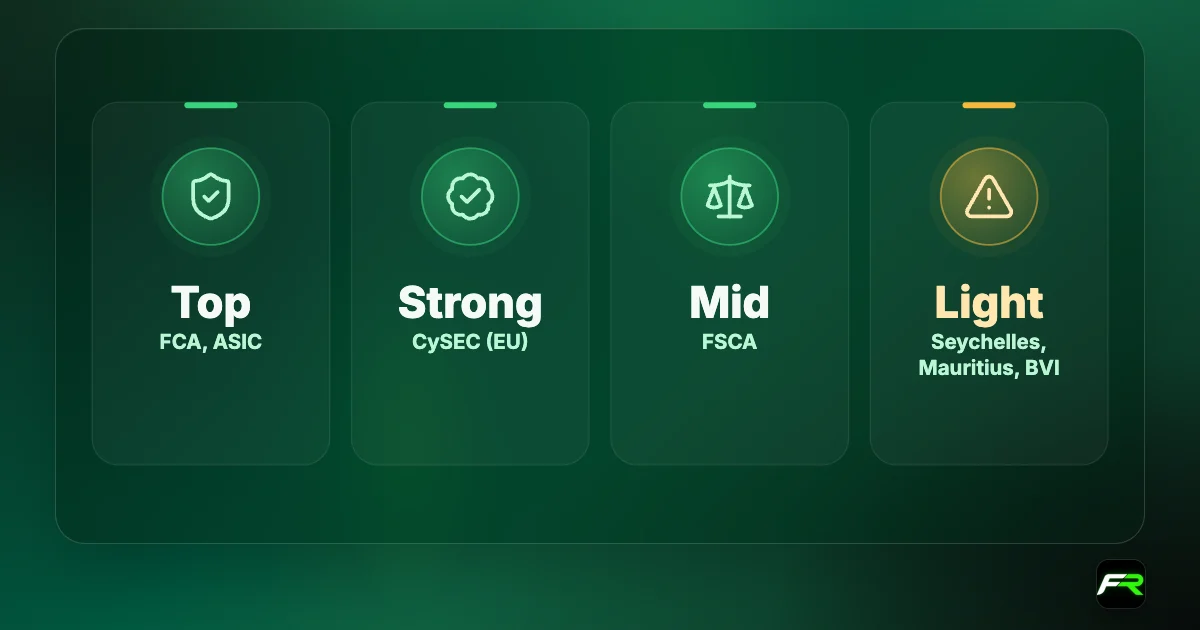
Regulation is the first filter, not an optional extra. The key question is which legal entity you will actually trade under. A firm might advertise FCA or ASIC licensing prominently, but clients in Thailand are often placed under an offshore entity licensed by the FSA of Seychelles or the IFSC of Belize. Those are legitimate regulators, but they operate with looser capital requirements and weaker client fund rules than their Tier-1 counterparts. Know which entity holds your money.
A Tier-1 license (FCA, ASIC, CySEC, MAS) demands strict client fund segregation, negative balance protection, and regular audits. Tier-2 and Tier-3 frameworks vary considerably. The Thai SEC register can confirm which firms hold any local authorization, though the list of domestically licensed retail forex entities remains short.
Trading Costs: Spreads, Commissions, and Swaps
The advertised spread is rarely the actual cost per trade. Calculate everything together:
- Spread-only accounts (e.g., XM Standard, Exness Standard): The spread is your only transaction cost. Simpler to budget, but typically wider than raw-priced tiers.
- Raw spread plus commission (e.g., IC Markets Raw, Pepperstone Razor): Much tighter pricing with a flat per-lot charge. Better value at higher volumes.
- Overnight financing: Positions held past the daily rollover attract a credit or charge. Exness waives this on many instruments. XM and several others offer interest-free Islamic accounts.
- Inactivity charges: A number of firms bill monthly after an extended period of no activity. Pepperstone and Exness do not impose these.
Platforms and Execution
MT4 remains the most widely used trading environment globally, running a huge ecosystem of expert advisors and custom indicators. MT5 adds more timeframes, order types, and broader asset coverage. cTrader is the preferred choice among many professional and algorithmic traders for its depth-of-market data and cleaner interface. TradingView integration, offered by Pepperstone among others, suits traders who work primarily through chart analysis and community-built indicators.
Execution quality matters as much as the software itself. Slippage, requotes, and latency eat into results faster than spreads on a bad day. Look for firms with publicly documented average fill speeds and transparent slippage data, especially if you trade around news events or run tight scalping rules.
Deposits and Withdrawals for Thai Accounts
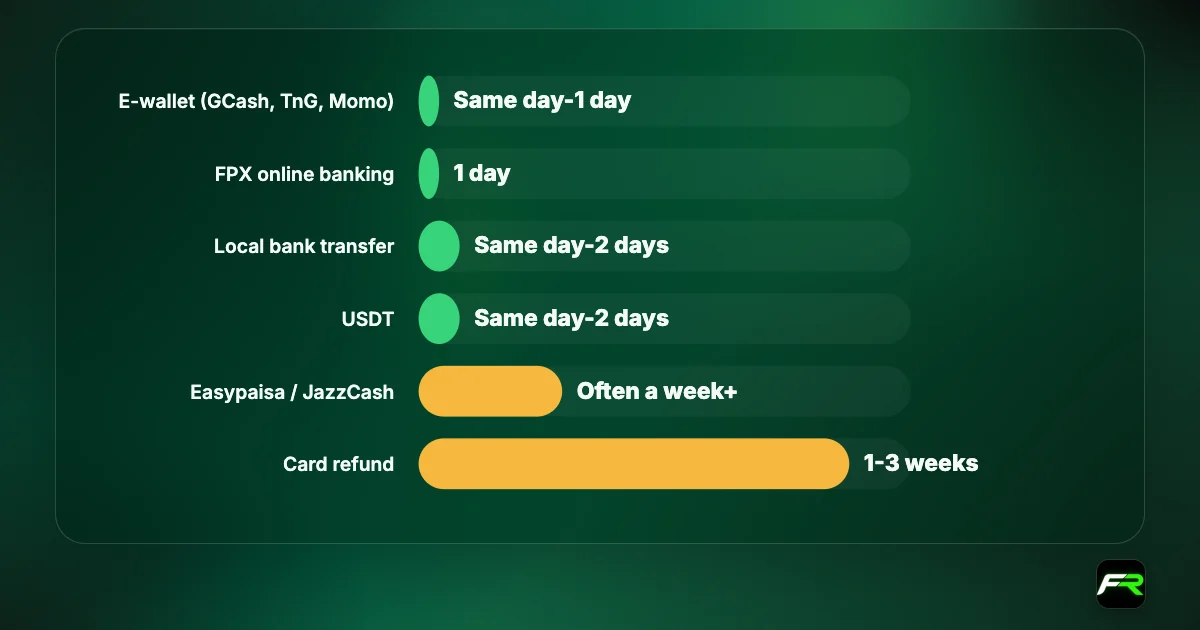
Funding methods that work well in Thailand include local bank transfers (Bangkok Bank, Kasikorn, SCB), international cards (Visa/Mastercard), e-wallets (Skrill, Neteller), and cryptocurrency, which is now accepted by Exness, LiteFinance, and a growing number of others. Processing times vary significantly across methods. Some firms clear internal withdrawals in under 30 minutes; standard bank wires can take two to five business days.
Confirm whether your chosen payment channel carries any fees. The broker usually does not charge, but your payment processor or bank often will. International wire withdrawals in particular can attract third-party fees of $15 to $30 per transaction.
Leverage and Risk Management
Accounts operating under offshore entities available to Thai residents often go up to 1:500 (IC Markets via FSA Seychelles) or even 1:2000 (Exness Standard tier). High leverage amplifies losses just as much as gains, and a single bad trade can eliminate an entire account balance at those ratios. The Thai SEC has been reviewing caps for retail clients, and the regional direction across Southeast Asia points firmly toward tighter limits.
Negative balance protection keeps you from owing more than you deposited. All firms on this list include it on their standard retail-tier accounts. Professional-grade accounts may not carry that safety net, so read the terms before upgrading.
Islamic Accounts
Around 12% of Thailand’s population is Muslim, with the largest concentration in the southern provinces. Most brokers here accommodate Sharia-compliant trading by removing overnight interest credits and charges from qualifying accounts. Exness, XM, IC Markets, Pepperstone, FP Markets, and LiteFinance all offer this option. The cost structure varies: some firms substitute a flat administrative holding fee, while others simply remove the swap entirely. Always check what applies to the specific instruments you plan to trade, not just the account type in general.
Promotions and Bonuses
Bonuses can trim the effective cost of getting started, but the terms deserve careful reading before a decision is made. The three most common structures are no-deposit credits (free trading funds with no initial payment), percentage-match incentives on qualifying deposits, and cashback or rebate arrangements.
- No-deposit credit: LiteFinance no-deposit bonus — funded trading access with no money down.
- Deposit match: XM $50 deposit bonus — extra funds credited on qualifying deposits.
- Welcome credit: IC Markets 30% welcome bonus — percentage-based credit on your first qualifying transfer.
- Ongoing promotions: Exness promotions, IUX promotion offers, and XM Group promo offers.
Bonus funds almost always carry a volume requirement before withdrawal. Check the lot turnover threshold, the expiry date, and which instruments count before treating any incentive as real cash.
Account Types at a Glance
| Account Type | Typical Spread | Commission | Best For |
| Standard / Micro | 1.0–1.6 pips | None | Beginners, smaller balances |
| Raw / ECN / Razor | 0.0–0.3 pips | $3–$7 per lot | Active traders, scalpers |
| Zero / Pro | 0.0 pips | $0.40–$3 per lot | High-frequency, cost-sensitive strategies |
| Islamic / No-Swap | Variable | Varies | Muslim traders, long-horizon positions |
| Cent | Variable | None | Very small capital, live environment testing |
| Demo | Live conditions | None | Practice, strategy validation |
| Professional | Raw or near-raw | Varies | Verified experienced traders |
Red Flags to Avoid When Picking a Broker
- No verifiable license or only obscure offshore registration (Marshall Islands, Vanuatu, Saint Vincent) with no Tier-1 anchor.
- Guaranteed profit promises or unrealistic return figures in any marketing material.
- Pressure to fund quickly or upgrade to a higher tier immediately after registration.
- Withdrawal delays that exceed the stated processing window with no explanation.
- No traceable physical address, no named leadership, and customer support limited to a single social media channel.
- Spreads that balloon sharply during news events without any prior disclosure of that policy.
- No demo account. Any credible firm provides one.
The Thai SEC maintains an investor alerts page listing unauthorized platforms. Check it at sec.or.th before sending any funds.
FAQs
Is forex trading legal for Thai residents?
Yes. Residents can trade forex legally through internationally licensed firms. The Bank of Thailand and SEC Thailand oversee the local framework. The core restriction is that Thai nationals may not open speculative positions on the Thai baht itself.
Do I need to pay tax on forex profits in Thailand?
Forex income is generally treated as personal income and taxed at the progressive rate, which rises to 35% at the top bracket. Anyone using offshore accounts should speak with a licensed Thai tax professional, as the practical reporting picture can vary.
Which regulator offers the strongest protection for Thai traders?
The FCA and ASIC are considered the gold standard for client fund protection. That said, most residents here are placed under a sub-entity, often in Seychelles or Belize, even when the parent group holds FCA or ASIC authorization. Always verify which specific legal entity your account sits under before funding.
Can Thai Muslims open a halal trading account?
Yes. Most major firms on this list offer interest-free account variants that comply with Sharia principles. Exness, XM, IC Markets, Pepperstone, and FP Markets all provide this option. Some apply a flat administrative holding fee in place of the overnight swap; others waive the charge entirely. Review the specific terms for the assets you trade, not just the headline account description.
What is the safest way to deposit funds as a Thai trader?
Local bank transfers leave a clear paper trail and are generally the most straightforward. E-wallets add a processing layer but tend to speed up the withdrawal side. Cryptocurrency transfers are fast and increasingly accepted. In all cases, withdraw through the same channel you used to deposit, as most firms require this for anti-money-laundering compliance.
What leverage levels are available to traders in Thailand?
It depends on the entity your account is held under. ASIC-regulated accounts cap out at 1:30 for major currency pairs. Accounts under offshore entities, Seychelles or IFSC, can go as high as 1:500 or beyond. The Thai SEC has been reviewing domestic leverage thresholds as of early 2026, though any changes will primarily affect locally supervised intermediaries first.
Are broker bonuses worth taking?
They can be, if the conditions are realistic for your trading volume. No-deposit credits let you test a firm with zero risk to your own capital, which has genuine value. Percentage-match incentives increase your margin but lock a portion of funds until a lot turnover target is met. Focus on whether that target is achievable within your normal pattern before treating the bonus figure as extra spending power.
FX Recap Verdict
For most traders in Thailand, Exness makes the strongest practical case: $10 to start, Thai-language support around the clock, competitive pricing, and local funding channels that actually work. Those with more capital who put execution and raw pricing first will be better served by IC Markets or Pepperstone. Anyone just starting out with very little to put in can open a live account with XM or IUX for as little as $1 to $5.
EA developers and traders who want flexibility across multiple account tiers should look at RoboForex or FP Markets. LiteFinance suits those drawn to signal-following without the overhead of a third-party service. For the widest market access and the most verifiable regulatory track record, IG Group sits apart from the rest.
The thread running through every firm on this list: credible licensing, transparent cost structures, and funding options that work for Thai bank accounts. Open with a demo, confirm which legal entity will hold your funds, and work through the full fee picture before going live. No firm removes all risk, but choosing carefully removes one of the most avoidable sources of loss.