IC Markets

 3:09
 2:39
 2:10
 2:18
 3:43
 8:42
Nvidia Reinstates Jensen Huang as CEO: What the 30% Share Rebound Means for the Dollar, the Yen and Gold
Nvidia's board voted to bring back its founder 11 days after he resigned. Wall Street surged, yet the dollar held its November gains.
 WriterNafish PialJournalist & FX WriterJournalist · forex news and market writing View profileAbout Nafish →

 ReportingJawad Bin GoniPR & ReporterPR and reporting · media enquiries and press coverage View profileAbout Jawad →

 EditingAbir KhanWriterWrites the guides · checks every figure against primary sources View profileAbout Abir →

 Fact-checking & riskJannatul FerdaushFact-Checker & Risk AnalystFact-checks every figure · risk analysis · Applied Statistics, University of Dhaka View profileAbout Jannatul →

 Trading reviewJowel RanaForex TraderForex trader · reviews guides from a trader's view View profileAbout Jowel →

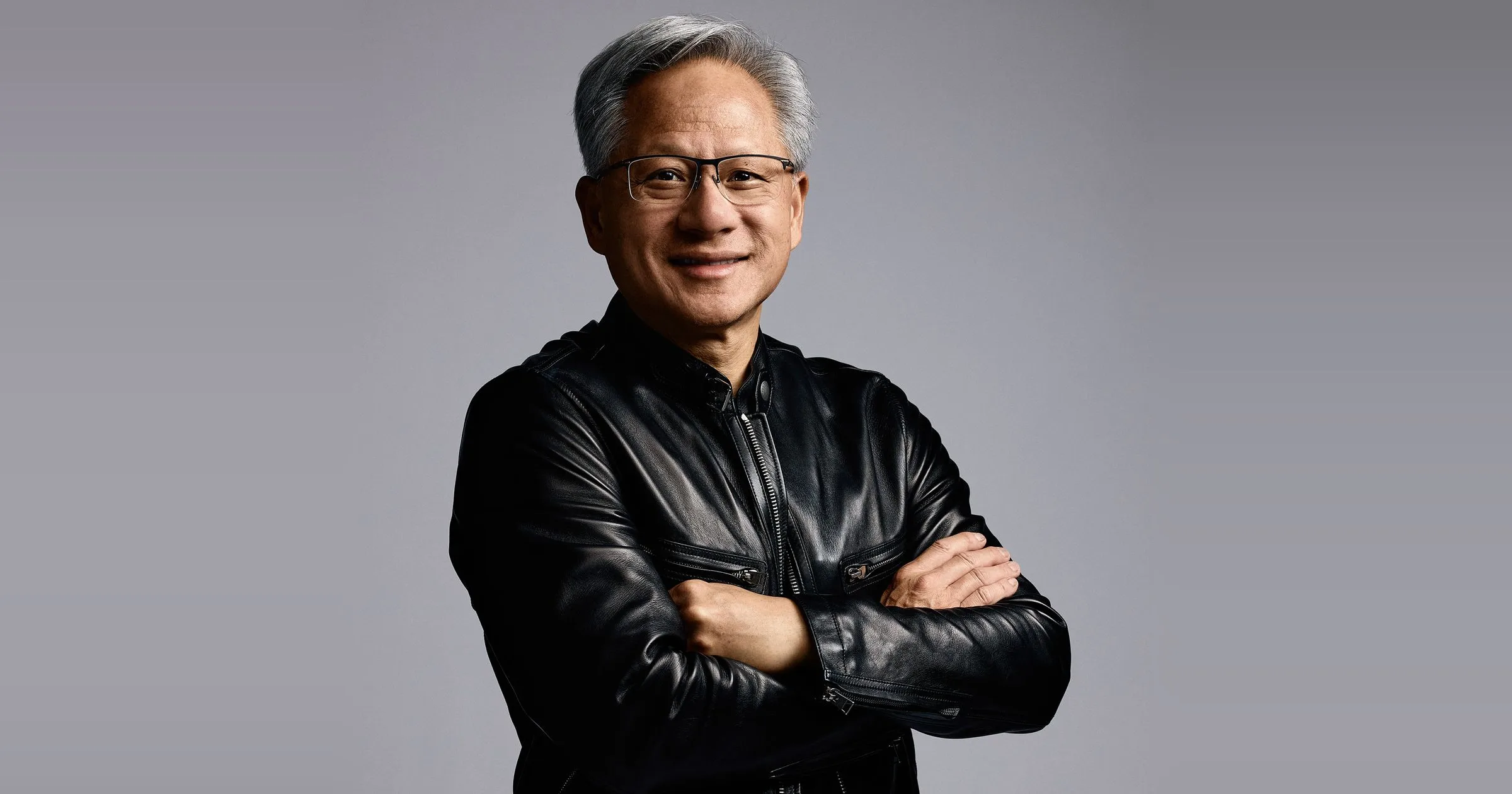
Jensen Huang is back in charge of Nvidia. The company said on Monday 23 November that its board had reinstated him as President and Chief Executive Officer and as a board member, effective immediately. The board voted unanimously, Nvidia said, after a series of discussions and meetings with Mr Huang, after which it was satisfied with his candour and his ability to lead the company.
The decision reverses a move made only 11 days earlier. On 12 November Nvidia announced that Mr Huang had resigned all three roles with immediate effect, gave no reason, and named its finance chief, Colette Kress, as interim CEO. Nvidia's shares then fell sharply. They rebounded on Monday: Al Jazeera reported a jump of more than 33% as US markets opened, and ABC News reported that the stock finished the day up more than 30%.
For currency traders the story is less about one company than about risk appetite. Nvidia is the largest weight in the main US stock indices, and its fortunes now steer global technology shares, Asian chip markets and the currencies tied to them. Here is what changed, what Nvidia itself has said, and what it means for the dollar, the yen, the Australian dollar and gold.
| Nvidia revenue outlook (Nvidia) | $130.0bn ±3% for Q4 fiscal 2027 (Q3 fiscal 2027 $115.8bn) |
|---|---|
| AUD/USD (ECB reference rate) | 0.6617 on 23 November, lowest since December 2025 (12 November 0.6821) |
| USD/JPY (ECB reference rate) | 159.07 on 23 November (12 November 159.70) |
| 10-year Treasury yield (US Treasury) | 4.92% on 23 November (20 November 4.92%) |
What Nvidia said, in its own words
Nvidia's statement on Monday is short, and its wording matters because so much of the coverage has gone beyond it. The board said it "received input from senior levels of the United States government" and that, based on that input, it is "confident that Mr. Huang's reinstatement poses no national security risk."
The statement also refers to "recent reporting that Mr. Huang has been the target of a foreign intelligence effort." In response, the board formed a committee made up only of independent directors, which hired independent counsel. Nvidia says that investigation "will proceed to conclusion", that Mr Huang fully supports it, and that the company will keep cooperating with ongoing government investigations and inquiries. It is also starting a search for a Chief Compliance Officer who will report to the board's Nominating and Corporate Governance Committee.
Two other changes from the past fortnight stay in place. Harvey C. Jones, named the board's first-ever Chair on 12 November, remains Chair. On 17 November the board set up a National Security and Export Control Oversight Committee, chaired by Suzanne Nora Johnson with Stephen C. Neal and John O. Dabiri, to oversee export control compliance and global trade risk. Ms Kress returns to her role as Chief Financial Officer.
FX Recap reports only what Nvidia and official bodies have confirmed. Press reports about the reasons for the resignation have not been confirmed by Nvidia, and we do not repeat them here.
The White House role and the questions still open
The government's part in the decision is unusual for a listed company. President Donald Trump welcomed it on Truth Social, writing, as quoted by Al Jazeera, that "The United States Government has no reason to believe that Jensen's return to NVIDIA poses any risk to National Security." ABC News reported that he told CNBC: "I spoke to them, let me put it that way. And I convinced them."
Not everyone in Washington agrees. Senator Elizabeth Warren wrote on X, according to Al Jazeera, that the decision "does not change the fact that Huang and NVIDIA still owe Congress answers." ABC News reported that Mr Huang is still due to speak to lawmakers next week. Neither Nvidia's statements nor the committees involved have set out the full scope of those inquiries publicly, so traders should treat any headline from them as a possible source of fresh volatility.
The investigation by Nvidia's independent directors is the other open item. The company has not said when it will finish or whether its findings will be published. A clean result would remove the last cloud over the reinstatement; anything else could bring the leadership question back.
Why one company moves currency markets
Nvidia's latest results show why investors care so much. For the quarter to 25 October, the company reported revenue of $115.8 billion, up 103% on a year earlier, of which $107.6 billion came from its data centre business. It expects about $130.0 billion in the current quarter, plus or minus 3%, and says that outlook assumes no data centre compute revenue from China.
A company of that size sets the tone for the whole AI trade. ABC News, citing Reuters, reported that the S&P 500 closed up 4.7% on Monday and the Nasdaq Composite up 6.5%. In Asia on Tuesday, Reuters-attributed figures in the same report showed Japan's Nikkei up 4.5% as Tokyo returned from a holiday, South Korea's KOSPI up 7.5% and Taiwan's market up 9.1%. These are reported market moves, not figures FX Recap measured.
Moves like these usually help the currencies of countries that sell chips and raw materials to the AI boom, such as the Australian dollar and the Korean won and Taiwan dollar, and weigh on safe havens like the Japanese yen and Swiss franc. This time the currency reaction was muted. ABC News reported the Australian dollar near 66.3 US cents through Tuesday's Asian session, little changed, and quoted Reuters saying that bets on further Federal Reserve tightening lifted Treasury yields and the dollar.
What the official rates show
The European Central Bank's reference rates give a clean before-and-after across the 11 days Mr Huang was away. The ECB sets them at about 14:15 Frankfurt time each working day, before Wall Street opens, so Monday's rates show where currencies stood going into the US session rather than the reaction to the share rally. Gold comes from our daily gold-api.com readings.
| Market | Change, 12 to 23 Nov | 12 Nov | Latest |
|---|---|---|---|
| EUR/USD | -1.28% | 1.1081 | 1.0939 (23 Nov) |
| GBP/USD | -1.37% | 1.3256 | 1.3074 (23 Nov) |
| USD/JPY | -0.39% | 159.70 | 159.07 (23 Nov) |
| AUD/USD | -2.99% | 0.6821 | 0.6617 (23 Nov) |
| USD/CAD | +0.79% | 1.4249 | 1.4362 (23 Nov) |
| USD/CHF | +0.79% | 0.8331 | 0.8397 (23 Nov) |
| Spot gold | -8.51% | $3,978.80 | $3,640.10 (24 Nov) |
The dollar gained against every major currency except the yen over the period, and the Australian dollar fell furthest, to 0.6617, its lowest reference rate since 19 December 2025. That pattern fits the Fed story better than the Nvidia one: the minutes of the Fed's October meeting, released on 18 November, showed almost all officials expecting further tightening, and higher US rates support the dollar whatever happens to one share.
Bond yields barely moved on the day itself. The US Treasury's par yield curve put the 2-year yield at 4.63% and the 10-year at 4.92% on Monday, both unchanged from Friday, so the share rally did not change the bond market's view of the Fed. Gold, which fell 8.5% between the two dates, rose 1.4% between our Monday and Tuesday morning readings to $3,640.10.
AUD/USD levels to watch
The Australian dollar is the major currency most exposed to a change in global risk appetite and to Asian chip demand, and it reaches Australian October inflation data on Wednesday at an 11-month low. These levels come from ECB reference rates, one a day, so they mark daily fixes rather than intraday highs and lows.
| Level | Why it matters |
|---|---|
| 0.7033 | 28 Oct reference-rate swing high, top of the 20-day range |
| 0.6874 | 20-day average of reference rates |
| 0.6821 | 12 Nov rate, the day Nvidia announced the resignation |
| 0.6666 | 20 Nov rate, Friday's close |
| 0.6617 | 23 Nov rate, lowest since December 2025 |
| 0.6602 | 19 Dec 2025 rate, the next reference below |
If the tech rally lifts risk appetite for more than a day, the first test for AUD/USD is a move back above 0.6666 and then the 12 November level at 0.6821. A fix below 0.6602 would take the pair to levels last seen in late 2025. Daily levels are on our AUD/USD analysis page.
What it means for traders
A single company headline rarely sets the direction of a currency for long. The Fed, inflation data and bond yields do. Keep these points in mind this week:
- Wednesday 25 November matters more than Monday's rally. Australia publishes October CPI at 00:30 UTC, and the US Bureau of Economic Analysis releases October personal consumption expenditures (PCE) inflation and the second estimate of third-quarter GDP at 13:30 UTC.
- Watch whether stocks hold their gains. A rally that fades would hand the yen and the Swiss franc their usual safe-haven support; one that holds should ease the pressure on the Australian dollar.
- Headline risk has not gone away. The independent board investigation, government inquiries and next week's hearings with lawmakers could all move Nvidia and the wider tech market again.
- Thin markets exaggerate moves. US markets close on Thursday for Thanksgiving, and the Fed's pre-meeting blackout starts on Saturday 28 November, before the 9 December decision.
- For yen pairs, our USD/JPY analysis has the daily levels, and the gold analysis covers the metal's rebound.
Days like Monday can turn quickly, and leverage magnifies losses as well as gains. Only trade money you can afford to lose. This is news and education, not a recommendation to buy or sell any share, currency or commodity.
Company facts are from Nvidia's press releases of 12, 17 and 23 November 2026. Share and index moves are as reported by Al Jazeera and ABC News (citing Reuters). Currency rates are ECB euro reference rates (GBP/USD, USD/JPY, AUD/USD, USD/CAD and USD/CHF derived from them). Gold readings are from gold-api.com, logged once a day by FX Recap. Treasury yields are from the US Treasury's daily par yield curve.
Cite this guide
FX Recap, "Nvidia Reinstates Jensen Huang as CEO: What the 30% Share Rebound Means for the Dollar, the Yen and Gold", updated 24 November 2026, https://fxrecap.com/forex-news/top-stories/nvidia-reinstates-jensen-huang-ceo-dollar-yen-gold
Free to quote with a link. Journalists: data and comment in our press room.
Frequently asked
Is Jensen Huang the CEO of Nvidia again?
Yes. Nvidia said on 23 November 2026 that its board voted unanimously to reinstate Jensen Huang as President and CEO and as a board member, effective immediately, 11 days after he resigned on 12 November.
Why was Jensen Huang reinstated?
Nvidia said the board was satisfied with his candour and ability to lead after meetings with him, and that input from senior levels of the US government left it confident his return poses no national security risk. An independent board committee's investigation continues.
How did forex markets react to Nvidia's CEO news?
Less than stocks did. ABC News reported the Australian dollar little changed near 66.3 US cents on Tuesday, with Fed tightening bets keeping the dollar firm. ECB reference rates show the dollar up against most majors since 12 November.
Who ran Nvidia while Jensen Huang was away?
Colette Kress, Nvidia's Chief Financial Officer, served as interim CEO from 12 to 23 November 2026 while keeping her CFO role. Harvey C. Jones became the board's first Chair and remains in that role.
Sources: Nvidia: Board Reinstates Jensen Huang as President, CEO and Board Director (23 Nov 2026) · Nvidia: NVIDIA Announces CEO Transition (12 Nov 2026) · Nvidia: Financial Results for Third Quarter Fiscal 2027 · European Central Bank: euro foreign exchange reference rates · Nvidia: Board Establishes National Security and Export Control Oversight Committee (17 Nov 2026) · US Treasury: daily par yield curve rates · gold-api.com: spot gold price (XAU) · Al Jazeera: Nvidia board reinstates Jensen Huang as CEO (reported context) · ABC News: markets live blog, 24 Nov 2026 (reported context) · Federal Reserve: Minutes of the FOMC, October 27-28, 2026
The team behind this guide
Reported, written, edited and checked by five FX Recap specialists
Every guide is written, fact-checked and edited before it goes live, and updated when the facts change. Spotted an error? Tell us.