IC Markets




































Fed Beige Book: Oil Costs Spread Through Prices While Hiring Stalls
Higher oil prices showed up in every district report, three districts saw robust price growth and most saw flat jobs, ahead of the 28 October decision.
 WriterAbir KhanWriterWrites the guides · checks every figure against primary sources View profileAbout Abir →
 Market analysisTanbir Habib RiyadForex & Crypto AnalystForex and crypto analyst · technical and fundamental analysis View profileAbout Tanbir →
 Fact-checking & riskJannatul FerdaushFact-Checker & Risk AnalystFact-checks every figure · risk analysis · Applied Statistics, University of Dhaka View profileAbout Jannatul →
 Trading reviewJowel RanaCo-Founder & Forex TraderCo-founder · forex trader · reviews guides from a trader's view View profileAbout Jowel →
 Final approvalRanjan NiskrityFounder, Owner & Forex TraderFounder and owner · forex trader · signs off every guide View profileAbout Ranjan →
Businesses across the United States are paying more for fuel and passing it on, but they are not hiring. That is the message of the Federal Reserve's latest Beige Book, published on Wednesday 14 October. The report gathers comments from business contacts in all 12 Federal Reserve districts, and this edition says plainly that "higher oil prices permeated all District reports".
The Beige Book is qualitative. It does not forecast and it is not a statement of Fed policy, but officials read it before every meeting, and this one lands two weeks before the Federal Open Market Committee decides on rates on 28 October. Its mix of rising price pressure alongside a stalled labour market is an awkward combination for a central bank that raised rates in September.
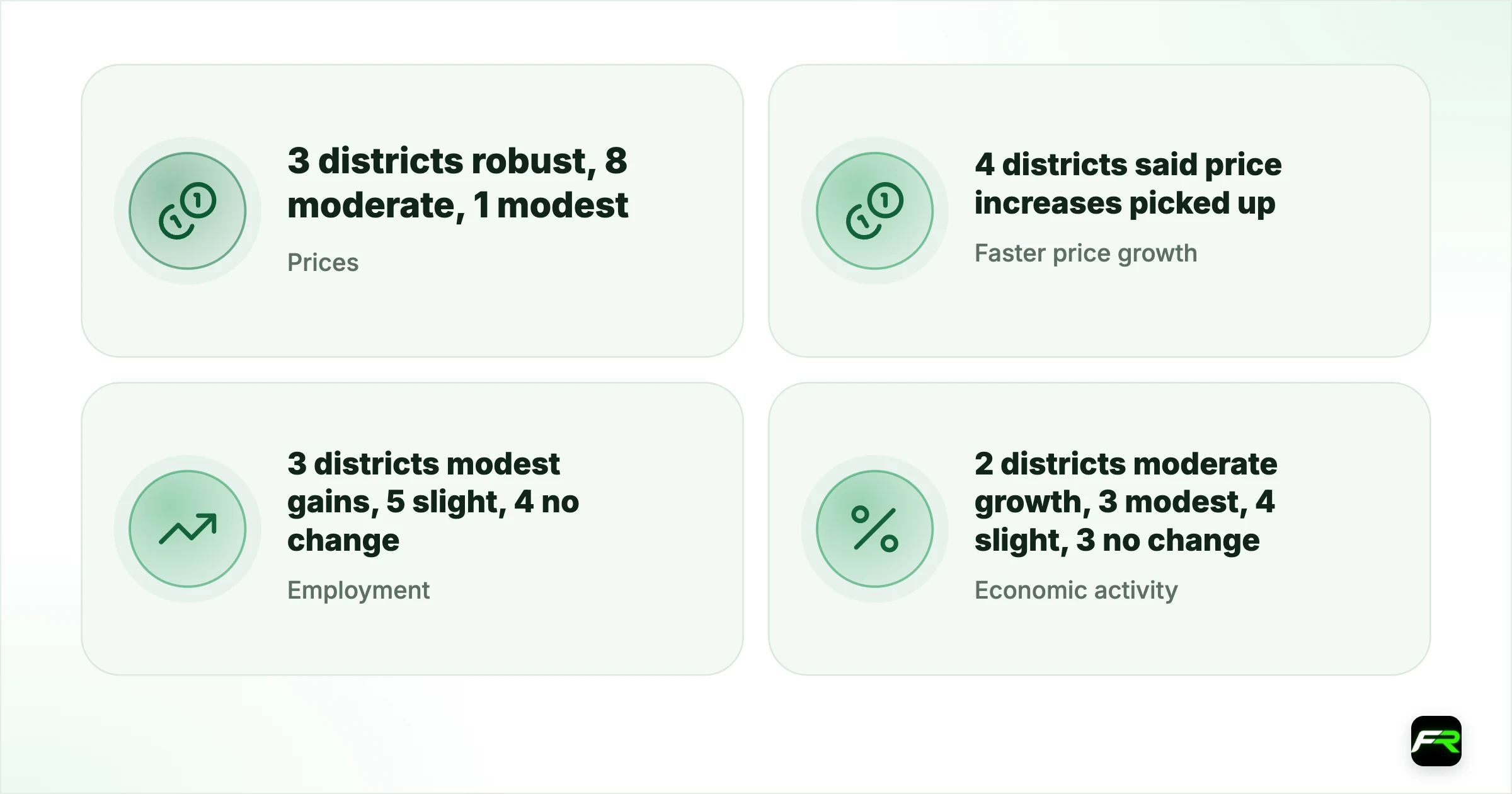
| Prices | 3 districts robust, 8 moderate, 1 modest |
|---|---|
| Faster price growth | 4 districts said price increases picked up |
| Employment | 3 districts modest gains, 5 slight, 4 no change |
| Economic activity | 2 districts moderate growth, 3 modest, 4 slight, 3 no change |
| Published | 14 October 2026, prepared at the Philadelphia Fed |
| Information collected | On or before 5 October 2026 |
| Next Beige Book | 25 November 2026 |
Growth: slight, and led by factories
Activity was soft but not shrinking. Of the 12 districts, two reported moderate growth, three modest growth, four slight growth and three no significant change. Manufacturing was the bright spot. Dallas reported "robust, broad-based growth" in manufacturing, and six more districts said factories grew at a modest to moderate pace. Other sectors showed little growth.
Consumers are holding back. Most districts reported little or no change in overall spending, and auto dealers described flat to modestly lower sales in five of the six districts that reported on cars. Over half of the districts said spending was driven by high-income households. Even in Dallas, where retailers did well, the report quoted "some reports of lower-income customers being more cautious with spending". Three districts, Boston, Minneapolis and San Francisco, noted fewer sales to Canadian tourists.
Firms still expect growth in the coming months, but only slight growth, weighted towards manufacturing and, in the report's words, "burdened by persistent uncertainties".
District notes fill in the detail. Richmond said consumer spending stayed solid despite trade-offs forced by higher gas prices, and its hotels reported strong occupancy. Chicago described activity as flat, with financial conditions tightening modestly and farm income expectations for 2026 down slightly. Minneapolis reported a slight fall in consumer spending, while San Francisco said retail sales softened somewhat and residential real estate weakened slightly. Kansas City summed up its region as subdued conditions with pockets of strong demand.
Jobs: flat, with AI starting to show
Employment barely moved. Three districts described modest increases, five slight increases and four no significant change, and the summary concluded that "labor market conditions were little changed". Labour supply was generally adequate, although shortages persisted for specialised, technical and skilled-trade workers.
One line stands out for the longer term. Five districts reported that some firms had cut staff through attrition, delayed hiring or expected to create fewer jobs after raising productivity with investment in artificial intelligence. It is anecdotal evidence, but it suggests some employers are choosing technology over new hires at a time when demand is soft.
Wages are rising, partly because of inflation. Five districts described moderate wage growth, four modest and two slight. Several said inflation had brought "additional wage pressure" through cost-of-living demands, and Boston staffing firms said workers were looking for new jobs because pay rises had lagged inflation. That is the second-round effect central bankers watch for: fuel costs feeding into wage demands, and wages into service prices.
Prices: fuel surcharges across the supply chain
Price growth was the strongest part of the report. Three districts called it robust and eight moderate; three of those eight said input price pressures were intensifying, if not already growing robustly. Only one district reported modest price growth, and four said the pace of increases had picked up since the last report in early September.
| District | Activity | What contacts said about prices |
|---|---|---|
| Dallas | Expanded moderately | Price growth was strong |
| St. Louis | Increased modestly | Prices rose at a robust pace, increases widespread |
| Cleveland | Increased modestly | Selling prices grew robustly |
| New York | Increased slightly | Selling prices at the high end of moderate |
| Boston | Expanded slightly | Modest overall; heating oil up sharply |
| Kansas City | Held steady | Diesel and shipping costs a top concern |
Source: Federal Reserve Beige Book, October 2026, highlights by district.
Fuel is the common thread. Firms reported elevated diesel prices and said fuel surcharges were passing higher costs along the supply chain. Contacts also cited pressure from other commodities, tariffs and insurance. Consumer-facing businesses described tighter margins, because price-sensitive customers are resisting increases; they are responding with selective price rises, targeted discounts and menu changes. Looking ahead, firms in several districts expect prices to rise further as existing contracts expire and hedges are renegotiated.
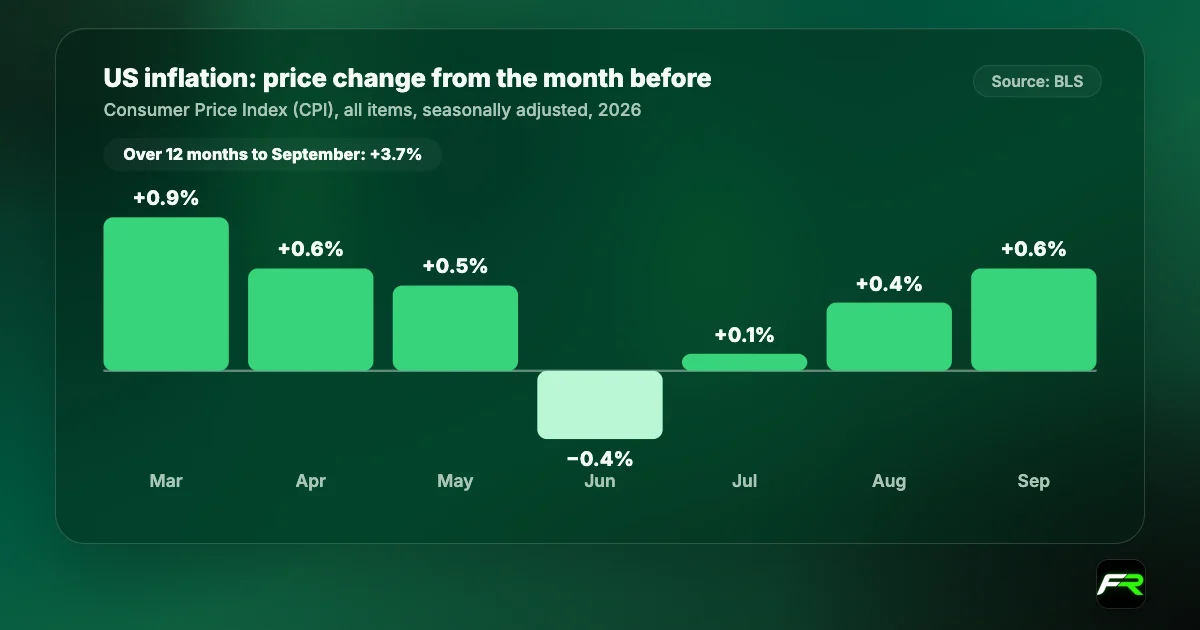
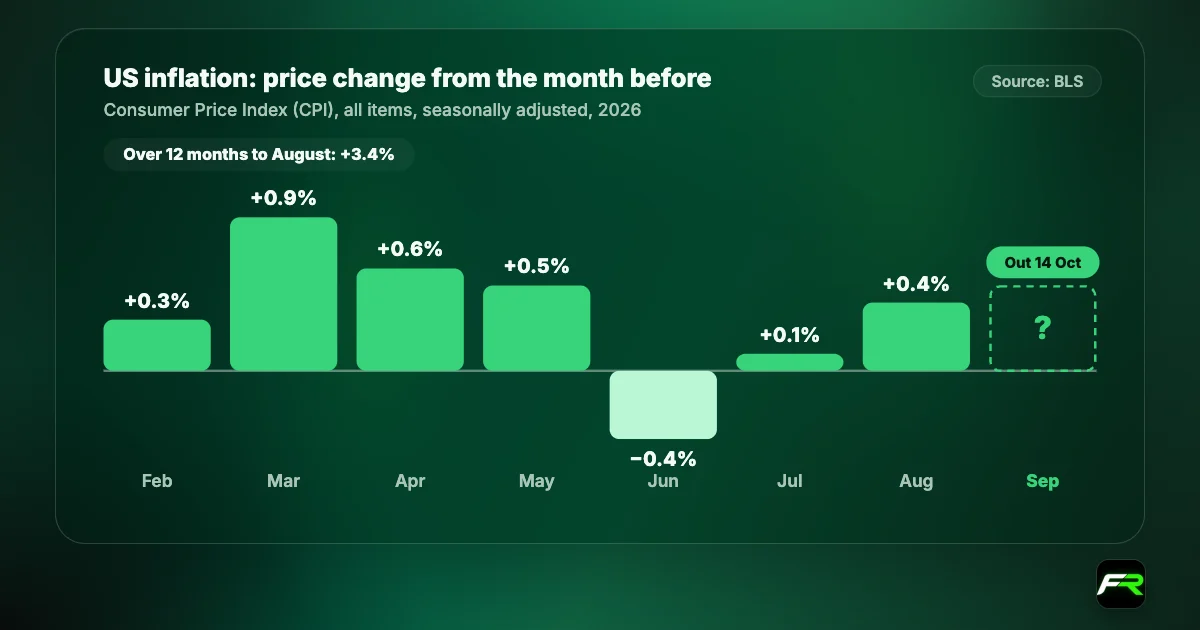
That fits the official data. The BLS reported on the same day that consumer prices rose 0.6% in September and 3.7% over the year, with gasoline up 9.1% in the month. Our US CPI story has the details and the market reaction.
What the Beige Book means for the dollar
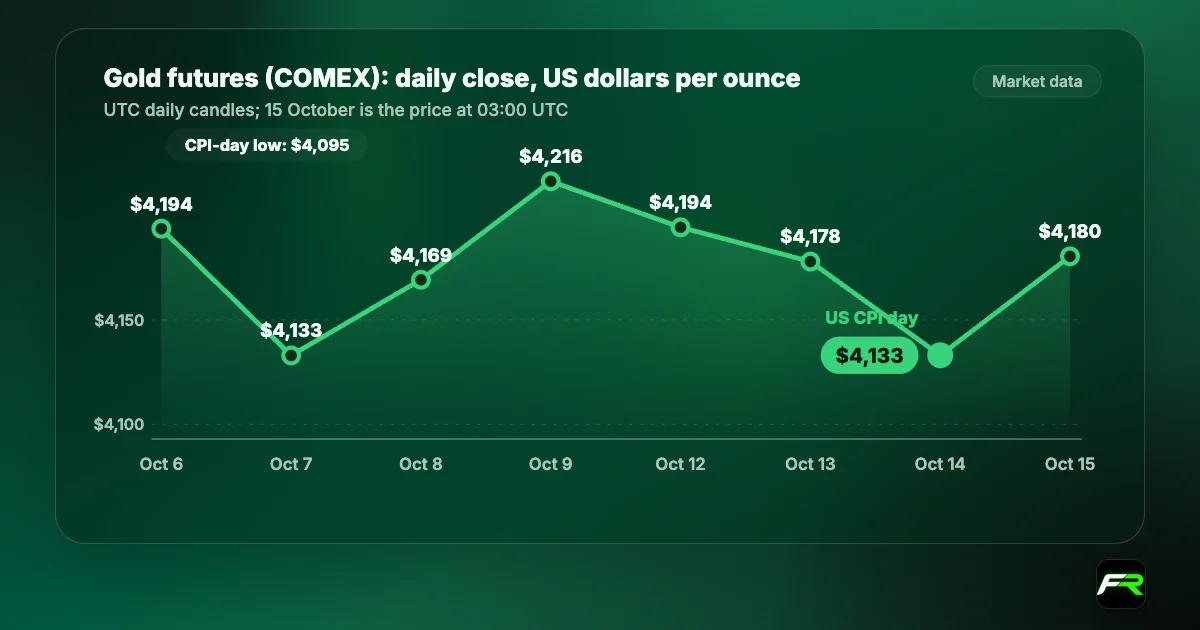
For currency traders, the report adds to the case on both sides of the Fed debate. Officials who want another hike can point to robust price growth, accelerating input costs and early signs of wage demands linked to inflation. Those who want to wait can point to flat employment, cautious consumers and slight growth outside manufacturing. Neither camp gets a clear win, which helps explain why the dollar struggled to hold its post-CPI rally on Wednesday.
The bigger risk for the dollar is a shift in the Fed's tone at the 28 October meeting. If officials stress the price side of the Beige Book, short-dated Treasury yields could rise further and support the currency. Should they dwell on the stalled labour market instead, markets may start to price a pause, and the dollar's gains of the past two months would be exposed.
- Mark 28 October in your economic calendar; the decision is the next major event for every dollar pair.
- Watch weekly jobless claims and other labour data to confirm whether hiring really has stalled.
- Keep an eye on oil. Every district mentioned fuel costs, so a sustained move in crude feeds straight into the Fed's thinking.
- Size positions so a surprise from the Fed costs no more than 1% to 2% of your account, using the position size calculator.
A trader expecting a hawkish Fed buys USD/JPY at 157.80 with a stop at 157.20, a 60-pip risk. On a mini lot (10,000 units) each pip is worth about $0.63 at these levels, so the stop risks about $38. Doubling the size to make the trade feel worthwhile would double the risk to about $76, and a surprise from the Fed could gap through the stop. Keeping size small is the only protection against an outcome the Beige Book cannot predict.
Central bank decisions can move currencies sharply in seconds. Leverage magnifies those moves, so trade only with money you can afford to lose.
All Beige Book findings and quotes are from the Federal Reserve's October 2026 Beige Book, which summarises comments from contacts outside the Fed and is not a statement of Fed policy. Inflation data is from the US Bureau of Labor Statistics. The interpretation for the dollar is FX Recap's own. This is news, not investment advice.
Frequently asked
What is the Fed Beige Book?
A summary of economic conditions in the 12 Federal Reserve districts, based on comments from businesses and other contacts. It is published eight times a year, ahead of Fed policy meetings, and is not a statement of Fed policy.
What did the October 2026 Beige Book say about prices?
Three districts described price growth as robust and eight as moderate, and four said price increases had picked up. Higher oil prices appeared in every district's report, with fuel surcharges passing costs through the supply chain.
What did the October 2026 Beige Book say about jobs?
Employment was little changed. Three districts saw modest increases, five slight increases and four no change. Five districts said some firms had reduced or delayed hiring after investing in AI.
When is the next Beige Book?
The Federal Reserve lists the next edition for 25 November 2026. The next rate decision is on 28 October.
Sources: Federal Reserve: Beige Book, October 2026, National Summary · Federal Reserve: Beige Book publication schedule · US Bureau of Labor Statistics: Consumer Price Index, September 2026 · Federal Reserve: FOMC meeting calendar
The team behind this guide
Researched, checked and approved by five forex specialists
Every guide is written, fact-checked and edited before it goes live, and updated when the facts change. Spotted an error? Tell us.