Best Forex Broker in Japan (2026)
Japan’s forex market is one of the most active in the world, with USD/JPY alone accounting for over 14% of global daily trading volume. The JFSA enforces some of the strictest retail trading regulations anywhere, including a 1:25 leverage cap and mandatory client fund segregation. This page covers the top brokers available to Japan-based traders, how the regulatory framework protects you, and what to look for before opening an account.

Exness

IC Markets

LiteFinance

FP Markets

AvaTrade

RoboForex
Disclosure: "Visit Broker" links are partner (affiliate) links. FX Recap may earn a commission at no cost to you. Trading involves significant risk of loss. T&Cs apply.
Japan is one of the most active retail forex trading countries in the world. The Japanese yen sits on one side of 16.8% of all global foreign exchange transactions, according to the Bank for International Settlements’ 2025 Triennial Survey. That places JPY third globally, behind only the US dollar (89.2%) and the euro (28.9%). Daily turnover in Japan’s forex market averaged $440.2 billion in April 2025, a 1.8% rise from the figure recorded three years earlier.
USD/JPY is the second most-traded currency pair on earth at 14.3% of global daily volume. For traders based in Japan, it dominates everything. Data from the Tokyo Foreign Exchange Market Committee for October 2024 shows USD/JPY alone accounted for 62.76% of all spot transaction share in Japan’s domestic market.
With that volume of activity, it’s no surprise that dozens of brokers compete for Japanese clients. The challenge isn’t finding one, it’s identifying the right one. Regulations here are strict, leverage is capped lower than most major markets, and a handful of domestic brokers hold the bulk of retail market share. At the same time, well-regulated international names offer tools, market access, and account types that local Japanese platforms simply can’t match.
FX Recap has reviewed the market top to bottom. What follows covers the brokers worth your attention, how the JFSA regulatory framework actually works, what fees to watch, how leverage operates here, and the practical steps for getting started.
Top Forex Brokers in Japan at a Glance
The table below compares the brokers FX Recap covers in detail on this page. Spreads listed are typical averages and will vary with market conditions.
| Broker | Regulation | Min. Deposit | Avg. Spread EUR/USD | Platforms | Best For |
| IG Markets | FCA, ASIC, JFSA | $0 | 0.6 pips | IG Platform, MT4 | Overall / Research |
| IC Markets | ASIC, CySEC, FSA | $200 | 0.0 pips | MT4, MT5, cTrader | Low Cost / ECN |
| Pepperstone | FCA, ASIC, CySEC | $0 | 0.09 pips | MT4, MT5, cTrader | Speed / Execution |
| AvaTrade | ASIC, CySEC, FSCA, JFSA | $100 | 0.9 pips | MT4, MT5, AvaTradeGO | Beginners / Copy |
| OANDA | JFSA, FCA, NFA | $0 | 1.2 pips | OANDA Platform, MT4 | Transparency |
| FOREX.com | CFTC, NFA, FCA | $100 | 0.8 pips | MT4, MT5, Web | U.S. Pair Range |
| XM Group | ASIC, CySEC, IFSC | $5 | 1.6 pips | MT4, MT5 | Beginners / Bonuses |
| Hantec Markets | FCA, FSA Seychelles | $0 | 0.0 pips | MT4, MT5 | Tight Spreads |
| GMO Click | JFSA (Domestic) | ¥0 | 0.2 pips (USD/JPY) | GMO Platform | JPY Pairs / Local |
| DMM FX | JFSA (Domestic) | ¥0 | 0.2 pips (USD/JPY) | DMM Platform | JPY Pairs / Local |
Risk warning: CFDs and forex trading carry significant risk. Between 55% and 89% of retail accounts lose money on leveraged instruments. Make sure you understand the risks fully before depositing capital.
How Forex Regulation Works in Japan
Forex regulation in Japan is among the tightest anywhere in the world. The primary authority is the Financial Services Agency (FSA), also referred to as the JFSA. It operates under Japan’s Financial Instruments and Exchange Act (FIEA) and has direct oversight of every broker offering leveraged forex trading to Japanese residents.
Getting a JFSA license is not a quick process. The typical application takes around six months, during which the regulator vets the applicant thoroughly. There’s a ¥150,000 application fee, and capital requirements sit at either ¥10 million or ¥50 million depending on the permit type. These thresholds filter out undercapitalized operators before they can touch client money.
JFSA-licensed brokers must also hold membership in two self-regulatory organizations: the Financial Futures Association of Japan (FFAJ) and, depending on business scope, the Japan Securities Dealers Association (JSDA). Without FFAJ membership, even a fully licensed broker cannot legally offer margin forex trading in Japan. That dual-layer structure is what makes the Japanese regulatory framework genuinely rigorous rather than just paperwork.
Clients of JFSA-licensed brokers are covered by the Japan Investor Protection Fund (JIPF), which compensates traders up to ¥10 million per person if a broker becomes insolvent. Brokers are legally required to segregate client funds into trust accounts held at major Japanese banks, and must report client fund balances daily.
Key Protections for Traders Under JFSA Rules
- Client funds held in independent trust accounts at Tier-1 Japanese banks
- Daily reporting of client fund balances to the regulator
- Prohibition on using client funds for company operations or hedging
- Negative balance protection required (accounts cannot go below zero)
- Mandatory risk disclosure before account opening
- Strict advertising standards to prevent misleading claims
- JIPF compensation up to ¥10 million per client in insolvency scenarios
The FFAJ, JSDA and the SESC
Beyond the FSA itself, three other bodies shape how brokers operate in Japan. The FFAJ is the self-regulatory organization specifically for futures and forex businesses. Membership is compulsory for any firm offering margin forex trading to retail clients. The JSDA covers securities-related activities. The Securities and Exchange Surveillance Commission (SESC) handles market surveillance, investigates misconduct, and works alongside the FSA to enforce the Financial Instruments and Exchange Act. If a broker engages in market manipulation or misleads clients, the SESC conducts the investigation.
Trading with Offshore Brokers
Japanese residents can technically open accounts with international brokers that aren’t JFSA-registered, and many do so specifically to access leverage above the domestic 1:25 cap. However, trading with an unlicensed firm means you fall outside Japan’s investor protection framework entirely. If that broker fails or refuses a withdrawal, neither the JFSA nor the JIPF can intervene. The FSA has also periodically issued public warnings about specific unlicensed brokers operating in Japan. That doesn’t make offshore trading illegal for individuals, but it carries real risk that a JFSA-licensed account does not.
Leverage in Japan: The 1:25 Cap Explained
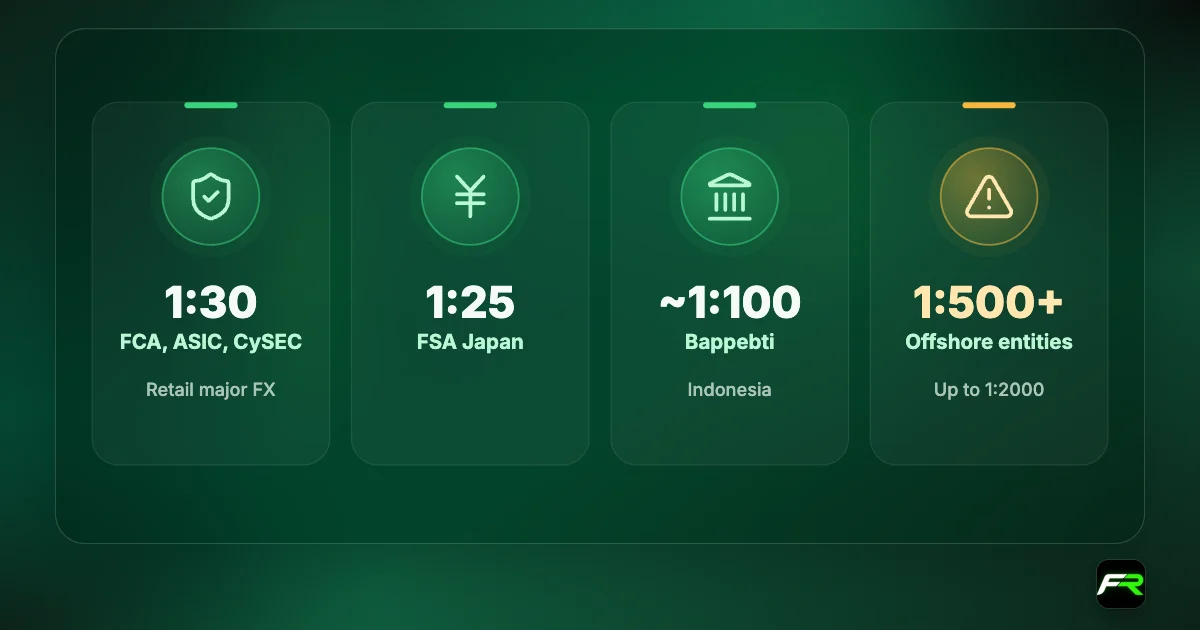
Japan’s retail forex leverage cap of 1:25 is among the lowest in any major regulated market. This wasn’t always the case. Following the 2008 Global Financial Crisis, the JFSA moved in two stages: first reducing the limit to 50:1, then tightening to 25:1. The stated aim was to reduce the scale of losses in volatile markets, particularly given Japan’s large population of household forex participants.
At 1:25, a ¥1,000,000 account can control positions up to ¥25,000,000. That’s still meaningful exposure for anyone managing risk actively, but it’s a real constraint compared to the 1:500 or higher ratios offered by some offshore brokers. The UK FCA and Australia’s ASIC both cap major pair leverage at 1:30 for retail clients, slightly above Japan’s level.
Corporate clients in Japan may apply for higher leverage by demonstrating strong capital reserves and documented risk management processes. That route exists but requires justification. The vast majority of individual traders operate at the standard 1:25.
| Jurisdiction | Max Retail Leverage | Regulator |
| Japan | 1:25 | JFSA |
| European Union | 1:30 (major pairs) | ESMA |
| United Kingdom | 1:30 (major pairs) | FCA |
| Australia | 1:30 (major pairs) | ASIC |
| United States | 1:50 | NFA / CFTC |
| Offshore (e.g. FSA Seychelles) | Up to 1:2000 | Various |
A proposal to further reduce retail leverage to 1:10 was discussed by JFSA regulators but scrapped following significant industry pushback. The 1:25 limit remains in force as of March 2026.
Broker Profiles: Detailed Reviews
1. IG Markets
IG is consistently ranked among the most trusted international brokers. It holds a JFSA license alongside regulatory authorizations from the FCA (UK), ASIC (Australia), and six other Tier-1 jurisdictions. Its Trust Score on BrokerNotes stands at 99, reflecting that breadth of oversight.
The IG proprietary web platform is its standout feature, built around research tools including Reuters and Morningstar analysis, integrated trading signals, and one of the most comprehensive charting suites in the retail market. Spreads on EUR/USD average around 0.6 pips with no commission on the standard account. MetaTrader 4 is available for those who prefer that environment.
Highlights:
- JFSA-licensed alongside FCA, ASIC, and six other Tier-1 regulators
- No minimum deposit required
- 70+ forex pairs including all major JPY crosses
- Reuters news feed and Morningstar analysis built into the platform
- Weekend forex trading available on select pairs
- ProRealTime advanced charting at no extra cost with 4+ trades per month
Watch out for:
- Standard account spreads are not the tightest in the market
- MT5 not available
2. IC Markets
IC Markets is one of the most popular brokers among active and algorithmic traders globally. It’s regulated by ASIC, CySEC, and FSA Seychelles. Its Raw Spread ECN accounts offer EUR/USD spreads starting from 0.0 pips with a commission of $3.50 per lot per side ($7 round turn), which ranks among the lowest all-in cost available for high-frequency traders.

Execution speeds average 40 milliseconds, and the broker provides MT4, MT5, and cTrader alongside a free VPS for automated strategies. Minimum deposit is $200. IC Markets doesn’t hold a JFSA license, so it operates for Japan-based traders under its ASIC and CySEC authorizations. Those who prioritize tight execution costs and platform flexibility over domestic JFSA coverage tend to favor this broker.

Highlights:
- Raw spreads from 0.0 pips (ECN/Raw account)
- Execution speed averaging 40ms
- MT4, MT5, and cTrader all available
- Free VPS for automated trading
- Over 60 forex pairs
Watch out for:
- No JFSA license (ASIC and CySEC regulated)
- $200 minimum deposit on Raw accounts
Detailed profile: IC Markets review on FX Recap.
Active promotion: IC Markets $30 welcome bonus (terms apply, confirm availability for your region).
3. Pepperstone
Pepperstone holds FCA, ASIC, CySEC, DFSA, SCB, and CMA authorizations. The broker built its name around execution quality and fast order processing, which matters for scalpers and day traders working in fast-moving JPY pairs. The Razor account delivers raw spreads from 0.09 pips on EUR/USD with a $7 per lot round-turn commission. No minimum deposit is required.
cTrader is available alongside MT4 and MT5, and Pepperstone has solid social trading integrations through DupliTrade and Myfxbook Autotrade. Customer support runs around the clock via live chat and email.
Highlights:
- FCA, ASIC, CySEC regulated
- No minimum deposit
- Raw spreads from 0.09 pips on Razor account
- MT4, MT5, cTrader all available
- DupliTrade and Myfxbook copy trading integrations
Watch out for:
- No JFSA license
- Inactivity fee after 12 months without trading activity
4. AvaTrade
AvaTrade is registered with multiple regulators including ASIC, CySEC, FSCA, and the JFSA. That JFSA registration is relevant for Japan-based traders. The broker is popular with newcomers due to its structured educational content, commission-free account structure, and the AvaTrade GO mobile app, which handles positions on the go without a steep learning curve.
Standard account spreads average around 0.9 pips on EUR/USD. Minimum deposit is $100. AvaTrade supports MT4, MT5, and the AvaOptions platform for traders who want forex options exposure. The AvaSocial copy trading feature is easy to navigate for those starting out with social trading strategies.
Highlights:
- JFSA-registered alongside ASIC and CySEC
- No commissions on standard accounts
- Strong educational content for newer traders
- MT4, MT5, and AvaOptions platform access
- AvaSocial copy trading
Watch out for:
- Inactivity fee kicks in after 3 months
- Spreads on standard accounts are wider than ECN alternatives
Detailed profile: AvaTrade review on FX Recap.
5. OANDA Japan
OANDA is one of the few international brokers with a genuine JFSA license and a physical presence in Japan. Its pricing model is fully transparent: no commissions, and spreads displayed in real time. The broker was founded in 1996 and has never faced a major compliance incident. That track record matters.
The OANDA proprietary web platform and mobile apps are clean and direct. MT4 is also supported. No minimum deposit is required, and OANDA’s fxTrade API opens the door for traders building systematic or algorithmic approaches. The focus here is reliability and pricing clarity rather than cutting-edge execution technology.
Highlights:
- JFSA-licensed with a physical Japan presence
- Zero minimum deposit
- Transparent pricing with no hidden charges
- Strong research tools and daily market commentary
- fxTrade API for systematic traders
Watch out for:
- Spreads are wider than ECN competitors for high-frequency use
- MT5 not available
Latest bonus: OANDA welcome bonus up to $1,000 (eligibility varies by account type and jurisdiction).
6. FOREX.com
FOREX.com operates under the GAIN Capital umbrella with CFTC, NFA, FCA, and other major regulatory licenses. The broker covers over 80 currency pairs, including a solid range of JPY crosses beyond the standard majors. The Standard account carries no commissions and spreads from around 0.8 pips on EUR/USD. A Direct Market Access (DMA) option is available for more active accounts at tighter spreads with commissions.
Both MT4 and MT5 are on offer. The web and desktop platforms have strong charting and integrated research. Minimum deposit is $100.
Highlights:
- Over 80 currency pairs including wide JPY cross coverage
- MT4 and MT5 available
- DMA account for active traders
- CFTC, NFA, and FCA regulated
Watch out for:
- No JFSA license
- Customer support quality reported as inconsistent by some users
7. XM Group
XM is one of the most widely used brokers globally for retail forex, particularly among those starting out. It’s regulated by ASIC, CySEC, and IFSC. The minimum deposit of $5 makes it accessible to traders who want to test a live account with very little capital at stake. MT4 and MT5 are available across all account types.
Spreads on the Micro and Standard accounts average around 1.6 pips on EUR/USD with no commissions. XM’s Zero account reduces this to 0.0 pips with a $3.50 per side commission. The broker is well known for its educational webinars, Japanese-language customer support, and occasional deposit bonuses (note: promotional offers vary by jurisdiction and may not apply under stricter regulatory frameworks).
Highlights:
- $5 minimum deposit
- MT4 and MT5 across all account types
- Japanese-language customer support
- Regular educational webinars
- Over 55 forex pairs
Watch out for:
- Inactivity fee after 90 days of no trading
- Standard account spreads are wider than ECN alternatives
- No JFSA license
Detailed profile: XM Group review on FX Recap.
Deposit bonus: XM $50 deposit bonus details and XM Group promotional offers (availability varies by jurisdiction, confirm terms before depositing).
Other Brokers Worth Considering
The ten brokers above cover the most widely used names in Japan’s market. Several other internationally regulated options are also accessible to Japan-based traders and suit specific needs. Below is a brief rundown with links to full FX Recap profiles where available.
Exness
Exness is regulated by the FCA, CySEC, and FSA Seychelles and has built a strong following across Asia. Tight spreads on major pairs, flexible account funding methods including local Asian payment options, and monthly transparency reports published on its website set it apart from many competitors.
FX Recap profile: Exness review on FX Recap.
See what’s available: Exness promotions and active bonuses.
FP Markets
FP Markets holds ASIC and CySEC licenses and is well regarded among active traders for its Raw ECN pricing and fast order execution. EUR/USD spreads on the Raw account average 0.0 pips with a $3 per side commission. MT4, MT5, and IRESS are all available. Minimum deposit is $100. FP Markets doesn’t hold a JFSA license but serves Japan-based traders under its ASIC entity.
FX Recap profile: FP Markets review on FX Recap.
LiteFinance
LiteFinance is regulated by CySEC and FSA Seychelles. The broker is known for copy trading functionality built directly into its platform, no-deposit bonus offers for new accounts, and MT4/MT5 support across all account types. Spreads on the standard account start from 1.8 pips on EUR/USD.
FX Recap profile: LiteFinance review on FX Recap.
New account offer: LiteFinance no deposit bonus (confirm current availability and terms before applying).
IUX Markets
IUX Markets is an emerging broker gaining ground in Southeast and East Asia. It offers standard and ECN account types, MT4 and MT5, and a fairly simple onboarding process. Regulation is through FSA Seychelles, which places it outside the JFSA framework for Japan-based traders. It may suit those who want a newer platform with a transparent fee structure, though the regulatory tier is lower than ASIC or FCA-licensed alternatives.
FX Recap profile: IUX Markets review on FX Recap.
Current promotions: IUX Markets promotional offers.
RoboForex
RoboForex is regulated by the IFSC in Belize and is popular for its cent accounts and high-leverage options outside the JFSA-restricted framework. Japan-based traders accessing RoboForex do so under the Belize entity, which carries a higher regulatory risk profile than ASIC, FCA, or CySEC-licensed alternatives. MT4, MT5, and proprietary platforms are available with a $10 minimum deposit. It’s best suited for traders who have a specific reason to use it and fully understand the offshore regulatory trade-off.
FX Recap profile: RoboForex review on FX Recap.
Eightcap
Eightcap holds ASIC and SCB (Bahamas) authorization and is well regarded for execution quality and competitive fees. It’s accessible to Japan-based traders through its ASIC entity. The broker runs periodic demo trading contests, which some traders use as a pressure-tested way to evaluate a platform’s behavior without committing live funds.
Demo contest details: Eightcap traders demo contest (a useful way to assess the platform before going live).
Types of Forex Trading Accounts
Brokers serving Japan-based traders typically offer several account structures. The central distinction is between commission-free standard accounts (where costs are built into the spread) and raw or ECN accounts (where spreads are tight but a per-lot commission applies).
| Account Type | Typical Spread | Commission | Best For |
| Standard / Classic | From 1.0 pip | None | Casual / part-time traders |
| Raw / ECN / Pro | From 0.0 pips | $3-7 per lot | Active & professional traders |
| Swap-Free (Islamic) | Variable | None or fixed fee | Traders avoiding swap costs |
| Demo Account | Live market prices | None | Strategy testing, newcomers |
| Cent Account | Variable | None | Ultra-low capital beginners |
Swap-free accounts are designed for traders who don’t want overnight rollover charges, often for religious reasons. Not all brokers offer these by default in Japan. If a swap-free setup is important to you, confirm with the broker directly before funding.
A demo account is genuinely worth using before going live, even for experienced traders moving to a new platform. Market data replicates live prices at most brokers, so you can assess execution behavior and spread patterns before real capital is involved.
Spreads, Commissions and Trading Costs
The total cost of any trade is made up of several components. Spreads and commissions are the most visible, but overnight swap rates, deposit fees, and withdrawal charges can add up considerably over time.
Spreads
The spread is the gap between a pair’s buy and sell price. On a standard account, this is the broker’s primary revenue per trade. For USD/JPY at domestic brokers like GMO Click and DMM FX, spreads average 0.2 pips, which is tighter than most international alternatives on that specific pair. At international brokers, EUR/USD spreads on standard accounts typically fall between 0.6 and 1.6 pips. On ECN accounts, EUR/USD often starts from 0.0 pips with a per-lot commission.
Commissions
ECN and Raw account commissions at international brokers typically run between $3 and $7 per lot round turn. At $7 per lot, a 0.1 lot trade (10,000 units) costs $0.70 in commission on top of whatever spread applies. For scalpers and high-frequency accounts, this structure often works out cheaper overall than a wide spread on a zero-commission account.
Overnight Swap Rates
Holding a leveraged position past the daily rollover time (usually 5pm New York) triggers a swap charge or credit, depending on the trade direction and the interest rate differential between the two currencies in the pair. USD/JPY positions have historically involved substantial swap costs because of the wide rate gap between the US Federal Reserve and the Bank of Japan. Swap rates shift when central banks adjust policy, so reviewing the broker’s live swap table before holding overnight positions is a practical habit.
Non-Trading Fees
Several brokers charge inactivity fees when an account goes dormant. XM deducts $10 per month after 90 days with no trading activity. AvaTrade applies a fee after three months. IG starts charging after 24 months. These deductions can quietly drain a small account. Deposit and withdrawal fees vary considerably. IC Markets, Hantec Markets, and AvaTrade advertise free transactions on major payment methods. Others charge for international wire transfers. Always review the fee schedule for your specific payment method before funding the account.
Trading Platforms Available in Japan
Platform choice is one of the most personal decisions in forex trading. The tools you use every day affect your analysis quality, order execution, and overall workflow. Here’s how the main options compare for Japan-based traders.
MetaTrader 4 (MT4)
MT4 remains the most widely used retail forex platform globally. It’s available at virtually every international broker operating in Japan. The platform’s core strength is its Expert Advisor (EA) ecosystem, which allows automated strategies to run directly within the terminal. MT4’s charting is functional and the platform is stable, though its interface feels dated compared to newer alternatives. For algorithmic traders and anyone relying on third-party indicators or automated systems, MT4 remains the default standard.
MetaTrader 5 (MT5)
MT5 is the successor to MT4, offering more timeframes, additional order types, and a built-in economic calendar. MetaTrader 5 accounted for 54.2% of combined MT4/MT5 trading volume in 2025, having overtaken its predecessor’s market share. IC Markets, Pepperstone, and Hantec Markets are among the top-rated brokers for MT5 usage in Japan, according to BrokerChooser’s 2026 platform testing.
cTrader
cTrader is favored among ECN-focused traders and is available at IC Markets and Pepperstone. Its Level 2 pricing display, advanced order types, and clean layout make it the preferred environment for many experienced traders who’ve moved away from the MetaTrader ecosystem. cTrader also has native support for automated strategies through its cAlgo development environment.
Proprietary Platforms
IG’s proprietary web platform is the most feature-rich browser-based option for Japan-based traders who prioritize research, charting, and analysis in one place. OANDA’s fxTrade is clean and direct with a strong API for systematic trading. Japanese domestic platforms at GMO Click and DMM FX are purpose-built for JPY pair trading with fast execution and Japanese-language interfaces throughout.
Domestic Brokers vs. International Brokers
The decision between a Japanese domestic broker and an international one comes down to what you actually need from your trading setup.
Where Domestic Brokers Win
GMO Click, DMM FX, and SBI FX Trade have unambiguous regulatory standing. They’re JFSA-licensed, Japanese-language from top to bottom, and optimized for USD/JPY and the key JPY crosses. Spreads on those pairs are genuinely tight. The My Number registration requirement is handled natively, and account opening is efficient for Japan residents with a Zairyu Card or national ID. Customer service operates in Japanese around the clock.
If JPY pairs are your focus, you want domestic regulatory protection above all else, and you have no interest in multi-asset trading, a domestic broker is the straightforward choice.
Where International Brokers Win
Internationally regulated brokers licensed by the FCA, ASIC, or CySEC offer considerably more. The platform range is wider: MT4, MT5, cTrader, and proprietary tools are all available at leading international names, compared to the custom-built platforms at domestic brokers. The instrument library is much broader, covering exotic currency pairs, CFDs on indices, commodities, and equities. Automated trading through EAs, VPS services, and copy trading platforms are standard at brokers like IC Markets and Pepperstone, but largely absent from domestic alternatives.
For traders who operate across multiple markets, run automated systems, or need tight ECN spreads on pairs beyond USD/JPY, an internationally licensed broker will almost always be the better fit.
Forex Trading Tax in Japan
Profits from forex trading in Japan are classified as miscellaneous income under the Japanese tax code. The flat rate applied to this category is 20.315%, which combines national income tax (15%), local inhabitant tax (5%), and a 0.315% recovery surcharge for the Great East Japan Earthquake reconstruction fund.
All forex income must be reported in yen. If you trade with a foreign currency base account, you’ll need to convert gains at the exchange rate applicable at the time of each transaction. Domestic brokers licensed by the JFSA handle certain tax calculations and withholding automatically, which simplifies year-end reporting. International broker accounts require traders to track and report their own gains, meaning detailed records of every trade, including the yen-equivalent P&L, are essential.
My Number (Japan’s national identification system) became mandatory for all financial transactions in 2016. All trading accounts, including forex, are linked to your My Number, making undisclosed income effectively impossible to conceal from the National Tax Agency.
FX Recap provides general educational content, not tax advice. For guidance specific to your personal trading obligations, a Japanese tax professional is the right resource.
How to Compare Forex Brokers in Japan
There’s no single best broker for every trader. The right choice depends on your trading style, preferred pairs, the platforms you rely on, and how much weight you give to domestic regulatory coverage versus product depth. These are the factors worth examining in order of practical importance.
1. Regulatory Status
Start here. A JFSA license offers the highest level of legal protection for Japan-based traders, including JIPF compensation up to ¥10 million. International brokers licensed by the FCA, ASIC, or CySEC also operate to rigorous standards and are safe for most traders, but without JIPF coverage. Brokers with offshore-only regulation (Seychelles, Vanuatu, Belize) carry more risk and warrant more caution regardless of advertised leverage or bonus offers.
2. Total Trading Cost
Compare the full cost per trade, not just the headline spread. For a standard account, multiply the spread by the trade size to get the cost per trade. For an ECN account, add the commission on top of the spread. Then factor in whether overnight swap rates are relevant to your style. A broker with 0.0 pip spreads but a $7 per lot commission charges $7 on every standard lot traded. A broker with 1.2 pip spreads and no commission charges $12 per standard lot on EUR/USD. The ECN account is cheaper for anyone consistently trading more than one standard lot at a time.
3. Platform and Execution
MT4 is the most practical choice if you rely on third-party EAs or have an existing trading system built in the MetaTrader ecosystem. MT5 fits multi-asset trading better. cTrader suits ECN execution-focused traders. Proprietary platforms at brokers like IG are worth considering if research and analysis tools are a priority. Test the platform on a demo account before committing any funds.
4. Currency Pair Range
Most Japan-based traders focus primarily on USD/JPY, followed by EUR/JPY and GBP/JPY. Domestic brokers cover these pairs at tight spreads. If you also trade EUR/USD, GBP/USD, AUD/USD, or exotic pairs, an international broker will give you a more complete selection. Confirm that the specific pairs you trade are listed before opening an account.
5. Deposit and Withdrawal Methods
Domestic brokers accept bank transfers from Japanese accounts and process withdrawals in yen without complications. International brokers generally accept credit/debit cards, bank transfers, and e-wallets including Skrill and Neteller. Verify both available methods and any attached fees. Free deposits and withdrawals, as offered by IC Markets, Hantec Markets, and Pepperstone, are genuinely useful, especially for traders who move funds regularly.
6. Customer Support
Japanese-language support is a practical requirement for many local traders. Domestic brokers provide this natively. International brokers vary: AvaTrade, XM, and IG all offer multilingual support that includes Japanese. For any broker you plan to use long-term, confirm support availability in your preferred language before you’re dealing with an actual issue.
How to Open a Forex Account in Japan
The account opening process differs slightly between domestic and international brokers, but the core documentation requirements are consistent.
For a Domestic JFSA-Licensed Broker
- A valid Japanese Resident Card (Zairyu Card) or national identity document
- My Number Card or proof of My Number notification
- A Japanese bank account for deposits and withdrawals
- Completion of the broker’s suitability questionnaire (required by JFSA)
- Electronic or physical signature on the account agreement
Tourists cannot open domestic Japanese trading accounts. The Zairyu Card and My Number requirements mean these accounts are only accessible to registered residents. Verification typically takes one to three business days.
For an International Broker
- Passport or national identity document
- Proof of address (bank statement or utility bill dated within 3 months)
- Completion of the broker’s KYC and suitability questionnaire
- Source of funds declaration (required by some brokers)
International broker verification is usually faster, often completed within 24 hours for standard applications. Some brokers let you place trades on a demo account while verification is in progress and fund the live account once it’s approved.
General Steps
- Choose a broker and navigate to the account registration page
- Fill in personal details: name, address, date of birth, nationality
- Complete the trading knowledge and risk questionnaire
- Upload identity and address documents
- Wait for verification confirmation (typically 24 hours to 3 business days)
- Fund the account using your preferred deposit method
- Download or log into the trading platform and begin
USD/JPY and the Carry Trade
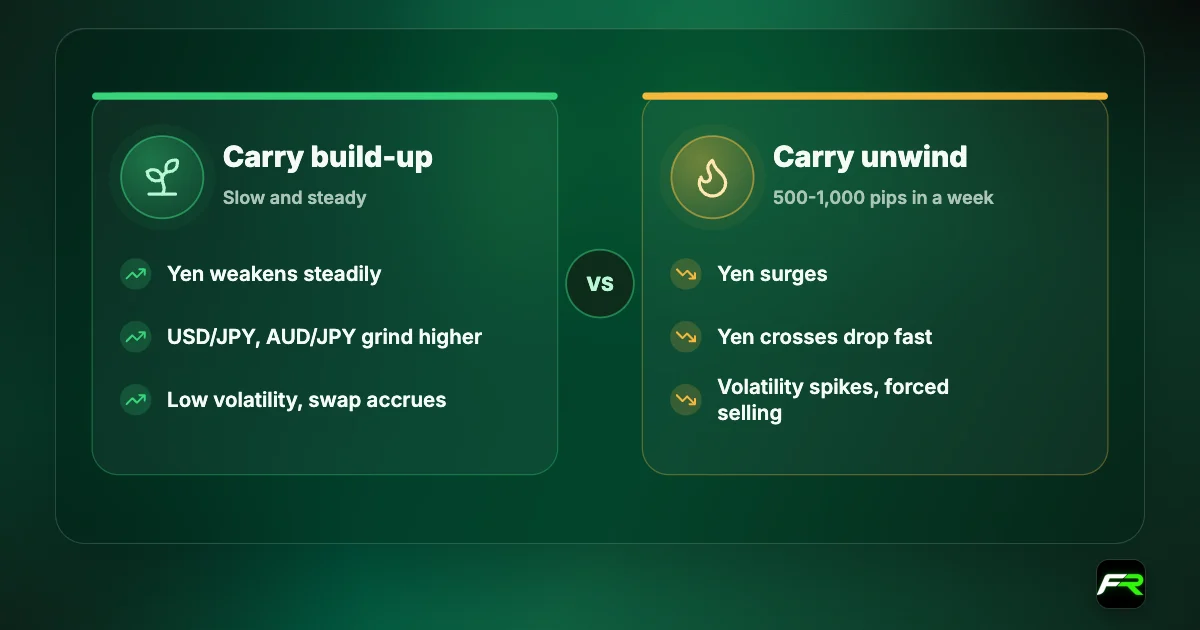
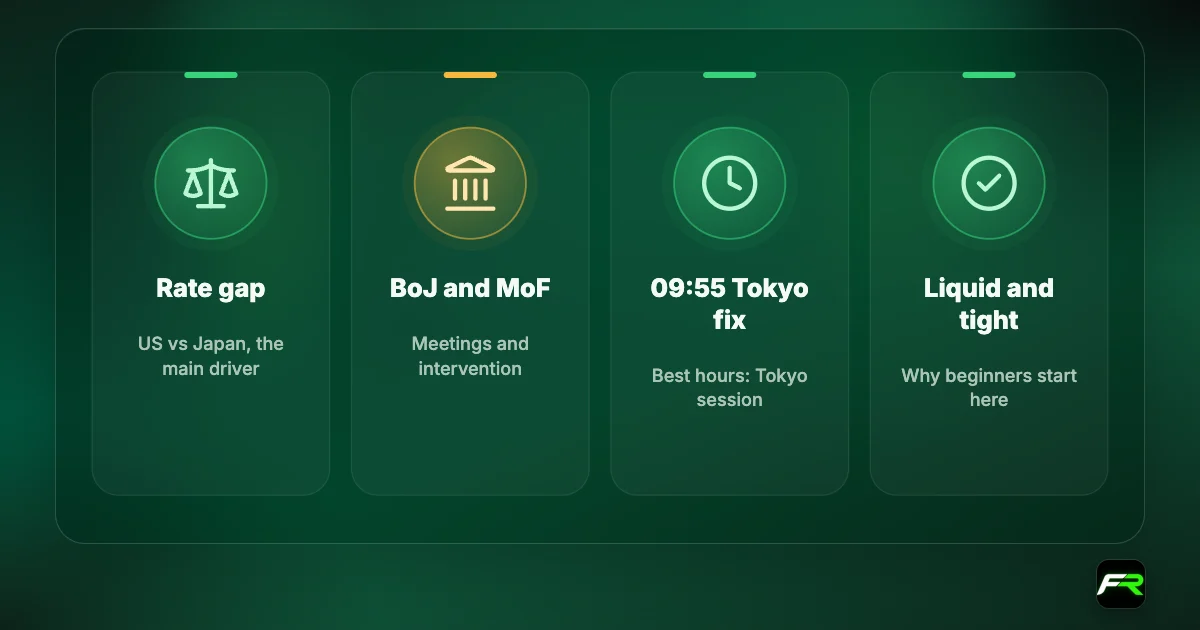
The carry trade is deeply embedded in how Japanese traders think about the forex market. The strategy involves borrowing in a low-interest-rate currency (the yen, historically) and investing in a higher-yielding one (often the US dollar, Australian dollar, or New Zealand dollar). For years, the Bank of Japan’s near-zero interest rate policy made the yen the default funding currency for global carry trades.
The archetype of the Japanese household trader, often described in global financial media as ‘Mrs. Watanabe,’ refers to individuals who built positions shorting the yen against higher-yielding currencies. This wasn’t a fringe activity. It was a major source of trading volume in Japan. The yen’s relatively stable share of global forex turnover at 16.8% in the BIS 2025 survey is partly attributable to this entrenched carry trade culture.
The Bank of Japan’s decision to begin raising rates in 2024, for the first time in decades, changed the carry trade calculus significantly. USD/JPY, which had pushed above 160 during the extended yen weakness period, turned more volatile as the interest rate differential between the US and Japan began to narrow. Traders holding long USD/JPY carry positions faced meaningful drawdowns. For anyone assessing broker selection in 2026, recognizing that USD/JPY is no longer a straightforward one-directional trade is worth building into account sizing and fee calculations, particularly around overnight swaps.
FAQs
Is forex trading legal in Japan?
Yes. Forex trading is legal and formally regulated under Japan’s Financial Instruments and Exchange Act. The JFSA licenses and supervises brokers offering retail forex trading to Japanese residents. Both domestic and internationally regulated brokers are accessible to Japan-based traders.
What is the maximum leverage for retail forex traders in Japan?
The maximum retail leverage in Japan is 1:25, as set by the JFSA. This applies to all JFSA-licensed brokers offering margin forex trading. International brokers operating for Japanese clients under foreign licenses may technically offer higher leverage, but they do so outside the domestic regulatory framework.
Do I need a JFSA-regulated broker, or can I use an international one?
You can use either. A JFSA-regulated broker provides the highest domestic legal protection, including JIPF compensation up to ¥10 million. International brokers licensed by the FCA, ASIC, or CySEC also maintain rigorous standards. Brokers with offshore-only regulation warrant more careful research before use.
How are forex profits taxed in Japan?
Forex profits are taxed as miscellaneous income at a flat rate of 20.315%. That figure combines national income tax (15%), local inhabitant tax (5%), and a 0.315% reconstruction surcharge. All profits must be reported in yen. Domestic brokers typically assist with tax documentation. International broker accounts require manual record keeping.
What is the Japan Investor Protection Fund?
The Japan Investor Protection Fund (JIPF) compensates traders up to ¥10 million per person if a JFSA-licensed broker becomes insolvent. It applies exclusively to clients of JFSA-regulated firms. International broker clients aren’t covered by JIPF, though they may be covered by equivalent schemes in the broker’s home jurisdiction, such as the UK’s FSCS for FCA-regulated firms.
Which broker is best for USD/JPY trading in Japan?
For JPY pair focus with tight spreads and domestic regulatory coverage, GMO Click and DMM FX consistently deliver the most competitive conditions (0.2 pips typical on USD/JPY). For traders who want international-standard platforms alongside competitive USD/JPY pricing, Pepperstone, IC Markets, and IG are the names that come up most often.
Can I trade forex in Japan with a phone?
Yes. Every major broker featured here offers a mobile trading app. IG, Pepperstone, AvaTrade, and IC Markets all have well-rated apps for iOS and Android. Japanese domestic brokers GMO Click and DMM FX also have dedicated apps optimized for JPY pair trading on mobile devices.
What is the minimum deposit for forex trading in Japan?
Minimums vary widely. IG, OANDA, Hantec Markets, and Pepperstone require no minimum deposit at all. IC Markets and FOREX.com require between $100 and $200. Japanese domestic brokers including GMO Click and DMM FX also accept accounts with no stated minimum, though some require a small initial deposit to activate margin trading.
FX Recap’s Final Take
Japan is not an easy market for brokers or for traders. The regulatory bar is high, leverage is constrained, and the tax reporting requirements are specific. For traders willing to operate within those rules, the result is one of the most structurally sound retail trading environments in the world.
The broker that suits you depends on your actual priorities. If domestic regulatory coverage and JPY pair focus are the priority, GMO Click or DMM FX are the most logical starting points. For traders who want access to a broader environment with tight ECN spreads, advanced platforms, and automated trading support, IC Markets and Pepperstone are where most active accounts land. For those who want strong research tools alongside a reputable international name with JFSA authorization, IG and AvaTrade both cover that ground well.
Whatever broker you go with, start with a demo account. Test the platform, the execution, the spread behavior during Tokyo session opens and during US data releases, and the withdrawal process. A broker that performs consistently across all of those areas is far more valuable than one with a slightly lower minimum deposit or a promotional bonus.