IC Markets

 3:09
 2:39
 2:10
 2:18
 3:43
 8:42
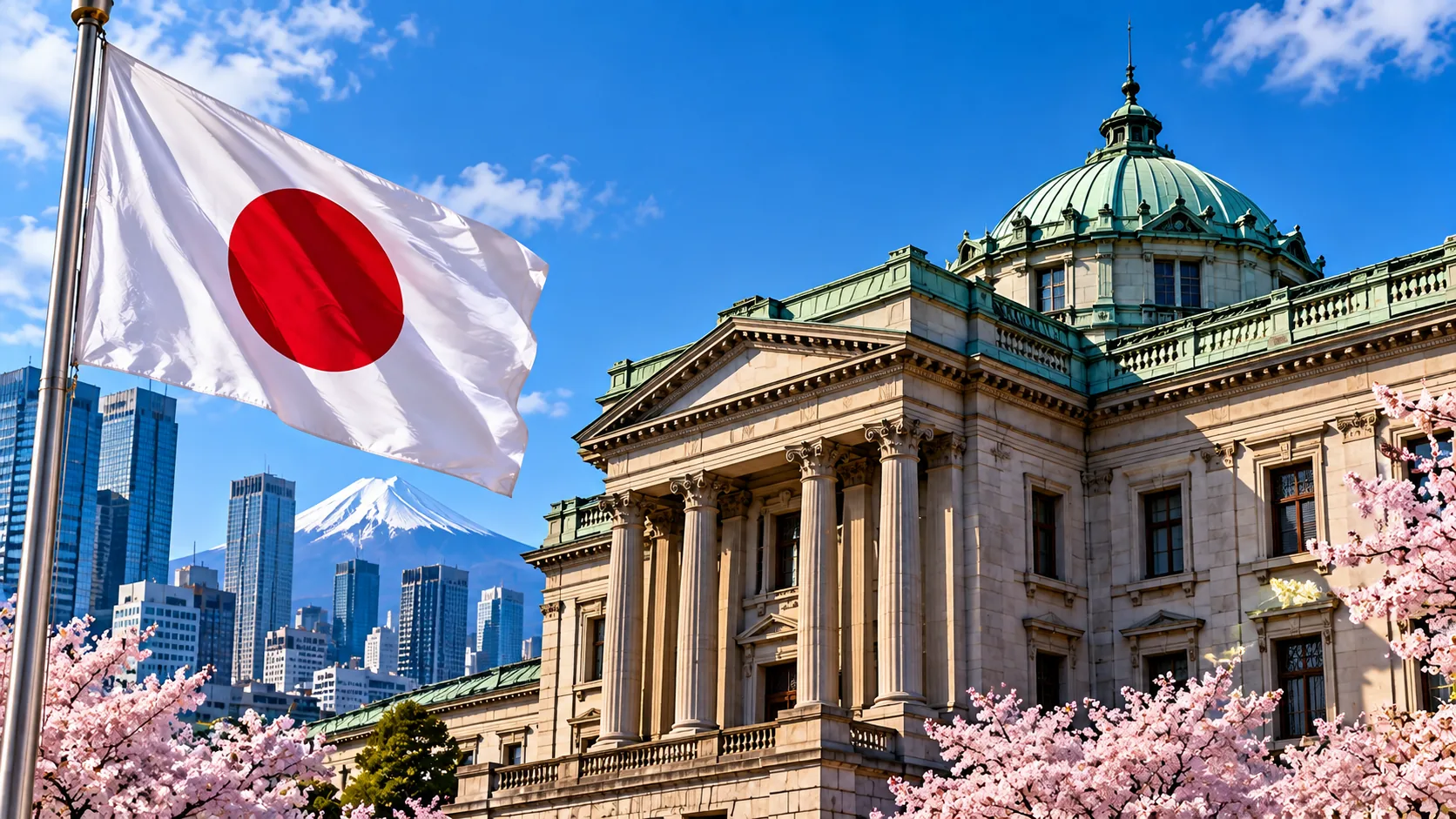
BoJ's Tamura Says Rates Should Reach Neutral "Soon", Puts Neutral Around 2% and Warns Hikes May Need to Speed Up
The Bank of Japan board member said financial conditions are still easy at a 1.25% policy rate and that the bank should "make haste slowly".
 WriterNafish PialJournalist & FX WriterJournalist · forex news and market writing View profileAbout Nafish →

 ReportingJawad Bin GoniPR & ReporterPR and reporting · media enquiries and press coverage View profileAbout Jawad →

 Market analysisTanbir Habib RiyadForex & Crypto AnalystForex and crypto analyst · technical and fundamental analysis View profileAbout Tanbir →

 EditingAbir KhanWriterWrites the guides · checks every figure against primary sources View profileAbout Abir →

 Fact-checking & riskJannatul FerdaushFact-Checker & Risk AnalystFact-checks every figure · risk analysis · Applied Statistics, University of Dhaka View profileAbout Jannatul →

 Trading reviewJowel RanaForex TraderForex trader · reviews guides from a trader's view View profileAbout Jowel →

Tamura Naoki, a member of the Bank of Japan's Policy Board, said on Thursday 26 November that the bank needs to bring its policy rate up to the neutral level soon. He added that it may have to raise rates faster if prices threaten to run above its 2% target.
Tamura spoke at a meeting with local leaders in Yamanashi; the bank published an English translation of the speech the same day.
His core message was short. "Given that financial conditions remain accommodative as I mentioned earlier, I believe that the Bank needs to bring the policy interest rate to the neutral level soon," Tamura said. In a footnote he repeated his estimate of where that level is: "the neutral interest rate is most likely around 2 percent, and my view has not changed". The policy rate is around 1.25%, so his view implies roughly three more quarter-point rises.
| Policy interest rate (Bank of Japan) | around 1.25%, held 8-1 on 30 October (September around 1.25%) |
|---|---|
| Tamura's neutral rate estimate (BoJ speech) | around 2% (June 2026 speech around 2%) |
| Japan CPI, annual (Statistics Bureau of Japan) | 2.3% in October (September 2.1%) |
| USD/JPY (ECB reference rates) | 159.32 on 25 November (previous day 159.07) |
"Make haste slowly"
Tamura spent much of the speech on how the bank should judge the pace of rises. The neutral rate cannot be pinned down in advance, he said. In his view "it can only be determined in retrospect, through adjustments to the policy interest rate and careful monitoring of their effects on financial conditions." That argues for steady steps with checks in between, not one large move.
He also explained why Japan may need to act faster than the US or Europe. Inflation expectations there have been anchored around 2% for many years, while Japan's underlying inflation rose from negative or zero levels, so it is less firmly anchored. A shock could therefore move Japanese inflation more. "In my view, the Bank therefore needs to respond to such shocks more swiftly and strongly than would be necessary if underlying CPI inflation were anchored," Tamura said. Real interest rates, he added, have "remained at low levels", especially at short maturities, and lending attitudes as perceived by firms "have remained accommodative".
His reading of company finances points the same way. Funding costs, including lending rates and corporate bond yields, have risen, but the average interest expense of companies remains low relative to their profits, he said. Bankruptcies caused by heavier interest payments have been limited, and banks' loan officers report that demand for loans is still increasing. Tamura said he gives even more weight to what firms tell the bank directly, and that some have begun to say higher rates will restrain investment. He called it "only natural" that more firms will mention an impact as rates rise, since cooling demand is the purpose.
He then made clear the checks should not slow things down much. "I believe that, within a few months of each rate hike, the Bank can make a reasonable assessment of financial conditions based on information obtained from interviews with firms and the results of various surveys," Tamura said. "While it is necessary to make these assessments "thoroughly," that does not mean "slowly." In my view, the Bank is currently expected to "make haste slowly.""
For markets, "a few months" is the important phrase. The last rise, to around 1.25%, came at the September meeting, so by the 17 and 18 December meeting about three months will have passed. On Tamura's timetable, that is enough time to have judged its effects.
Why he thinks prices could overshoot
Tamura said the bank's view is that underlying inflation has "generally reached" 2%. As a result, he said, "the focus of monetary policy has shifted from raising underlying CPI inflation to 2 percent to avoiding further upward deviation". His concern is that it could now go above target.
He gave three reasons: high oil prices linked to the Middle East, the weak yen and demand from AI. Producer prices rose 7.1% in the year to October, and costs are moving down the supply chain. In October's consumer prices, he noted, domestic non-durable goods such as plastic bags and food wrap rose 12.0%, and recreational durable goods such as laptops and tablets rose 8.2%. "While such developments are factored into the Bank's baseline scenario of the outlook for prices to some extent, recent price developments suggest further upside risks," he said.
| Figure cited by Tamura | Value |
|---|---|
| Producer prices, October, annual | 7.1% |
| Domestic non-durable goods CPI, October, annual | 12.0% |
| Recreational durable goods CPI, October, annual | 8.2% |
| Neutral interest rate, his estimate | 2% |
| Policy interest rate now | 1.25% |
AI came up more than once. "In particular, global AI-related demand is, to my surprise, pushing up Japan's economy in a wide range of industries," Tamura said, from data centres to power equipment, air-conditioning and construction. He accepted that AI may lower prices over the long run by lifting productivity, but said that "at least in the short term" it will push prices up.
What changed from his earlier remarks
The estimate of neutral has not moved: Tamura gave the same 2% figure in a speech on 25 June. What is new is the urgency. He now says rates should reach that level "soon". There is also a warning that the bank should be ready to move faster: "I believe the Bank is required to respond swiftly to signs of an upward deviation in prices, including by accelerating the pace of policy interest rate hikes."
Tamura voted with the majority to hold rates at the 30 October meeting, when Takata Hajime alone proposed a rise to 1.5%. Thursday's speech suggests he may be close to joining a vote for the next step. He also played down the cost to companies: "the majority of them perceive the impact on business activity of past policy interest rate hikes and near-term potential further rate hikes to be limited."
What it means for the yen
A board member arguing for faster rises is support for the yen, but the currency has been driven more by the dollar. USD/JPY's ECB-derived reference rate was 159.32 on Wednesday, close to the 160.00 of 13 November, the highest reference rate of the past 60 working days. Tamura listed the yen's past fall among the forces lifting prices and said currency moves "could exert additional upward pressure on prices, depending on how they play out."
Rates are moving the other way in the US, where firm personal consumption expenditures (PCE) data on Wednesday kept a December Fed rise in play. If both banks raise in December, the gap between US and Japanese rates would barely change. A BoJ rise with a Fed hold would narrow it and help the yen more. Japan's latest inflation data are in our Japan CPI story.
What it means for traders
One board member does not set policy, but Tamura's view is now on the record before the December meeting. Points to keep in mind:
- Tamura puts neutral around 2%, against a policy rate of about 1.25%. That leaves room for several more rises.
- His "within a few months" test fits a move on 18 December, three months after the September rise.
- Watch for other board members' speeches and the Tokyo CPI for November before the meeting.
- USD/JPY near 160 also depends on the Fed's 9 December decision; a hawkish BoJ alone may not lower it much.
- Daily levels are on our USD/JPY analysis page.
Say you expect a BoJ rise in December and sell USD/JPY at 159.30, with a stop at 160.30, above the 13 November reference rate of 160.00 and 100 pips away. On a $5,000 account risking 1%, or $50, each pip needs to be worth about $0.50, roughly 0.08 standard lots. A target at 157.30, near the 30 October reference rate of 157.25, is 200 pips away. A strong US data surprise could lift the pair through the stop first.
Central bank speeches can move currencies quickly, and leverage magnifies losses as well as gains. Only trade money you can afford to lose. This is news and education, not a recommendation to buy or sell.
Quotes and figures are from Tamura Naoki's speech "Economic Activity, Prices, and Monetary Policy in Japan", published by the Bank of Japan on 26 November 2026 as an English translation of the Japanese original. Japan CPI is from the Statistics Bureau of Japan. USD/JPY is derived by FX Recap from European Central Bank (ECB) euro reference rates.
Cite this guide
FX Recap, "BoJ's Tamura Says Rates Should Reach Neutral 'Soon', Puts Neutral Around 2% and Warns Hikes May Need to Speed Up", updated 26 November 2026, https://fxrecap.com/forex-news/market-voices/boj-tamura-neutral-rate-2-percent-hikes-soon
Free to quote with a link. Journalists: data and comment in our press room.
Frequently asked
What did BoJ board member Tamura say on 26 November 2026?
Tamura Naoki said financial conditions remain accommodative and that the Bank of Japan needs to bring its policy rate to the neutral level soon. He said the bank may need to speed up rate rises if prices look set to rise above its 2% target.
What is the neutral interest rate in Japan according to Tamura?
He said the neutral rate is most likely around 2%, a view he gave in a speech on 25 June 2026 and which he said has not changed. The policy rate is around 1.25%.
When is the next Bank of Japan meeting?
The Monetary Policy Meeting is on 17 and 18 December 2026, with the decision on 18 December. Its policy rate has been around 1.25% since the September meeting.
Who is Tamura Naoki?
Tamura Naoki is a member of the Bank of Japan's Policy Board, the nine-member body that sets monetary policy. He voted to hold rates at the 30 October 2026 meeting.
Sources: Bank of Japan: Tamura Naoki, Economic Activity, Prices, and Monetary Policy in Japan (26 Nov 2026, PDF) · Bank of Japan: Monetary Policy Meetings schedule · Statistics Bureau of Japan: Consumer Price Index · European Central Bank: euro foreign exchange reference rates
The team behind this guide
Reported, written, edited and checked by five FX Recap specialists
Every guide is written, fact-checked and edited before it goes live, and updated when the facts change. Spotted an error? Tell us.