 IC Markets





























How to Start Forex Trading: A Beginner’s Roadmap
The beginners of Forex are required to learn how to choose a broker, market structure and simple risk rules before they can venture into live trading. Acquiring forex is a matter of time, patience and practice. The early entry in the market usually leads to unnecessary losses. The gradual learning process assists beginners to acquire discipline, realistic expectations, and technical competence as long-term trading skills are acquired.
 WriterAbir KhanWriterWrites the guides · checks every figure against primary sources View profileAbout Abir →
 Market analysisTanbir Habib RiyadForex & Crypto AnalystForex and crypto analyst · technical and fundamental analysis View profileAbout Tanbir →
 Fact-checking & riskJannatul FerdaushFact-Checker & Risk AnalystFact-checks every figure · risk analysis · Applied Statistics, University of Dhaka View profileAbout Jannatul →
 Trading reviewJowel RanaCo-Founder & Forex TraderCo-founder · forex trader · reviews guides from a trader's view View profileAbout Jowel →
 Final approvalRanjan NiskrityFounder, Owner & Forex TraderFounder and owner · forex trader · signs off every guide View profileAbout Ranjan →
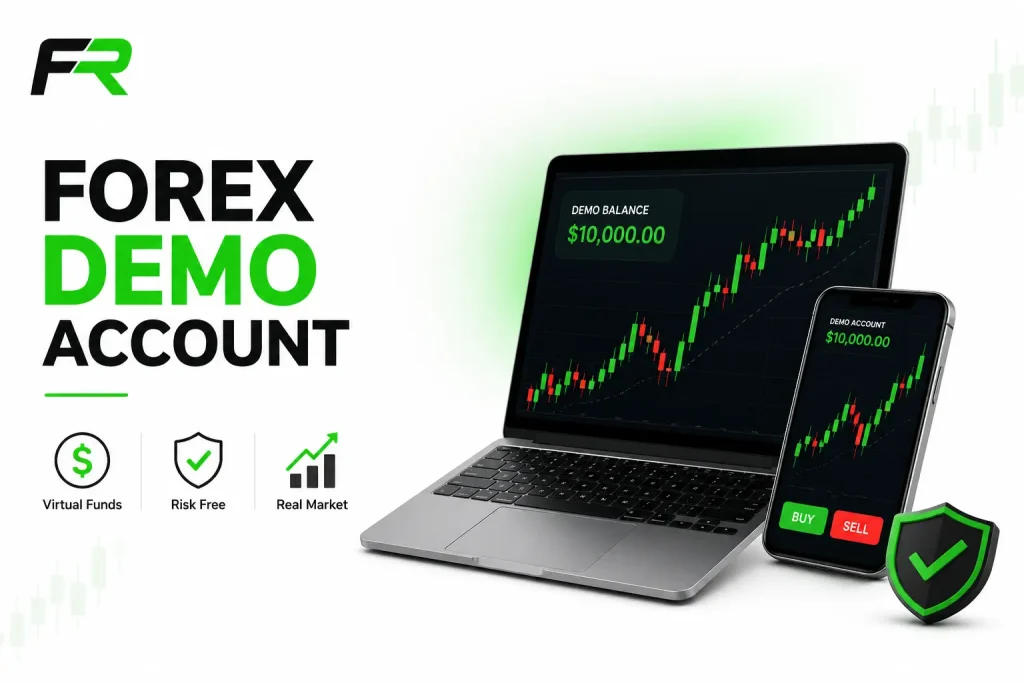
Forex trading is accessible to almost anyone with an internet connection and a modest starting amount of capital. The barrier to entry is low. That is both the appeal and the danger. The market processes over $7.5 trillion in daily volume according to the Bank for International Settlements, operates across multiple time zones without pause, and reacts instantly to economic data, central bank decisions, and geopolitical events. Getting started is easy. Building the foundation to survive and grow is what takes real effort.
This article is written for traders who are starting from scratch. It covers how the forex market works, the essential concepts you need before placing your first trade, how to choose a broker safely, how to build a trading plan, and the psychological realities that determine whether most beginners succeed or fail. The case studies are real in pattern if not in name, because the same stories repeat constantly across different traders in different countries.
There are no shortcuts described here. What is described is the actual process that beginners who eventually become consistent traders follow, which is slower and less exciting than most people expect, and far more reliable than any alternative.
How the Forex Market Works
The foreign exchange market is where currencies are bought and sold against each other. When you trade forex, you are always buying one currency while simultaneously selling another. These pairs are quoted as a ratio: EUR/USD at 1.1000 means one euro buys 1.10 US dollars.
There is no central exchange for forex. Trades happen directly between participants through a network of banks, brokers, and electronic platforms. This decentralized structure means the market operates continuously from Sunday evening through Friday evening, cycling through the Sydney, Tokyo, London, and New York sessions.
The London and New York sessions produce the highest trading volume and tightest spreads for major pairs. The overlap period between London and New York, roughly 1pm to 5pm London time, is generally the most active period of the trading day. FXRecap’s guide on forex market hours covers the full session schedule and explains how activity levels change throughout the day.
Major currency pairs involve the US dollar on one side and are the most traded instruments in the market: EUR/USD, GBP/USD, USD/JPY, USD/CHF, AUD/USD, USD/CAD, and NZD/USD. Minor pairs exclude the US dollar but involve other major currencies. Exotic pairs combine a major currency with a currency from a smaller or emerging economy. Beginners almost always do better starting with one or two major pairs before expanding.
Why Prices Move
Currency prices reflect the relative economic strength, interest rate expectations, and risk appetite between two countries. Several specific forces drive movement.
Interest rate decisions are the most consistent driver. When a central bank raises interest rates, it attracts foreign capital seeking higher returns, which increases demand for that currency. When rates are cut, the reverse tends to occur. Traders watch central bank meeting schedules closely and position around expected decisions.
Economic data releases move prices sharply and quickly. Non-farm payrolls from the US, inflation readings, GDP growth figures, and manufacturing data can shift a currency pair by 50 to 100 pips in seconds after release. New traders who hold positions through these events without understanding what the data means often experience large, unexpected losses.
Geopolitical developments, changes in trade policy, and sudden political uncertainty all affect currency valuations, sometimes more dramatically than any scheduled data release. These events cannot be predicted precisely, which is why risk management matters regardless of how confident you are in a setup.
Market sentiment also plays a role. During periods of global uncertainty, money tends to flow into perceived safe-haven currencies: the US dollar, Japanese yen, and Swiss franc. During risk-on periods, higher-yielding currencies like the Australian and New Zealand dollars tend to strengthen.
Essential Concepts For Beginners
Before placing any trade, these mechanics need to be clear. Misunderstanding even one of them is enough to produce losses that have nothing to do with market direction.
Pips
A pip is the smallest standard price increment for a currency pair. For most pairs, it is the fourth decimal place: if EUR/USD moves from 1.1000 to 1.1005, it has moved 5 pips. For JPY pairs like USD/JPY, a pip is the second decimal place. FXRecap’s guide on what is a pip in forex covers pip values across different pairs and lot sizes so you can calculate profit and loss accurately before entering any trade.
Lot Sizes
A standard lot is 100,000 units of the base currency. A mini lot is 10,000 units, and a micro lot is 1,000 units. The lot size you trade directly determines the dollar value of each pip. On EUR/USD with a standard lot, one pip is worth approximately $10. With a micro lot, one pip is worth approximately $0.10. Beginners should start with micro lots to keep losses manageable while learning. FXRecap’s guide on lot size in forex explains the full calculation process.
Spread
Every currency pair has two prices: the bid price at which you can sell, and the ask price at which you can buy. The difference between them is the spread. If EUR/USD shows a bid of 1.1000 and an ask of 1.1002, the spread is 2 pips. This is the immediate cost of entering the trade. A trade opened at market is already 2 pips in the negative before price moves at all. FXRecap covers what is a forex spread in detail, including how spreads widen during news events and low-liquidity periods.
Margin
Margin is the deposit required to open and hold a leveraged position. It is not a fee. It is collateral that the broker holds while the trade is open. If losses reduce your account equity below the required margin level, you receive a margin call, and the broker may close your positions automatically. FXRecap’s guide on what is forex margin explains how margin calculations work and how to monitor your margin level in a live account.
Leverage
Leverage allows you to control a position larger than your actual deposit. At 1:100, a $100 account deposit controls a $10,000 position. That amplification works in both directions.
Here is the arithmetic that most beginners encounter too late. You open a $10,000 EUR/USD position using $100 as margin at 1:100 leverage. The position moves 1% against you. That is 100 pips on EUR/USD. Your loss is $100, which is your entire margin. The account is wiped out before the market has moved meaningfully by any standard measure.
Professional traders almost never use maximum available leverage. Consistent traders typically operate at effective leverage of 1:5 to 1:10, meaning a $5,000 account controls positions totaling $25,000 to $50,000, not $500,000. The higher the leverage used, the smaller the adverse price move required to cause a significant account loss.
“I made 40% in my first month with high leverage. I was down 80% by the second month. The market taught me faster than any course could.”
Regulators in the EU and UK cap retail forex leverage at 1:30 for major pairs specifically because data showed that traders using higher leverage lost money at substantially higher rates. These caps exist for good reason.
FXRecap’s guide on what is forex leverage covers how leverage interacts with position size and account balance in practical terms, with examples across different account sizes.
How to Choose a Broker You Can Trust
The broker holds your money and executes your trades. Choosing one carelessly is the fastest way to lose capital before a single market decision is made.
Regulation
Regulated brokers operate under rules set by financial authorities that include client fund segregation, capital requirements, and dispute resolution processes. The main regulators in major jurisdictions are the FCA in the UK, ASIC in Australia, CySEC in Cyprus, CFTC and NFA in the US, and MAS in Singapore. A broker licensed by any of these has met a baseline of requirements designed to protect client funds. An unregulated broker has no such oversight. Any broker that cannot clearly state their regulatory status and license number should be avoided entirely.
Spreads, Commissions, and Fees
Brokers make money through spreads, commissions, or both. Spreads on major pairs at reputable brokers typically range from 0.5 to 2 pips depending on the account type and market conditions. Commission-based accounts often offer tighter spreads but charge a fixed fee per trade. Compare the total cost of a trade, spread plus commission if applicable, rather than looking at either figure alone.
Brokers advertising unusually tight spreads without any commission should be examined carefully. The economics of running a brokerage require revenue, and if the stated spread is implausibly low, the difference is often made up in other ways: wider spreads during news events, slow execution that produces slippage, or opaque fee structures.
Platform and Execution
Most brokers offer MetaTrader 4 or MetaTrader 5. Some offer proprietary platforms. The platform should be stable, fast, and identical between the demo and live environments. If the demo platform is slow or frequently disconnects, that is a signal about the quality of the broker’s infrastructure.
Deposits, Withdrawals, and Support
Check how deposits and withdrawals work before funding an account. Reputable brokers process withdrawal requests within a reasonable timeframe, typically one to five business days depending on the method, without requiring excessive documentation for standard requests. Read reviews from current customers about withdrawal experiences specifically, as this is where brokers with poor practices most commonly create problems.
FXRecap’s guide on how to identify the best forex broker walks through the full evaluation process including what to look for in regulatory documentation and how to assess execution quality on a demo account before committing funds.
Account Types
Most brokers offer several account types that differ in minimum deposit, spread structure, and available leverage. The right account type for a beginner is almost always the one with the lowest minimum deposit and access to micro lot trading.
Standard accounts typically have minimum deposits of $100 to $500 and trade in mini or standard lots. Micro accounts allow trading in micro lots, making it possible to manage positions with very small risk amounts even on modest account balances. ECN or raw spread accounts offer tighter spreads but charge commission per trade and usually require higher minimum deposits. These are more relevant once a trader has consistent experience and higher capital.
FXRecap’s guide on types of forex accounts covers the differences between account types in practical terms and explains which situations each one suits.
Islamic or swap-free accounts are available at most brokers for traders who cannot receive or pay overnight interest for religious reasons. These accounts work identically to standard accounts in terms of execution and trading mechanics, with the overnight swap replaced by an administrative fee structure.
Technical and Fundamental Analysis
Technical Analysis
Technical analysis examines price charts to identify patterns, trends, and levels that suggest where price is likely to go next. It is based on the idea that historical price behavior, and the patterns it creates, tends to repeat because market participants respond to similar conditions in similar ways.
A beginner’s technical toolkit should cover: identifying trend direction from higher highs and higher lows, recognizing support and resistance levels where price has previously reacted, reading basic candlestick formations that signal momentum shifts, and using one or two indicators to confirm what the price action suggests.
FXRecap’s guides on learning forex charts, candlestick charts, and forex indicators cover these skills in depth.
Fundamental Analysis
Fundamental analysis examines the economic conditions that determine the relative value of currencies. Key inputs include interest rate decisions and central bank communications, inflation data, employment figures, GDP growth, and trade balances.
A practical example: the US Federal Reserve raises interest rates by 0.25% while the European Central Bank holds rates steady. All else equal, this increases the yield advantage of USD-denominated assets, attracting capital flows into the dollar. A trader who anticipated this shift and positioned short EUR/USD before the announcement would benefit from the subsequent dollar strengthening.
Most beginners find it easier to start with technical analysis and incorporate fundamental awareness gradually. At minimum, knowing what major news events are scheduled each day and avoiding open positions through the most volatile releases is a practical risk reduction even before fundamental analysis is formally incorporated into a strategy.
Building a Trading Plan
A trading plan is a written document that defines your approach before you are in the emotional environment of a live trade. It removes the need to make decisions under pressure by making the decisions in advance.
A complete trading plan covers:
- Which currency pairs you will trade and why those specific pairs
- The timeframes you will analyze and trade on
- Your entry criteria: the specific conditions that must be present before you enter a trade
- Your stop-loss placement method: where the stop goes and how that level is determined
- Your take-profit target: how you identify the exit point and what risk-to-reward ratio you require as a minimum
- Maximum risk per trade as a percentage of account balance, typically 1% to 2%
- Maximum daily or weekly loss after which you stop trading for that period
- Trading session hours: when you will and will not trade
- Rules for not trading: news events, low-liquidity periods, or emotional states that disqualify an otherwise valid setup
The plan is only useful if it is followed. Deviating from it based on how a specific trade feels is the most common way traders undermine months of preparation. The plan should be reviewed periodically and updated based on evidence from your trade journal, not based on recent emotional experiences.
Risk Management
Risk management is not a defensive afterthought. It is the primary skill that separates traders who last from traders who do not. A good strategy without risk management will fail eventually. A moderate strategy with disciplined risk management can survive long enough to improve.
The foundation is the 1% rule. Risk no more than 1% of your account balance on any single trade. On a $500 account, the maximum loss per trade is $5. On a $2,000 account, it is $20. This rule ensures that a losing streak of ten consecutive trades reduces the account by 10%, not 50% or 100%.
Position size is calculated backward from the dollar risk. Decide your maximum loss first, divide it by the number of pips to your stop-loss, and adjust for the pip value of the pair and lot size. This calculation means the stop-loss placement drives the position size rather than the position size being set arbitrarily.
Risk-to-reward ratio determines whether a strategy is mathematically viable. A strategy that risks 20 pips to target 40 pips has a 1:2 ratio. Even if it wins only 45% of the time, the math is profitable: 45 winning trades multiplied by 40 pips minus 55 losing trades multiplied by 20 pips results in a net positive over 100 trades. A strategy targeting 10 pips while risking 30 requires a win rate above 75% just to break even. Most beginners unknowingly use ratios that make profit mathematically impossible regardless of entry quality.
FXRecap’s guides on forex risk management and stop-loss and take-profit cover the practical mechanics of setting these levels correctly on any trade.
Trading Psychology
Studies of retail trader behavior consistently show that the majority of beginners who lose money do so not because of poor strategy selection but because of emotional decision-making. Fear, greed, impatience, and the desire to recover losses quickly override whatever logical framework the trader started with.
The patterns are predictable. A trader sets a take-profit at 40 pips. After the trade moves 20 pips in their favor, anxiety about losing the unrealized gain causes an early exit. The same trader later holds a losing trade far past the stop-loss level because exiting would confirm the loss as real. At the end of the month, winning trades are smaller than planned and losing trades are larger than planned. The strategy’s expected performance never materializes because execution departs from the plan consistently.
“Your mindset is what makes you stick to your method. It is not the chart that leads you astray. It is your feelings.”
The practical tools for managing trading psychology are structural rather than motivational. Keep a trade journal that records not just entry and exit but your emotional state before and after each trade. Review it weekly. The patterns in emotional decision-making only become visible with consistent documentation.
Set rules that remove in-the-moment discretion for the most dangerous decisions. The stop-loss level should be set when the trade is entered and should not be moved to avoid a loss. The position size should be calculated before the trade, not adjusted based on how confident the setup feels. These rules are not restrictions on good trading. They are protection from the emotional distortions that affect every trader at some point.
Two Case Studies
Case 1: Disciplined Growth on a Small Account
Rahul, a software engineer in India, opened a forex account with $300. He traded micro lots and risked no more than 1% per trade, which was $3. His first month’s results felt insignificant in dollar terms. But he kept a detailed trade journal, reviewed it weekly, and adjusted his approach based on patterns in his own behavior rather than on tips or signals.
Nine months later, he was averaging 3% to 4% monthly returns with consistent execution. The dollar amounts had grown with the account balance, and more importantly, the habits were solid. He had gone through losing streaks without abandoning the plan because the losses were always small enough to be absorbed.
Rahul’s result came from one thing: he treated risk control as the primary skill rather than as a constraint on profit. That reordering of priorities is what most traders who last eventually arrive at, usually after a more painful route.
Case 2: Speed and Leverage Without Foundation
Jamal opened with $200 and, after a few winning trades, increased his leverage to 1:500 reasoning that larger position sizes would grow the account faster. On a normal trading day, price moved 50 pips against his open position. At that leverage level, 50 pips erased the account completely.
“I did not lose because of the market. I lost because I had no foundation.”
Jamal’s experience is not unusual. It is in fact the most common outcome for traders who prioritize return potential over risk management. The market will eventually produce a move large enough to wipe out any account operating at maximum leverage, and usually sooner than the trader expects.
When to Move from Demo to Live Trading
The readiness to trade live is not measured by time on demo but by specific conditions being met. Moving to live before these conditions exist is moving too early regardless of how long the demo period lasted.
You are ready when: your strategy is defined clearly enough to explain to someone else, your demo results over at least 50 trades show positive expectancy, you are following your trading plan consistently rather than making exceptions, and you have a trade journal that documents your behavior and shows you understand your own patterns.
The transition should be gradual. Start live trading with the minimum deposit the broker allows and with position sizes smaller than what you used on demo. The goal of the first live month is not profit. It is demonstrating that your demo habits carry over under real financial conditions.
FXRecap’s guide on forex demo trading covers how to use the demo period productively and what the real differences are between demo and live execution.
Red Flags and Scams to Avoid
The forex industry has a significant volume of fraud targeting new traders. Knowing the patterns makes them much easier to identify.
- Guaranteed profit claims: No one can guarantee profits in a market as volatile and unpredictable as forex. Anyone making this claim is either deceptive or selling something they do not understand.
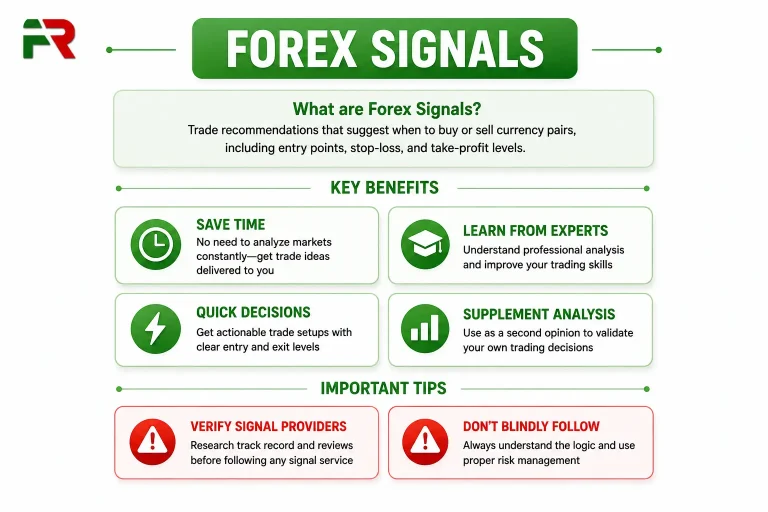
- Signal providers with unverifiable track records: Telegram and Instagram are full of accounts claiming extraordinary returns from signal services. Real track records are verified by third parties over extended periods. Screenshots of winning trades prove nothing.
- Managed account schemes: Handing control of a trading account to someone else requires that person to hold regulatory authorization to manage funds. Many schemes operating without such authorization have disappeared with client money.
- Unregulated brokers offering unusually high bonuses: Large deposit bonuses from unknown brokers are often accompanied by withdrawal restrictions that make it difficult or impossible to recover funds.
- Mentoring programs promising fast profits: Legitimate trading education teaches process and risk management. Programs that focus primarily on showing expensive lifestyles or promising specific income levels are selling a fantasy.
The practical rule is straightforward. If someone is offering you a way to make money in forex that does not require developing real skill over time, it is not what it claims to be.
Summary
Starting forex trading well means building a foundation before anything else. That foundation is made of the same components every time: an honest understanding of how the market works, clarity on the mechanics of pips, spreads, leverage, and margin, a reliable regulated broker, a written trading plan, disciplined risk management, and enough self-awareness to recognize when emotions are affecting decisions.
None of that is complicated, but all of it takes time and deliberate practice. The traders who move through that process carefully, who spend real time on demo before going live, who start small when they do go live, and who keep records of their behavior are the ones who eventually reach consistency. The ones who skip steps in search of faster results almost always end up starting over, usually with less capital than they began with.
Forex is a genuine market with genuine opportunities. It rewards preparation and patience more consistently than any other approach. The process described in this article is slower than most beginners want it to be. It is also more reliable than any shortcut that has been tried.
The team behind this guide
Researched, checked and approved by five forex specialists
Every guide is written, fact-checked and edited before it goes live, and updated when the facts change. Spotted an error? Tell us.
Related Articles
 Education
7 min read
Education
7 min read

 Education
6 min read
Education
6 min read
 Education
8 min read
Education
8 min read
 Education
10 min read
Education
10 min read
 Education
9 min read
Education
9 min read
 Education
7 min read
Education
7 min read