IC Markets





























Best Forex Brokers in Vietnam
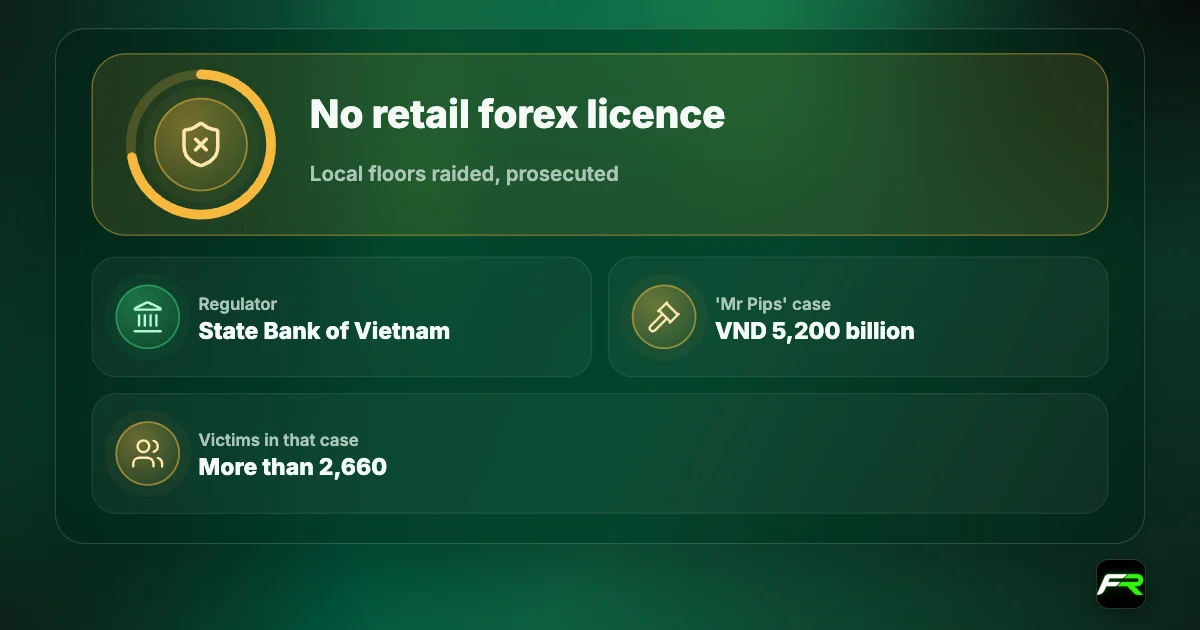
Vietnam licenses no retail forex brokers and has raided local trading floors. Trading offshore sits in a grey area with fines reported. Here is the legal picture and how to protect yourself.
 WriterAbir KhanWriterWrites the guides · checks every figure against primary sources View profileAbout Abir →
 Market analysisTanbir Habib RiyadForex & Crypto AnalystForex and crypto analyst · technical and fundamental analysis View profileAbout Tanbir →
 Fact-checking & riskJannatul FerdaushFact-Checker & Risk AnalystFact-checks every figure · risk analysis · Applied Statistics, University of Dhaka View profileAbout Jannatul →
 Trading reviewJowel RanaCo-Founder & Forex TraderCo-founder · forex trader · reviews guides from a trader's view View profileAbout Jowel →
 Final approvalRanjan NiskrityFounder, Owner & Forex TraderFounder and owner · forex trader · signs off every guide View profileAbout Ranjan →
Forex trading is widespread in Vietnam, and so is the confusion around it. The State Bank of Vietnam reserves foreign currency dealing for licensed banks and credit institutions, no firm holds a retail forex brokerage licence, and authorities have raided and prosecuted local "trading floors" that took deposits from the public. At the same time, many Vietnamese traders hold accounts with international brokers.
This page explains where the law draws the lines, why we do not rank offshore brokers for Vietnamese residents, and what to check if you are weighing the risk.
Is forex trading legal in Vietnam?
Foreign exchange activity is limited to authorised credit institutions under Decree 88/2019/ND-CP, and running a retail forex brokerage or trading floor inside Vietnam is illegal. For individuals trading their own money on an offshore platform, the law is less explicit. The direction of travel is toward end users: under Decree 284/2026, in force from 1 September 2026, individuals who trade crypto assets through providers not licensed by the Ministry of Finance face fines of up to VND 50 million. That decree covers crypto, not forex, but it shows authorities are now willing to fine traders as well as platforms.
The practical result is a grey area with no protection. If an offshore broker freezes your account or fails, no Vietnamese regulator or compensation scheme can help, and the transfer routes most people use sit outside the banking rules.
Local "sàn forex" operations that promise fixed returns, pay commissions for recruiting and hold your money in local accounts are the schemes Vietnamese police have prosecuted. They are not brokers.
How Vietnamese traders usually fund accounts
| Route | How it works | Main risk |
|---|---|---|
| Domestic VND transfer | Via the broker's local payment partner | The partner, not a bank, holds your money in transit |
| MoMo or ZaloPay | E-wallet top-up through a partner | Small limits; withdrawals often slower than deposits |
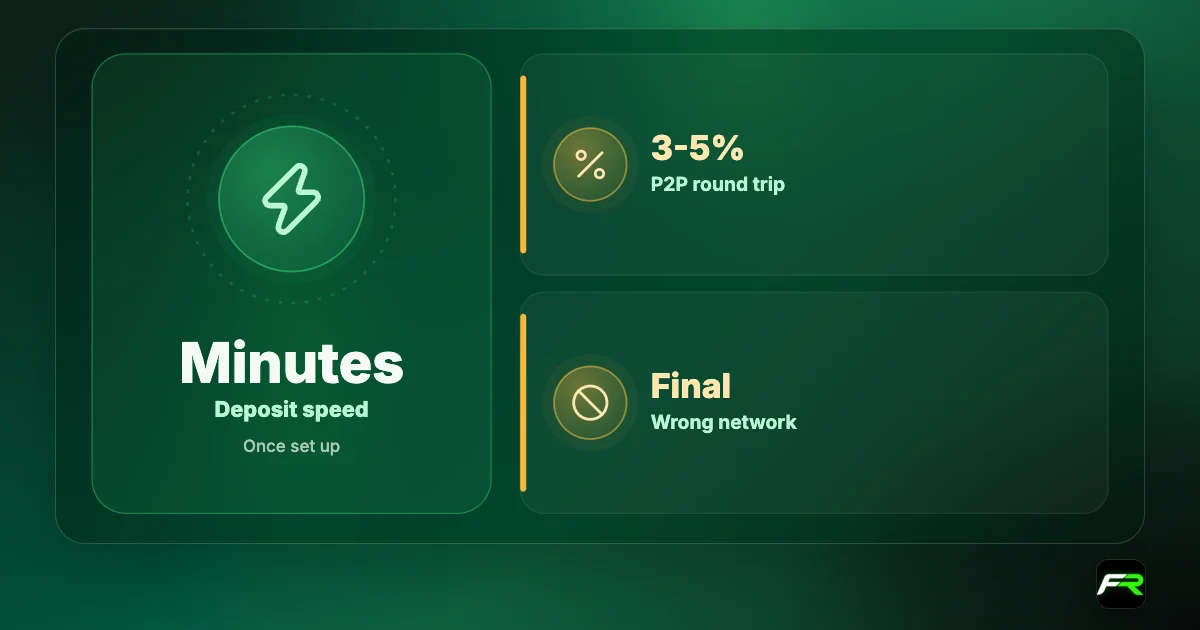
| USDT | Bought locally, sent to the broker | P2P payments can trigger bank account freezes |
| Local agent | An individual funds the account for you | No recourse if the agent keeps the money |
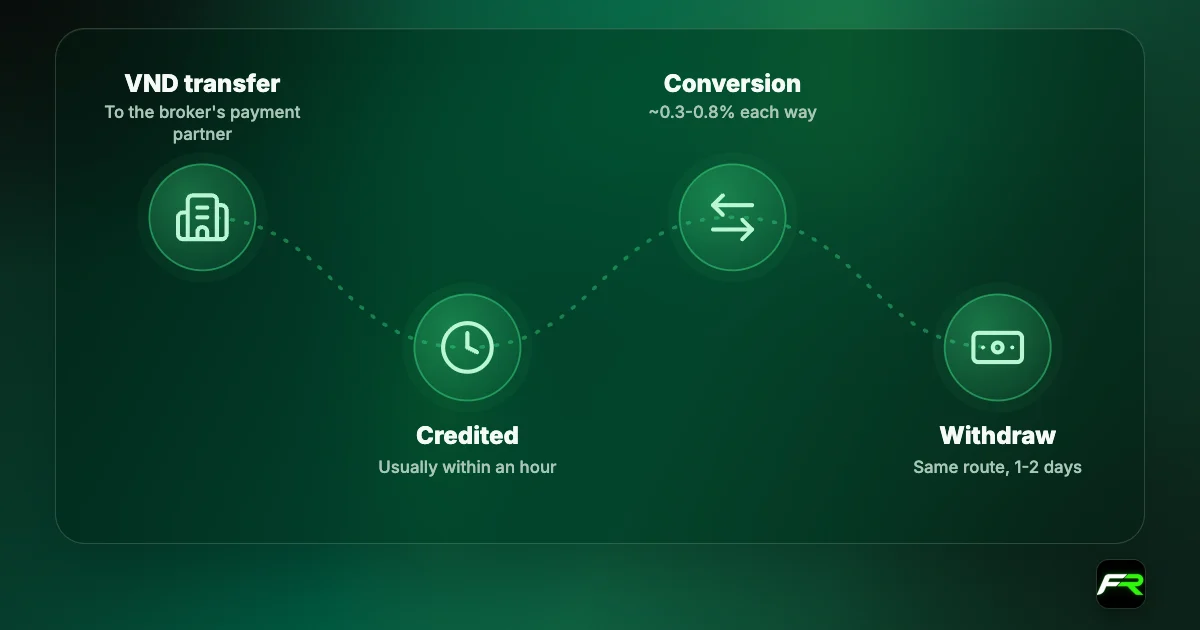
Deposits through a payment partner usually arrive within an hour and withdrawals take one to two business days, but every step outside a licensed bank adds risk you cannot recover from.
If you decide to trade anyway: the minimum checks
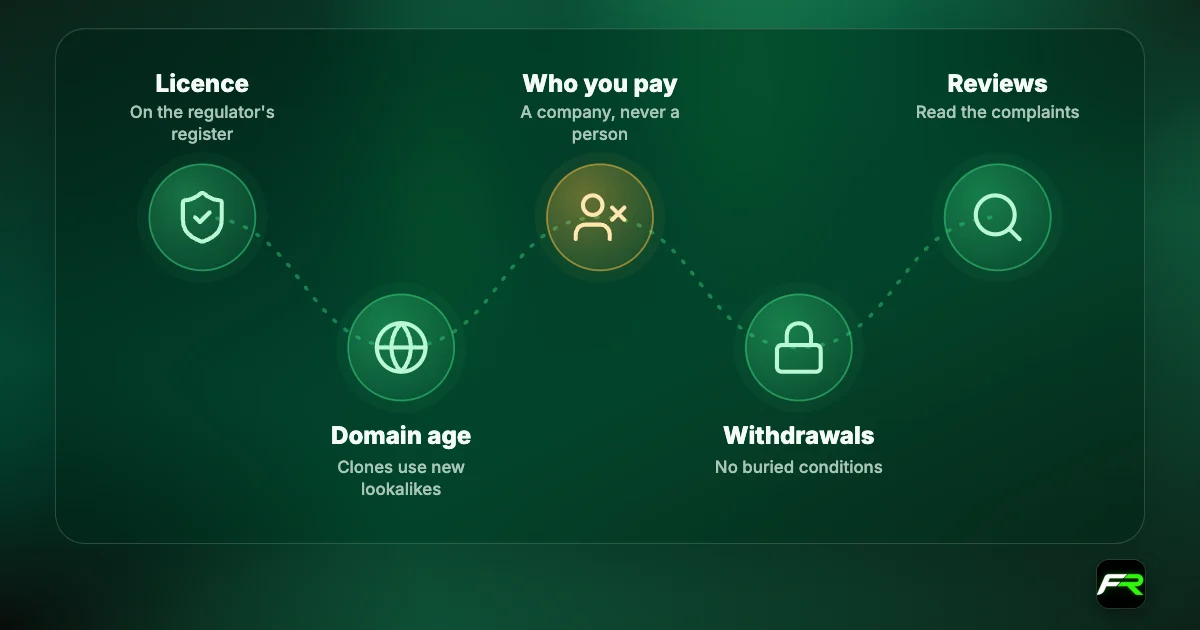
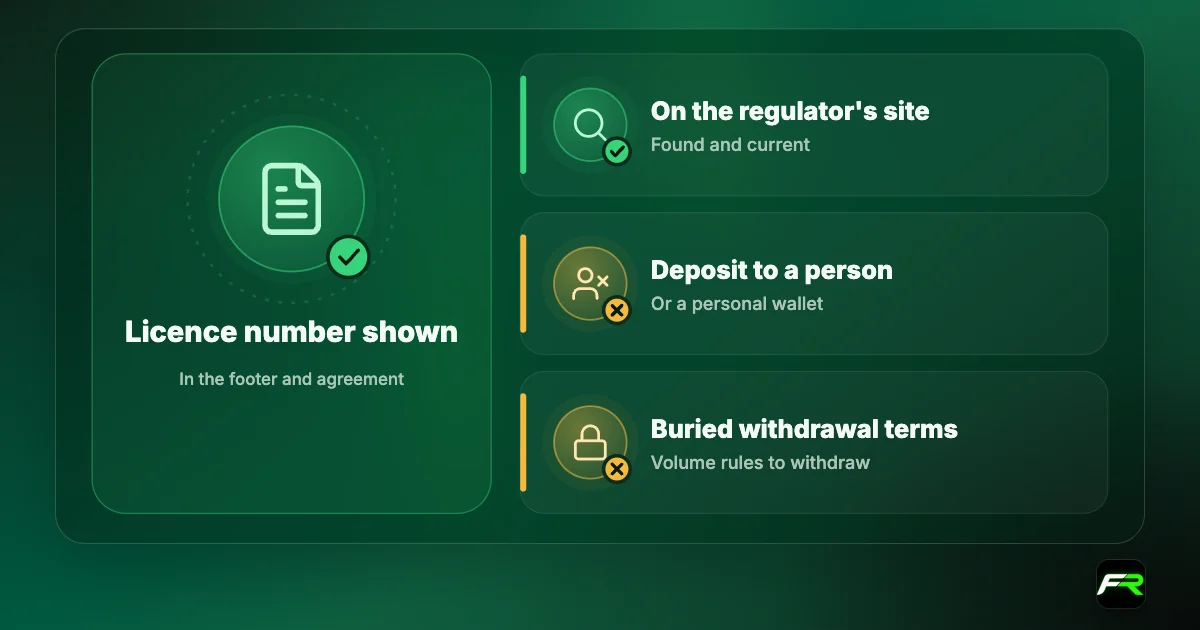
- A licence you can verify with ASIC, CySEC or the FCA on the regulator's own website, and the entity named in your client agreement.
- No agent in the middle. Deposit only through the broker's own client area, in your own name.
- A tiny first round trip. Deposit a small amount, trade once, withdraw, and confirm it arrives.
- Fixed risk per trade of 1 to 2 per cent, and leverage no higher than you would use on a regulated account.
These checks reduce the risk; they do not make the activity legal or protected in Vietnam.
Leverage
Offshore entities advertise 1:500 to 1:2000, while strongly regulated ones cap retail forex at 1:30. The higher figure is not an advantage for a small account. At 1:1000 a 0.1 per cent move against you erases the balance, and the gold and USD/JPY moves common in Vietnamese hours are larger than that.
Tax
Vietnam has no clear framework for taxing offshore retail forex profits, which follows from the activity having no recognised channel. Large inflows into a personal account can still prompt questions from your bank about the source of funds. Keep full statements of every deposit and withdrawal.
Best times to trade from Vietnam
Vietnam is GMT+7. The Tokyo session runs from about 7:00 am to 4:00 pm Hanoi time, London opens around 2:00 to 3:00 pm, and the London and New York overlap, the busiest window, is roughly 7:00 to 11:00 pm. USD/JPY and AUD/USD are the pairs with real movement in the morning.
Scams aimed at Vietnamese traders
- Local trading floors promising fixed monthly profits and paying you to recruit friends.
- Zalo and Telegram groups selling signals with an affiliate link to an unknown platform.
- "Experts" who ask for your login or offer to trade for a profit share.
- Fees demanded before a withdrawal can be released.
Why local trading floors keep collapsing
Vietnam has seen wave after wave of local "sàn forex" collapse, and they follow the same pattern. The operator takes deposits into local accounts, shows profits on a platform it controls, pays early withdrawals from new deposits, and rewards members for recruiting. When new money slows, withdrawals stop. Because the money never reached a real broker, there is nothing to recover.
A genuine broker never pays you a fixed monthly return, never pays you to recruit, and never asks you to send money to a person. If any of those appear, you are looking at a deposit scheme wearing a trading platform as a costume.
How the dong moves
The State Bank of Vietnam sets a daily central rate for USD/VND and lets banks trade within a band around it, widened to 5 per cent either side in 2022. That keeps the dong far steadier than most currencies, which is why Vietnamese traders focus on USD/JPY, gold and EUR/USD instead. It also means the dong rarely offers the kind of move that offshore platforms advertise.
Learning without the legal risk
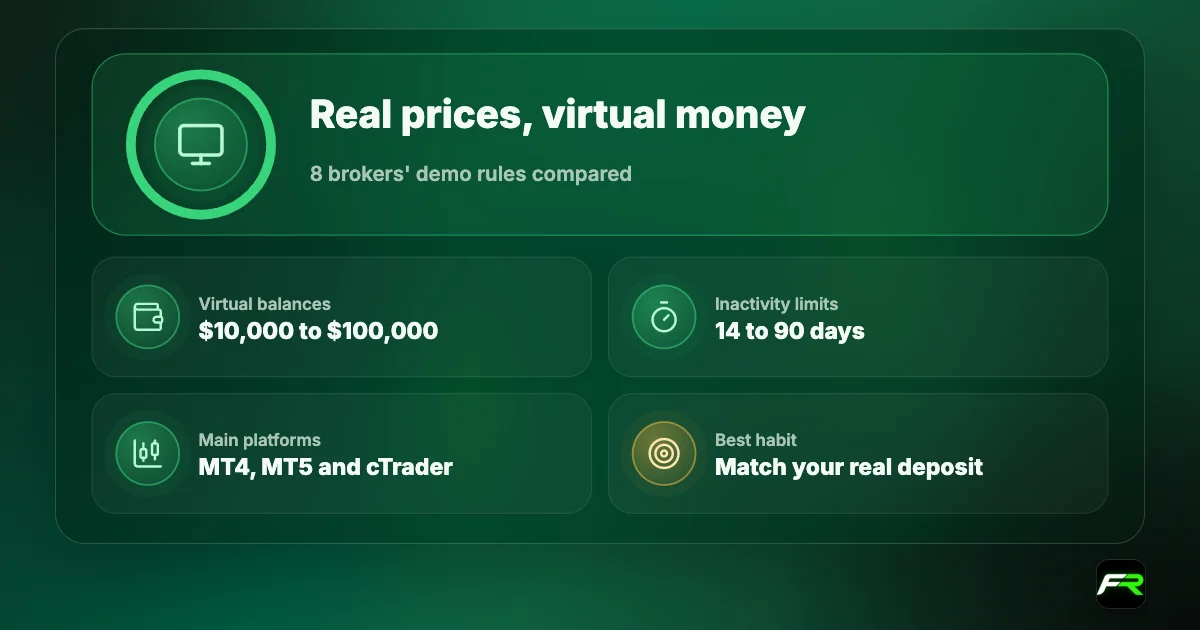
You can build real trading skill without touching the grey area. Demo accounts from major international brokers use live prices and virtual money, and charting platforms let you paper trade and backtest ideas. Treat the demo like a real account: a balance you could afford, 1 per cent risk per trade, and a written journal. Three months of honest demo results will show if your approach has an edge before any money is at stake.
- Use the same pair and session for every test so the results are comparable.
- Record the spread at the time of each trade; it is the cost a live account would add.
- Review your journal weekly and change only one rule at a time.
The "Mr Pips" case: Vietnam's biggest forex scam
In 2024 and 2025 Hanoi police dismantled a network led by Pho Duc Nam, a social media personality known as "Mr Pips", in what they described as the largest forex fraud ever uncovered in Vietnam. More than 80 people were charged with fraudulently appropriating property, and police seized about US$2.3 million in cash, 246 kg of gold bullion, dozens of cars and other assets. International reports put the sums involved at around US$200 million, and police later moved against some 550 salespeople linked to the scheme.
The pattern matched every other local "sàn": courses and social media content to build trust, a platform the organisers controlled, and commissions for bringing in new members. Nothing about it involved a real broker.
Is Exness or XM legal in Vietnam?
No foreign broker is licensed to offer retail forex in Vietnam. International brands that accept Vietnamese clients do so under their home regulator, which cannot protect you in Vietnam, and the domestic rules on foreign exchange still apply to how you move money. Legitimacy abroad does not create legality at home.
In Vietnam the biggest losses rarely come from the chart. They come from money that never reached a real broker, or never came back from one. If you cannot explain exactly where your money sits and under which regulator, you are not ready to fund an account.
Minh joined a local "sàn" that paid a fixed 8 per cent a month for the first three months. When the payments stopped, the office closed and the Zalo group was deleted. He now practises on a demo account with an internationally regulated broker and keeps his savings in a Vietnamese bank.
| Retail forex licence in Vietnam | None exists |
|---|---|
| Regulator | State Bank of Vietnam |
| Local trading floors | Illegal; raided and prosecuted |
| Individuals trading offshore | Grey area; no protection or recourse |
| Local recourse | None |
| Busiest window | About 7:00 to 11:00 pm Hanoi time |
Rules around the region vary widely; compare Thailand, where individuals may use a broker abroad, and Malaysia, where unlicensed offshore brokers are not permitted.
Frequently asked
Is forex trading legal in Vietnam?
Running a forex brokerage or trading floor in Vietnam is illegal, and no retail licence exists. Individuals trading with offshore brokers are in a grey area with no protection, and a 2026 decree now fines individuals who use unlicensed crypto platforms, a sign enforcement is reaching end users.
Which forex broker is best for Vietnam?
We do not rank offshore brokers for Vietnamese residents because there is no legal, protected route. If you trade anyway, use only a broker with a verifiable ASIC, CySEC or FCA licence and fund it without agents.
Are local forex trading floors legal?
No. Vietnamese authorities have raided and prosecuted local trading floors that take public deposits and promise fixed returns.
Can I use MoMo for forex trading?
Some brokers accept MoMo or ZaloPay through payment partners, but that route sits outside the banking rules and offers no protection if something goes wrong.
What is the safest way to learn forex in Vietnam?
A demo account with real prices and virtual money. It costs nothing, carries no legal risk and teaches the same skills.
Can I be fined for trading forex in Vietnam?
Reports in 2026 describe administrative fines of up to VND 100 million for using unrecognised channels such as offshore forex platforms, with criminal liability possible in serious cases. Operating a local trading floor is clearly illegal.
Is gold trading legal in Vietnam?
Buying physical gold through licensed dealers is legal. Leveraged gold CFDs on offshore platforms fall into the same grey area as forex.
What was the Mr Pips forex scam?
A network led by Pho Duc Nam, known as Mr Pips, that Hanoi police called Vietnam's biggest forex fraud. More than 80 people were charged and police seized about US$2.3 million in cash and 246 kg of gold bullion.
Is Exness legal in Vietnam?
No foreign broker is licensed for retail forex in Vietnam. Brands that accept Vietnamese clients do so under their home regulator, which offers no protection or recourse in Vietnam.
The team behind this guide
Researched, checked and approved by five forex specialists
Every guide is written, fact-checked and edited before it goes live, and updated when the facts change. Spotted an error? Tell us.