 IC Markets





























Best Forex Brokers with Trading APIs for 2026
We compare 10 brokers for API trading, including FXCM, IG, OANDA, Interactive Brokers, IC Markets and Pepperstone, on the protocols they support (REST, FIX, streaming), documentation, latency and data access. Confirm the API supports your language and order types, then run your code on a demo before trading live.
 WriterAbir KhanWriterWrites the guides · checks every figure against primary sources View profileAbout Abir →
 Market analysisTanbir Habib RiyadForex & Crypto AnalystForex and crypto analyst · technical and fundamental analysis View profileAbout Tanbir →
 Fact-checking & riskJannatul FerdaushFact-Checker & Risk AnalystFact-checks every figure · risk analysis · Applied Statistics, University of Dhaka View profileAbout Jannatul →
 Trading reviewJowel RanaCo-Founder & Forex TraderCo-founder · forex trader · reviews guides from a trader's view View profileAbout Jowel →
 Final approvalRanjan NiskrityFounder, Owner & Forex TraderFounder and owner · forex trader · signs off every guide View profileAbout Ranjan →


Exness

XM

IC Markets

LiteFinance

FP Markets

AvaTrade

Octa

RoboForex
Disclosure: "Visit Broker" links are partner (affiliate) links. FX Recap may earn a commission at no cost to you. Trading involves significant risk of loss. T&Cs apply.
Not every broker that advertises API access delivers a clean, reliable integration. Some offer limited endpoints.Some provide limited documentation, while others may perform differently under periods of heavy trading activity.
This guide compares brokers that offer API access suitable for algorithmic trading, based on publicly available documentation and regulatory information. All regulatory details listed here have been cross-checked against official FCA, ASIC, and CySEC registers as of March 2026.
What a Trading API Does
A trading API (Application Programming Interface) is a direct connection between your code and a broker’s execution system. Instead of logging into a platform and clicking manually, your script sends instructions straight to the broker’s servers. Prices stream in. Orders go out. Risk rules fire automatically.
Once configured correctly, your strategy can execute automatically according to its predefined rules.. Your program monitors tick data, confirms signal conditions, submits an order, sets a stop, and records the trade result. Execution speed depends on the broker, network latency, and market conditions.
The Three Core API Protocols
The protocol type dictates what is actually possible with a broker’s API:
- REST APIs are request-response connections. Clean and accessible for most developers starting out. Suited to account management, order submission, and pulling historical data.
- WebSocket APIs maintain a persistent two-way connection that pushes real-time price updates directly to your application. Lower latency than REST for live data feeds.
- FIX is an institutional-grade communication protocol widely used by banks, brokers, and professional trading firms. Sub-millisecond execution. FXCM’s FIX API supports up to 250 price updates per second and requires a Trading Station account with a minimum balance of $5,000.
Why Traders Move to API Trading
The most direct benefit is execution discipline. A rule-based system does not hesitate, second-guess, or override itself based on how the last trade went. The signal fires, the order goes in, the stop gets placed. Every single time.
Automated systems can usually respond faster than manual trading, particularly during fast-moving markets. A well-built API system can. For strategies that depend on short time windows, that difference compounds across hundreds of trades.
The third factor is scale. Running three strategies simultaneously across different pairs is difficult to manage manually. Through an API, it becomes a background process.
None of this removes market risk. A strategy with poor logic runs poorly, just faster. Error handling, position limits, and circuit breakers are not optional extras. They are what separates a functional algo from a liability.
Why API Access Matters More in 2026
The forex market has always rewarded speed and consistency, but the competitive baseline has shifted. Retail algorithmic trading is more accessible than at any previous point. Python libraries, public quant forums, broker sandbox environments, and cloud VPS hosting have all lowered the barrier to entry significantly.
More participants are now running automated systems. A trader relying on chart patterns and manual timing competes with bots that can scan 50 pairs and place an order in the time it takes to move a mouse.
API access alone does not create an edge. A profitable strategy still depends on sound logic, disciplined risk management, and ongoing testing.
How to Evaluate a Broker’s API Before Committing
Simply offering an API does not guarantee a high-quality developer experience. Before spending time on integration, these areas deserve careful attention.
Protocol Support
REST is the standard. Nearly every broker offers it. What distinguishes the better options is whether WebSocket is available for real-time data streaming and whether FIX is accessible if your strategy requires institutional-grade throughput. The combination of REST for order management and WebSocket for price feeds handles most systematic retail strategies well.
Documentation Quality
Incomplete documentation can significantly increase development time. Before opening an account for API purposes, read the developer docs directly. Check whether authentication is explained clearly, whether endpoints include working examples, and whether error codes are documented fully. Brokers that maintain interactive API consoles or publish client libraries for Python and Java tend to deliver a meaningfully better integration experience.
Latency Infrastructure
Quoted latency figures are a starting point. Where available, review independently audited execution statistics together with the broker’s published infrastructure details. IC Markets hosts infrastructure in Equinix NY4 and LD5. Traders using co-located VPS services may achieve latency below 1 ms under suitable conditions. The distance between your bot and the matching engine can influence slippage on fast-moving instruments.
Data Access
An API that only supports live trading is limited for strategy builders. Backtesting requires historical tick or bar data through the same interface. Brokers that provide clean historical endpoints within the same API, such as OANDA’s v20 REST API and IG both provide historical market data through their APIs, reducing the need for separate data sources in many development projects.
Risk Management at the API Level
A well-designed trading API should support programmatic stop-loss and take-profit management where available. It should return clear error states when orders fail rather than silently dropping them. Some brokers support server-side risk rules that remain active even when your connection drops. For live algo trading, this is not a minor detail.
Best Forex Brokers with Trading APIs: Detailed Reviews
All data below was verified against official broker websites, regulatory registers (FCA, ASIC, CySEC), and independent testing sources as of March 2026. Spreads are indicative and vary by market conditions. Minimum deposits may differ by account type and regional entity.
| Broker | Regulation | API Type | Min. Deposit | Spreads From | Best For | Key Note |
| FXCM | FCA, ASIC, CySEC, FSCA | REST, FIX, Java API, ForexConnect | $50 | 0.2 pips (Raw) | Algo & multi-language dev | 3 free APIs. FIX pushes 250 price updates/sec. $5,000 min balance for FIX. Python wrapper available. VPS at $30/mo (refunded above $500K volume). |
| IG | FCA, CFTC, ASIC, MAS | REST, Lightstreamer Streaming, FIX (institutional) | $0 | 0.6 pips (EURUSD) | Institutional & retail algos | REST + Lightstreamer WebSocket feeds. Deep historical data via API. FIX via IG’s institutional service. Python wrapper community-maintained. 40 simultaneous subscriptions per connection. |
| OANDA | FCA, CFTC, NFA, ASIC, MAS, CIRO | REST + Streaming (v20) | $0 | 0.7 pips (Standard) / 0.0 pips (Core +$5/lot) | Developer-friendly strategies | v20 REST API with full Python support (oandapyV20). Streaming and historical candles unified under one interface. Core account requires $10,000 minimum. US traders accepted. |
| Interactive Brokers | SEC, FCA, CFTC, ASIC, IIROC | TWS API, Client Portal API, FIX | $0 (cash) / $2,000 (margin) | 0.1 pips + $2 min commission | Multi-asset automated traders | Covers forex, stocks, futures, options from one account. Languages: C++, C#, Java, Python, R. TWS or IB Gateway must run for API connectivity. FIX via IBKR FIX Engineering team. |
| IC Markets | ASIC, CySEC, FSA (Seychelles) | cTrader Open API, MT4/MT5 API | $200 | 0.0 pips (Raw cTrader, $6/lot round turn) | HFT & latency-sensitive algos | Equinix NY4 (MT4/MT5) and LD5 (cTrader). Under 1ms latency to major VPS in LD5. 25+ liquidity providers. $29B+ daily volume. cTrader cAlgo for C#/.NET strategies. 2026 #1 MetaTrader broker (ForexBrokers.com). |
| Pepperstone | FCA, ASIC, CySEC, BaFin, DFSA, CMA, SCB | MT4 API, MT5 API, cTrader Open API | $0 | 0.0 pips (Razor, $6–7/lot round turn) | Developers focused on execution quality | 30ms average execution. 7.5M+ trades per day. Free VPS (2+ lots/month). API requires larger account size per Pepperstone policy. 6 tier-1 regulatory licences. Not available in US. |
| Saxo Bank | Danish FSA, FCA, ASIC, FINMA, MAS | OpenAPI (REST + Streaming, OAuth/SAML) | $0 Classic / $200,000 Platinum / $1M VIP | 0.4 pips (EURUSD) | Institutional & multi-asset traders | 71,000+ instruments. SaxoOpenAPI covers full trading lifecycle via REST on HTTP with streaming. Free streaming on forex and 5,000+ bonds by default. Developer portal with docs, sample code, and libraries. |
| Forex.com | FCA, CFTC, MAS, ASIC | REST | $100 | ~0.2 pips (Raw + commission) | Broad market API traders | ~20ms average execution. Order routing across full liquidity pool since 2026 update. Reliable documentation. Suitable for US-based traders where broker options are regulated-restricted. |
| Capital.com | FCA, CySEC, ASIC, SCB | REST | $20 | Spread-only, from 0.6 pips | Entry-level automation | Simpler REST interface with low deposit barrier. Suited to beginners building first live API connections. No FIX or WebSocket streaming option. AI-powered analysis built into platform. |
| Exness | FCA, CySEC, FSCA, CMA, SCB, BVI FSC | MT5 REST, cTrader | $10 | 0.0 pips (Pro account) | MT5 hybrid automation | Easy onboarding. No minimum deposit on most accounts. MT5 REST allows basic automation alongside manual trading. Limited API depth compared to institutional-grade options above. |
Regulatory disclaimer: All regulatory details have been cross-checked against official FCA, ASIC, and CySEC registers. Traders should independently verify current regulatory status before opening any account, as licensing is subject to change.
Top Brokers: What Matters for API Traders
FXCM
Regulation: FCA, ASIC, CySEC, FSCA (via Stratos Group entities)
FXCM offers four distinct API options: REST, FIX, Java API (a wrapper SDK of FIX), and ForexConnect. All three non-REST APIs connect directly to FXCM’s trading server and are free. The FIX API is the fastest, pushing up to 250 price updates per second and requiring a Trading Station account with a $5,000 minimum balance.
The Python REST package (fxcmpy) is well-documented and community-maintained. ForexConnect supports C++, C#, Java, VB, VBA, and works across Linux, iOS, and Android. VPS hosting is available at $30 per month, with fees refunded for traders who reach $500,000 in notional volume over three consecutive months.
FXCM does not support MT5. Tradeable instruments are narrower than brokers like IG or Interactive Brokers. For developers wanting multiple API types and multi-language support within a single regulated account, FXCM offers one of the broader API selections available to retail traders.
IG
Regulation: FCA, CFTC, ASIC, MAS
IG’s API offering covers REST, a Lightstreamer-based streaming layer, and FIX for institutional clients via IG’s institutional service. The streaming API allows up to 40 simultaneous subscriptions per connection. FIX provides DMA and OTC product access at institutional grade.
The historical data depth through IG’s REST API is one of the broadest available at the retail level. EUR/USD spreads average 0.6 pips on standard accounts. A Python wrapper is maintained independently by the community. Demo API access requires the same email as a live account, and all testing can be done safely in the sandbox environment.
According to ForexBrokers.com’s 2026 review, IG received one of the industry’s highest Trust Scores.
OANDA
Regulation: FCA, CFTC, NFA, ASIC, MAS, CIRO (Canada)
OANDA’s v20 REST API has a long-standing reputation as one of the cleaner interfaces for developer-focused traders. The documentation is thorough, the oandapyV20 Python wrapper is actively maintained, and the API covers streaming prices, order management, account history, and historical candle data through a single unified structure.
Account types differ by region. Standard accounts carry spreads from 0.7 pips with no commission and no minimum deposit. Core accounts drop to raw spreads from 0.0 pips with a $5 per lot commission but require a $10,000 minimum deposit. OANDA is one of the few major brokers still accepting US-based forex traders through its CFTC/NFA-regulated entity, making it a practical default for US-based algo developers.
OANDA does not offer FIX access at standard retail account levels. For high-frequency models requiring sub-millisecond throughput, this is a practical limitation. For most quantitative retail strategies, the REST plus streaming combination covers the full range of typical use cases.
Interactive Brokers
Regulation: SEC, FINRA, CFTC (US), FCA (UK), ASIC (Australia), and CIRO (Canada), among others.
Interactive Brokers is widely regarded as one of the strongest multi-asset brokers for API trading. The TWS API, Client Portal API, and FIX gateway collectively cover forex, equities, futures, and options through a single account structure. Languages supported include C++, C#, Java, Python, R, ActiveX, and DDE. For traders running cross-asset strategies or hedging forex exposure against equity positions, few retail brokers offer a comparable range of asset classes and API options.
No minimum deposit is required for cash accounts. Margin accounts require $2,000. The forex commission structure starts at 0.2 bps of trade value with a $2 minimum per order. The all-in trading cost varies by pricing tier, trade size and market conditions. Refer to IBKR’s published commission schedule for current pricing.
The setup is more involved than consumer-focused brokers. The TWS application or IB Gateway must be running and connected for the API to function. Once operational, the execution infrastructure is enterprise-grade. The steep learning curve is a genuine barrier for less experienced developers, but the documentation and IBKR Campus training resources are extensive.
IC Markets
Regulation: ASIC (Tier-1), CySEC (Tier-1), FSA (Seychelles)
IC Markets is widely known for competitive pricing and low-latency execution. Their True ECN model routes orders through 25+ tier-1 liquidity providers, processing over $29 billion in daily trading volume. The Raw Spread account on cTrader prices from 0.0 pips with a $6 per lot round-turn commission. On MT4/MT5, the Raw Spread account charges $7 per lot round-turn.
Server infrastructure runs through Equinix NY4 for MT4/MT5 and Equinix LD5 in London for cTrader, with under 1ms latency to co-located VPS providers. The cTrader Open API supports algorithmic strategies built in C#/.NET via the cAlgo module. Free VPS hosting is available for traders meeting minimum volume requirements, with the VPS hosted in the same Equinix NY4 data centre as IC Markets’ trading servers.
IC Markets won first place in both the MetaTrader and Algo Trading categories in ForexBrokers.com’s 2026 Annual Awards. The $200 minimum deposit applies to all account types. US, Canadian, and Japanese residents cannot open accounts.
Pepperstone
Regulation: FCA (license 684312), ASIC (license 414530), CySEC, BaFin, DFSA, CMA, SCB
Pepperstone’s Razor account offers spreads from 0.0 pips, with commissions charged separately. Average EUR/USD spread on the Razor account is 0.1 pips across testing periods. Pepperstone reports low-latency execution, although execution speed varies with market conditions and connection quality. Over 7.5 million trades are processed per day on the platform.
API access is available through MT4, MT5, and the cTrader Open API. Pepperstone notes that API trading is designed for clients with larger account sizes and connect directly to Pepperstone’s trading infrastructure. Documentation across all three platforms is detailed, with specific integration guides available through the developer resources.
Pepperstone offers VPS services to eligible clients who meet the broker’s current trading activity requirements. Free VPS hosting is available for traders placing two or more standard lots per month, with servers co-located near Pepperstone’s trading infrastructure. No minimum deposit is required. Pepperstone does not accept clients from the US, Canada, or Belgium. Six tier-1 regulatory licences provide one of the broadest multi-jurisdiction compliance structures among retail brokers.
Saxo Bank
Regulation: Danish FSA (banking licence), FCA (UK), ASIC, FINMA (Switzerland), MAS (Singapore)
Saxo is a fully licensed Danish investment bank, not a standard forex broker. Saxo OpenAPI provides REST-based services together with streaming functionality for supported applications. It covers the complete trading lifecycle across 71,000+ instruments including 190 forex pairs, 19,000+ stocks, 7,000+ ETFs, 5,000+ bonds, futures, and options.
Classic accounts generally have no minimum funding requirement in eligible regions, although local requirements may vary, though most active traders fund with $2,000 or more in practice. Platinum accounts require $200,000. VIP accounts require $1,000,000. Forex spreads start at 0.4 pips on EUR/USD. A Developers Portal provides full documentation, sample code, and libraries. Free streaming prices are available by default for forex and approximately 5,000 bonds.
Saxo removed inactivity fees in 2024. Deposits and withdrawals are free. Card funding was discontinued in April 2025. The pricing tier structure rewards high-volume clients significantly, and algorithmic trading restrictions apply to traders from certain international jurisdictions.
Forex.com
Regulation: FCA, CFTC, ASIC, MAS
Forex.com‘s REST API averages approximately 20 milliseconds execution speed in published independent testing. FOREX.com routes client orders through its execution infrastructure as described in its execution policy. The minimum deposit is $100.
Raw accounts price from around 0.2 pips with a per-lot commission. Standard accounts include all costs within the spread. For US-based traders, Forex.com is one of the more accessible regulated options given CFTC oversight. The API documentation is clear and covers standard endpoints for order management, position handling, and market data.
Capital.com
Regulation: FCA, CySEC, ASIC, SCB
Capital.com‘s REST API is one of the more straightforward options for beginners. Minimum deposit is $20. Spreads are spread-only from 0.6 pips with no commission. Capital.com offers REST and WebSocket APIs. However, it does not provide a FIX API for retail clients. The platform’s built-in AI-powered analysis tools are designed for the platform interface rather than API consumers.
For traders building their first live API connection with limited technical experience and a low capital commitment, Capital.com simplifies the setup process. It is not a destination for advanced algo strategies.
Exness
Regulation: FCA, CySEC, FSCA, CMA, SCB, BVI FSC
Exness accepts no minimum deposit on most account types. The Pro account prices from 0.0 pips. MT5 REST integration allows basic automation alongside manual trading. API depth is limited compared to the institutional-grade options above, but the ease of onboarding and low capital requirements make it accessible for traders who want to combine MT5 with simple programmatic order management.
What API Automation Looks Like in Practice
Consider a systematic trader running a trend-following strategy on EUR/USD. The rule: go long when a short-term moving average crosses above a longer-term moving average with volume confirmation. Simple enough to write. Easy to hesitate on when executed manually.
After automating the same rules through FXCM’s REST API, the bot monitors price ticks per second, submits orders within milliseconds of signal confirmation, and applies risk rules automatically on every position. No delays. No overrides based on how the previous trade went.
Over three months of live testing, the strategy executed more consistently than the manual backtest results. Not because the logic changed, but because every rule fired exactly as written, every time. That reliability is what systematic traders are paying for when they invest in API integration.
Getting Started with API Trading: The Right Order
There is no shortcut past the setup phase. The traders who build reliable systems take it step by step.
- Choose a broker based on your actual requirements. Latency tolerance, data access, account minimums, and regulatory jurisdiction should drive the decision. Not marketing copy.
- Open an account and request API access. Most brokers handle API key generation through a secure developer dashboard. Some require full account verification before API access is enabled.
- Read the full documentation before writing any code. Rate limits, authentication methods, endpoint structure, and error code definitions all need to be understood before the first request is sent. Documentation gaps at this stage create debugging problems later.
- Develop and test in a demo or sandbox environment. Demo environments are not perfect replicas of live execution, but they catch logic errors, mishandled responses, and edge cases before they cost real capital.
- Log everything from the start. Every order, every tick, every error response. Logs are what let you trace a misbehaving strategy back to its root cause. Traders who skip this early on rebuild it after a confusing loss.
- Go live at minimum position size. Small sizes during the early live phase let you observe how your system handles real execution conditions, slippage, partial fills, and connectivity interruptions without full capital exposure.
Execution Quality, Risk, and Keeping the Algorithm Honest
Automation removes emotional hesitation from the execution layer. It does not remove market risk. Without deliberate controls, automation compounds losses faster than any manual trader could manage.
The traders who use APIs over extended periods treat risk management as a core component of the system itself, not an afterthought bolted on later. That means:
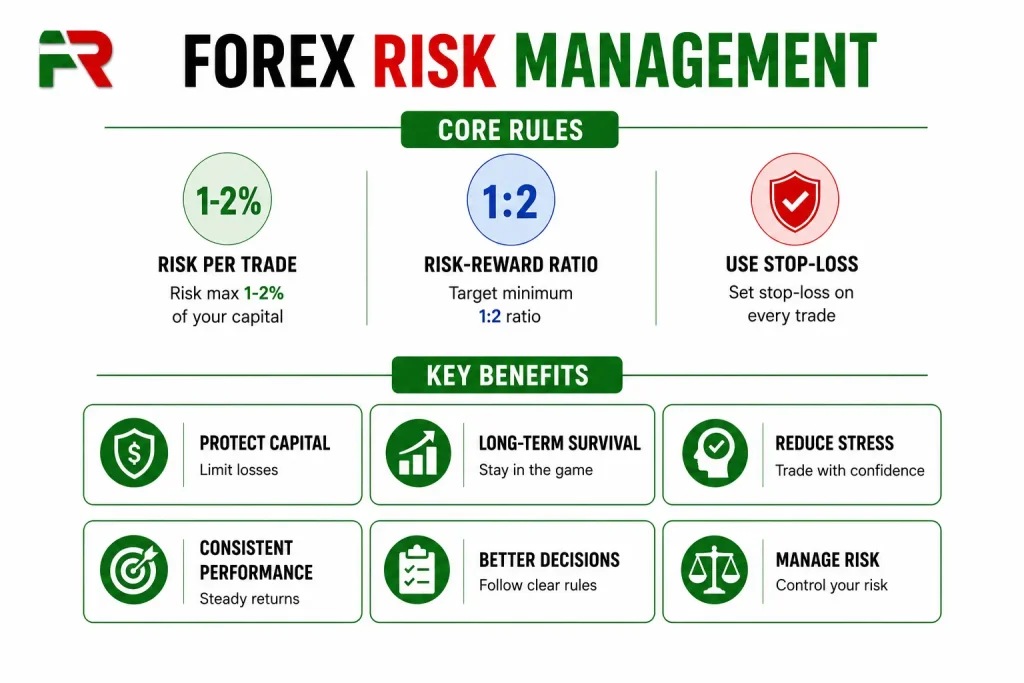
- Hard portfolio-level loss limits that pause or shut down the entire system, not only individual positions.
- Scheduled monitoring around high-impact news events where normal model assumptions may not hold.
- Fallback logic for when the API feed is slow, returns unexpected data, or drops the connection entirely.
- Position sizing that accounts for current volatility rather than fixed lot sizes regardless of market conditions.
Market conditions change. A strategy that performs well in a trending environment may behave unpredictably in a range-bound one. Reviewing performance across different regimes and rebuilding assumptions periodically is what keeps an automated system functional over time, not just during the conditions it was originally built for.
How FX Recap Evaluates Brokers for API Trading
Every broker included in this page was assessed across the same set of criteria. Regulatory standing is verified against official FCA, ASIC, and CySEC registers. Execution data comes from published independent testing sources, disclosed clearly where it does not. API documentation is reviewed directly against the broker’s developer resources, not through press materials.
FX Recap does not accept payments from brokers to influence rankings or content. Broker positions in comparison tables reflect research findings. Readers should verify all regulatory details independently through the FCA Register, ASIC Connect, CySEC’s regulated entities list, and equivalent databases for other jurisdictions.
FAQs
Do all forex brokers offer API access?
No. Many retail brokers provide only their own platform interface without any API layer. Among those that do, quality varies significantly. Some offer limited REST endpoints only. Others support FIX and WebSocket connections alongside client libraries for multiple programming languages. It is worth verifying the specific API documentation before opening an account.
Is FIX API necessary for retail traders?
For most retail algorithmic traders, FIX is not required. REST plus WebSocket covers medium-frequency systems, swing strategies, and intraday models. FIX becomes relevant for high-frequency strategies that need sub-millisecond order routing, and it typically comes with institutional account requirements. FXCM’s FIX, for example, requires a $5,000 minimum balance.
Which programming language works best for forex API integration?
Python is the most practical starting point for most traders. The financial library ecosystem is mature, and most developer-friendly brokers publish Python client examples or maintain official wrappers. C++ is used for latency-critical HFT systems. Java is supported by several institutional-grade brokers, including FXCM’s Java API and Interactive Brokers. R is supported directly by IBKR’s API for statistical and backtesting workflows.
Can I run an API bot on a home computer?
Technically yes, reliably no. Home internet connections are subject to outages, latency spikes, and power interruptions. For any strategy that needs to run continuously during market hours, a VPS hosted near the broker’s data centre is the standard approach. IC Markets, Pepperstone, and IBKR all offer VPS solutions or have clear guidance on recommended co-location options.
Are trading APIs free to use?
In most cases, yes. Brokers typically include API access as part of a live trading account without additional fees. Some charge for premium historical data packages or institutional FIX connections. FXCM’s FIX API requires a $5,000 account balance but no separate fee. Saxo provides free streaming for forex and approximately 5,000 bonds; additional market data requires a separate licence agreement.
What is the difference between backtesting and live API trading?
Backtesting runs strategy logic against historical data to assess past performance. Live API trading executes real orders in real markets with real capital. The gap between the two, commonly called the execution gap, comes from slippage, partial fills, latency, and real-world market impact. A demo account sits in between: live price feeds, simulated order execution. Always test thoroughly in demo before committing live capital.
Final Thoughts from FX Recap
API trading can help systematic traders automate execution while maintaining consistency.In the hands of a systematic trader who tests carefully, manages risk deliberately, and treats the code as part of the strategy itself, it can reduce the impact of emotional decision-making when implemented correctly.
The brokers listed here have each demonstrated meaningful API reliability, regulatory credibility, and documentation quality. Which one fits your setup depends on strategy type, the markets you are trading, your technical background, and what you actually need from an API layer.
Begin with a demo account, validate your strategy under different market conditions, and only move to live trading once you are confident in its performance. Have you built an API system that worked well, or run into problems during testing that others could learn from? The best content on FX Recap comes from traders who have done the work.
- 1
 IC MarketsTop pick★★★★★★★★★★4.7/5
 - 2
 Exness★★★★★★★★★★4.7/5
 - 3
 XM★★★★★★★★★★4.7/5
 - 4
 RoboForex★★★★★★★★★★4.6/5
 - 5
 FP Markets★★★★★★★★★★4.6/5
Your capital is at risk. FX Recap rates brokers available in each country on regulation, trading conditions and user trust. How we rank
 Unlimited cashback on your XM tradesUnlimited XM cashbackAdT&Cs apply. Your capital is at risk.T&Cs apply · Capital at riskStart earning