IC Markets






























Is Forex Trading Going to Be Banned in South Africa?
No, and the regulatory direction is the opposite. Here is where the rumour comes from, what the FSCA is actually doing, and why a licensed market is harder to ban than an unregulated one.
 WriterAbir KhanWriterWrites the guides · checks every figure against primary sources View profileAbout Abir →
 Market analysisTanbir Habib RiyadForex & Crypto AnalystForex and crypto analyst · technical and fundamental analysis View profileAbout Tanbir →
 Fact-checking & riskJannatul FerdaushFact-Checker & Risk AnalystFact-checks every figure · risk analysis · Applied Statistics, University of Dhaka View profileAbout Jannatul →
 Trading reviewJowel RanaCo-Founder & Forex TraderCo-founder · forex trader · reviews guides from a trader's view View profileAbout Jowel →
 Final approvalRanjan NiskrityFounder, Owner & Forex TraderFounder and owner · forex trader · signs off every guide View profileAbout Ranjan →
The question comes up every few months, usually after an FSCA action against a scam gets reported without context, or a WhatsApp message claims the government is about to shut forex down. There is no proposal to ban individual forex trading in South Africa. If anything the trend runs the other way: more licensing, more supervision, more enforcement against the operators who give the industry its bad name. This guide explains why the rumour keeps circulating and what is actually happening.
Where the rumour comes from
- FSCA warnings misread. The regulator publishes warnings against unlicensed operators at a pace of more than two a week. Each one is protection for traders, but a headline like "FSCA warns against forex scheme" reads to some people as "FSCA against forex".
- Big enforcement cases. The R2 billion Banxso fine and its liquidation were widely covered. A court finding one platform's model illegal is not a ban on the activity, but it feels like a crackdown.
- Scam marketing in reverse. Some unlicensed operators tell clients "regulation is coming, move your money now" to create urgency. The ban rumour is sometimes a sales tactic.
- Confusion with advertising rules. There are limits on how financial products can be advertised, and unlicensed platforms are not allowed to advertise at all. That is a marketing restriction, not a trading ban.
What the FSCA is actually doing
The regulatory direction since 2022 has been to bring forex and CFD brokers under the Over-the-Counter Derivative Provider licensing regime, so that firms taking South African clients are supervised, hold capital, and segregate client money. In December 2025 the FSCA imposed the largest fine in its history on Banxso, and during 2026 it provisionally withdrew licences from CFD brokers it found wanting and opened investigations. That is a regulator enforcing a framework, not dismantling one. A licensed, supervised market is the opposite of a banned one.
| What people fear | What is actually happening |
|---|---|
| Government bans individual forex trading | No proposal exists; individuals trading their own money are not the target |
| FSCA shuts down all brokers | FSCA licenses compliant brokers and acts against non-compliant ones |
| Forex becomes illegal like it was decades ago | The activity is more regulated and more clearly legal than it was ten years ago |
| You have to withdraw your money now | This is often a scam operator's urgency tactic |
What tighter rules elsewhere look like
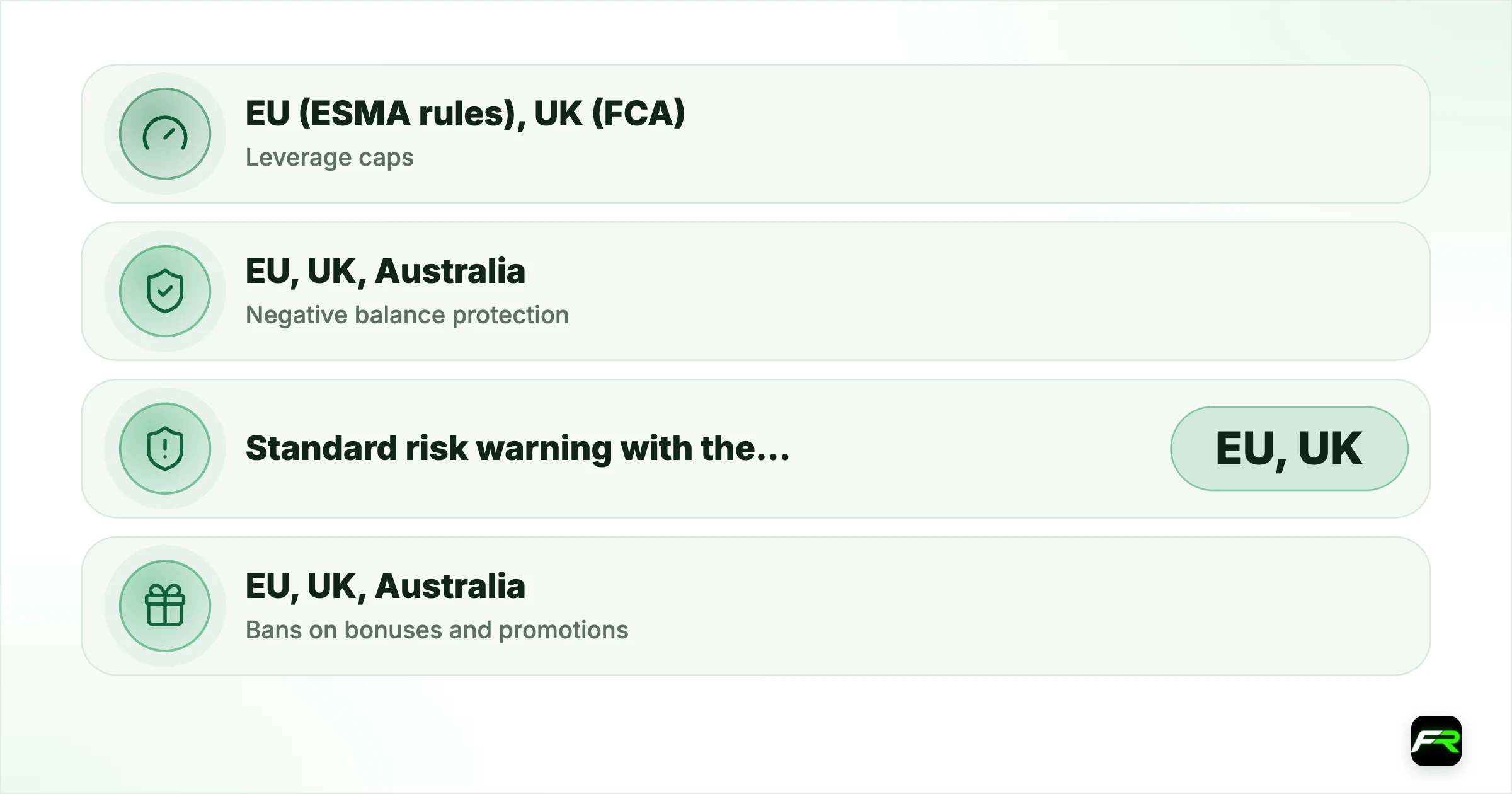
The best guide to where South African rules could go is what other regulators have already done. None of these markets banned forex trading. Each placed limits on how it is sold to retail clients, and people there still trade every day.
| Measure | Where it exists | Effect on a trader |
|---|---|---|
| Leverage caps (30:1 on major pairs) | EU (ESMA rules), UK (FCA) | Smaller positions per rand of margin |
| Negative balance protection | EU, UK, Australia | You cannot lose more than your deposit |
| Standard risk warning with the share of losing accounts | EU, UK | Every advert shows the loss rate |
| Bans on bonuses and promotions | EU, UK, Australia | No deposit bonuses for retail clients |
If the FSCA adopted any of these, the effect would be smaller positions, fewer bonuses and clearer warnings. That might push some traders towards offshore entities, which is exactly why regulators abroad pair such rules with action against firms that target their residents without a licence.
How to tell real regulatory news from a rumour
- Find the source. A real change appears on fsca.co.za, in a government gazette or in a Treasury statement, not first in a WhatsApp forward.
- Read what it covers. Most notices concern one firm or one product, not the whole industry.
- Look for dates. Rule changes go through consultation and carry an effective date; nothing serious happens overnight.
- Ask who benefits. A message urging you to move money today usually benefits the sender.
Following those four steps takes a few minutes and filters out nearly every scare. When a genuine change does come, it will come with time to adjust, and licensed brokers will write to their clients about it.
Could the rules get stricter? Yes, and that is normal
It is reasonable to expect tighter conduct standards over time: leverage limits, clearer risk warnings, stricter marketing rules, faster action against offshore entities targeting South Africans. Other markets have gone this way. That would change how brokers operate and might make some offshore setups harder to access, but it is regulation of a legal activity, not prohibition of it. Traders in markets with strict rules still trade.
Sibusiso almost did not open an account because a family group chat was certain forex was about to be banned. He checked the FSCA site himself, found a register of licensed brokers and a stream of warnings against unlicensed ones, and realised the "ban" was a misreading of enforcement news. That week he opened an account with a locally licensed broker. The only real risk in the story was that he nearly took a WhatsApp forward as fact.
When you see a claim that forex is being banned, check the FSCA's own website. If licensed brokers are still listed and still operating, there is no ban. Treat urgent "move your money now" messages as a warning sign about the sender, not about the law.
I have been answering the will-it-be-banned question for years and the answer has not changed. The state is not trying to stop South Africans from trading their own money. It is trying to stop unlicensed operators from taking it. Those are very different projects, and confusing them mostly benefits the scammers.
Frequently asked
Is forex trading going to be banned in South Africa?
There is no proposal to ban individual forex trading. The regulatory direction has been to license and supervise brokers through the ODP framework, which makes the market more regulated, not less legal.
Why does the FSCA keep issuing warnings about forex?
The warnings target unlicensed operators and scams, not licensed brokers or individual traders. The FSCA issues them at a rate of more than two a week as consumer protection. A warning against a scheme is not a statement against forex trading.
Does the Banxso case mean CFDs are illegal?
No. A court found Banxso's specific business model illegal after the FSCA found it misappropriated client funds and ran deepfake adverts. CFDs offered by a properly licensed, compliant broker remain legal.
Could the rules become stricter?
Quite possibly, for example leverage limits or tighter marketing rules, as has happened in other markets. That is regulation of a legal activity, not a ban. Traders in strictly regulated markets still trade.
Someone told me to withdraw my money before forex is banned. Should I?
Be cautious of the person telling you that. "Regulation is coming, move your money now" is a common urgency tactic used by unlicensed operators. Check the FSCA website; if licensed brokers are still operating, there is no ban.
Would leverage limits mean forex is banned?
No. Leverage caps limit how large a position you can open relative to your deposit, as in the EU and the UK, where retail trading carries on under 30:1 limits on major pairs. A cap changes position sizes; it does not stop anyone trading.
Related reading
The team behind this guide
Researched, checked and approved by five forex specialists
Every guide is written, fact-checked and edited before it goes live, and updated when the facts change. Spotted an error? Tell us.