IC Markets




























Best FSCA-Regulated Forex Brokers in South Africa
A checklist for choosing an FSCA-regulated broker, and what an ODP licence, a real ZAR account and local funding actually give you.
 WriterAbir KhanWriterWrites the guides · checks every figure against primary sources View profileAbout Abir →
 Market analysisTanbir Habib RiyadForex & Crypto AnalystForex and crypto analyst · technical and fundamental analysis View profileAbout Tanbir →
 Fact-checking & riskJannatul FerdaushFact-Checker & Risk AnalystFact-checks every figure · risk analysis · Applied Statistics, University of Dhaka View profileAbout Jannatul →
 Trading reviewJowel RanaCo-Founder & Forex TraderCo-founder · forex trader · reviews guides from a trader's view View profileAbout Jowel →
 Final approvalRanjan NiskrityFounder, Owner & Forex TraderFounder and owner · forex trader · signs off every guide View profileAbout Ranjan →
"Best broker" lists are mostly affiliate rankings, and the order changes depending on who is paying. This guide is a checklist instead. For a South African trader, a small number of things separate a broker worth using from one that is not, and once a broker clears them, the differences between the good options are small and personal. The most important item is a verifiable FSCA licence, because that decides whether your money is protected under South African rules or only under a foreign regulator's.
What a local FSCA licence gets you
An FSCA-licensed broker holds an Over-the-Counter Derivative Provider (ODP) authorisation, or operates through an authorised local financial services provider. That brings it under South African conduct rules, capital requirements and a complaints process you can escalate to the FSCA and, if needed, the Ombud, all within South Africa and in a language you speak. A broker on an offshore-only licence is legal to use, but a dispute goes to a regulator in another country. The FSCA vs offshore guide covers the difference.
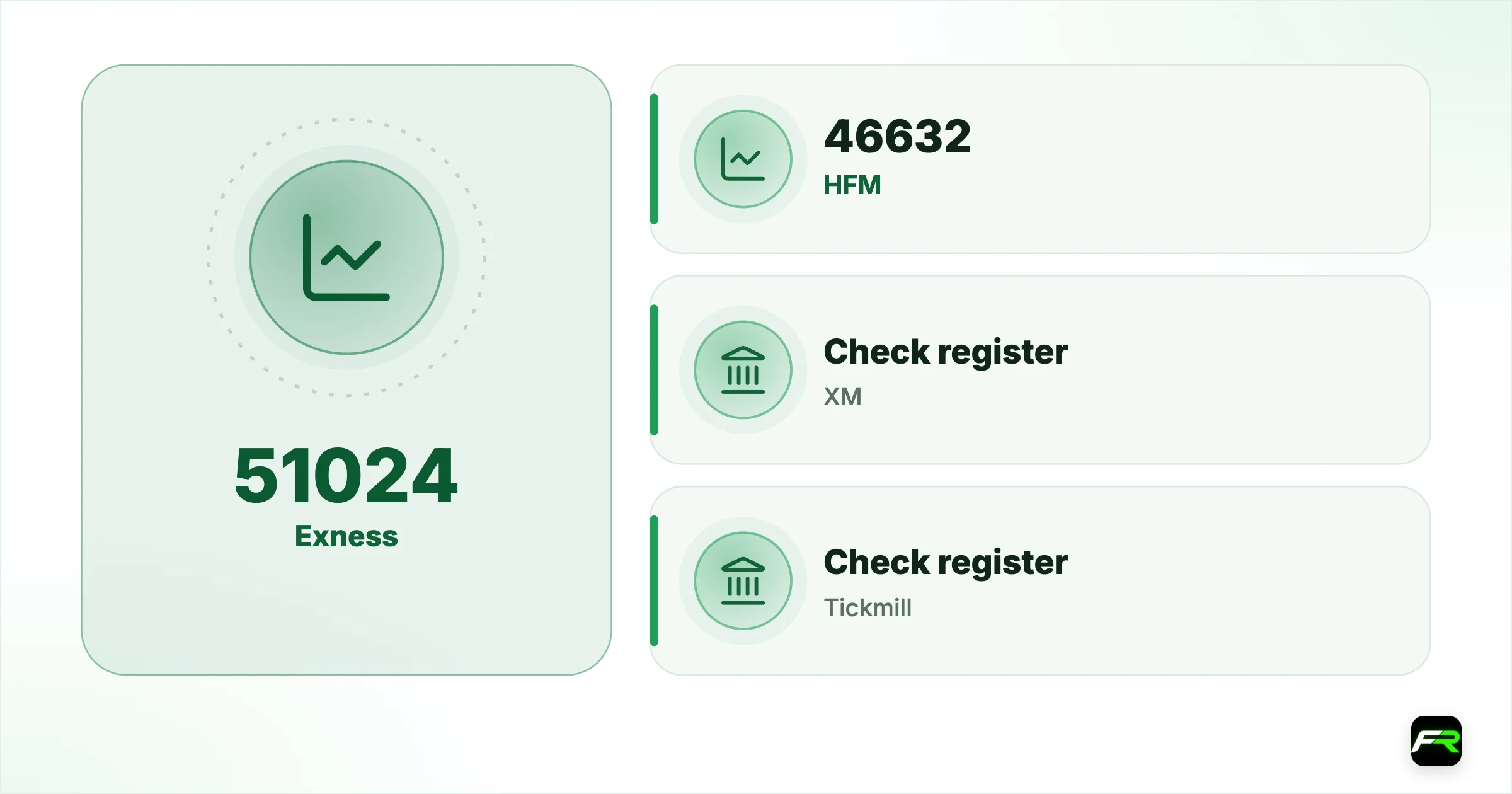
Several well-known brokers hold a local FSCA licence. Exness operates as an FSCA-authorised provider (FSP 51024) with a Cape Town office, HFM has held FSCA authorisation (FSP 46632) since 2016, and XM, Tickmill, AvaTrade, FP Markets and FxPro also hold local authorisation. Names and licence numbers change, and being on this list is not on its own a recommendation, so verify the current FSP number yourself on fsca.co.za before you deposit.
| Broker | FSCA FSP | Typical minimum deposit | ZAR account |
|---|---|---|---|
| Exness | 51024 | About R70 (USD 10 equivalent) | Yes |
| HFM | 46632 | About R70 (USD 5 equivalent) | Yes |
| XM | Check register | About R90 (USD 5 equivalent) | Yes |
| Tickmill | Check register | About R1,800 (USD 100) | Limited |
| AvaTrade | Check register | About R1,800 (USD 100) | Limited |
The figures above are indicative and move with the exchange rate and the broker's own changes. Treat them as a starting point for your own check, not a fixed table.
A true ZAR base account
A ZAR base account holds your balance in rand rather than converting it to US dollars on deposit. This matters for two reasons. First, you are not paying a conversion spread (typically 0.3 to 0.8 per cent) every time you deposit and withdraw. Second, your profit and loss is in the currency you actually spend, so you are not also carrying a USD/ZAR exchange-rate exposure on your account balance on top of your trades. Not every broker that accepts rand offers a genuine ZAR account; some take rand and convert immediately. The ZAR account guide covers which do.
| Feature | Why it matters for a South African trader |
|---|---|
| Local FSCA ODP licence | South African conduct rules and a local complaints route |
| True ZAR base account | No conversion spread on deposits and withdrawals; P&L in rand |
| Local funding (EFT, Ozow, card) | Fund domestically without touching your SARB allowance |
| Clean, fast withdrawal record | The single best test of whether a broker treats clients fairly |
| Free VPS on volume | Keeps trades managed during load shedding |
| Tight spreads on the pairs you trade | Your main ongoing cost |
Local funding and withdrawals
A broker with a local South African entity can take your deposit by domestic EFT, Ozow instant EFT, or card, in rand, without the transfer counting against your SARB discretionary allowance. Most support the main banks directly, so an FNB, Standard Bank, Nedbank, ABSA or Capitec transfer arrives quickly, and Ozow deposits are usually instant. Withdrawals come back the same way, usually within a day or two of the broker approving them, and card withdrawals from the better brokers can be near-instant. The funding guide covers the methods, and the withdrawal times guide has real numbers.
Start on a demo account
Whichever broker you choose, open its demo account first and stay on it until your process is consistent, not until you are bored. A common benchmark is 30 to 50 trades logged with the same rules and a break-even or positive result before you fund anything. Four to six months on demo is normal for someone who goes on to trade profitably. The broker choice barely matters while you are on demo, so use that time to learn the platform and your own strategy, then pick the live account. In our case studies, the traders who skipped this step are the ones who lost their first deposit.
What returns to expect
No broker changes the maths of this. A retail trader who becomes consistently profitable, and most do not, tends to average roughly 1 to 5 per cent a month over several years, with losing months included. Three per cent of a R5,000 account is R150. Full-time income needs a proven multi-year record and capital of around R500,000 or more. A good broker gives you tight spreads, fast withdrawals and a local licence. It does not give you an edge, and any broker or affiliate promising one is selling something.
How to run the check yourself
- Find the exact company name and FSP number in the broker's footer or legal section.
- Look it up on the FSCA register at fsca.co.za. Confirm the entity exists, the authorisation covers derivative instruments, and it is current.
- Confirm it offers a true ZAR base account, not just rand deposits that convert.
- Check the spread on the one or two pairs you will actually trade, during the hours you trade them.
- Read recent reviews focused specifically on withdrawals.
- Open the account, deposit the minimum, place one small trade, and withdraw it. Confirm the round trip works before funding properly.
Sipho picked a broker from a YouTube ranking without checking anything. It turned out he was onboarded to the broker's offshore entity, not its FSCA one, and when a withdrawal was delayed he had no local body to complain to. He moved to a broker with a local FSCA licence and a ZAR account, verified the FSP number himself, and ran a small test withdrawal that cleared in a day. His view now is that the ranking told him nothing that mattered and the three-minute FSCA check told him everything.
What matters less than the marketing suggests
Very high leverage (a beginner does not need 1:1000, and it signals a light-touch entity), deposit bonuses (they usually lock your withdrawal behind a trading-volume requirement), award shelves (a marketing product), and "zero spread" claims (someone is always paid, usually through a commission or a wider spread at the hours you actually trade). Focus on the licence, the ZAR account, the withdrawal record and the spread on your pairs.
A local FSCA licence protects the conduct of the broker. It does not protect you from losing money trading. Regulated broker disclosures consistently show most retail accounts lose money, and that is true of the FSCA-licensed brokers too.
Frequently asked
Which forex brokers have a local FSCA licence?
Brokers with a local FSCA ODP authorisation have included Exness, Tickmill, AvaTrade, FP Markets and FxPro, with HFM also holding FSCA authorisation. Names and licence status change, so verify the current FSP number on the FSCA register at fsca.co.za before depositing.
What is the difference between an FSCA broker and an offshore one?
An FSCA-licensed broker is under South African conduct rules with a local complaints route to the FSCA and the Ombud. An offshore broker serving you is legal to use but a dispute goes to a foreign regulator with no local recourse.
Do I need a ZAR account?
It is not required, but a true ZAR base account saves you the conversion spread on every deposit and withdrawal and keeps your profit and loss in rand rather than adding a USD/ZAR exposure to your account balance.
How do I verify a broker's FSCA licence?
Find the company name and FSP number on the broker's website, then search the FSCA register at fsca.co.za. Confirm the entity exists, the authorisation covers derivative instruments, and it is current.
Are broker awards a good guide?
No. Broker awards are largely a marketing product with entry fees and many categories. Judge a broker on its FSCA licence, its withdrawal record, its ZAR account and the spread on the pairs you trade instead.
Is Exness legit in South Africa?
Exness operates as an FSCA-authorised provider (FSP 51024) with a local office, offers ZAR accounts and local funding, and is one of the more widely used brokers among South African traders. Verify the current FSP number on fsca.co.za yourself, and confirm you are onboarded to the FSCA-licensed entity rather than an offshore one.
What is the smallest amount I can start with?
The main FSCA brokers open accounts from around R70 to R500. Starting that small is fine for learning the platform, but a few thousand rand you can afford to lose is more realistic once you go live, because tiny accounts produce tiny amounts even when you trade well.
Should I use a bonus offer?
Usually not. Deposit bonuses typically lock your withdrawal behind a trading-volume requirement, which pushes you to overtrade. A tight spread and a clean withdrawal record are worth more than bonus credit you may not be able to take out.
Can I fund a forex account from Capitec?
Yes. Brokers with local South African funding accept transfers from Capitec along with FNB, Standard Bank, Nedbank and ABSA, and Ozow instant EFT works with Capitec too. Deposits in rand to a local broker entity do not use your SARB allowance.
Related reading
The team behind this guide
Researched, checked and approved by five forex specialists
Every guide is written, fact-checked and edited before it goes live, and updated when the facts change. Spotted an error? Tell us.