IC Markets












Is Forex Trading Legal in South Africa?
Yes: trading your own money with a licensed broker is legal, the FSCA regulates brokers and SARS taxes profit. What's allowed and your protection.
 WriterAbir KhanWriterWrites the guides · checks every figure against primary sources View profileAbout Abir →
 Market analysisTanbir Habib RiyadForex & Crypto AnalystForex and crypto analyst · technical and fundamental analysis View profileAbout Tanbir →
 Fact-checking & riskJannatul FerdaushFact-Checker & Risk AnalystFact-checks every figure · risk analysis · Applied Statistics, University of Dhaka View profileAbout Jannatul →
 Trading reviewJowel RanaCo-Founder & Forex TraderCo-founder · forex trader · reviews guides from a trader's view View profileAbout Jowel →
 Final approvalRanjan NiskrityFounder, Owner & Forex TraderFounder and owner · forex trader · signs off every guide View profileAbout Ranjan →
Forex trading is legal in South Africa. An individual buying and selling currencies through a broker, using their own money, is not breaking any law and does not need a licence of their own. The activity is common, the brokers advertise openly, and the regulator, the Financial Sector Conduct Authority (FSCA), licenses and supervises the firms rather than banning the activity. What matters is which broker you use, where its licence sits, and whether you declare the profit to SARS.
The confusion usually comes from two places. First, a steady stream of FSCA warnings against unlicensed operators, which some people read as the FSCA being against forex when it is actually protecting traders from scams. Second, the fact that most brokers are foreign companies, which raises the question of whether using them is somehow not allowed. It is allowed. Here is how the framework works.
What the FSCA regulates
Since 2022, a broker offering forex and CFDs to South African clients is required to hold an FSCA licence as an Over-the-Counter Derivative Provider, known as an ODP licence, or to operate through an authorised local financial services provider. Several well-known brokers hold a local FSCA licence in their own name. Others serve South Africans through an offshore entity, which is legal, but means the FSCA is not your regulator for that account.
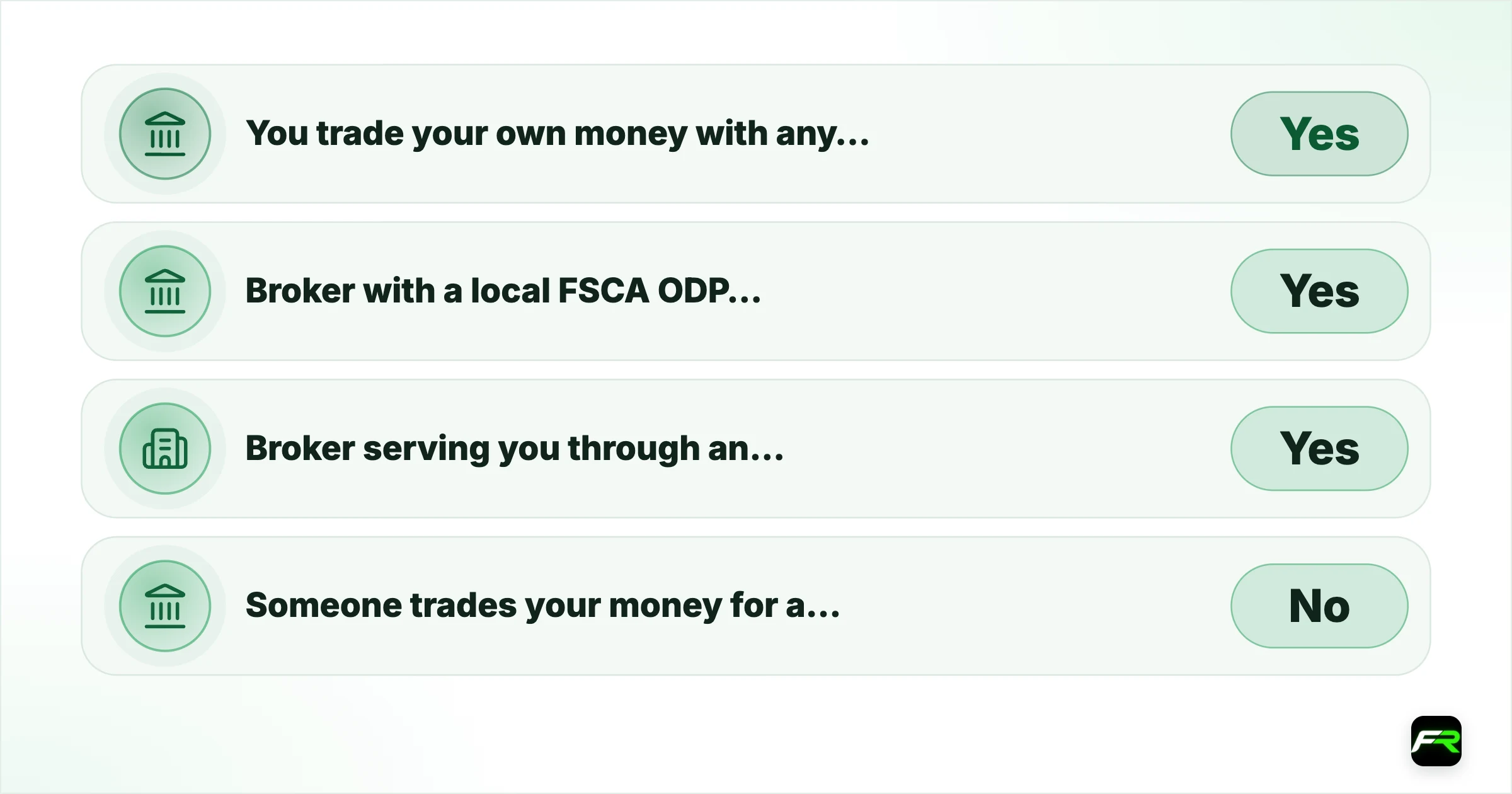
| Setup | Legal? | Your protection |
|---|---|---|
| You trade your own money with any licensed broker | Yes | Depends on the licence (see below) |
| Broker with a local FSCA ODP licence | Yes | South African conduct rules, local complaints route |
| Broker serving you through an offshore entity | Yes | The foreign regulator only, no local recourse |
| Someone trades your money for a profit share, unlicensed | No | None, and this is the main scam structure |
| Unlicensed broker with no verifiable authorisation anywhere | You can be scammed | None |
What is not legal
The clear line is unlicensed financial services. If a person or a company manages your money and trades it on your behalf for a fee or a profit share, they need an FSCA licence to do that as a discretionary financial services provider. Almost none of the operators who pitch this on WhatsApp and Telegram hold one. That structure, a fixed monthly return, a mentor who trades your account, a personal bank account for deposits, is not investing and it is not legal, and it is where a large share of South African forex losses come from. The scams guide covers the red flags.
It is also an offence to run an unlicensed broker or investment scheme, which is why the FSCA publishes warnings and pursues operators. The FSCA has been explicit that it targets unlicensed brokers and scams, not legitimate individual traders.
The Banxso case, and what it shows
The clearest recent example of the line between legal and illegal is Banxso. It launched in 2021, marketed itself as making global trading accessible to ordinary South Africans, sponsored Bafana Bafana and a UFC champion, and grew fast. In 2026 the FSCA imposed fines of more than R2 billion on the company and its two directors, who were held personally liable, the largest penalty in South African regulatory history. The investigation found the platform misappropriated client funds, gave false information to clients and to the FSCA, promised unrealistic returns, and was promoted through deepfake videos of well-known businesspeople endorsing automated trading systems. A court placed Banxso in liquidation and found its business model was illegal.
The lesson for an individual trader is not that CFDs are illegal. They are not. It is that a locally marketed, heavily advertised platform with celebrity faces and a call centre can still be operating unlawfully, that the FSCA licence must be checked directly on the register rather than taken from the broker's own marketing, and that any product promising an automated income is a warning sign on its own.
Is forex trading a scam or a pyramid scheme?
The activity is neither. Buying and selling currency through a licensed broker is a legitimate, regulated financial activity. What is often a scam or a pyramid is the layer of people selling forex to South Africans: mentors who recruit students to become sub-mentors, signal groups whose "proof" is affiliate commission rather than trading profit, and account-management schemes that pay early joiners with later joiners' deposits. So the trading itself is real, while a large part of the industry built around teaching and promoting it is not. Our mentorship guide and the case studies cover how to tell them apart.
What if my broker fails?
This is where the offshore-versus-local choice has teeth. If a broker with a local FSCA licence fails, you have a South African regulator and, for eligible complaints, the Ombud, to pursue. When an offshore-only broker fails, your claim sits with a foreign regulator and whatever client-money protection that jurisdiction offers, which is often limited and slow. Neither route guarantees you get your money back. Your practical protections are to use a broker that segregates client funds, to withdraw profits regularly rather than leaving a large balance sitting with the broker, and to prefer a local licence. Our FSCA vs offshore guide covers the trade-off.
SARS and exchange control
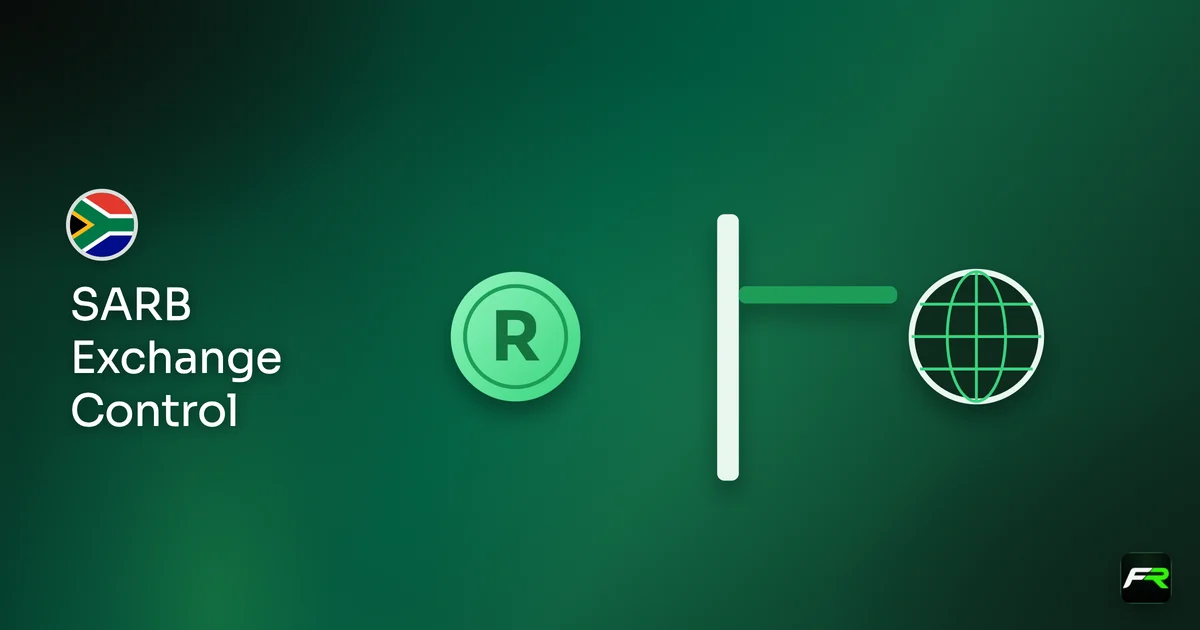
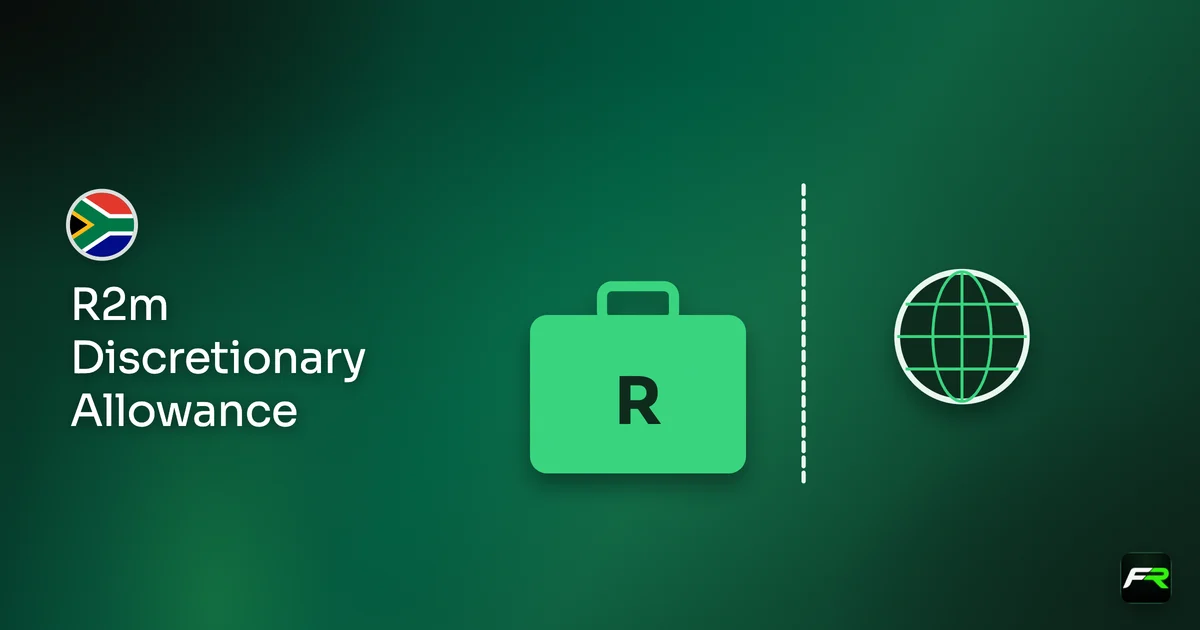
Two other authorities are involved, and neither makes forex illegal. SARS taxes the profit: active forex trading gains are treated as ordinary income, added to your other income and taxed at your marginal rate of 18 to 45 per cent, and regular traders must register as provisional taxpayers, all covered in our SARS guide. Separately, the South African Reserve Bank governs the cross-border transfer when you send rand to a foreign broker. Since the 2026 Budget, every resident can move R2 million a year offshore without a tax clearance under the Single Discretionary Allowance, plus up to R10 million under the Foreign Investment Allowance with a tax compliance PIN. A dedicated exchange-control guide works through it.
Thabo assumed forex was a legal grey area because a relative told him the government was cracking down. He checked his broker on the FSCA register, found it held a local ODP licence, and confirmed with a tax practitioner that he needed to register for provisional tax once his trading became regular. Nothing about what he was doing was illegal. The only thing he had been getting wrong was not declaring a small profit the previous year, which the practitioner helped him correct through a voluntary disclosure.
Is forex going to be banned?
That rumour resurfaces regularly, usually after an FSCA action against a scam operator gets reported without context. There is no proposal to ban individual forex trading in South Africa. If anything the regulatory direction has been the opposite: bringing brokers under a proper licensing regime (the ODP framework) so that traders are better protected. A licensed, regulated market is harder to ban than an unregulated one, and the FSCA has repeatedly said licensed brokers continue to operate freely. Our dedicated guide covers this in full.
The practical checklist
- Confirm forex is legal for you: it is, if you are trading your own money.
- Check your broker on the FSCA register (fsca.co.za): find the FSP number, confirm it covers derivatives and is current.
- Prefer a broker with a local FSCA ODP licence for the local complaints route, or accept the offshore trade-off knowingly.
- Never let anyone unlicensed trade your money for a profit share.
- Register with SARS as a provisional taxpayer once your trading is regular, and keep full records.
- Fund within your SARB allowances, or use a broker with a local ZAR account.
Legal does not mean safe. Forex trading on margin carries a high risk of loss, and regulated broker disclosures consistently show most retail accounts lose money. The legality question and the will-I-make-money question are completely separate.
For the rules and brokers that apply where you live, see our guide to the best forex brokers in South Africa.
Frequently asked
Do I need a licence to trade forex in South Africa?
No. An individual trading their own money needs no licence. Only firms that offer forex to the public, or people who manage other people's money, need an FSCA licence.
Is it legal to use an offshore broker?
Yes. It is legal to trade with a broker that serves you through an offshore entity. The trade-off is that the FSCA is not your regulator for that account, so a dispute goes to a foreign regulator with no local recourse.
Will forex trading be banned in South Africa?
There is no proposal to ban individual forex trading. The regulatory direction has been to license and supervise brokers through the ODP framework, which makes the market more regulated, not less legal.
What makes forex trading illegal in South Africa?
Running an unlicensed broker or investment scheme, and managing other people's money for a fee or profit share without an FSCA discretionary licence. Individual self-directed trading is not affected.
Do I have to tell SARS about my forex trading?
Yes, if you make a profit. SARS taxes active forex gains as ordinary income at your marginal rate, and regular traders must register as provisional taxpayers and file IRP6 returns. The broker being offshore does not change this.
Is forex trading gambling?
The activity is a regulated financial market, not a game of chance, but it can be traded like gambling and most people who lose money are effectively doing that. Traded with a fixed small risk per trade, a tested process and a journal, it is closer to running a small high-variance business. The difference is risk management.
What happened with Banxso?
Banxso was a locally marketed online trading platform that the FSCA fined more than R2 billion in December 2025, with its directors held personally liable, for misappropriating client funds and running deepfake celebrity adverts. A court found its business model illegal and placed it in liquidation. It is the clearest recent example that heavy local advertising does not mean a platform is safe.
What happens to my money if my broker collapses?
With a locally FSCA-licensed broker you have a South African regulator and the Ombud to pursue. With an offshore-only broker your claim goes to a foreign regulator with limited protection. Neither guarantees recovery. Use a broker that segregates client funds and withdraw profits regularly rather than leaving a large balance with the broker.
Related reading
The team behind this guide
Researched, checked and approved by five forex specialists
Every guide is written, fact-checked and edited before it goes live, and updated when the facts change. Spotted an error? Tell us.