IC Markets









Is Forex Trading Legal in Ghana? What SEC Ghana Says in 2026
We found no Ghanaian law banning individuals from trading forex, but SEC Ghana requires capital market businesses to be licensed and in July 2026 named 23 unlicensed online platforms. Here is what that means for traders.
 WriterAbir KhanWriterWrites the guides · checks every figure against primary sources View profileAbout Abir →
 Market analysisTanbir Habib RiyadForex & Crypto AnalystForex and crypto analyst · technical and fundamental analysis View profileAbout Tanbir →
 Fact-checking & riskJannatul FerdaushFact-Checker & Risk AnalystFact-checks every figure · risk analysis · Applied Statistics, University of Dhaka View profileAbout Jannatul →
 Trading reviewJowel RanaCo-Founder & Forex TraderCo-founder · forex trader · reviews guides from a trader's view View profileAbout Jowel →
 Final approvalRanjan NiskrityFounder, Owner & Forex TraderFounder and owner · forex trader · signs off every guide View profileAbout Ranjan →
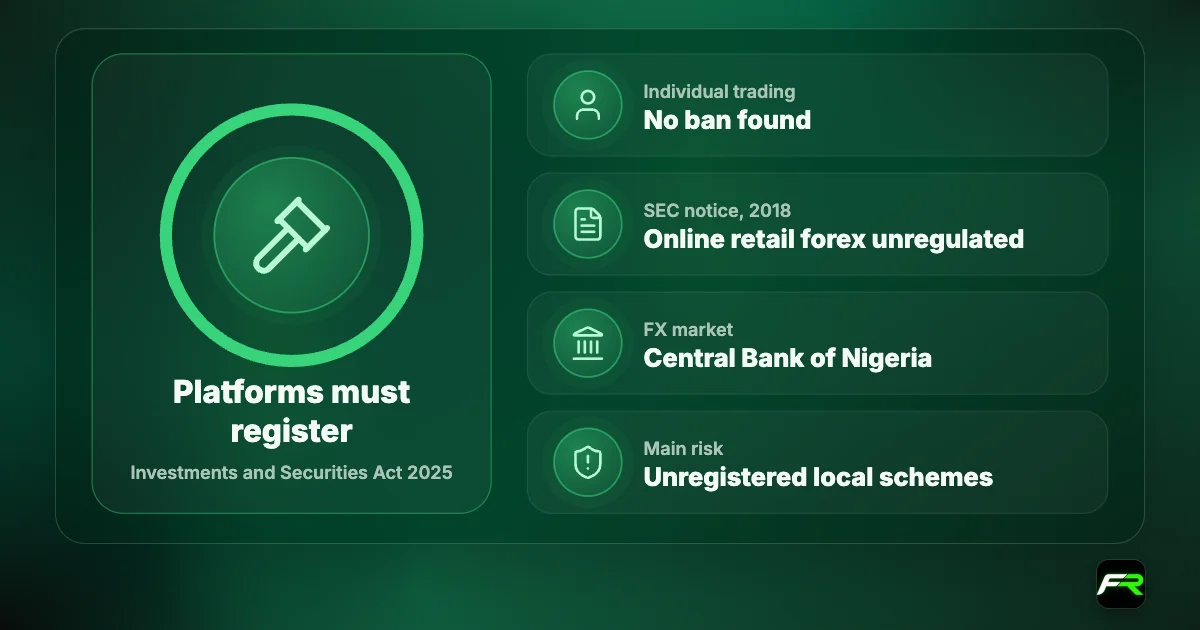
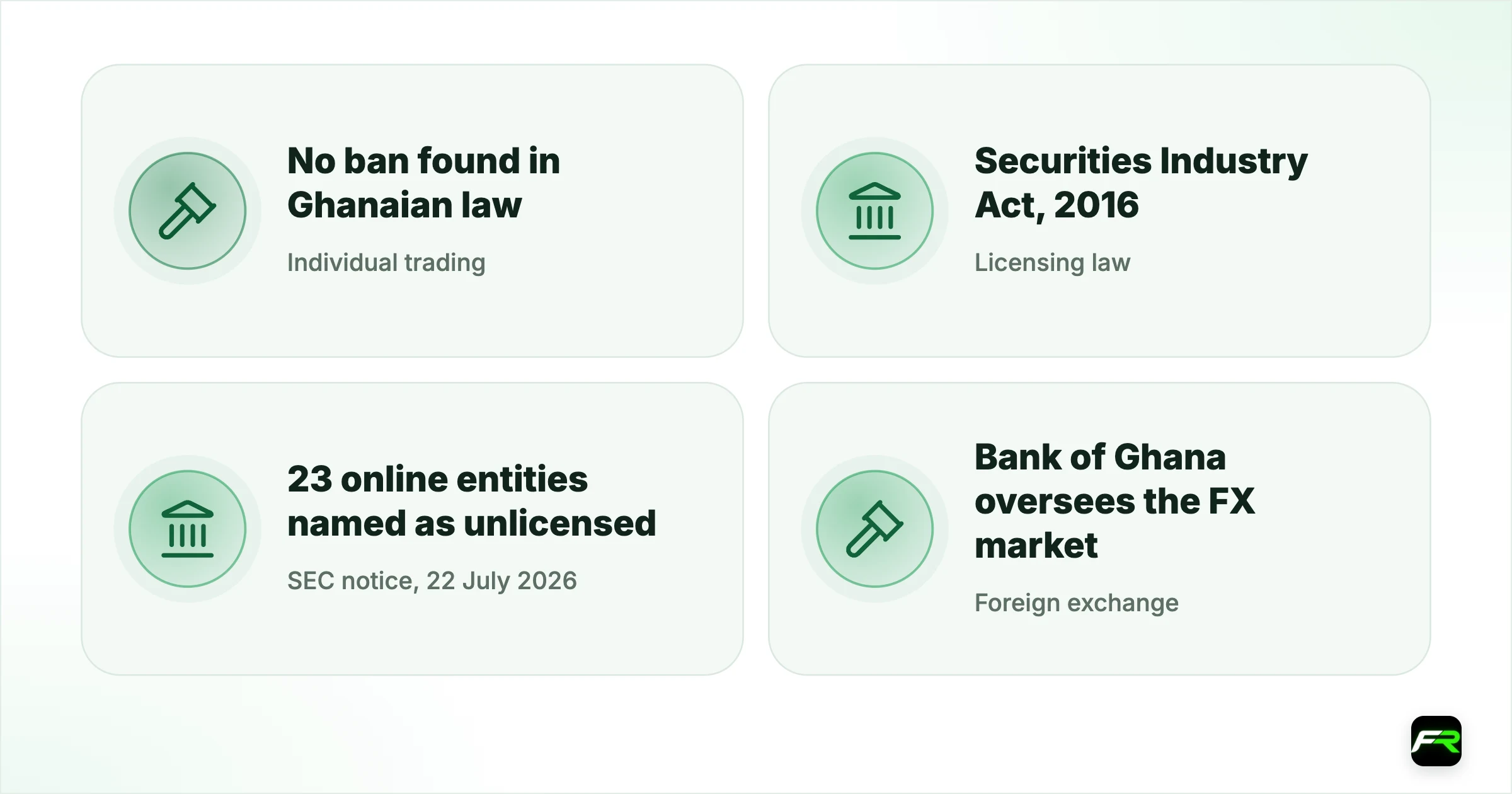
We found no law in Ghana that bans individuals from trading forex with their own money. What Ghana regulates is the businesses that offer investment and trading services. Under the Securities Industry Act, 2016 (Act 929), capital market activities require a licence from the Securities and Exchange Commission, Ghana. On 22 July 2026 the SEC published a notice naming 23 entities operating online without a licence, several of them trading platforms.
For traders, the practical position is that you carry the risk of whichever platform you choose. International brokers are usually regulated abroad rather than in Ghana, so checking their home licence matters, and any local scheme should be checked against the SEC's records before you send money.
| Individual trading | No ban found in Ghanaian law |
|---|---|
| Licensing law | Securities Industry Act, 2016 (Act 929), as amended |
| SEC notice, 22 July 2026 | 23 online entities named as unlicensed |
| Foreign exchange | Bank of Ghana oversees the FX market |
| Your protection | Mainly the broker's own regulator |
What the SEC's July 2026 notice says
Notice SEC/PN/002/07/2026, dated 22 July 2026, warned the public that 23 entities operating on social media and online were promoting unlicensed investment products. It stated that it had not licensed any of them to carry out capital market activities, citing sections 3 and 208(c) of the Securities Industry Act, 2016, as amended by the Securities Industry (Amendment) Act, 2021 (Act 1062). Several names on the list presented themselves as forex or crypto trading platforms.
Contact details for verifying entities are included: a toll-free line and email listed on the SEC's website. Use them, or the SEC's published lists, before dealing with any local investment business.
What it means for you
| Question | Practical answer |
|---|---|
| Can I trade forex as an individual? | We found no law banning it |
| Can I use an international broker? | Ghanaians commonly do; check its home licence |
| Is that broker licensed in Ghana? | Usually not; check SEC Ghana's records |
| Are local "forex investment" schemes legal? | Only if licensed; many named by the SEC are not |
| Who do I complain to about an offshore broker? | Its own regulator, if it has one |
The biggest risk: unlicensed local schemes
Much of the harm in Ghana comes from schemes that promise fixed returns from forex or crypto, recruit through social media and pay early investors with later investors' money. The SEC's notices target exactly these businesses. Warning signs include guaranteed returns, referral bonuses, payment to personal mobile money numbers, and pressure to invest quickly.
Our scam broker list and our guide to spotting a fake broker show the common patterns.
Choosing an international broker
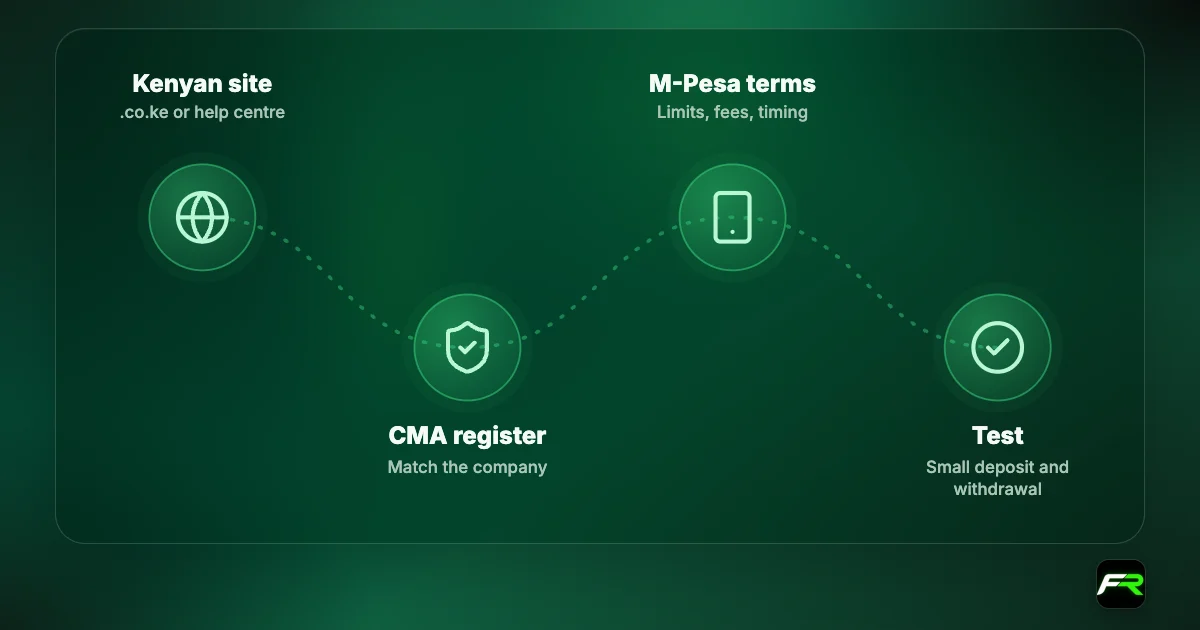
- Find the company that will hold your account, shown in the website footer or account agreement.
- Check it on its regulator's register: for example the FCA, ASIC, CySEC or South Africa's FSCA.
- Confirm negative balance protection and segregated client funds for that entity.
- Test a small deposit and withdrawal by your preferred method before funding fully.
Our guide to forex regulators explains what each one protects.
Protections to look for in any broker
| Protection | What it does | Where to find it |
|---|---|---|
| Segregated client funds | Keeps your money separate from the broker's own | Client agreement, regulator rules |
| Negative balance protection | Stops losses exceeding your balance | Account terms for your entity |
| Compensation scheme | Pays out if a regulated firm fails, up to a limit | Only some regulators, e.g. the UK's FSCS |
| Complaints route | An ombudsman or regulator to escalate to | Broker's complaints policy |
| Clear entity name | Tells you which company and regulator you deal with | Website footer, account agreement |
Offshore entities often offer fewer of these than top-tier regulators. Checking which ones apply to your account tells you what happens if the broker fails or a dispute arises.
Funding and the cedi
The Bank of Ghana oversees the foreign exchange market. Ghanaian traders usually fund dollar trading accounts by card, bank transfer or mobile money where a broker supports it. The cedi rate used by each payment method affects the real cost of deposits and withdrawals, so compare methods and keep records.
A trader in Kumasi sees a Telegram channel offering daily returns from "forex signals and account management". The platform's name matches one of the 23 entities in the SEC's July 2026 notice, so the trader reports the channel and instead opens a small account with an internationally regulated broker, keeping control of every trade.
Mobile money and verification
Where a broker supports mobile money, the account used must usually be registered in your own name, matching your trading account. Brokers verify identity before the first withdrawal, so complete it early. Never send mobile money to an individual who says they will deposit it with a broker for you; that is how many local scams collect funds.
Tax
Trading profits generally form part of taxable income for Ghanaian residents. The Ghana Revenue Authority administers income tax; ask a tax adviser how your trading should be reported and which records to keep.
When to trade from Ghana
Ghana keeps GMT all year, so the London and New York overlap runs from 12:00 to 16:00 or 13:00 to 17:00 Accra time depending on the season. Our page on forex market hours in Ghana lists every session.
Checklist before you deposit
- Is the company on its regulator's register under the exact name?
- Has SEC Ghana named it in a warning or list of unlicensed entities?
- Does it promise fixed or guaranteed returns? If so, walk away.
- Does it ask for money to a personal account or number? If so, walk away.
- Have you tested a small withdrawal?
Save a copy of the SEC's latest notice of unlicensed entities and check new platforms against it before you sign up.
Any platform guaranteeing daily or monthly returns from forex is a scheme, not trading. Regulated brokers never guarantee returns.
This is general information from official sources, not legal or tax advice. Rules change; check the regulator's or tax authority's current guidance, or speak to a qualified adviser, before acting.
Frequently asked
Is forex trading legal in Ghana?
We found no law banning individuals from trading forex. Businesses offering capital market services need a licence from SEC Ghana under the Securities Industry Act, 2016, and in July 2026 the SEC named 23 unlicensed online entities.
Is forex trading regulated in Ghana?
SEC Ghana regulates capital market businesses and requires them to be licensed. International brokers serving Ghanaians are usually regulated abroad rather than by the SEC, so check their home licence.
Which platforms did SEC Ghana warn about in 2026?
Notice SEC/PN/002/07/2026 of 22 July 2026 named 23 entities operating online without a licence, including names presented as forex or crypto platforms. The full list is on the SEC's website.
Can Ghanaians use international forex brokers?
Ghanaians commonly do, and we found no law against it. Check the exact entity on its regulator's register, confirm protections such as negative balance protection, and test a withdrawal first.
How do I report a forex scam in Ghana?
Contact SEC Ghana through the toll-free line or email listed on its website, and report fraud to the police. Keep screenshots, payment records and chat messages as evidence.
Do I pay tax on forex profits in Ghana?
Trading profits generally form part of taxable income for residents. The Ghana Revenue Authority administers income tax; take advice from a tax professional on how to report trading.
Official sources: SEC Ghana: entities operating without a licence (July 2026)
Related reading
The team behind this guide
Researched, checked and approved by five forex specialists
Every guide is written, fact-checked and edited before it goes live, and updated when the facts change. Spotted an error? Tell us.