IC Markets



























Forex Trading Tax in Nigeria (2026): How the New Tax Act Treats Your Profits
From 1 January 2026, the Nigeria Tax Act 2025 taxes individuals' gains at personal income tax rates of 0% to 25% instead of a flat 10% capital gains tax. Here is what that means for forex profits and the records to keep.
 WriterAbir KhanWriterWrites the guides · checks every figure against primary sources View profileAbout Abir →
 Market analysisTanbir Habib RiyadForex & Crypto AnalystForex and crypto analyst · technical and fundamental analysis View profileAbout Tanbir →
 Fact-checking & riskJannatul FerdaushFact-Checker & Risk AnalystFact-checks every figure · risk analysis · Applied Statistics, University of Dhaka View profileAbout Jannatul →
 Trading reviewJowel RanaCo-Founder & Forex TraderCo-founder · forex trader · reviews guides from a trader's view View profileAbout Jowel →
 Final approvalRanjan NiskrityFounder, Owner & Forex TraderFounder and owner · forex trader · signs off every guide View profileAbout Ranjan →
Forex trading profits are taxable in Nigeria. From 1 January 2026, the Nigeria Tax Act 2025 changed how individuals are taxed: gains that were once subject to a flat 10% capital gains tax are now taxed at personal income tax rates, which run from 0% on the first ₦800,000 of annual income to 25% on income above ₦50 million. Trading profits are added to your other income for the year and taxed through those bands.
How your trading is classified, as income or as gains, and how it is reported can depend on your circumstances, so treat this page as an outline and take advice from a qualified tax professional before filing.
| Law | Nigeria Tax Act 2025, effective 1 January 2026 |
|---|---|
| Individuals' gains | Taxed at personal income tax rates |
| Rates | 0% to 25% across six bands |
| Tax-free band | First ₦800,000 of annual income |
| Keep | Broker statements, deposits, withdrawals, exchange rates |
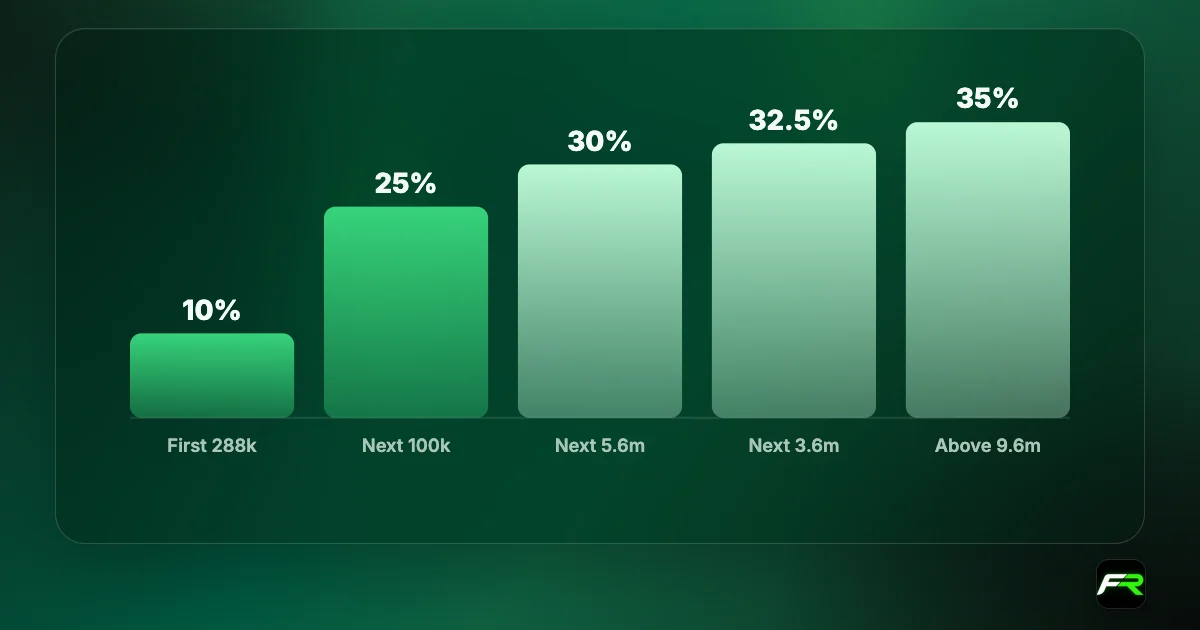
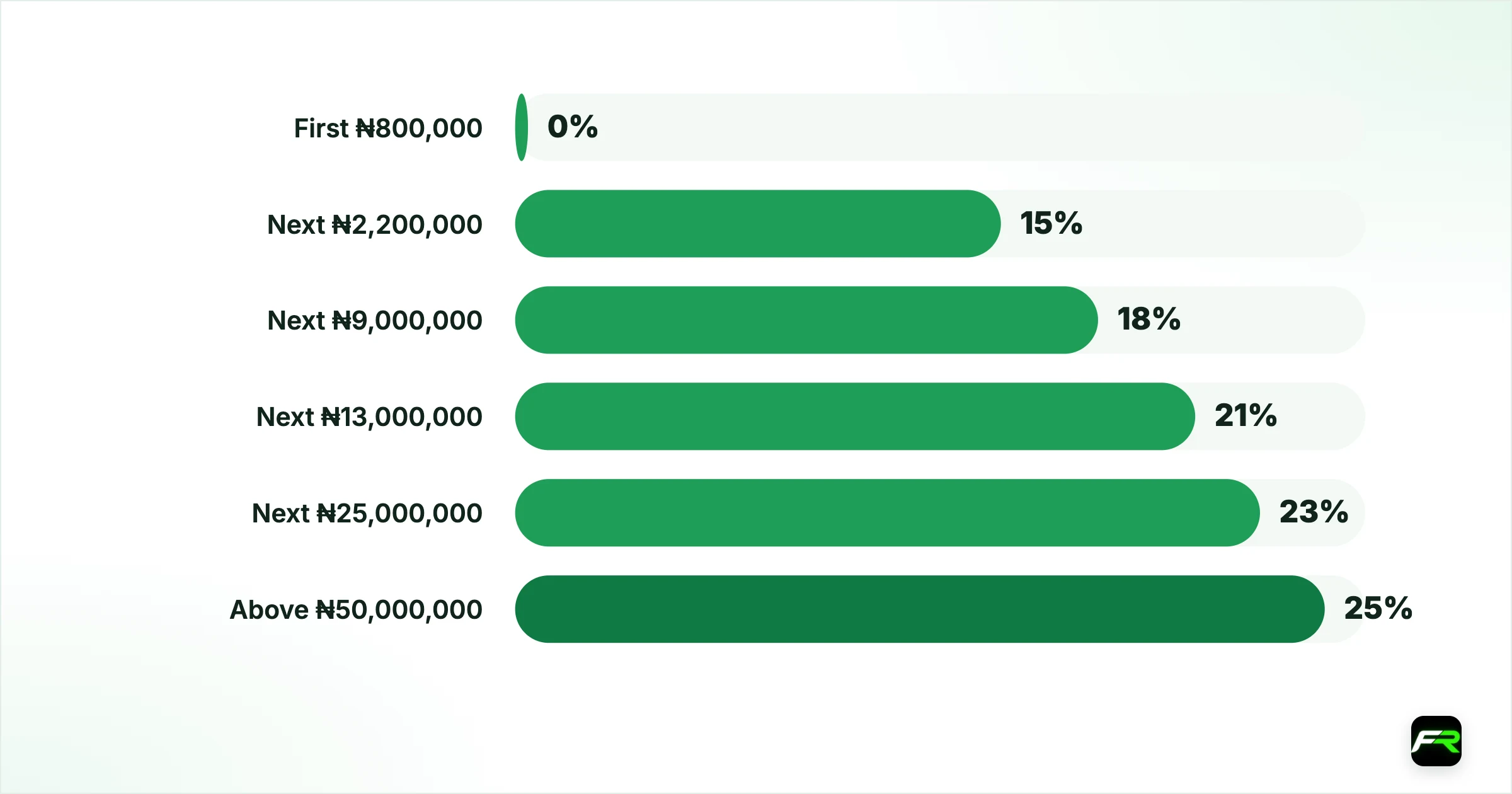
The personal income tax bands from 2026
| Annual taxable income | Rate |
|---|---|
| First ₦800,000 | 0% |
| Next ₦2,200,000 (to ₦3 million) | 15% |
| Next ₦9,000,000 (to ₦12 million) | 18% |
| Next ₦13,000,000 (to ₦25 million) | 21% |
| Next ₦25,000,000 (to ₦50 million) | 23% |
| Above ₦50,000,000 | 25% |
Bands are as summarised by EY's tax alert on the Act. Each slice of income is taxed at its own rate, so a higher band only applies to the part of income above its threshold.
What changed for traders
Under the old system, individuals' capital gains were commonly taxed at a flat 10%. The new Act brings individuals' gains into the personal income tax bands, so a trader with modest total income may pay less than before, and one with high income more. It also brings gains from digital and virtual assets into the tax net explicitly, which matters for traders who also hold crypto.
Working out your trading profit
- Take total gains from closed trades in the tax year, from your broker's annual statement.
- Subtract trading losses in the same year and allowable costs, such as commissions.
- Swaps and fees appear on statements; include them as your adviser directs.
- Convert dollar amounts to naira using a consistent, documented exchange-rate method.
- Add the result to your other income to see which bands apply.
Exchange rates matter a great deal for naira reporting. Record the rate used for each conversion and its source, and keep the same method all year.
A salaried trader in Lagos earns ₦6 million a year and makes a net trading profit equal to ₦1.5 million after costs. Under the 2026 bands, the combined ₦7.5 million is taxed slice by slice: nothing on the first ₦800,000, 15% on the next ₦2.2 million and 18% on the remaining ₦4.5 million, before reliefs. Treating the trading profit as the top slice of income, it falls in the 18% band. The figures are illustrative; reliefs and classification can change the result.
Records to keep
- Annual and monthly statements from every broker account.
- Bank and card records of each deposit and withdrawal.
- The exchange rate and source used for each conversion.
- Trade history exports from your platform.
- Receipts for trading costs your adviser says are deductible.
Our guide to exporting MT5 trade history shows how to download the platform records.
Common mistakes
- Reporting only withdrawals instead of trading profit for the year.
- Ignoring losses, which reduce taxable profit when properly recorded.
- Using different exchange rates for different months without a record of why.
- Leaving broker statements until the deadline, when old accounts may be closed.
- Relying on social media claims instead of the Act or a qualified adviser.
Digital assets alongside forex
Many Nigerian traders also hold crypto. The Act's explicit inclusion of gains from digital and virtual assets means those gains belong in the same calculation of income. Keep exchange statements and wallet records with the same care as broker statements, including the naira value at each disposal.
Who collects the tax
Nigeria's tax administration was reorganised alongside the Act, with the federal tax authority renamed the Nigeria Revenue Service. Personal income tax for most individuals is administered by the state internal revenue service where you are resident. Your adviser can confirm which authority applies to you and how to file.
Getting advice
Because the 2026 rules are new, practice may develop as tax authorities issue guidance. A qualified tax professional can tell you how trading income is being treated in your state, how to document exchange rates, and whether any reliefs apply. Bring a year of broker statements and deposit and withdrawal records to the first meeting; it makes the advice faster and cheaper.
Losses
Trading losses reduce your trading profit for the year. Whether net losses can be carried forward or set against other income depends on how your trading is classified, so ask your adviser before assuming either. Keeping full records of losing years is as important as for profitable ones.
Offshore brokers and reporting
Nigerian tax residents are generally taxed on worldwide income, so profits held with an overseas broker are still part of your income. The broker's location does not change your obligation. Our guide to whether forex trading is legal in Nigeria covers the regulatory side of using international brokers.
Set aside a percentage of each profitable month's gains in a separate account for tax. It avoids a large bill arriving when the money has already been traded.
Social media claims that forex profits are "tax-free in Nigeria" are not reliable. Get advice from a qualified tax professional.
This is general information from official sources, not legal or tax advice. Rules change; check the regulator's or tax authority's current guidance, or speak to a qualified adviser, before acting.
Frequently asked
Do I pay tax on forex trading profits in Nigeria?
Yes. Trading profits form part of your taxable income. From 1 January 2026 the Nigeria Tax Act 2025 taxes individuals' gains at personal income tax rates of 0% to 25% rather than a flat 10% capital gains tax.
What is the tax rate on forex profits in Nigeria in 2026?
Profits are added to your other income and taxed through the personal income tax bands: 0% on the first ₦800,000, then 15%, 18%, 21%, 23% and 25% on higher slices. The rate on your trading profit depends on your total income.
Is the 10% capital gains tax still used for individuals?
Under the Nigeria Tax Act 2025, from 1 January 2026 individuals' gains are taxed at personal income tax rates instead of the old flat 10%. Your adviser can confirm how this applies to your trading.
Do I pay tax if my broker is outside Nigeria?
Generally yes. Nigerian tax residents are taxed on worldwide income, so profits with an overseas broker still count. Keep statements and records of conversions to naira.
Can I deduct forex trading losses in Nigeria?
Losses reduce trading profit in the same year. Whether net losses can be carried forward or offset against other income depends on how your trading is classified; ask a tax adviser.
Who do I pay forex tax to in Nigeria?
Personal income tax for most individuals is administered by the state internal revenue service where you live, while the federal authority is now the Nigeria Revenue Service. A tax adviser can confirm the right authority and filing process.
Official sources: EY tax alert: Nigeria Tax Act 2025
Related reading
The team behind this guide
Researched, checked and approved by five forex specialists
Every guide is written, fact-checked and edited before it goes live, and updated when the facts change. Spotted an error? Tell us.