IC Markets


























Forex Trading Tax in Kenya: KRA Rates, Filing and Records
Kenyan residents pay income tax at KRA's graduated rates of 10% to 35% and file through iTax by 30 June. Here is how trading profits fit, the bands, the records to keep and where the rules are unclear.
 WriterAbir KhanWriterWrites the guides · checks every figure against primary sources View profileAbout Abir →
 Market analysisTanbir Habib RiyadForex & Crypto AnalystForex and crypto analyst · technical and fundamental analysis View profileAbout Tanbir →
 Fact-checking & riskJannatul FerdaushFact-Checker & Risk AnalystFact-checks every figure · risk analysis · Applied Statistics, University of Dhaka View profileAbout Jannatul →
 Trading reviewJowel RanaCo-Founder & Forex TraderCo-founder · forex trader · reviews guides from a trader's view View profileAbout Jowel →
 Final approvalRanjan NiskrityFounder, Owner & Forex TraderFounder and owner · forex trader · signs off every guide View profileAbout Ranjan →
Kenyan tax residents pay income tax on their worldwide income at the Kenya Revenue Authority's graduated rates, which run from 10% on the first KSh 288,000 a year to 35% on income above KSh 9.6 million. Profits from forex trading generally form part of that income, and individuals file an annual return through KRA's iTax system by 30 June for the previous year.
We could not find KRA guidance written specifically for retail CFD and forex trading, so how your profits are classified, as business income or otherwise, is a question for a tax adviser. This page sets out the rates, filing steps and records that apply either way.
| Rates | 10% to 35% (annual bands) |
|---|---|
| Personal relief | KSh 2,400 a month (KSh 28,800 a year) |
| Filing | Annual return on iTax by 30 June |
| Worldwide income | Offshore broker profits included for residents |
| Specific CFD guidance | None found from KRA |
KRA income tax bands
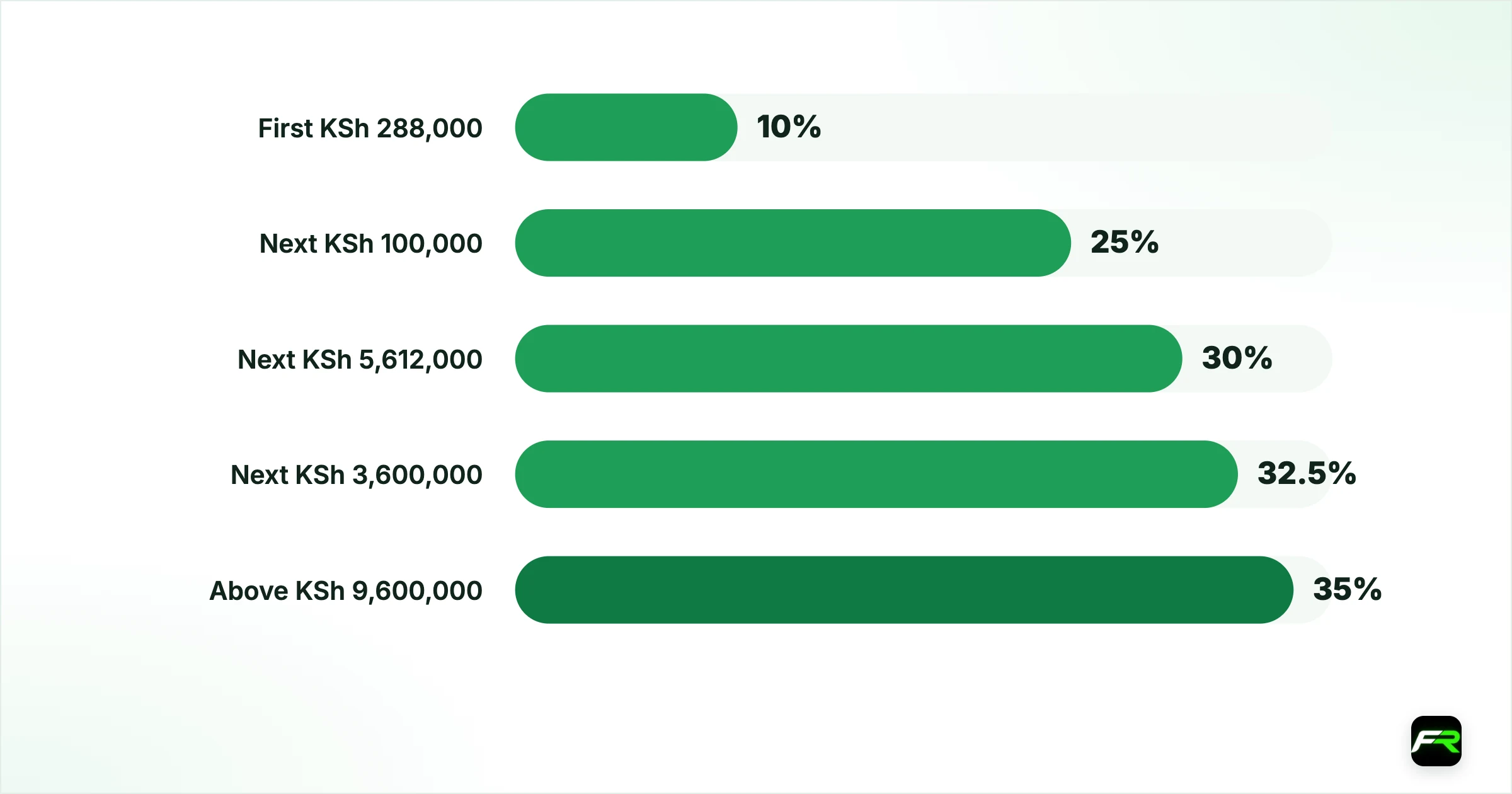
| Annual taxable income | Rate |
|---|---|
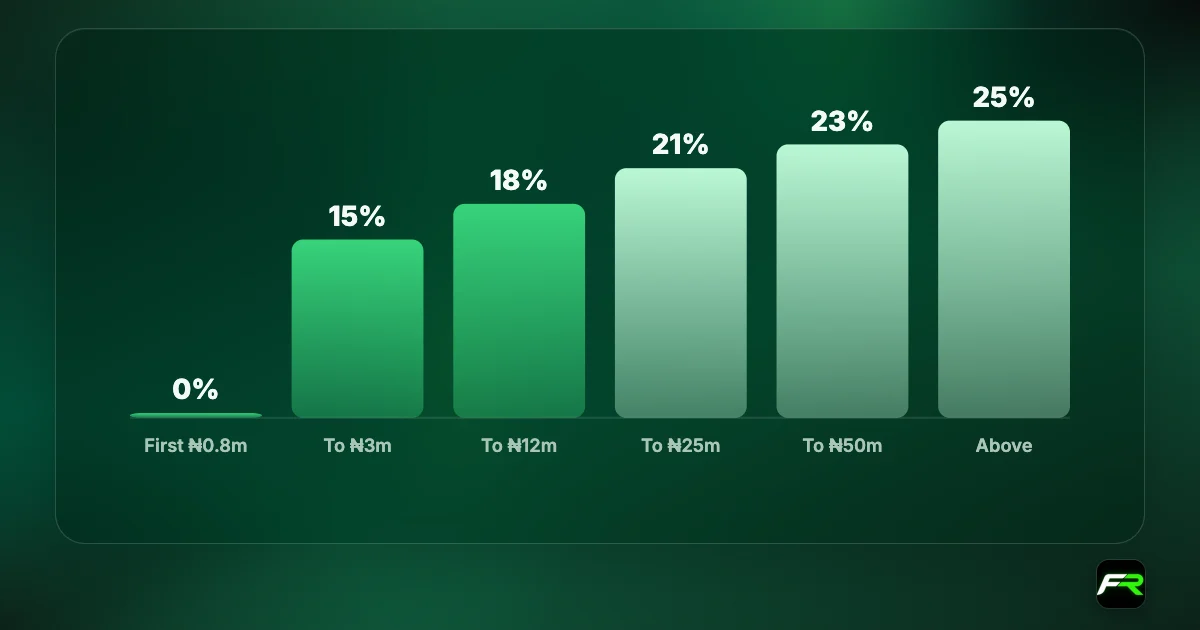
| First KSh 288,000 | 10% |
| Next KSh 100,000 | 25% |
| Next KSh 5,612,000 | 30% |
| Next KSh 3,600,000 | 32.5% |
| Above KSh 9,600,000 | 35% |
These are the annual bands effective from 1 July 2023, as published by KRA. Each slice of income is taxed at its own rate, and personal relief of KSh 28,800 a year reduces the tax due for resident individuals.
How trading profits fit
Regular, organised trading with the aim of profit is often treated as business income in many tax systems, taxed at the graduated rates after allowable expenses. Occasional investment gains can be treated differently. Kenya also has capital gains tax on the transfer of certain property; whether it applies to CFD trading, which involves no ownership of an underlying asset, is not something we found KRA guidance on. Ask a tax adviser how your activity should be reported.
Filing on iTax
- Gather your broker statements for January to December.
- Work out net profit: gains minus losses and allowable costs.
- Convert dollar figures to shillings using a documented exchange rate.
- Log in to iTax with your KRA PIN and complete the individual income tax return.
- Declare trading income alongside employment or other income, as your adviser directs.
- File and pay by 30 June of the following year.
Records to keep
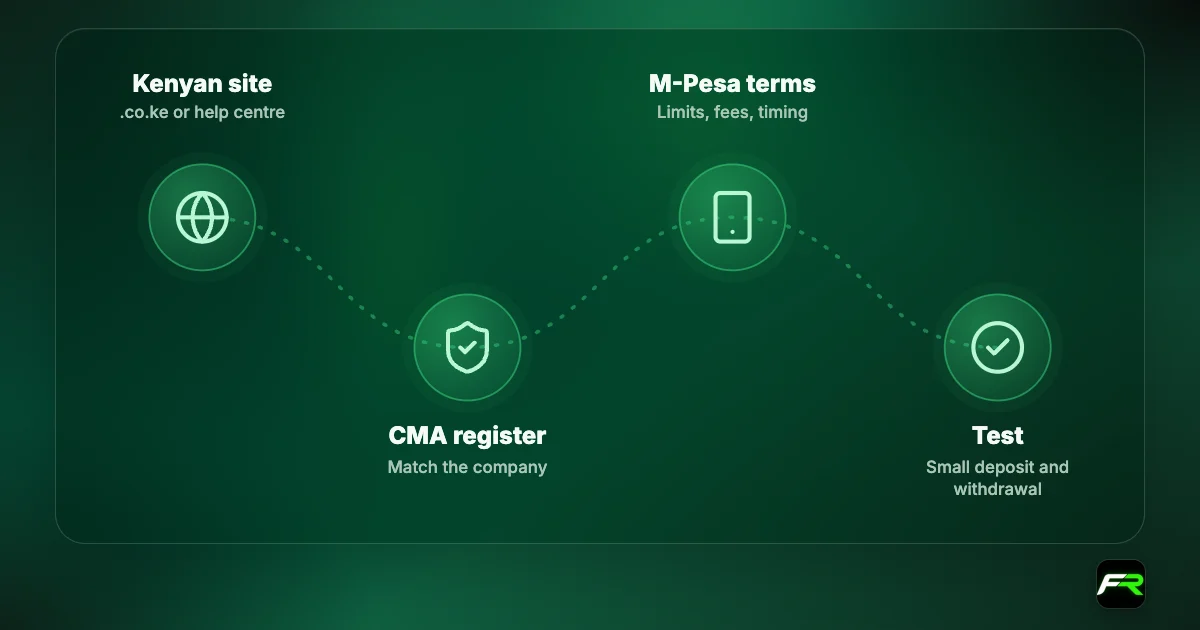
- Annual and monthly statements from each broker, especially CMA-licensed entities.
- M-Pesa and bank records of every deposit and withdrawal.
- Exchange rates used for conversions and their source.
- Platform trade history exports.
- Receipts for costs your adviser treats as allowable.
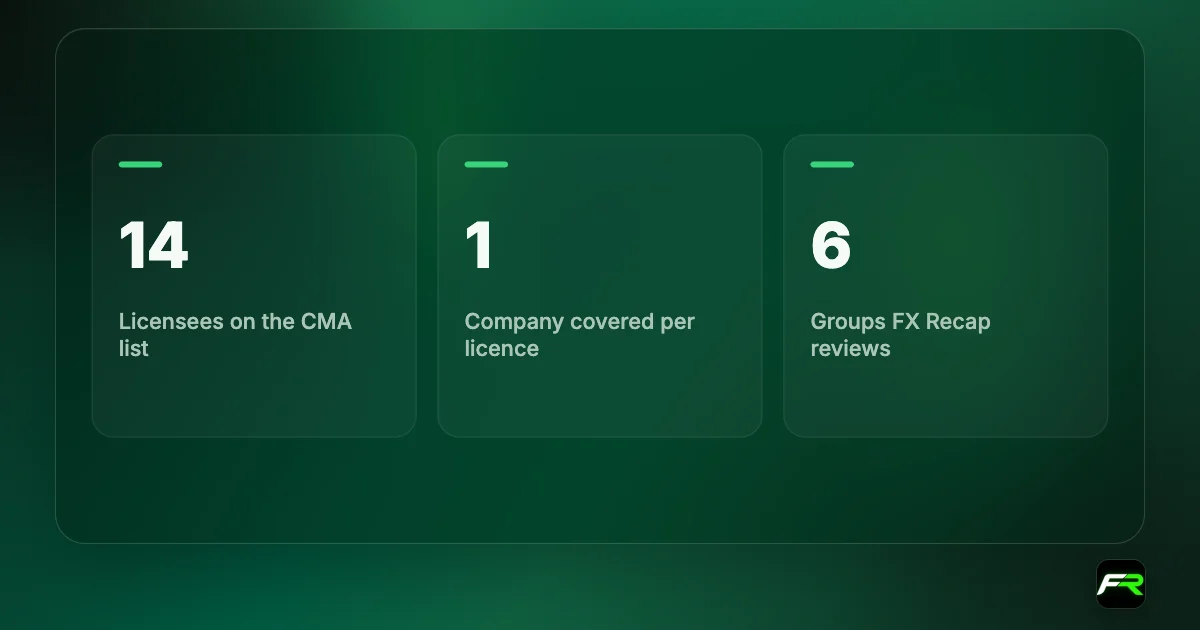
Brokers licensed by the Capital Markets Authority provide account statements that support your figures. Our guide to CMA-licensed brokers lists the licensees, and our guide to exporting MT5 history covers platform records.
A trader in Nairobi earns a salary taxed under PAYE and makes a net trading profit equal to KSh 400,000 for the year after costs. Because the salary already uses the lower bands, the trading profit is likely to fall in the 30% band if treated as additional income. The trader keeps every statement and M-Pesa record and asks an adviser to confirm the classification before filing on iTax.
Losses
Trading losses reduce trading profit in the same year. Whether losses can be carried forward or set against other income depends on classification, so get advice before relying on either. Keep records of losing years as carefully as profitable ones.
Working out the shilling figures
Broker statements are usually in US dollars, but your return is in shillings. Pick one conversion method and use it consistently: for example the Central Bank of Kenya's published rate on the date of each transaction, or a documented annual average if your adviser agrees. Record the method and keep the source. Consistency matters more than which reasonable method you choose.
Common mistakes
- Declaring only what was withdrawn to M-Pesa, not the year's trading profit.
- Forgetting losses, which reduce profit when properly recorded.
- Mixing personal and trading transactions on one M-Pesa line without notes.
- Waiting until June, when old statements may be hard to retrieve.
- Assuming offshore profits are not declarable.
Before you file
Reconcile the year's broker statements with your own trade history and M-Pesa records. Differences usually come from swaps, fees or exchange-rate conversion; note the reason for each so the figures on your return can be explained if KRA asks.
Trading as a business
Traders who run trading through a registered company follow corporate tax rules instead, with their own rates, filing dates and records. That route has costs, including accounting and compliance, and suits only larger, regular trading. Most retail traders file as individuals; an adviser can say whether a company structure would make sense for you.
Employment income and PAYE
If you are employed, your employer deducts PAYE from your salary using the same bands, so your salary already uses the lower rates. Trading profit is then added on top, which often places it in the 25% or 30% band. Your annual return reconciles the PAYE already paid with tax due on total income, including trading.
Penalties for late filing
KRA charges penalties and interest for late filing and late payment. The amounts are set out on KRA's website and can be significant relative to small trading profits. Filing a nil or loss return on time is better than filing late.
Offshore brokers
Kenyan tax residents are taxed on worldwide income, so profits with brokers outside Kenya are still declarable. Using a CMA-licensed Kenyan entity can make records simpler and adds local regulatory oversight. Our guide to brokers that accept M-Pesa covers several CMA licensees.
Set aside part of each month's net profit in a separate M-Pesa or bank account for tax, so the June bill does not come out of trading capital.
Advice on social media that forex profits are not taxable in Kenya is unreliable. Speak to a qualified tax adviser.
This is general information from official sources, not legal or tax advice. Rules change; check the regulator's or tax authority's current guidance, or speak to a qualified adviser, before acting.
Frequently asked
Is forex trading taxed in Kenya?
Generally yes. Kenyan tax residents pay income tax on worldwide income, and trading profits usually form part of it. KRA's graduated rates run from 10% to 35%. How your trading is classified is a question for a tax adviser.
What are KRA's income tax rates?
From 1 July 2023: 10% on the first KSh 288,000 a year, 25% on the next KSh 100,000, 30% on the next KSh 5,612,000, 32.5% on the next KSh 3,600,000 and 35% above KSh 9,600,000, before personal relief.
When do I file forex tax in Kenya?
Individuals file an annual income tax return on iTax by 30 June for the previous calendar year, declaring trading income alongside other income as their adviser directs.
Does capital gains tax apply to forex trading in Kenya?
Kenya has capital gains tax on transfers of certain property, but we found no KRA guidance confirming how it applies to CFD or retail forex trading. Ask a tax adviser how to report your activity.
Do I declare profits from an offshore broker?
Kenyan tax residents are taxed on worldwide income, so profits with brokers outside Kenya are declarable. Keep statements and conversion records.
What records should Kenyan forex traders keep?
Broker statements, M-Pesa and bank records of deposits and withdrawals, exchange rates used, platform trade history and receipts for allowable costs. Keep them for every year, including loss-making ones.
Official sources: KRA: individual income tax · Capital Markets Authority: list of licensees
Related reading
The team behind this guide
Researched, checked and approved by five forex specialists
Every guide is written, fact-checked and edited before it goes live, and updated when the facts change. Spotted an error? Tell us.