IC Markets

 3:09
 2:39
 2:10
 2:18
 3:43
 8:42
Victor Niederhoffer: The Squash Champion Who Lost It All, Twice
Victor Niederhoffer was a Harvard-trained statistician, a five-time US squash champion and a trader who managed currency trading for George Soros. He also saw his funds wiped out in 1997 and again in 2007. Here is his story and the lessons traders still draw from it.
 WriterNafish PialJournalist & FX WriterJournalist · forex news and market writing View profileAbout Nafish →

 ResearchJawad Bin GoniPR & ReporterPR and reporting · media enquiries and press coverage View profileAbout Jawad →

 Fact-checking & riskJannatul FerdaushFact-Checker & Risk AnalystFact-checks every figure · risk analysis · Applied Statistics, University of Dhaka View profileAbout Jannatul →

 Trading reviewJowel RanaForex TraderForex trader · reviews guides from a trader's view View profileAbout Jowel →

 Final approvalRanjan N. MondolForex TraderForex trader · signs off every guide View profileAbout Ranjan →

Victor Niederhoffer (1943–2026) was an American trader, statistician and squash champion who built a long record of high returns before his fund was wiped out in October 1997, and whose later fund closed in 2007 after losing more than 75% of its value. He studied at Harvard and the University of Chicago, taught at Berkeley, won the US national squash singles title five times, and from 1981 to 1993 managed fixed income and currency trading for George Soros. His book The Education of a Speculator (1997) became a classic. He died in August 2026, aged 82. His career is often studied as a lesson in how a brilliant trader can be right most of the time and still be ruined by a few rare events.
| Born | 10 December 1943, Brooklyn, New York |
|---|---|
| Died | 4 August 2026, aged 82 |
| Education | Harvard (BA 1964), University of Chicago (PhD 1969) |
| Squash | US national singles champion five times |
| Worked with Soros | 1981–1993, fixed income and currencies |
| Funds wiped out | 1997 and 2007 |
Statistician and athlete
Niederhoffer grew up in Brooklyn and studied statistics and economics at Harvard, graduating in 1964, before earning a PhD in finance at the University of Chicago in 1969. He taught finance at the University of California, Berkeley, from 1967 to 1972. His academic work focused on using statistics to find patterns in market prices, an approach that later became common among quantitative traders. In 1965 he co-founded an investment banking firm specialising in mergers and acquisitions.
Niederhoffer was also one of the best squash players of his generation. He won the US national singles championship in 1966 and then every year from 1972 to 1975, and in 1975 he beat Sharif Khan to win the North American Open.
Trading for Soros
From 1981 to 1993, Niederhoffer managed fixed income and foreign exchange trading for George Soros, while also running his own firm. His short-term, statistics-driven style was very different from Soros's big macro bets of currencies and bonds. Meanwhile, his own fund, Niederhoffer Investments, reported strong returns through the 1980s and much of the 1990s, and he was regarded as one of the most successful traders of the period.
1997: the first collapse
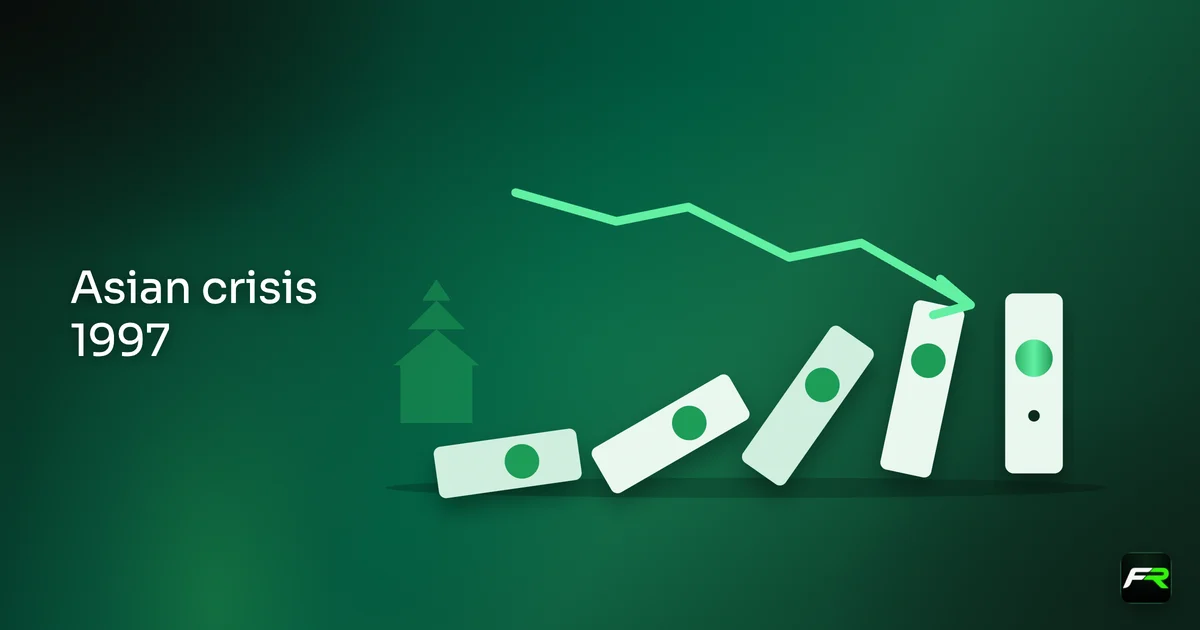
In 1997 his luck turned. Over the summer he bought Thai bank stocks, betting that the market had fallen too far, just as the Asian financial crisis deepened. The position lost heavily. He had also been selling large numbers of out-of-the-money put options on the S&P 500, collecting small premiums on the expectation that a sharp fall was unlikely. On 27 October 1997, US stocks fell about 7% in a single day, the puts surged in value, and his fund could not meet its margin calls. His brokers closed his positions, and Niederhoffer Investments was finished.
Coming back, and falling again
Niederhoffer rebuilt slowly, trading for himself and writing. In February 2002 he started managing outside money again through the Matador Fund, beginning with about $2 million. The fund grew strongly and won industry awards for its performance in 2004 and 2005, reaching about $346 million. Then, in 2007, as the subprime mortgage crisis hit markets, it suffered heavy losses. The fund closed in September 2007 after losing more than 75% of its value. Many observers noted that the pattern resembled 1997: a long run of gains followed by a sudden, devastating loss.
Selling options: picking up pennies
A recurring theme in Niederhoffer's losses was selling options that paid a small, steady income most of the time but could produce huge losses in a crash. Traders often describe this as "picking up pennies in front of a steamroller." The strategy shows a smooth equity curve for months or years, which can make it look safe. The risk is hidden in rare events, and when one arrives, it can erase years of gains in days. Many forex traders face a similar trap with strategies that never take a loss until they take a very large one.
Right most of the time
One reason Niederhoffer's story is retold so often is that his ideas were not foolish. Many of his statistical observations about short-term price behaviour held up for long periods, and his returns for over fifteen years were among the best of any trader. The problem was the size of his exposure to rare events. A strategy that wins 95% of the time can still be ruined if the other 5% includes a loss many times larger than the average win. That simple arithmetic, rather than any single bad call, explains both collapses.
His books and influence
The Education of a Speculator, published in 1997, mixed trading ideas with stories about squash, music and his family, and became a cult favourite. Practical Speculation, written with Laurel Kenner and published in 2003, included a frank account of his 1997 collapse. For years he also hosted a discussion group in New York and wrote widely online about markets and statistics. Traders continue to read him both for his ideas and for his candour about failure.
Mei ran a grid strategy on EUR/USD that added positions as price moved against her and closed them all for small profits when price came back. It worked for seven months without a losing week. Then a sharp trend took the pair 300 pips one way, the grid kept adding, and a margin call closed everything at a loss larger than all her previous gains. After reading about Niederhoffer, she now caps the number of open positions and sets a maximum account loss before starting any strategy.
Strategies with a very high win rate and no stop-loss, such as grids, martingale systems or selling options, can look safe for months and then lose everything in one move. Always know your worst-case loss.
Lessons for traders
- Being right often is not enough. One unlimited loss can outweigh years of wins.
- Beware of smooth equity curves. Ask what event would break them.
- Stay within your expertise. His 1997 losses began in a market he did not specialise in.
- Size for the crash. Plan for the day markets move far more than usual.
Read about another fund undone by rare events in LTCM and the 1998 crisis, and learn to cap your own risk with forex risk management.
Cite this guide
FX Recap, "Victor Niederhoffer: The Squash Champion Who Lost It All, Twice", updated 28 November 2026, https://fxrecap.com/learn-forex/education/victor-niederhoffer
Free to quote with a link. Journalists: data and comment in our press room.
Frequently asked
Who was Victor Niederhoffer?
An American trader, statistician and five-time US national squash singles champion who managed currency and fixed income trading for George Soros from 1981 to 1993 and wrote The Education of a Speculator. He died in August 2026, aged 82.
How did Victor Niederhoffer lose his fund in 1997?
He lost heavily on Thai bank stocks during the Asian crisis and on S&P 500 put options he had sold. When US stocks fell about 7% on 27 October 1997, he could not meet margin calls and his fund was closed.
What happened to the Matador Fund?
Niederhoffer started it in 2002 with about $2 million and grew it to about $346 million by 2005. It closed in September 2007 after losing more than 75% of its value during the subprime crisis.
Did Niederhoffer work with George Soros?
Yes. From 1981 to 1993 he managed fixed income and foreign exchange trading for Soros, while running his own firm.
What books did Victor Niederhoffer write?
The Education of a Speculator (1997) and Practical Speculation (2003, with Laurel Kenner), which includes his account of the 1997 collapse.
What is the main lesson from his career?
That strategies producing small, steady gains with rare large losses, such as selling options, can wipe out years of profit in a single crisis. Limiting the worst-case loss matters more than a high win rate.
Was Victor Niederhoffer a squash champion?
Yes. He won the US national squash singles title in 1966 and from 1972 to 1975, and beat Sharif Khan to win the North American Open in 1975.
Related reading
The team behind this guide
Researched, checked and approved by five forex specialists
Every guide is written, fact-checked and edited before it goes live, and updated when the facts change. Spotted an error? Tell us.