IC Markets

 3:09
 2:39
 2:10
 2:18
 3:43
 8:42






























Stanley Druckenmiller: The Trader Behind the Soros Pound Trade
Stanley Druckenmiller ran George Soros's Quantum Fund during its most famous trade and built one of the best-known records in hedge fund history. Here is his career and the ideas currency traders take from it.
 WriterNafish PialJournalist & FX WriterJournalist · forex news and market writing View profileAbout Nafish →

 ResearchJawad Bin GoniPR & ReporterPR and reporting · media enquiries and press coverage View profileAbout Jawad →

 Fact-checking & riskJannatul FerdaushFact-Checker & Risk AnalystFact-checks every figure · risk analysis · Applied Statistics, University of Dhaka View profileAbout Jannatul →

 Trading reviewJowel RanaForex TraderForex trader · reviews guides from a trader's view View profileAbout Jowel →

 Final approvalRanjan N. MondolForex TraderForex trader · signs off every guide View profileAbout Ranjan →

Stanley Druckenmiller is an American investor who managed George Soros's Quantum Fund from 1988 to 2000 and is widely credited with spotting the 1992 bet against the British pound that made the fund famous. Before and after his years with Soros he ran his own firm, Duquesne Capital Management, which he founded in 1981 and closed to outside investors in 2010.
His record is regularly described as one of the best in the industry. Figures of roughly 30% a year with no losing year are widely repeated, though they are not from audited public accounts.
Druckenmiller is a macro investor, meaning he trades currencies, bonds, shares and commodities based on views about economies and central banks. Currency traders study him because his best-known trades were in foreign exchange, and because he talks openly about how he sizes positions.
| Born | 1953, Pittsburgh, Pennsylvania |
|---|---|
| Own firm | Duquesne Capital Management, founded 1981 |
| With Soros | Lead manager of the Quantum Fund, 1988 to 2000 |
| Most famous trade | Short sterling before Black Wednesday, 1992 |
| Since 2010 | Manages a family office, no outside money |
Early career
Druckenmiller started his career at Pittsburgh National Bank, where he rose quickly to run its equity research. In 1981 he left to start Duquesne Capital Management with a small amount of capital. His results attracted attention on Wall Street, and in 1988 George Soros asked him to take over day-to-day management of the Quantum Fund, one of the largest and best-known hedge funds of the time. He kept running Duquesne alongside it.
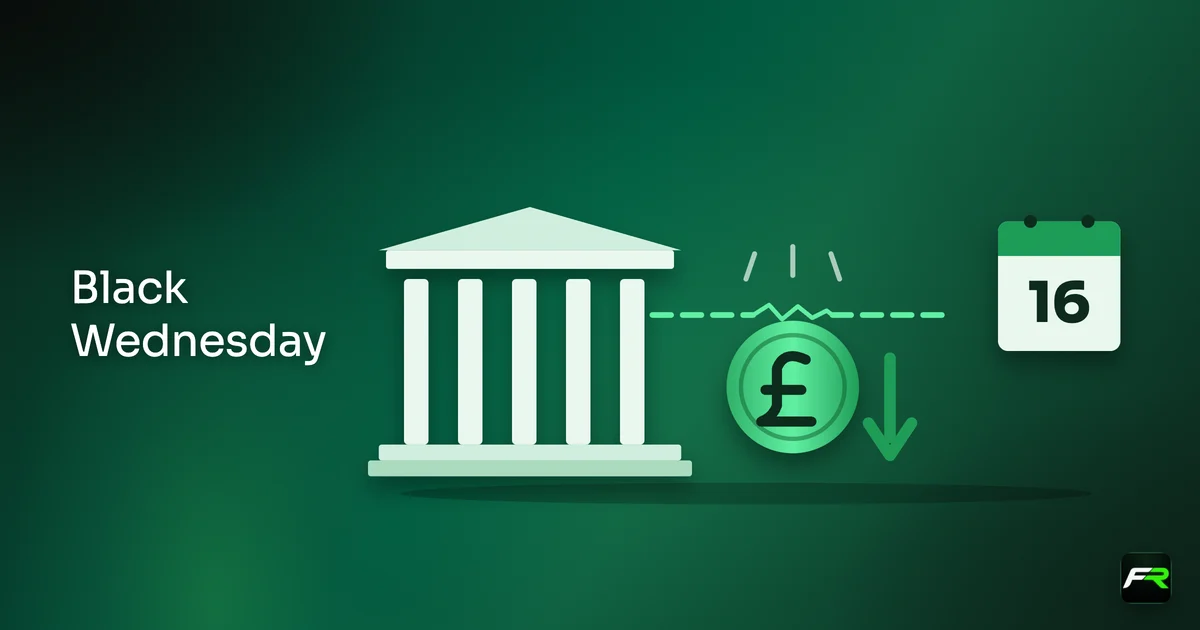
Black Wednesday, 1992
In 1992 Druckenmiller concluded that Britain could not keep the pound inside the European Exchange Rate Mechanism while its economy was in recession and German interest rates were high. He built a large short position in sterling. When he discussed it with Soros, the story goes, Soros urged him to make the bet much bigger because the risk was limited and the potential reward large.
On 16 September 1992 Britain left the ERM and the pound fell sharply. Quantum is widely reported to have made about $1 billion. Our article on George Soros and Black Wednesday covers the day itself.
Ideas he is known for
Druckenmiller has given many interviews and speeches over the years. A few themes come up repeatedly and are useful to any trader:
- Concentrate when the odds are strongly in your favour. He has said that the way to build long-term returns is to protect capital most of the time and to bet big when you have high conviction.
- Liquidity and central banks drive markets. He pays close attention to what central banks are doing with interest rates and money supply, often more than to company earnings.
- Admit mistakes fast. He is known for changing his mind quickly when the evidence turns against him, rather than defending a losing view.
- Look ahead, not at today. He tries to imagine where the economy will be in 12 to 18 months and position for that, not for current headlines.
The mistake of 2000
Druckenmiller is also open about his biggest error. In 1999 and 2000 he resisted the technology bubble, then bought into technology shares near the top, and Quantum suffered heavy losses when the bubble burst. He left Soros Fund Management in 2000, and has since described the episode as a lesson in emotional discipline: he knew the shares were overvalued but could not stand watching others profit.
That honesty is part of why traders find him useful. Even one of the most successful macro investors fell into the classic trap of chasing a move out of fear of missing out.
How he thinks about currencies
Currencies sit at the centre of Druckenmiller's approach because they react directly to central bank policy and to flows of money between countries. In interviews he has described watching interest rate differentials, the direction of monetary policy and the balance of payments to judge where a currency is likely to be a year or more ahead. A currency backed by tightening policy and strong inflows tends to rise; one weighed down by loose policy and outflows tends to fall.
He has also stressed that the best currency trades often come when a policy is clearly unsustainable, as with sterling in 1992. In those moments the market can stay calm for a long time and then move very quickly once the policy breaks. Being positioned before the break, with limited downside if it does not come, is the shape of trade he looks for.
For a retail trader, the practical version is simpler: know what each central bank is likely to do next, notice when a currency is being held up by something that cannot last, and keep position sizes small enough that being early does not hurt.
Closing Duquesne
In 2010 Druckenmiller announced that he would return outside investors' money and close Duquesne Capital, which managed about $12 billion at the time. He said that the strain of meeting his own high standards for performance year after year had become too much. Since then he has managed his own money through a family office and given occasional interviews about markets, central banks and the economy.
His approach depends on deep research, decades of experience and the ability to absorb large swings. Copying the idea of "betting big" on a small leveraged retail account, without that background, is a common way to lose money quickly.
Ayesha used to risk the same 2% on every trade, whether she felt strongly about it or not. After reading Druckenmiller's interviews, she changed her approach in a careful way: she still never risks more than 2%, but she risks only 0.5% on ordinary setups and skips trades where she has no clear reason. Her losing weeks got smaller, and the few trades she backs fully now carry more of her results.
Lessons for currency traders
- Look for asymmetry: trades where you can lose a little and gain a lot.
- Size by conviction, within firm limits. Bigger when the evidence is strong, smaller or flat when it is not.
- Follow central banks. Interest rate policy is the single biggest driver of currencies.
- Watch your emotions, especially the fear of missing out near the top of a big move.
Turn the ideas into rules with our guides to position sizing and trading psychology, and meet his contemporaries in the richest forex traders.
Cite this guide
FX Recap, "Stanley Druckenmiller: The Trader Behind the Soros Pound Trade", updated 13 November 2026, https://fxrecap.com/learn-forex/education/stanley-druckenmiller
Free to quote with a link. Journalists: data and comment in our press room.
Frequently asked
Who is Stanley Druckenmiller?
An American macro investor who founded Duquesne Capital Management in 1981 and managed George Soros's Quantum Fund from 1988 to 2000. He is widely credited with leading the 1992 bet against the British pound.
Did Druckenmiller or Soros break the Bank of England?
Accounts generally credit Druckenmiller with identifying the trade and Soros with pushing him to make it much larger. Both played a role, and many other investors were selling sterling at the same time.
What returns did Druckenmiller make?
Duquesne's returns are widely reported as about 30% a year on average with no losing year from 1981 to 2010. Those figures come from press reports rather than audited public accounts, so treat them as reported rather than verified.
Why did Druckenmiller close Duquesne Capital?
In 2010 he said the strain of keeping up his performance standards had become too great. He returned outside investors' money, when the fund managed about $12 billion, and has since managed only his own money through a family office.
What is Druckenmiller's investing style?
Global macro: taking positions in currencies, bonds, shares and commodities based on views about economies and central banks. He is known for concentrating capital in high-conviction ideas and cutting losing positions quickly.
What was Druckenmiller's biggest mistake?
By his own account, buying technology shares near the top of the bubble in 2000 after resisting them, which led to heavy losses at the Quantum Fund. He left Soros Fund Management that year.
Related reading
The team behind this guide
Researched, checked and approved by five forex specialists
Every guide is written, fact-checked and edited before it goes live, and updated when the facts change. Spotted an error? Tell us.