IC Markets

 3:09
 2:39
 2:10
 2:18
 3:43
 8:42






































The Brexit Pound Crash: Sterling's Biggest One-Day Fall
On the night of 23 June 2016 the pound climbed towards $1.50 as traders expected Britain to vote to stay in the EU. By the next morning it had plunged to its lowest level since 1985. Here is how the night unfolded and what traders learned.
 WriterNafish PialJournalist & FX WriterJournalist · forex news and market writing View profileAbout Nafish →

 ResearchJawad Bin GoniPR & ReporterPR and reporting · media enquiries and press coverage View profileAbout Jawad →

 Fact-checking & riskJannatul FerdaushFact-Checker & Risk AnalystFact-checks every figure · risk analysis · Applied Statistics, University of Dhaka View profileAbout Jannatul →

 Trading reviewJowel RanaForex TraderForex trader · reviews guides from a trader's view View profileAbout Jowel →

 Final approvalRanjan N. MondolForex TraderForex trader · signs off every guide View profileAbout Ranjan →

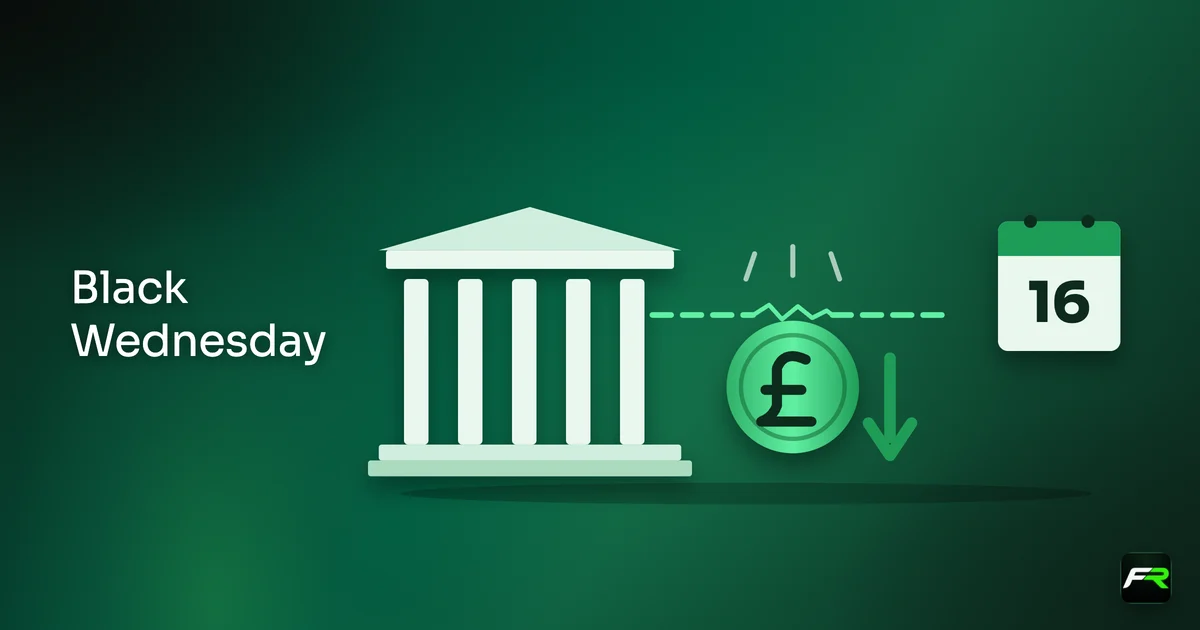
The Brexit pound crash happened overnight on 23 to 24 June 2016, when results of the UK's referendum showed a vote to leave the European Union and sterling collapsed against the dollar. GBP/USD had touched about 1.50 in the evening as markets bet on a vote to remain.
Within hours it fell to about 1.3229, its weakest level since 1985, and it ended the New York session on 24 June down about 8%, widely reported as the pound's biggest one-day fall since it began floating in the early 1970s.
The night is a classic case of event risk: a single, scheduled event with a binary outcome, where the market had priced one result and got the other.
| Vote | Thursday 23 June 2016 |
|---|---|
| Evening high | GBP/USD near 1.50 |
| Overnight low | About 1.3229, lowest since 1985 |
| Daily fall | About 8%, sterling's largest on record under floating rates |
| Policy response | Bank of England offers £250bn; rate cut to 0.25% in August |
What markets expected
Opinion polls before the vote were close, but betting markets and many investors leaned towards a vote to remain. As polling stations closed at 10pm UK time, the pound rose. Early optimism, partly based on a poll released that evening, pushed GBP/USD towards 1.50. In practice, much of the market had positioned for the status quo.
The night of the count
Results came in area by area through the night. The first significant shock came from Sunderland and Newcastle, where the leave vote was stronger than expected. Each result that beat expectations for leave knocked the pound lower, and the moves accelerated as it became clear the national result was turning.
Timing made the moves sharper. The count happened during the Asian trading session, when liquidity in sterling is thinner than in London or New York hours. Banks widened their spreads dramatically, and many retail brokers raised margin requirements before the vote and limited new positions overnight.
The morning after
On the morning of 24 June, Prime Minister David Cameron announced that he would resign. Bank of England Governor Mark Carney said the Bank was ready to provide £250 billion of additional funds to support markets, which helped steady sterling from its lows. Shares in UK banks and housebuilders fell sharply, while government bonds and gold rallied as investors looked for safety.
In August 2016 the Bank of England cut its main interest rate to a then-record low of 0.25% and restarted asset purchases. The pound stayed weak for years as the UK negotiated its exit, which became formal on 31 January 2020. Sterling's weakness made imports more expensive and pushed up inflation in the following years.
Sterling in the years that followed
The referendum night was only the start. Sterling stayed under pressure through 2016, hit by uncertainty about what leaving would mean for trade, banks and investment. In October 2016 it suffered a flash crash in Asian hours, briefly falling about 6% in minutes. Every twist in the negotiations, from the triggering of Article 50 in March 2017 to repeated parliamentary votes on the withdrawal deal, moved the pound.
For forex traders the period became a lesson in political risk. GBP pairs, normally among the most liquid in the world, began to behave like event-driven currencies, gapping on headlines and polls. Volatility in sterling options rose sharply ahead of key votes, a sign that professional traders were paying up to protect themselves.
The weaker pound also had real effects. Imported goods became more expensive, inflation rose above the Bank of England's 2% target in 2017, and UK holidaymakers found their money bought less abroad. Exporters and companies earning abroad, such as many large firms in the FTSE 100 index, benefited because their foreign earnings were worth more in pounds.
Investors also learned how quickly a currency's role can change. Before 2016 sterling was seen as a steady major currency. Afterwards it carried a political risk premium that lasted for years, and analysts began treating UK news flow much like that of an emerging market during key votes.
How brokers and traders prepared
Many brokers had learned from the Swiss franc crash in 2015. Ahead of the vote they raised margin requirements on sterling pairs, cut maximum leverage, warned clients that stops might be filled far from their levels, and in some cases restricted new positions. Traders who held large positions through the result with tight stops often found those stops filled hundreds of pips away.
A stop-loss is not a guarantee during a gap. If prices jump past your stop, it fills at the next available price. Around elections and referendums, the safest position size is often zero.
Priya bought GBP/USD at 1.4900 on the evening of the vote with a 1-lot position and a stop at 1.4750, expecting a remain result and a 200-pip rally. Her stop was triggered in the small hours but filled near 1.4300 because prices gapped, turning an expected loss of about $1,500 into one of about $6,000. Negative balance protection at her broker limited her losses to her deposit. She now closes positions before binary events or uses guaranteed stops where her broker offers them.
Lessons for traders
- Markets can price the wrong outcome. Confidence in a result is not the same as the result.
- Scheduled events can still gap. Elections, referendums and central bank surprises all carry gap risk.
- Liquidity depends on the hour. Moves in the Asian session for a European currency can be exaggerated.
- Know your broker's rules. Margin changes, guaranteed stops and negative balance protection matter most on nights like this.
Read what happened to the pound a few months later in the pound flash crash of October 2016, and how session timing affects liquidity in forex market hours.
Cite this guide
FX Recap, "The Brexit Pound Crash: Sterling's Biggest One-Day Fall", updated 15 November 2026, https://fxrecap.com/learn-forex/education/brexit-pound-crash
Free to quote with a link. Journalists: data and comment in our press room.
Frequently asked
How much did the pound fall after the Brexit vote?
GBP/USD fell from near 1.50 on the evening of 23 June 2016 to about 1.3229 the next morning, its lowest level since 1985. It closed the New York session on 24 June down about 8%, its largest one-day fall under floating exchange rates.
Why did the pound rise before it fell?
Markets expected a vote to remain, and early-evening optimism pushed sterling towards 1.50. When results showed a stronger leave vote than expected, that optimism reversed sharply.
What did the Bank of England do after the vote?
Governor Mark Carney said on 24 June that the Bank was ready to provide £250 billion of additional funds. In August 2016 the Bank cut its main interest rate to 0.25% and restarted asset purchases.
Why was the move so large?
The market had positioned for a remain result, the count ran through the thin Asian trading session, and the outcome was binary. When the unexpected result arrived, there were few buyers at nearby prices.
Did brokers change their rules for the vote?
Many raised margin requirements, reduced leverage on sterling pairs, warned about gaps and in some cases restricted new positions overnight, partly because of lessons learned from the Swiss franc shock in 2015.
When did the UK formally leave the EU?
The UK triggered the formal exit process, Article 50, on 29 March 2017 and left the European Union on 31 January 2020, followed by a transition period that ended on 31 December 2020. Sterling reacted to each stage of the negotiations.
Did anyone profit from the Brexit vote?
Traders and funds that were short sterling or held protection against volatility made money, and investors in UK companies with large foreign earnings gained as the weaker pound increased the value of those earnings. Many who positioned for a remain vote lost.
How should traders handle elections and referendums?
Reduce or close positions before the result, size any position for a very large move, understand that stops can be filled far away, and consider trading only once the result is known.
Related reading
The team behind this guide
Researched, checked and approved by five forex specialists
Every guide is written, fact-checked and edited before it goes live, and updated when the facts change. Spotted an error? Tell us.