IC Markets




































Tickmill Stop Out and Margin Call: 100% and 50% Levels Explained
Tickmill lists a margin call at a 100% margin level and stop out at 50%. Those are stricter than many offshore brokers, which warns you earlier and leaves more money when positions close. Here is the formula, a worked example and how to stay clear.
 WriterAbir KhanWriterWrites the guides · checks every figure against primary sources View profileAbout Abir →
 Market analysisTanbir Habib RiyadForex & Crypto AnalystForex and crypto analyst · technical and fundamental analysis View profileAbout Tanbir →
 Fact-checking & riskJannatul FerdaushFact-Checker & Risk AnalystFact-checks every figure · risk analysis · Applied Statistics, University of Dhaka View profileAbout Jannatul →
 Trading reviewJowel RanaCo-Founder & Forex TraderCo-founder · forex trader · reviews guides from a trader's view View profileAbout Jowel →
 Final approvalRanjan NiskrityFounder, Owner & Forex TraderFounder and owner · forex trader · signs off every guide View profileAbout Ranjan →
Tickmill sets its margin call at a 100% margin level and its stop out at 50%. The figures appear in its account conditions as margin call and stop-out of 100% and 50%. A margin call is the warning stage. Stop out is where the platform begins closing positions to protect the account.
Margin level is equity divided by the margin in use, shown as a percentage. Equity is your balance plus or minus the floating result of open trades. At 100%, your equity equals the margin your positions require. By 50%, it has fallen to half of that.
| Margin call | 100% margin level |
|---|---|
| Stop out | 50% margin level |
| Formula | Equity ÷ used margin × 100 |
| Negative balance protection | Yes, reset to zero |
| Execution | Market execution |
| Leverage | Up to 1:1000, dynamic on MT5 |
How Tickmill compares
Many high-leverage offshore accounts warn at a 50% margin level and liquidate at 20%, and some go as low as 0%. Tickmill's levels are on the cautious side by comparison. You hear about trouble sooner, and when positions are closed, half of the margin you committed is still there.
A stricter level has a cost. Trades have less room before the system intervenes. A position that would survive a deep pullback at a 20% stop out is closed earlier at 50%. For most traders that is a fair exchange, since trades that reach those depths rarely recover in time.
The four numbers to watch
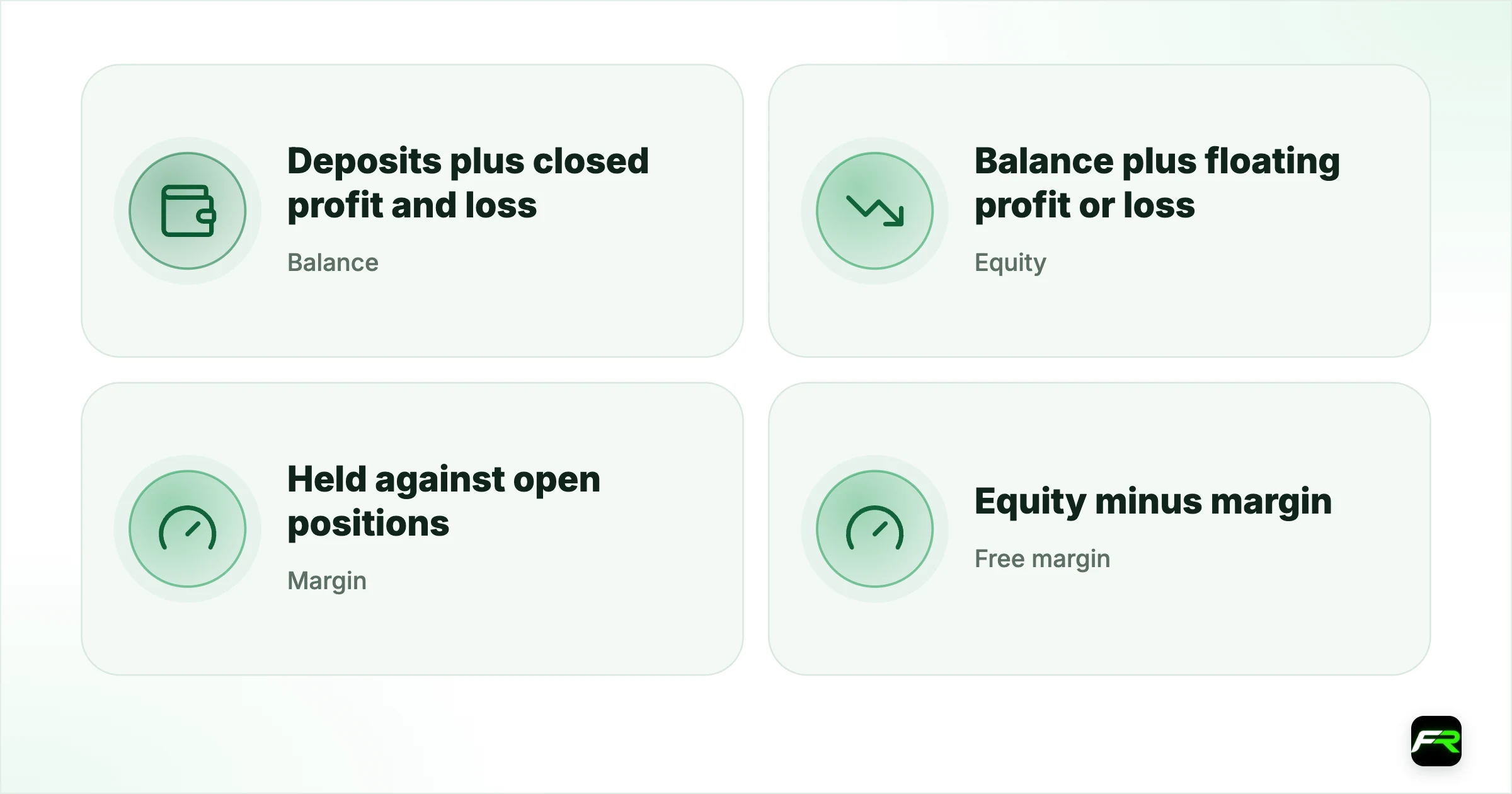
| Term | What it means | Example |
|---|---|---|
| Balance | Deposits plus closed profit and loss | $1,000 |
| Equity | Balance plus floating profit or loss | $900 with a $100 open loss |
| Margin | Held against open positions | $200 |
| Free margin | Equity minus margin | $700 |
| Margin level | Equity ÷ margin × 100 | 450% |
New traders watch the balance, which stays still while a trade is open. Equity is the figure that moves, and both thresholds are measured from it. MetaTrader shows all five numbers in the terminal window once a position is open.
What happens at 100%
At a 100% margin level you have no free margin. Every dollar of equity is committed to supporting open positions, so you can't open anything new. Nothing has been closed yet. The account is one bad move away from forced liquidation, and the sensible response is to reduce size at once.
Your choices are to close a position, close part of one, or transfer more money in from your wallet. Extra funds raise the margin level and also increase what you stand to lose on a trade that is already failing. A smaller position is usually the better answer.
What happens at 50%
When equity drops to half of the used margin, the platform closes positions automatically. MetaTrader's standard behaviour is to start with the largest losing position and continue until the margin level is back above the stop out threshold. Fills are at market, so in a fast move the closing price can be worse than the level implied.
A worked example
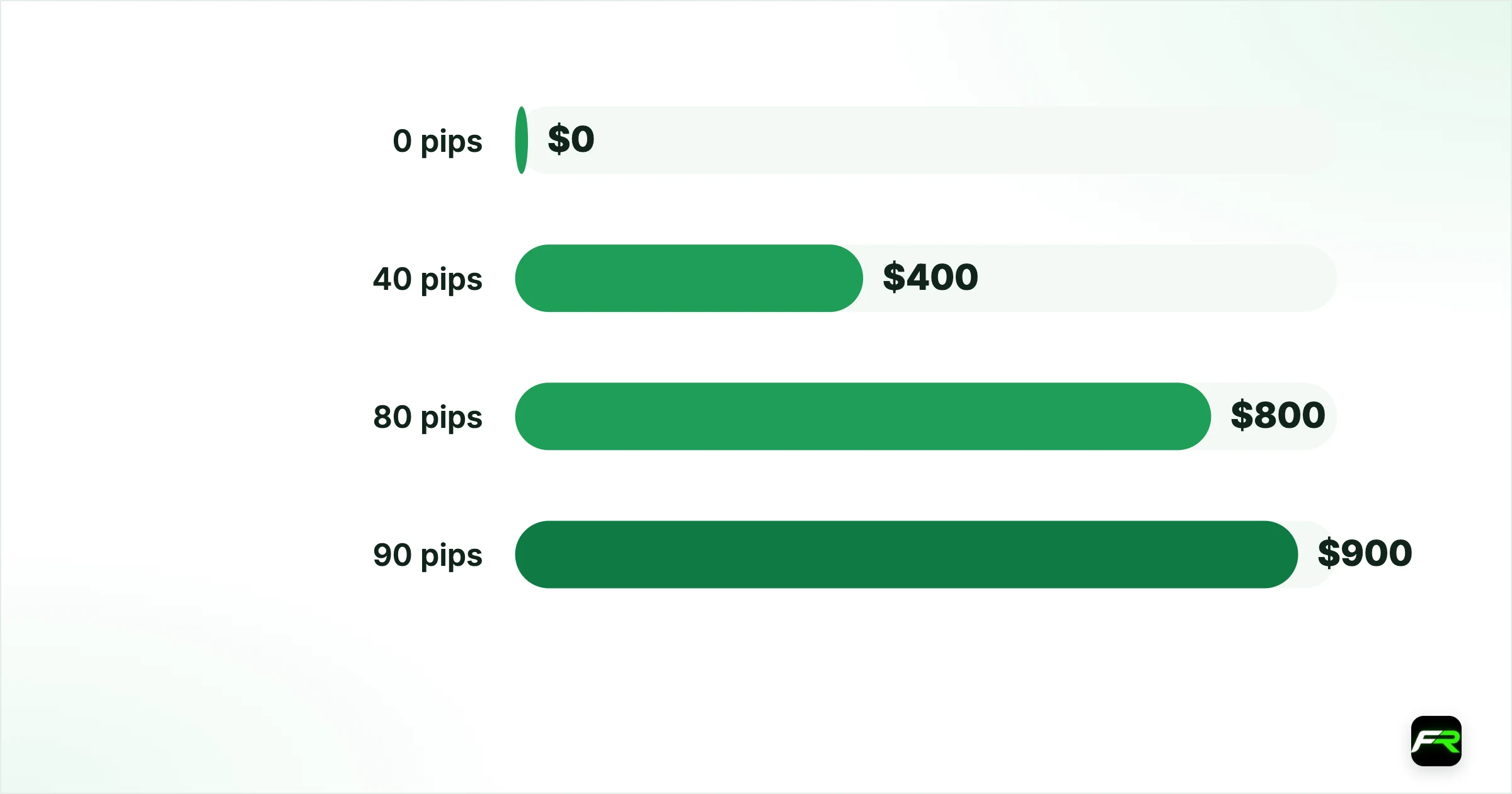
You have $1,000 in a trading account and buy one lot of a dollar-based pair on MT4 at 1:500. The position is worth $100,000, margin is $200, and each pip is worth $10. Your margin level starts at 500%.
| Move against you | Floating loss | Equity | Margin level | Status |
|---|---|---|---|---|
| 0 pips | $0 | $1,000 | 500% | Normal |
| 40 pips | $400 | $600 | 300% | Normal |
| 80 pips | $800 | $200 | 100% | Margin call |
| 90 pips | $900 | $100 | 50% | Stop out |
Eighty pips brings the margin call and ten more brings stop out. You are left with $100 from $1,000. The warning and the liquidation sit only ten pips apart here, so the margin call isn't a period for reflection.
Trade 0.10 lots with the same account and 90 pips costs $90. Margin is $20, equity is $910 and the margin level is 4,550%. The thresholds never come into view.
Dynamic leverage and margin level
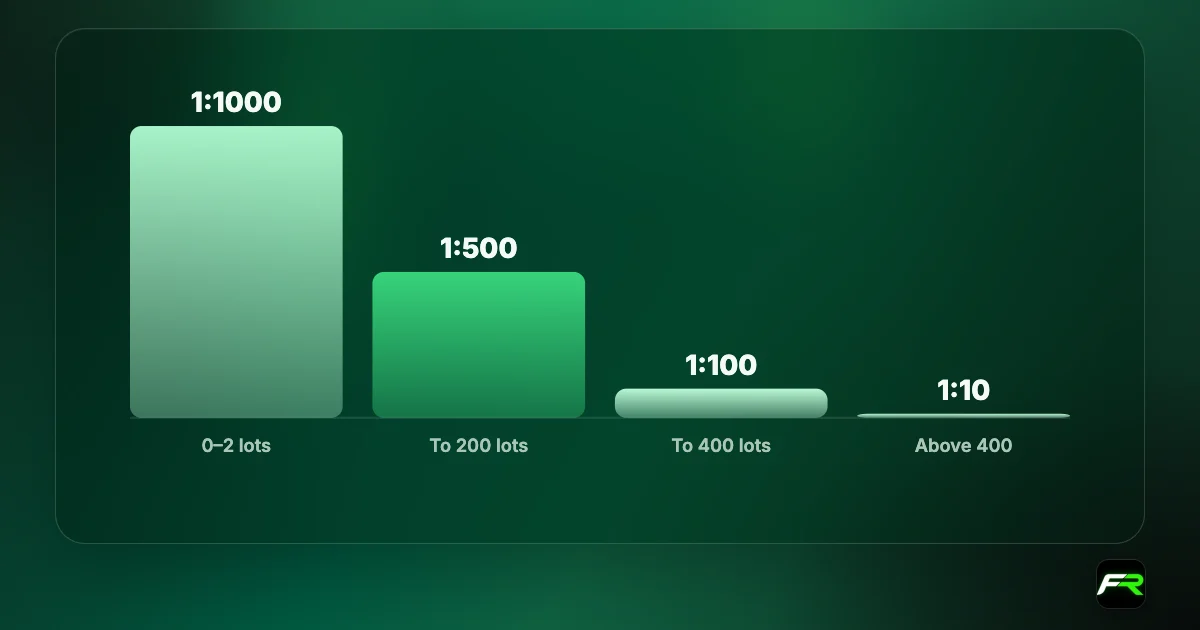
On MT5, Tickmill Trader and TradingView, margin is not a fixed share of position size. Leverage steps down as the position grows. Add a third lot of EUR/USD and that lot is margined at 1:500 instead of 1:1000, so it needs twice the margin of each of the first two.
Used margin rising faster than expected means the margin level falls faster than expected. A trader pyramiding into a winning position can trigger a margin call on a pullback that would have been harmless at the earlier size. The Tickmill leverage guide lists the tiers.
Gaps and negative balances
Stop out works on live prices. If the market gaps over a weekend or on a shock announcement, the first available price can be far beyond the 50% level, and the account can end below zero. Tickmill's safety page says you cannot lose more than you deposit and that an account in negative equity is reset to zero.
That protection caps the loss at your balance. Money sitting in your wallet, outside the trading account, isn't part of the trading account's equity, which is one more reason to keep spare funds there.
How withdrawals and transfers affect it
A transfer out of a trading account lowers equity while margin stays the same. Take $300 from an account with $600 of equity and $200 of margin, and the margin level goes from 300% to 150%. One ordinary swing later you are at the margin call. Check the level after any transfer, as our Tickmill withdrawal guide advises.
How to stay well away from both levels
- Put a stop loss on every trade, at the price where the idea is wrong.
- Risk about 1% of the account per trade and size from the stop.
- Keep used margin under a fifth of equity, for a margin level above 500%.
- Count correlated positions as a single large trade.
- Cut size before weekends and scheduled announcements.
- Use Tickmill's margin calculator before adding to a position.
Stock CFD leverage can be reduced around earnings, and leverage on any instrument may be cut in volatile periods. Either change raises margin and lowers your margin level without a price move.
Set a platform alert at a margin level of 400%. You want to know long before the broker's own warning at 100%.
Spreads play a part as well. Open positions are valued at the price you could close them at, so a wider spread lowers equity even when the mid price hasn't moved. At the daily rollover and around major releases, spreads often widen for a few minutes, and an account already near 100% can be tipped over by that alone.
Free margin is the number to check before any new trade. If the position you have in mind would use most of it, the trade is too large for the account, whatever leverage allows.
I prefer Tickmill's 100 and 50 to the 50 and 20 common offshore. A stop out that leaves half your margin gives you something to rebuild with. The best outcome is still never to see either number, and position size decides that.
Rafael had $500 on MT4 at 1:500 and bought 0.50 lots of GBP/USD. Margin was about $130. A 74-pip drop took his equity to roughly $130 and triggered the margin call; another 13 pips closed the trade at stop out with about $65 left. He now trades 0.05 lots with a 30-pip stop.
Frequently asked
What is Tickmill's stop out level?
50%. When your margin level, which is equity divided by used margin, falls to 50%, positions are closed automatically.
What is Tickmill's margin call level?
100%. At that point you have no free margin and can't open new positions. It is a warning to reduce exposure or add funds.
How do I calculate margin level?
Divide equity by used margin and multiply by 100. With $900 of equity and $200 of margin, the margin level is 450%.
Can I lose more than my deposit at Tickmill?
Tickmill states that you cannot lose more money than you deposit and that an account falling into negative equity is reset to zero.
Does dynamic leverage affect stop out?
Indirectly. On MT5 and Tickmill Trader, larger positions need proportionally more margin, which lowers your margin level faster as you add size.
How can I avoid a margin call?
Trade smaller. Risk about 1% per trade, use a stop loss, keep used margin under a fifth of equity and check the margin level after any withdrawal or transfer.
Related reading
The team behind this guide
Researched, checked and approved by five forex specialists
Every guide is written, fact-checked and edited before it goes live, and updated when the facts change. Spotted an error? Tell us.