IC Markets




































Fusion Markets Stop Out and Margin Call: 90% and 20% Explained
Fusion Markets issues a margin call at a 90% margin level and starts closing positions at 20%. Here is how margin level is calculated, what happens at each threshold, how negative balance protection fits in, and how to stay well clear of both.
 WriterAbir KhanWriterWrites the guides · checks every figure against primary sources View profileAbout Abir →
 Market analysisTanbir Habib RiyadForex & Crypto AnalystForex and crypto analyst · technical and fundamental analysis View profileAbout Tanbir →
 Fact-checking & riskJannatul FerdaushFact-Checker & Risk AnalystFact-checks every figure · risk analysis · Applied Statistics, University of Dhaka View profileAbout Jannatul →
 Trading reviewJowel RanaCo-Founder & Forex TraderCo-founder · forex trader · reviews guides from a trader's view View profileAbout Jowel →
 Final approvalRanjan NiskrityFounder, Owner & Forex TraderFounder and owner · forex trader · signs off every guide View profileAbout Ranjan →
Fusion Markets uses two margin thresholds. A margin call is triggered when your margin level falls to 90%. Stop out happens at 20%, and from there the platform closes positions automatically to stop the account losing more. Both figures come from the broker's FAQ and apply to its standard accounts.
Margin level is a simple ratio: your equity divided by the margin you are using, shown as a percentage. Equity is your balance plus or minus the running profit or loss on open trades. Your platform displays the number in the terminal window whenever a position is open.
| Margin call | 90% margin level |
|---|---|
| Stop out | 20% margin level |
| Formula | Equity ÷ used margin × 100 |
| Negative balance protection | Yes, for Vanuatu and Seychelles clients |
| Protection reset | Once per working day, per account |
| Excluded from protection | Mongolia, Türkiye, Indonesia, Hong Kong, Taiwan, Vietnam, China |
What happens at 90%
At 90% your equity has slipped below the margin your trades require. The account is flagged, and you can't open new positions that need more margin. Nothing is closed yet. Think of it as the last clear warning that your trades are too big for the money behind them.
You have three ways out: close part of the position, close a different losing trade, or add funds. A deposit made to rescue a trade is the option to be most careful with, since it adds to your stake in an idea that is already going wrong.
What happens at 20%
Once equity drops to a fifth of the margin in use, the system closes positions without asking. Platforms such as MetaTrader normally start with the trade showing the largest loss and continue until the margin level climbs back above the threshold. You have no say in the price.
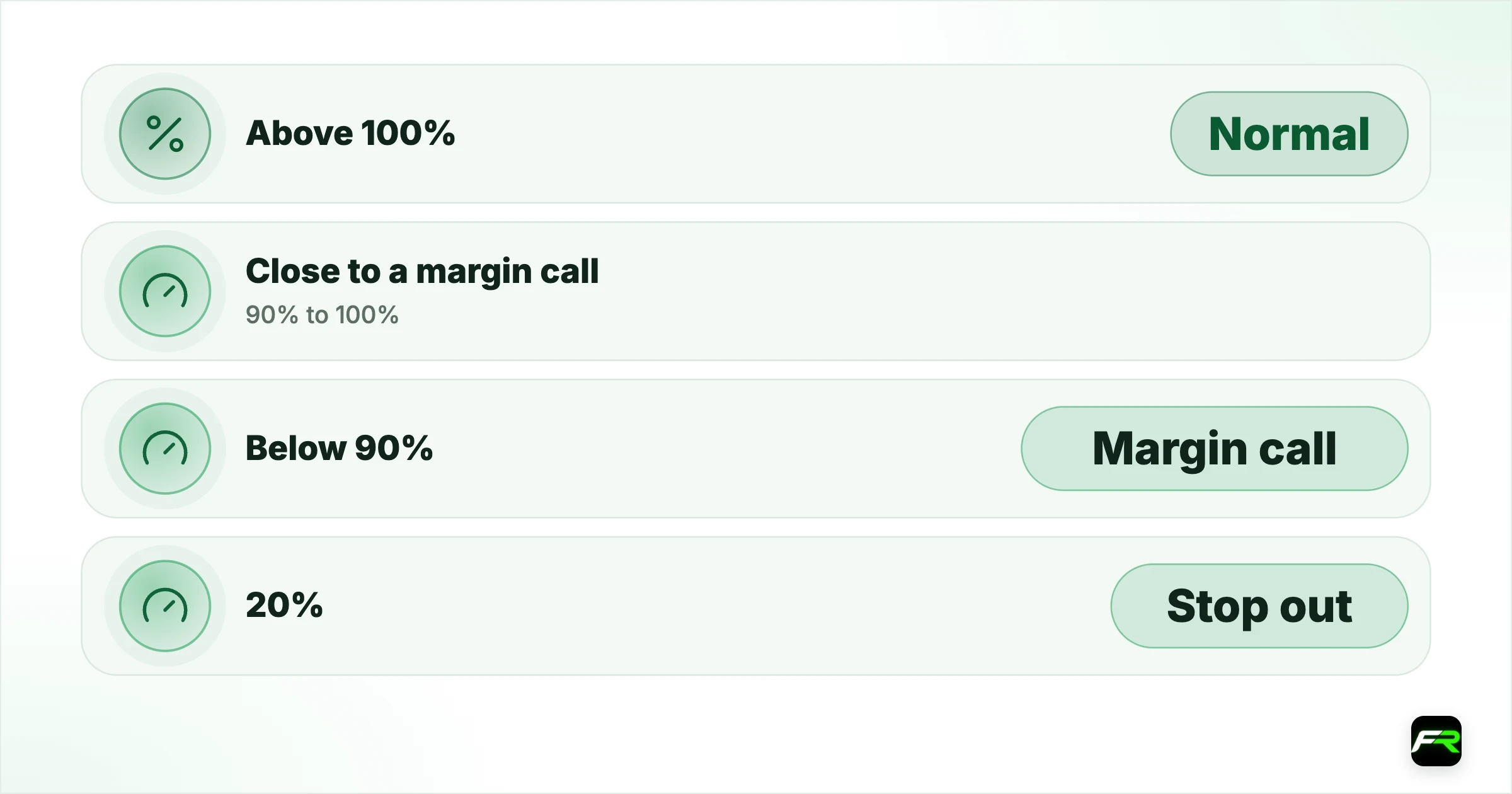
A 20% stop out level is low by industry standards. That gives trades more room before liquidation, and it also means little is left when it happens. By the time the system acts, about four fifths of the margin you committed has gone.
| Margin level | Status | What you can do |
|---|---|---|
| Above 100% | Normal | Open and close trades freely |
| 90% to 100% | Close to a margin call | Reduce size or add funds |
| Below 90% | Margin call | No new margin-using trades; cut risk now |
| 20% | Stop out | Positions are closed automatically |
A worked example
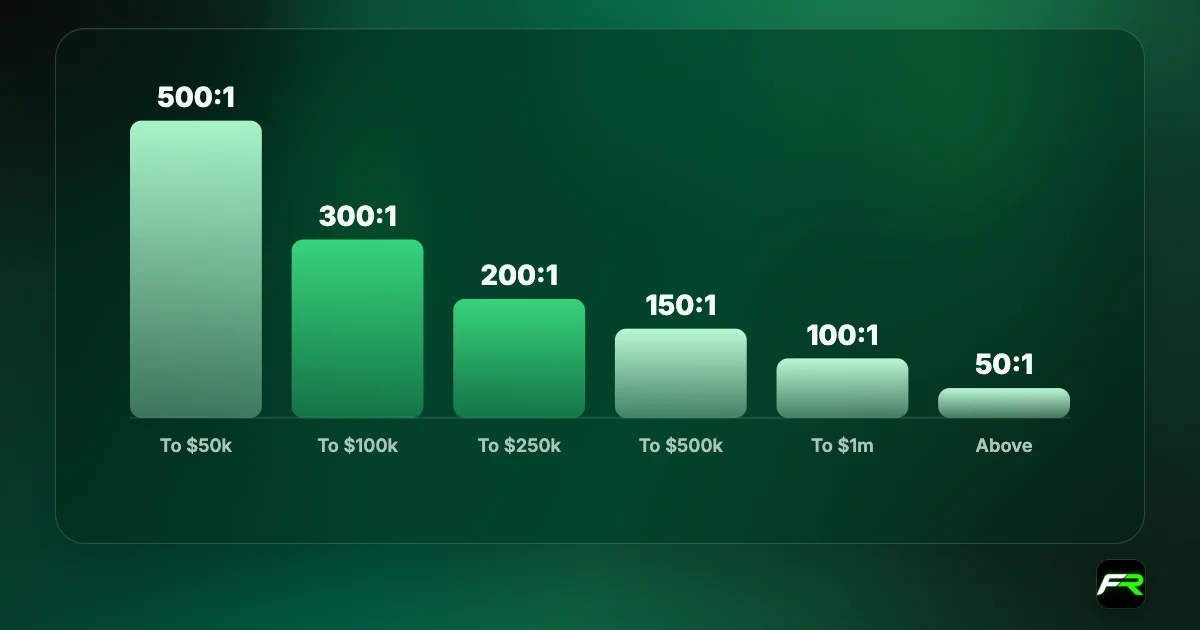
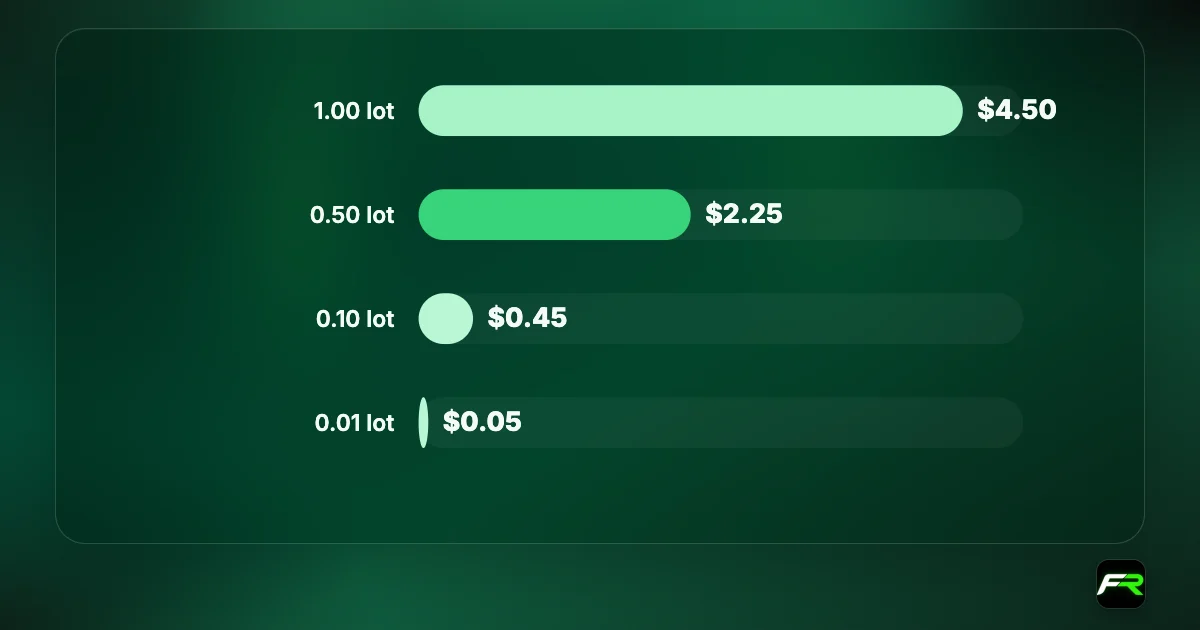
Say you deposit $500 and set leverage at 500:1. You buy 0.50 lots of a dollar-based pair, a position worth $50,000. Margin is $100, and each pip is worth about $5. Your margin level starts at 500%.
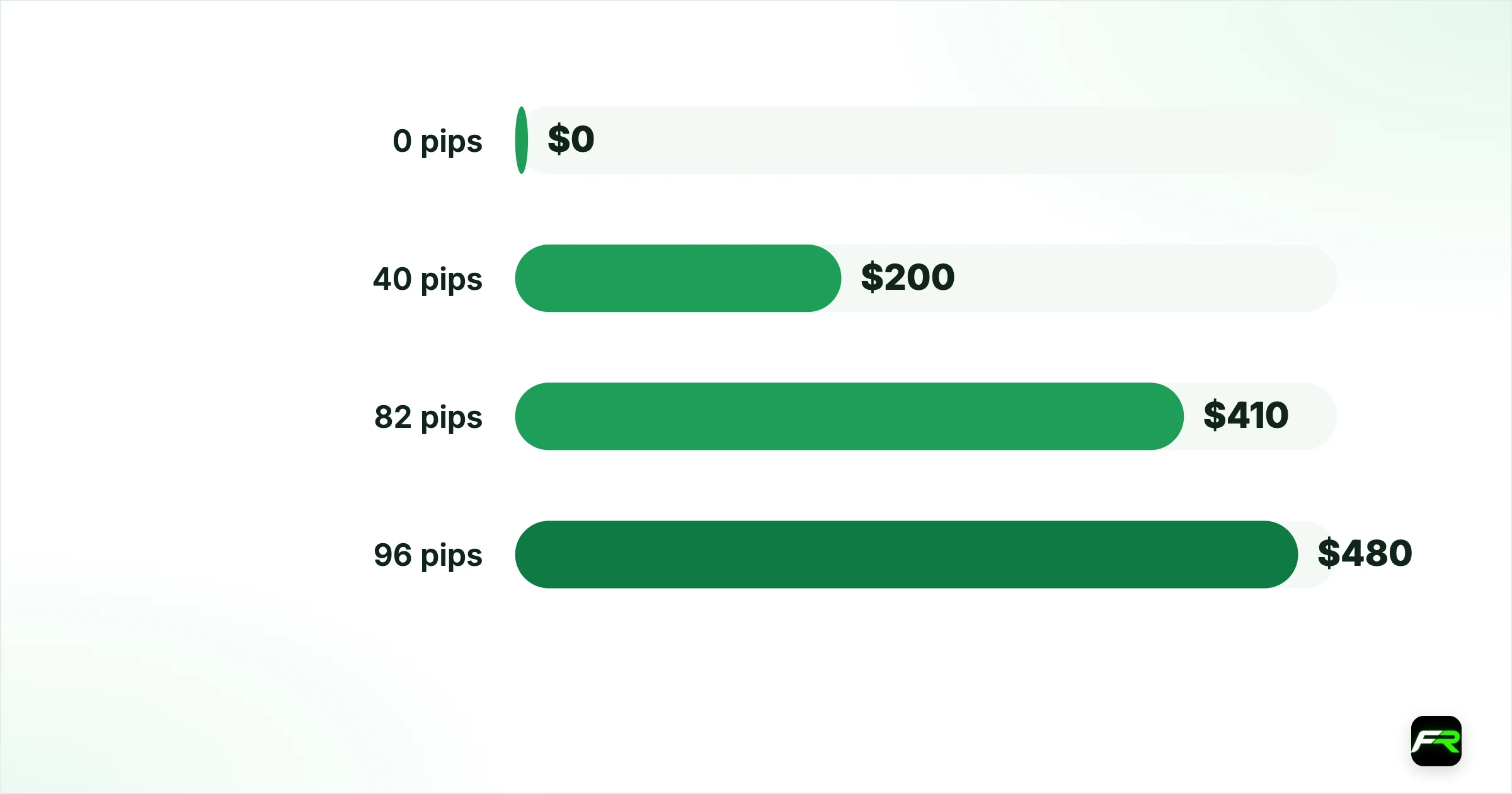
| Move against you | Loss | Equity | Margin level | Status |
|---|---|---|---|---|
| 0 pips | $0 | $500 | 500% | Normal |
| 40 pips | $200 | $300 | 300% | Normal |
| 82 pips | $410 | $90 | 90% | Margin call |
| 96 pips | $480 | $20 | 20% | Stop out |
An 82-pip fall brings the margin call and only 14 pips more ends the trade. In a fast market those two events can be seconds apart, so don't count on the warning to give you time. After the stop out, $20 remains from $500.
Run the same account at 0.05 lots and the numbers change completely. A 96-pip move costs $48, and the margin level never drops below 4,000%. Position size, not the stop out percentage, decides whether you ever see these thresholds.
Negative balance protection
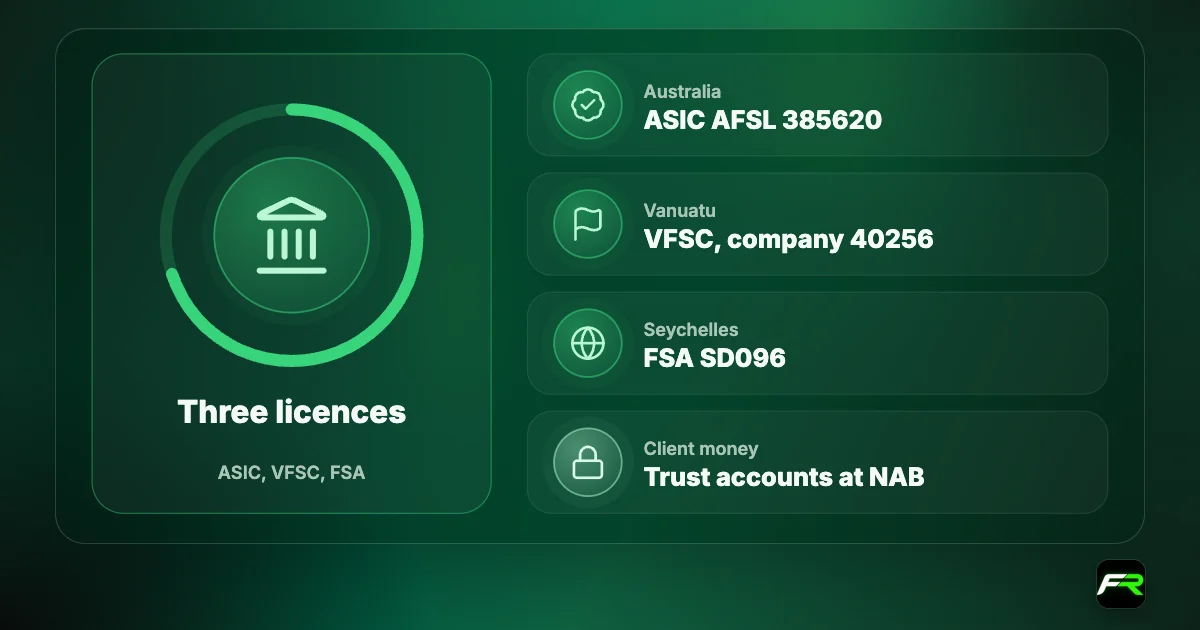
Stop out normally closes trades while some equity is left. In a gap, such as a weekend open or a shock announcement, the price can jump past the level and leave the account below zero. Fusion's FAQ says clients of its Vanuatu and Seychelles companies have negative balance protection, with the balance reset to zero.
Two details matter. Resets happen once per working day, and the protection applies to each account on its own, so a profit in one account doesn't have to cover a deficit in another. Residents of Mongolia, Türkiye, Indonesia, Hong Kong, Taiwan, Vietnam and China don't get the protection and can owe the shortfall.
Traders in the excluded countries should avoid holding large positions over weekends or through major news, when gaps are most likely.
How to stay away from stop out
- Put a stop loss on every trade, placed where your idea is wrong, not where the pain becomes too much.
- Risk about 1% of the account per trade and work out the lot size from that.
- Keep used margin below roughly 20% of equity so the margin level stays above 500%.
- Count correlated trades as one. Three long positions on dollar pairs behave like a single big trade.
- Check the swap before holding for weeks, since nightly charges reduce equity too.
- Reduce size before weekends and scheduled announcements.
A lower leverage setting on your account is a blunt but useful safeguard, because it stops you opening oversized trades in the first place. Our Fusion Markets leverage guide shows how to change it and what each level means for margin.
Add a margin level alert if your platform supports one, set far above 90%, for example at 300%. You want to hear about trouble long before the broker's warning.
Order and size limits
Fusion allows trades from 0.01 lots up to 100 lots per order and up to 200 orders at once on MetaTrader, pending orders included. On cTrader the limit is 2,000 positions. Those ceilings rarely matter to retail accounts, yet grid and martingale systems can reach them, and such systems are also the ones most likely to end in a stop out. The platforms guide covers the other differences between MetaTrader and cTrader.
Equity, balance and free margin
Four numbers in the terminal window tell the whole story. Balance is your money with closed trades counted. Equity adds the running profit or loss on open trades. Margin is the amount locked up as collateral, and free margin is equity minus margin. The margin level compares equity with margin as a percentage.
Balance doesn't move while a trade is open, which fools beginners into feeling safe. Equity is the figure that falls as a position goes against you, and equity is what the 90% and 20% thresholds are measured from. Watch that line, not the balance.
Spreads feed into equity too. At the daily rollover, 17:00 in New York, spreads often widen for a few minutes. A wider spread marks your open positions at a worse price, and an account sitting near the threshold can be stopped out by that alone, even though the mid price barely moved.
Free margin is the number to check before a new trade. If the position you want would use most of it, the trade is too large, whatever the leverage setting allows.
A 20% stop out level sounds trader-friendly because it gives positions room. I read it differently. If you reach it, 80% of your margin is already lost. Your own stop loss should close the trade long before the broker's system does.
Nguyen held 0.40 lots of gold on a $600 account into a weekend. Monday opened with a gap, his margin level fell through 90% and positions were closed near 20%, leaving $41. Vietnam is excluded from Fusion's negative balance protection, so a larger gap could have left him in debt. He now closes or halves positions on Fridays.
Frequently asked
What is the stop out level at Fusion Markets?
20%. When your margin level, which is equity divided by used margin, falls to 20%, the platform begins closing positions automatically.
What is the margin call level?
90%. Below that level you can't open new positions that require margin, and you should reduce exposure or add funds.
How is margin level calculated?
Equity divided by used margin, multiplied by 100. With $300 of equity and $100 of margin in use, the margin level is 300%.
Which trade is closed first at stop out?
MetaTrader platforms normally close the position with the largest loss first and continue until the margin level recovers above the stop out threshold.
Can my Fusion Markets balance go negative?
It can in a price gap. Fusion resets negative balances to zero for Vanuatu and Seychelles clients, once per working day and per account. Residents of seven places, including Indonesia, Vietnam and China, are excluded.
How do I avoid a margin call?
Trade smaller. Keep risk near 1% per trade, use a stop loss on every position and keep used margin under about a fifth of your equity.
Related reading
The team behind this guide
Researched, checked and approved by five forex specialists
Every guide is written, fact-checked and edited before it goes live, and updated when the facts change. Spotted an error? Tell us.