 IC Markets

 3:09
 2:39
 2:10
 2:18
 3:43
 8:42























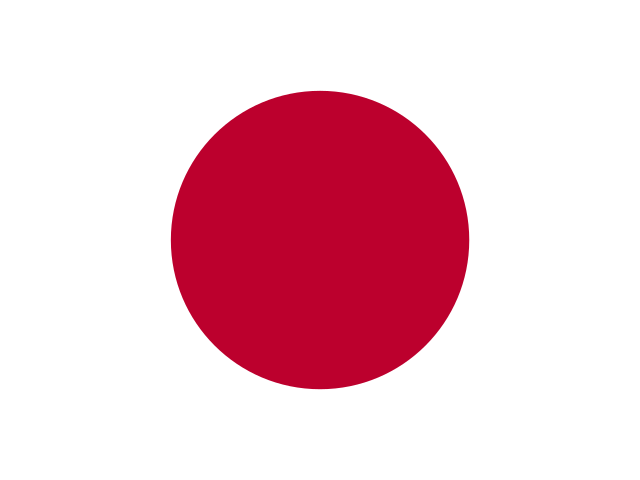












Who Is Mrs Watanabe? Japan's Army of Retail Forex Traders
"Mrs Watanabe" is the market's nickname for Japan's individual currency traders, a group large enough to move the yen. Here is who they are, how they trade and why professionals watch them.
 WriterAbir KhanWriterWrites the guides · checks every figure against primary sources View profileAbout Abir →

 Market analysisTanbir Habib RiyadForex & Crypto AnalystForex and crypto analyst · technical and fundamental analysis View profileAbout Tanbir →

 Fact-checking & riskJannatul FerdaushFact-Checker & Risk AnalystFact-checks every figure · risk analysis · Applied Statistics, University of Dhaka View profileAbout Jannatul →

 Trading reviewJowel RanaForex TraderForex trader · reviews guides from a trader's view View profileAbout Jowel →

 Final approvalRanjan N. MondolForex TraderForex trader · signs off every guide View profileAbout Ranjan →

"Mrs Watanabe" is the nickname traders use for Japan's retail forex investors, a group so large that its buying and selling can push the yen. The name became popular in the early 2000s, when Japanese savers, often pictured as housewives trading from home, started borrowing in yen to buy higher-yielding currencies.
Today the stereotype is out of date: reports suggest most of these traders are men in their 30s to 50s, many of them office workers. The nickname has stuck because the group still matters.
| What it means | Japan's individual forex traders, as a group |
|---|---|
| Classic strategy | The carry trade: sell yen, buy higher-yielding currencies |
| Leverage limit | 25:1 since August 2011 |
| Who trades | About 85% men, according to 2019 Bloomberg reporting |
Where the nickname came from
Watanabe is one of the most common surnames in Japan, so "Mrs Watanabe" works like "the average person" in English. In the early 2000s Japanese interest rates were close to zero while rates in Australia, New Zealand and elsewhere were several percentage points higher. Savers earning almost nothing at the bank discovered they could open margin accounts with online brokers and collect that difference.
Because these accounts were so numerous, their combined flows became visible to banks. Dealers in Tokyo and London began talking about "Mrs Watanabe buying the dip" when the yen weakened in Asian hours, and the name spread.
How the carry trade works
The classic Mrs Watanabe position is a carry trade. You borrow, or sell, a currency with a low interest rate and buy one with a higher rate, earning the gap each day you hold the position as swap. When the high-yielding currency is also rising, the trade pays twice.
The catch is that a carry trade earns slowly and can lose quickly. If the yen strengthens, a few days of exchange-rate losses can wipe out months of swap. That happened in 2008, when the financial crisis sent the yen sharply higher, and again in August 2024, when a sudden yen rally forced many leveraged positions to close at once. Our guide to the 2024 yen carry trade unwind covers that episode.
How Japan reined in leverage
In the late 2000s some Japanese brokers offered leverage of several hundred times. After heavy losses in 2008, Japan's Financial Services Agency introduced limits: 50 times from August 2010 and 25 times from August 2011. The regulator presented the cap as investor protection, and brokers responded by competing on spreads and tools rather than leverage.
Why professionals watch Japanese retail flows
Japan's retail market is one of the largest in the world. Bloomberg reported in 2019 that there were nearly 800,000 active retail forex accounts, and the Bank of Japan has described record trading by individuals in some years. These traders tend to buy dips in the dollar against the yen and sell rallies, which can steady the yen in calm periods.
In panics the effect reverses. When the yen rises fast, leveraged positions hit their margin limits and are closed automatically, and that forced buying of yen pushes it higher still. Analysts watch the positioning data published by Japanese exchanges and brokers for signs that the crowd is heavily one-sided.
Being on the same side as a large crowd is comfortable until everyone needs to leave at once. Crowded carry trades unwind violently, and the exits are narrowest when you most need them.
Kenji, an office worker, held AUD/JPY for the swap, which paid him a few hundred yen a day on his position. Over a year the swap added up nicely. Then the yen rallied about 8% in two weeks, and his losses on the exchange rate came to several times what he had earned in swap. Having used close to the full 25:1 leverage, he saw his broker close part of the position near the low. These days Kenji treats swap as a bonus, not a reason to hold, and uses far less leverage.
How Japanese retail trading differs
Japan built one of the most organised retail forex markets in the world. Brokers report detailed client statistics, the Tokyo Financial Exchange runs an exchange-traded currency product called Click 365, and positioning data from Japanese firms is followed closely by analysts abroad. That transparency is one reason the Mrs Watanabe idea took hold: the crowd's behaviour could be measured.
Japanese retail traders also trade at times that matter. Their activity peaks in the Tokyo session and in the evening after work, when liquidity in some pairs is thinner, so their flows can move prices more than the same volume would during London hours. Many favour pairs that pay positive swap against the yen, such as AUD/JPY, NZD/JPY and USD/JPY, and some have moved into currencies like the Mexican peso, Turkish lira and South African rand when their interest rates looked attractive.
Those higher-yielding emerging currencies carry extra risk. Their rates are high because inflation or political risk is high, and their exchange rates can fall sharply in a crisis. A trader collecting 5% a year in swap can lose that much in a single bad week. The Japanese experience shows that a strategy which works smoothly for long periods can still produce large losses when conditions change suddenly.
Japan's tax rules shaped the market too. Since 2012 profits from forex margin trading have been taxed at a separate flat rate rather than added to income, which made the activity more attractive to salaried workers and helps explain why so many office workers joined.
What retail traders anywhere can learn
- Carry is not free money. The interest you earn is payment for taking exchange-rate risk.
- Crowded trades unwind fast. When many traders hold the same position, a small shock can trigger a cascade.
- Leverage limits exist for a reason. Japan cut leverage after heavy losses, and so did Europe and the UK.
- Check the swap both ways. A positive swap in one direction means a negative one in the other, plus your broker's fee.
Learn how swap is calculated in our guide to forex swap costs, and why one side pays and the other earns in swap long vs swap short.
Cite this guide
FX Recap, "Who Is Mrs Watanabe? Japan's Army of Retail Forex Traders", updated 8 November 2026, https://fxrecap.com/learn-forex/education/mrs-watanabe-forex
Free to quote with a link. Journalists: data and comment in our press room.
Frequently asked
Who is Mrs Watanabe in forex?
Not a real person. It is the market's nickname for Japanese individual forex traders as a group. The name became popular in the early 2000s, when Japanese savers started trading currencies from home to earn more than near-zero bank rates.
Are Mrs Watanabe traders really housewives?
Mostly not. Bloomberg reported in 2019 that about 85% of Japan's retail forex traders were men, mostly in their 30s to 50s. The housewife image is an old stereotype that the nickname keeps alive.
What is the maximum leverage in Japan?
Retail forex leverage in Japan has been capped at 25 times the deposit since August 2011, after a 50 times limit in 2010. Before the rules, some brokers offered several hundred times.
Why do Japanese traders like the carry trade?
Japanese interest rates have been near zero for most of the past 25 years, so selling yen and buying higher-yielding currencies earned a daily swap. It works while exchange rates are stable and loses quickly when the yen rallies.
How are forex profits taxed in Japan?
Since 2012, profits from over-the-counter forex margin trading in Japan have been taxed separately from salary at a flat rate, rather than added to other income. Losses can be carried forward for a limited period. Rules can change, so Japanese residents should confirm the current treatment with the tax office or an adviser.
Which currencies do Japanese retail traders favour?
Pairs that pay positive swap against the yen have been popular, such as AUD/JPY, NZD/JPY and USD/JPY. Some traders also hold higher-yielding emerging currencies like the Mexican peso or South African rand, which pay more but can fall sharply in a crisis.
Can Mrs Watanabe move the market?
In aggregate, yes. Japan has one of the world's largest retail forex markets, and its flows can steady the yen in calm times and amplify moves when leveraged positions are forced to close during a sharp yen rally.
Related reading
The team behind this guide
Researched, checked and approved by five forex specialists
Every guide is written, fact-checked and edited before it goes live, and updated when the facts change. Spotted an error? Tell us.