IC Markets





























Swap Long vs Swap Short: Why One Is Positive and the Other Negative
Swap long applies to buys, swap short to sells. They differ because of the interest rate gap between the two currencies and the broker's markup. Here is how to read them and when holding overnight pays.
 WriterAbir KhanWriterWrites the guides · checks every figure against primary sources View profileAbout Abir →
 Market analysisTanbir Habib RiyadForex & Crypto AnalystForex and crypto analyst · technical and fundamental analysis View profileAbout Tanbir →
 Fact-checking & riskJannatul FerdaushFact-Checker & Risk AnalystFact-checks every figure · risk analysis · Applied Statistics, University of Dhaka View profileAbout Jannatul →
 Trading reviewJowel RanaCo-Founder & Forex TraderCo-founder · forex trader · reviews guides from a trader's view View profileAbout Jowel →
 Final approvalRanjan NiskrityFounder, Owner & Forex TraderFounder and owner · forex trader · signs off every guide View profileAbout Ranjan →
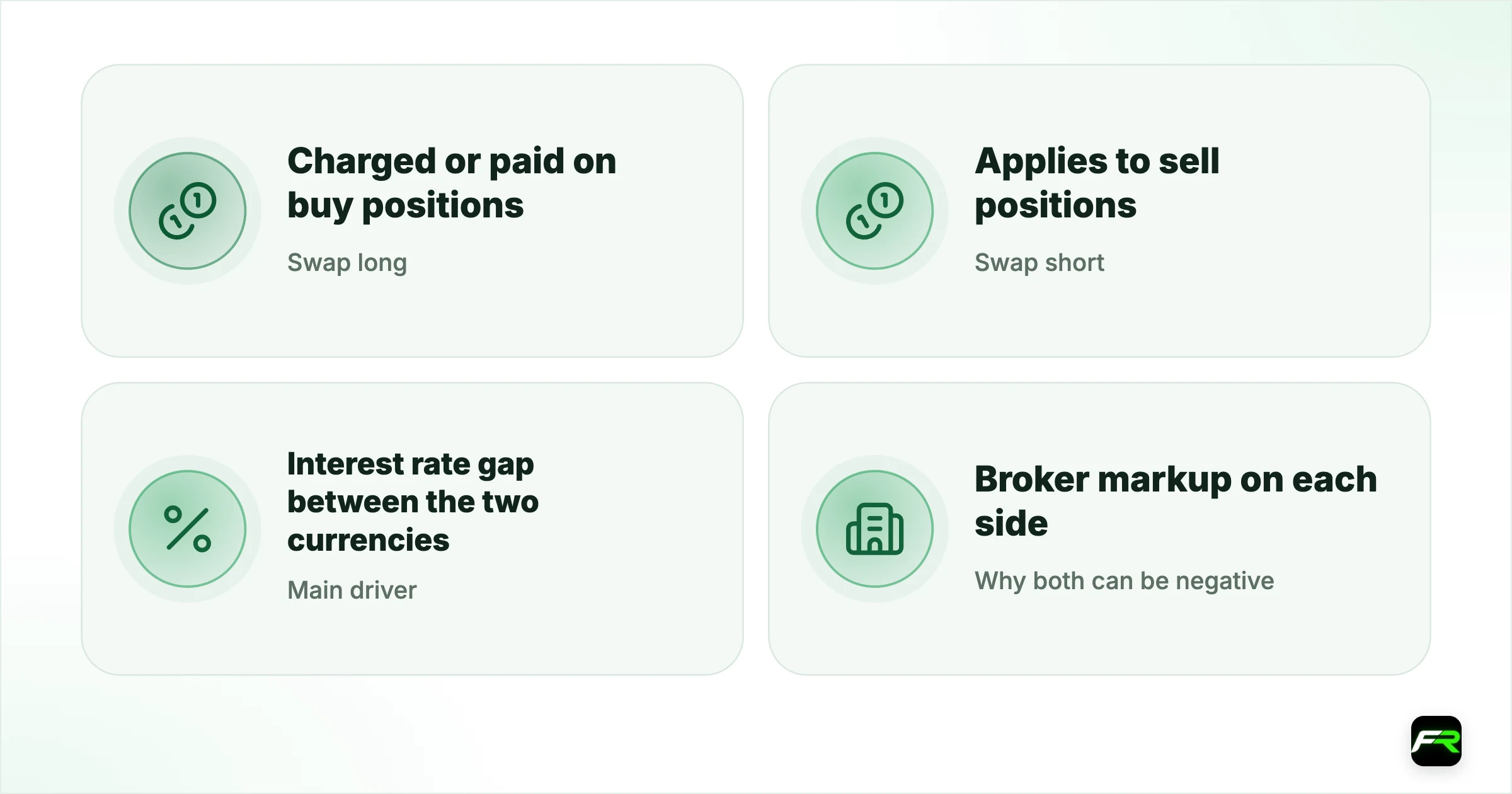
Swap long is the overnight charge or credit on a buy position; swap short is the same for a sell. They usually differ because they reflect the interest rate gap between the two currencies in the pair. Buying a pair means borrowing the second currency to hold the first, so if the first pays more interest, a buy earns and a sell pays. Brokers then add a markup, which is why both sides are often negative on pairs with similar rates.
Reading which side is positive helps you estimate holding costs, plan swing trades and avoid surprises on Wednesday night, when most pairs charge three days at once.
| Swap long | Charged or paid on buy positions |
|---|---|
| Swap short | Applies to sell positions |
| Main driver | Interest rate gap between the two currencies |
| Why both can be negative | Broker markup on each side |
| Where to check | Specification window in MetaTrader |
The interest logic
Every currency has a short-term interest rate set mainly by its central bank. When you buy EUR/USD, you hold euros and owe dollars. If US rates are higher than euro rates, you are holding the lower-yielding currency and borrowing the higher-yielding one, so you pay the difference each night. A seller holds dollars and owes euros, and in principle earns the difference.
The broker sits in the middle and adds a margin to both sides. So the side that should earn may earn less, or still pay a little, and the side that should pay pays more.
A simple example with round numbers
| Currency A (base) | Currency B (quote) | |
|---|---|---|
| Interest rate (example) | 4.5% | 1.5% |
| Buy A/B | Held: earns 4.5% | Borrowed: costs 1.5% |
| Raw interest | Earn about 3% a year | |
| After broker markup | Earn less, e.g. 2% a year | |
| Sell A/B | Borrowed: costs 4.5% | Held: earns 1.5% |
| Raw and after markup | Pay about 3%, plus markup |
The rates are invented to show the mechanics. Brokers convert these annual figures into points or money per lot per night, which is what the Specification window shows.
How to read swap rates in MT5
- Right-click the symbol in Market Watch and open Specification.
- Read Swap long and Swap short; a minus sign means you pay.
- Check Swap type: points, percentage or money.
- Note the 3-day swap day, usually Wednesday on forex.
- Use the swap calculator to turn points into money for your size.
Why the numbers change
Swap rates move when central banks change rates, when market expectations for those rates shift, and when brokers update their own funding costs. After a rate decision, a pair's swaps can change within days. Check before holding a position for weeks, and again after major central bank meetings listed in our economic calendar.
Pairs where one side is clearly positive
Pairs combining a high-rate currency with a low-rate one tend to show a clearly positive swap on one side. With US rates well above Japan's in 2026, many brokers show a positive long swap on USD/JPY and a negative short swap. Emerging-market currencies with high rates, such as the South African rand or the Mexican peso, often make the short side of USD/ZAR or USD/MXN positive. Check your own broker's figures; they vary.
A trader in Johannesburg considers holding a USD/ZAR short for three weeks. The Specification shows a positive short swap because rand rates are higher than dollar rates. Over 15 rollovers, including three triple Wednesdays, the credit adds up to a modest sum per lot. The trader treats it as a bonus, not a reason, because a 1% move in USD/ZAR is worth far more than the whole three weeks of swap.
Swaps on crosses
On cross pairs such as EUR/JPY or GBP/AUD, the same logic applies with the two non-dollar rates. If the euro's rate is above the yen's, a long EUR/JPY tends to show the better swap. Crosses often have larger broker markups than majors, so both sides can be clearly negative even with a rate gap, which makes long holds on crosses more expensive.
Carry trades and their risk
A carry trade aims to earn the positive swap by holding the high-yielding side for weeks or months. It works while the exchange rate is stable or moves your way. Carry fails when the high-yielding currency falls, which often happens suddenly in risk-off markets. Our yen carry trade guide shows how quickly carry gains can be wiped out.
Swap-free accounts
Islamic accounts remove interest-based swaps on both sides, but brokers often replace them with a fixed fee per lot per night after a grace period. On pairs with a large rate gap, the fee may be lower than the negative swap; on others, higher. Read the fee table before choosing. See our guide to swap-free accounts.
Swap in your trading plan
For trades held a day or two, swap is usually a small cost next to the spread. Over a swing trade held a few weeks, it can equal or exceed the spread, and for position trades held months it can decide whether the trade is worth taking. Add the expected swap to your plan: nights held times the daily rate, with Wednesday counted as three. If the negative swap over the planned holding period is larger than a quarter of your expected profit, look for a better entry or a cheaper pair.
Swaps on gold and indices
Gold has no central bank rate, so its swaps reflect the cost of financing the position in dollars plus the broker's markup; both sides are often negative. Index and commodity CFDs usually charge a financing rate based on a benchmark rate plus a margin, quoted as a percentage. These swaps can be larger than on forex, which matters for longer holds.
When two trade ideas look equally good, the one with the positive or smaller negative swap is cheaper to hold. It is a tie-breaker, not a strategy.
A positive swap does not make a losing trade profitable. Exchange-rate moves dwarf swap credits, so set a stop loss as on any other trade.
Frequently asked
What is swap long and swap short?
Swap long is the overnight charge or credit for holding a buy position; swap short is the same for a sell. They differ because of the interest rate gap between the two currencies and the broker's markup on each side.
Why are both swaps negative?
When the two currencies have similar interest rates, the raw difference is small, and the broker's markup on each side makes both negative. On pairs with a large rate gap, one side is usually positive.
Which side has positive swap on USD/JPY?
With US rates well above Japan's in 2026, many brokers show a positive long swap on USD/JPY and a negative short swap. Figures differ by broker and change when rates move, so check your own Specification window.
When is swap charged?
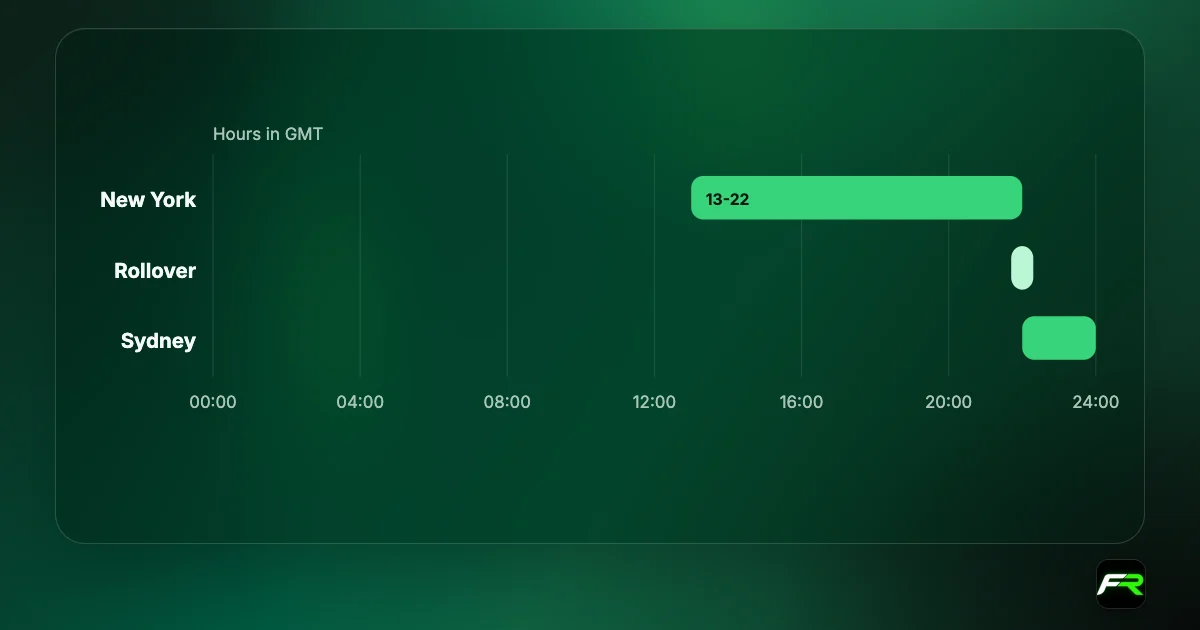
At the daily rollover, 17:00 New York time, on positions still open. Most forex pairs charge three days on Wednesday night to cover the weekend. Positions closed before the rollover pay no swap that day.
Do swaps change?
Yes. They move with central bank rates, market expectations and the broker's funding costs. After a rate decision, swaps can change within days, so check before holding a position for weeks.
Is a carry trade a good idea?
It can earn steady swap while exchange rates are calm, but high-yielding currencies can fall sharply in risk-off markets and wipe out months of credit. Treat swap as a small extra, and manage the currency risk first.
Official sources: MetaTrader 5 Help
Related reading
The team behind this guide
Researched, checked and approved by five forex specialists
Every guide is written, fact-checked and edited before it goes live, and updated when the facts change. Spotted an error? Tell us.