 IC Markets


































Litefinance vs IUX
IUX charges about a ninth of what LiteFinance does per trade. That sounds like the end of the argument. It is not, because LiteFinance gives you copy trading, cTrader, and real protection if you live in Europe. Here is what the higher price buys.
 WriterAbir KhanWriterWrites the guides · checks every figure against primary sources View profileAbout Abir →
 Market analysisTanbir Habib RiyadForex & Crypto AnalystForex and crypto analyst · technical and fundamental analysis View profileAbout Tanbir →
 Fact-checking & riskJannatul FerdaushFact-Checker & Risk AnalystFact-checks every figure · risk analysis · Applied Statistics, University of Dhaka View profileAbout Jannatul →
 Trading reviewJowel RanaCo-Founder & Forex TraderCo-founder · forex trader · reviews guides from a trader's view View profileAbout Jowel →
 Final approvalRanjan NiskrityFounder, Owner & Forex TraderFounder and owner · forex trader · signs off every guide View profileAbout Ranjan →


IUX charges about a ninth of what LiteFinance does per trade. At first glance, IUX appears to be the obvious choice on cost. However, LiteFinance offers features such as copy trading, cTrader support, and stronger regulatory protection for eligible European clients that may justify the higher trading costs for some traders. However, the higher trading cost comes with several additional features worth considering.
If you are an EEA client, LiteFinance’s CySEC-regulated entity offers Investor Compensation Fund protection for eligible clients. IUX does not provide equivalent EU compensation coverage. If you want copy trading, open an account on LiteFinance. IUX does not offer it at all. For traders primarily focused on minimizing trading costs, IUX generally offers significantly lower spreads than LiteFinance’s standard account.
The difference in trading costs is substantial. LiteFinance charges roughly 9 times as much per trade on the account a beginner uses. The key question is whether the additional cost provides benefits that match your trading needs.
If you are based in Europe, LiteFinance may be the more suitable option because its European entity is regulated by CySEC and provides investor protection for eligible clients. IUX does not advertise an investor compensation scheme comparable to the EU Investor Compensation Fund. Outside Europe, LiteFinance puts you in St Vincent, whose authority does not regulate forex at all, and the gap narrows sharply.
Copy trading. LiteFinance is built around it. IUX does not have it.
Withdrawal experience. Some independent review platforms contain reports of withdrawal delays, although the broker states that withdrawals are processed according to its published procedures. LiteFinance pays out automatically, usually within a day.
Although IUX offers leverage up to 1:3000, such high leverage significantly increases trading risk and may not be suitable for most retail traders.
Quick Answer
| Best for | Winner | Why |
|---|---|---|
| European traders | LiteFinance | Real EU licence with compensation cover |
| Cost per trade | IUX | About 0.2 pips, against 1.8 |
| Copy trading | LiteFinance | Built around it. IUX has none. |
| Getting your money out | LiteFinance | Automatic, about a day. IUX has delays reported. |
| Avoiding extra fees | IUX | No idle fee. LiteFinance charges about $10 a month. |
| Practising with tiny sums | LiteFinance | Cent account trades in cents |
| Free credit | IUX | $30 to $50. LiteFinance offers deposit bonuses. |
Comparison Table
| LiteFinance | IUX | |
|---|---|---|
| Started | 2005, as LiteForex | 2016, rebranded 2024 |
| Watched by | CySEC for EU clients, St Vincent or Mauritius for everyone else | FSCA South Africa and SVG offshore |
| Strict regulator | None | None |
| Protection for EU clients | Yes, compensation fund cover | None |
| Smallest deposit | $10 (Cent), $50 (Classic and ECN) | $10 (sites list $3 to $50) |
| Commission-free gap (EUR/USD) | 1.8 pips (Classic), 3 pips (Cent) | About 0.2 pips |
| Raw account | 0.0 pips + commission (see below) | 0.0 pips + about $3 a lot |
| Copy trading | Core feature | Not offered |
| Software | MT4, MT5, cTrader, own social platform | MT5 only, own app, TradingView charts |
| Fee for leaving the account unused | About $10 a month once idle | None |
| VPS hosting | About $15 a month | Not offered |
| Support | Broad hours | Weekdays only |
| Getting paid out | Automatic, about a day | Delays reported |
| Max leverage | 1:1000 (some sites say 1:500) | 1:3000 |
As account conditions may change over time, always confirm the latest details on each broker’s official website before opening an account. IUX lists its smallest deposit as $3, $10, $30 and $50 across different sites.
Trading Costs
Based on published average spreads, IUX generally offers lower trading costs on standard accounts. and the size of the gap deserves stating plainly.
Based on published average spreads at the time of writing, IUX generally offers lower spreads than LiteFinance’s Classic account. Always verify current spreads on each broker’s official website. Its $10 Cent account charges 3. So IUX is roughly nine times cheaper than Classic and fifteen times cheaper than Cent.
This difference is significant, particularly for active traders. Over a large number of trades, lower spreads can have a noticeable impact on overall trading costs.
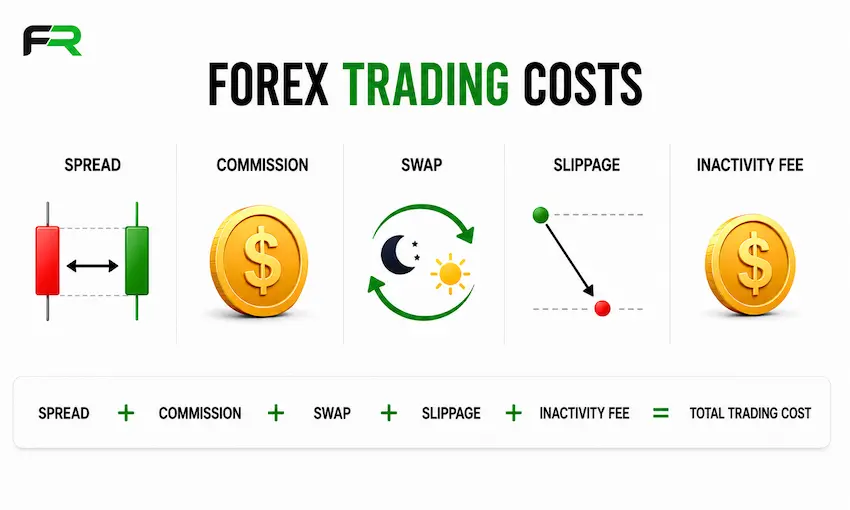
Commission figures differ across third-party review sites. Use LiteFinance’s official contract specifications when comparing account costs. Trusted review sites quote the commission as $0.25, $0.50, $5, $10, and $30 per lot on minor pairs. That is a fortyfold range, and different third-party sources report varying commission figures. If the ECN account interests you, open LiteFinance’s own contract specifications and read the number for the pair you trade. Do not rely on any table, including this one.
There are also additional non-trading costs to consider. Regular idle or monthly maintenance charges do not start accumulating right when an account stops trading for a short time. Broker reviews of the LiteFinance Platform note that an inactivity fee of $10 per month is assessed only after an extended period of inactivity, typically lasting one full year.
LiteFinance charges a standard fee of $15 per month for its VPS hosting service, which is waived if at least 2 standard lots are traded in the month. IUX charges neither. If you trade in bursts, LiteFinance may gradually increase your overall trading costs without you doing anything.
Based on published pricing, IUX has a clear advantage in trading costs. Based on published spreads, IUX currently offers considerably lower trading costs on its standard account.
[Your own test: screenshot LiteFinance’s live commission spec for EUR/USD. Given how badly the web contradicts itself, that image would beat every rival page.]
What the Higher Price Buys
So why would anyone pay nine times more? LiteFinance provides several additional features that may justify its higher trading costs for some users.
Copy trading. LiteFinance built its business around social trading. You browse experienced traders, check their records, and copy them automatically. IUX does not offer copy trading at all. If copy trading is one of your main priorities, LiteFinance is the stronger choice because IUX does not currently offer this feature.
cTrader. LiteFinance offers MT4, MT5 and cTrader. At the time of publication, IUX primarily offers MetaTrader 5 alongside its mobile application. Verify platform availability before publishing. If you want cTrader specifically, or you have older MT4 tools, only LiteFinance has them.
European protection. If you live in Europe, LiteFinance’s arm is watched by CySEC and you are covered by the Investor Compensation Fund. That is genuine, government-backed protection. IUX has nothing comparable anywhere on earth. For many European traders, stronger regulatory protection may be more important than lower trading costs.
The Cent account. LiteFinance lets you trade in cents rather than dollars, so you can practise with real money at almost no risk. Although spreads are wider, the Cent account provides an accessible way for beginners to practise with small position sizes.
Which Broker Is Safer?
The answer depends largely on the regulatory entity that serves your country of residence, so find yourself below.
If you live in Europe, LiteFinance, in most cases. Its European arm is watched by CySEC and European clients get Investor Compensation Fund cover. That is investor compensation protection and IUX offers none.
If you live anywhere else, the regulatory differences become less pronounced.
Outside Europe, LiteFinance signs you up under LiteFinance Global in St Vincent and the Grenadines, or under Mauritius. The Financial Services Authority of St. Vincent and the Grenadines registers companies but does not licence or supervise retail forex trading activities. It registers companies rather than supervising retail forex activities. So the CySEC licence applies only to eligible clients and does not cover you.
IUX operates under the FSCA in South Africa plus offshore registration. Some sites list IUX as ASIC-regulated. That is disputed, so check for your own country before believing it.
Neither broker is primarily supervised by a Tier-1 financial regulator for most international clients. Client fund protection policies depend on the legal entity serving your account. Check the broker’s legal documentation for your location.
There are two important considerations. IUX has a recurring pattern of withdrawal complaints, and its support is weekdays only. LiteFinance rebranded from LiteForex and altered its corporate structure, rather than remaining the same entity since 2005.
On balance, outside Europe, LiteFinance’s longer, cleaner record and more reliable payouts give It a slight advantage. Traders seeking the highest level of regulatory protection may also wish to compare brokers regulated by Tier-1 authorities.
Leverage
IUX offers 1:3000 to anyone. LiteFinance offers up to 1:1000, though some sources say 1:500.
While 1:3000 leverage may appeal to some experienced traders, it also substantially increases trading risk. Leverage grows your losses exactly as fast as your wins, and at 1:3000, a small move the wrong way. Very high leverage significantly increases trading risk and can amplify losses.
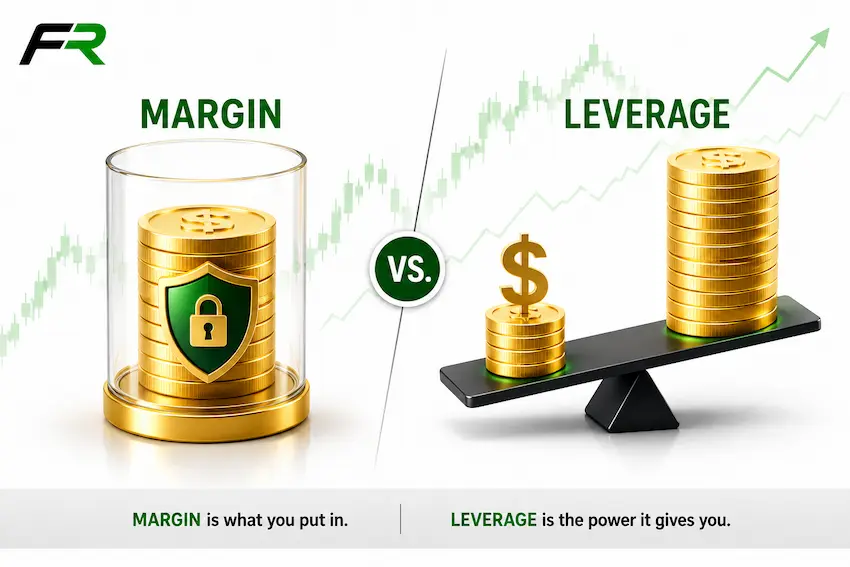
Notice that Regulatory protection depends on the legal entity through which your account is opened, and both offer leverage no recognised financial regulator would allow. High leverage limits often reflect the regulatory framework under which a broker operates.
Final Verdict
If you are in Europe, take LiteFinance. The CySEC licence and compensation cover are worth more than nine times the spread, because they are the difference between having somewhere to appeal and having nowhere.
If copy trading is why you are here, take LiteFinance. IUX simply does not offer it.
If you are outside Europe, trade currencies yourself, and close your positions daily, IUX is significantly cheaper and that is a meaningful cost advantage. Its 0.2 pips against 1.8 is not a small edge. Traders should weigh the lower trading costs against reported withdrawal concerns and the available customer support before making a decision.
Overall, both brokers have strengths and limitations that should be evaluated according to your trading requirements. Two brokers have no Tier-1 regulator, one of which has received withdrawal-related complaints from some users online and the other of which charges an inactivity fee under certain conditions and cannot tell you what its raw account costs are.
Traders who prioritise stronger regulatory oversight may also wish to compare brokers regulated by Tier-1 authorities. If you have $100 rather than $10, you may also wish to compare brokers regulated by Tier-1 authorities before making your final decision.
FAQ
Which is cheaper, LiteFinance or IUX?
IUX, by roughly nine times. About 0.2 pips on EUR/USD against LiteFinance’s 1.8 Classic account.
Which is safer?
In Europe, LiteFinance, because its CySEC arm gives you compensation cover. Outside Europe, neither is watched by anyone strict, though LiteFinance has a longer clean record and more reliable payouts.
Does IUX offer copy trading?
No. LiteFinance does, and it is built around it.
What does LiteFinance’s ECN account cost?
Sources quote anything from $0.25 to $30 per lot. Check LiteFinance’s own contract specifications rather than any comparison table.
Does either charge a fee for not trading?
LiteFinance does, about $10 a month once idle. IUX does not.
Is 1:3000 leverage better than 1:1000?
No. Both are dangerous for a beginner. IUX can offer the bigger number partly because no strict regulator stops it.

Why you can trust FX Recap
FX Recap is an independent Forex media platform. Every broker score comes from our published methodology, including live account testing, regulatory verification, and real trader feedback, so you can make smarter trading decisions.
Read our methodologyAdvertising Disclosure
We prioritize rigorous, unbiased broker testing through our published methodology. Forex and CFD trading carries significant risk of loss, so read our Risk Notice before you trade. While our ratings stay objective, we receive compensation that may influence list placement. Learn how we make money.
Current Offers & Promotions
 Promotion
LiteFinance 30% Deposit Bonus 2026
LiteFinance offers a 30% deposit bonus on qualifying deposits of $50 or more made with the EASYSTART promo code. According…
View Offer Promotion
IUX LotBack Program 2026
IUX Markets' LotBack Program allows eligible traders to earn IRP points from qualifying trading activity. Rewards start at 0.5 IRP…
View Offer Promotion
LiteFinance 50% Trade Smart Deposit Bonus 2026
LiteFinance’s Trade Smart promotion pays a cash reward equal to 50% of a qualifying deposit of at least $100 once the trading requirements are met, using the TRADESMART promo code on ECN MT4 accounts…
View Offer
