IC Markets




























Forex Trading Hours Over Christmas and New Year 2026: What Closes and When
Christmas Day falls on Friday 25 December 2026 and New Year's Day on Friday 1 January 2027, giving two long weekends with thin markets. Here is what usually closes, when liquidity returns and how to protect open trades.
 WriterAbir KhanWriterWrites the guides · checks every figure against primary sources View profileAbout Abir →
 Market analysisTanbir Habib RiyadForex & Crypto AnalystForex and crypto analyst · technical and fundamental analysis View profileAbout Tanbir →
 Fact-checking & riskJannatul FerdaushFact-Checker & Risk AnalystFact-checks every figure · risk analysis · Applied Statistics, University of Dhaka View profileAbout Jannatul →
 Trading reviewJowel RanaCo-Founder & Forex TraderCo-founder · forex trader · reviews guides from a trader's view View profileAbout Jowel →
 Final approvalRanjan NiskrityFounder, Owner & Forex TraderFounder and owner · forex trader · signs off every guide View profileAbout Ranjan →
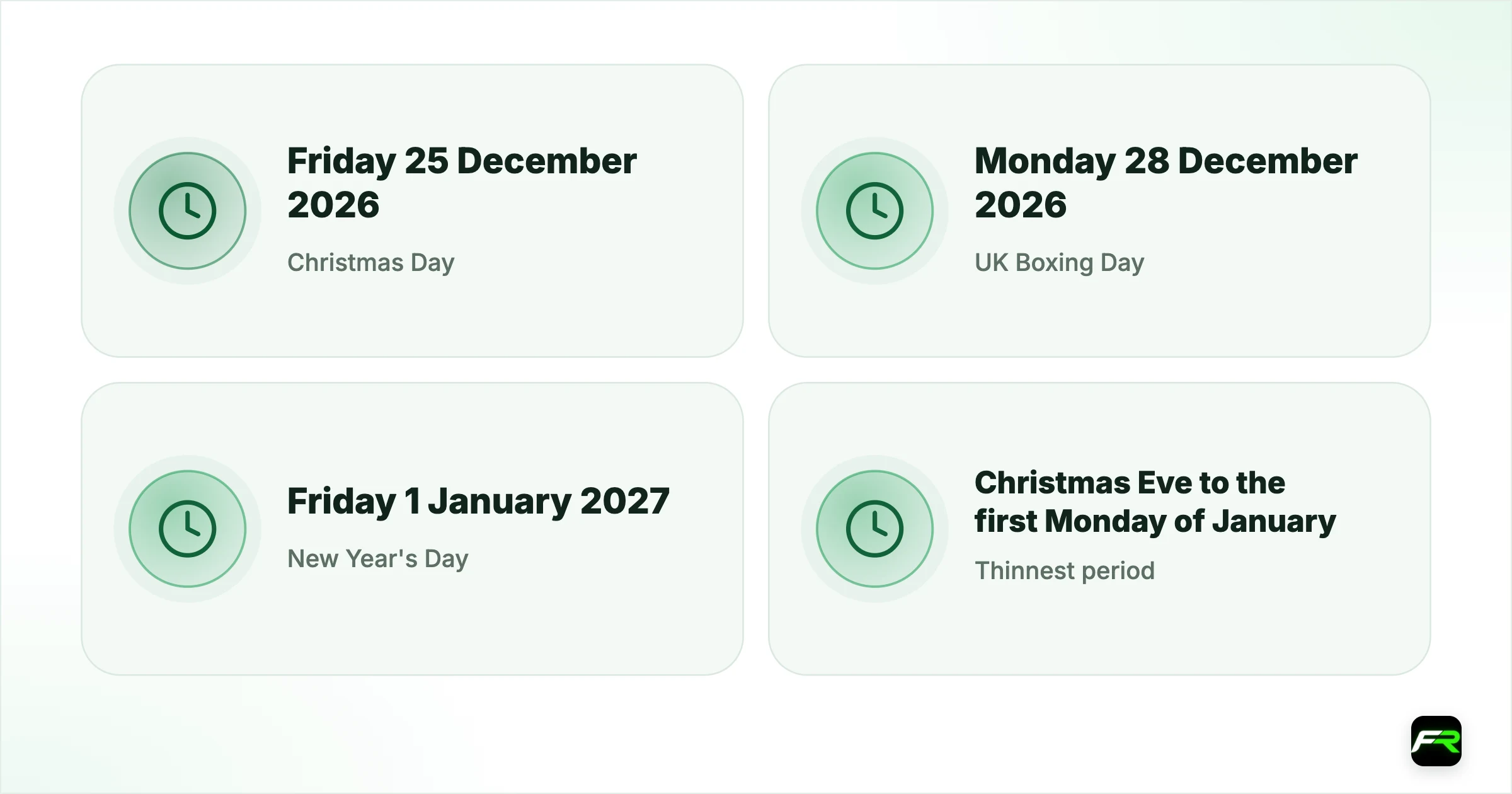
Over Christmas and New Year 2026, forex trading is thin from about 24 December to 4 January. Christmas Day is Friday 25 December 2026 and New Year's Day is Friday 1 January 2027, so each holiday joins a weekend. Brokers typically close or sharply limit trading on both days, close early on Christmas Eve and New Year's Eve, and run with wide spreads in between. The UK also has a Boxing Day substitute bank holiday on Monday 28 December.
Exact hours differ by broker and are published in holiday notices in December, so treat this page as the pattern to expect and check your broker's own schedule for the times.
| Christmas Day | Friday 25 December 2026 |
|---|---|
| UK Boxing Day (substitute) | Monday 28 December 2026 |
| New Year's Day | Friday 1 January 2027 |
| Thinnest period | Christmas Eve to the first Monday of January |
| Check | Your broker's holiday notice |
The 2026 holiday calendar
| Date | What it is | What to expect |
|---|---|---|
| Thu 24 Dec | Christmas Eve | Early close at many venues; thin afternoon |
| Fri 25 Dec | Christmas Day | Forex closed or barely quoted at most brokers |
| Mon 28 Dec | UK Boxing Day substitute | London closed; light trading |
| Tue 29 to Wed 30 Dec | Between holidays | Thin volume, wider spreads |
| Thu 31 Dec | New Year's Eve | Early close at many venues |
| Fri 1 Jan | New Year's Day | Forex closed or barely quoted |
| Mon 4 Jan | First full week | Liquidity returns through the day |
UK dates are from the government's published bank holiday list. US markets also close on Christmas Day and New Year's Day; Japanese banks are closed from 31 December to 3 January.
Why liquidity drops
Forex prices come from banks and liquidity providers. Over the holidays many dealing desks run with skeleton staff, and the main centres close on the holidays themselves. With fewer quotes in the market, spreads widen and prices can jump on small orders. Sudden moves on thin volume, sometimes called flash moves, are more likely in this period than at any other time of year.
Gold and indices
Gold follows the CME schedule, which closes or shortens trading on US holidays, and most brokers' XAUUSD symbols follow. Index and stock CFDs follow their exchanges' holiday calendars. Expect gold to be closed on Christmas Day and New Year's Day and to trade with wider spreads around them. Our guide to gold trading hours covers the normal schedule.
What happens to open positions
- Swaps. Holiday weekends can change which night carries the multi-day swap, so swap charges may not follow the usual Wednesday pattern.
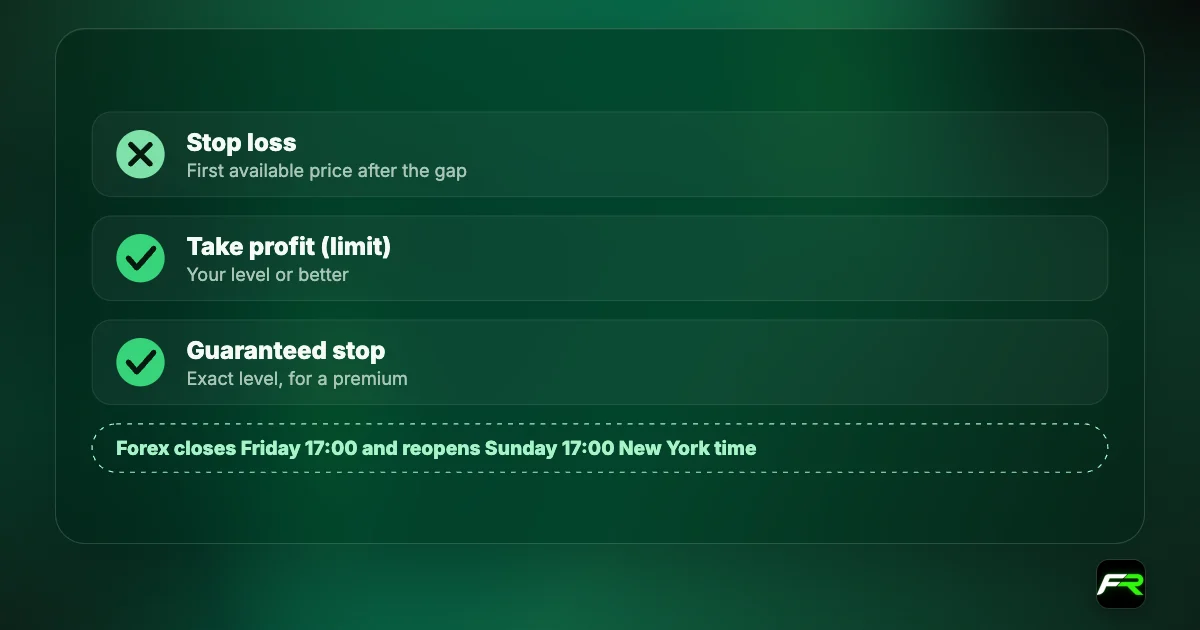
- Gaps. Prices can gap at each reopen after a closed day, filling stop losses at worse prices.
- Margin. Brokers often raise margin requirements before holidays, reducing free margin on open trades.
- Spreads. Wide spreads can trigger tight stops and pending orders without a real move.
How to protect your account
- Read your broker's holiday notice as soon as it arrives in December.
- Close or reduce short-term trades before 24 December.
- Widen stops and cut position sizes on anything you hold through the period.
- Cancel pending orders close to the price.
- Avoid new entries until liquidity returns on Monday 4 January.
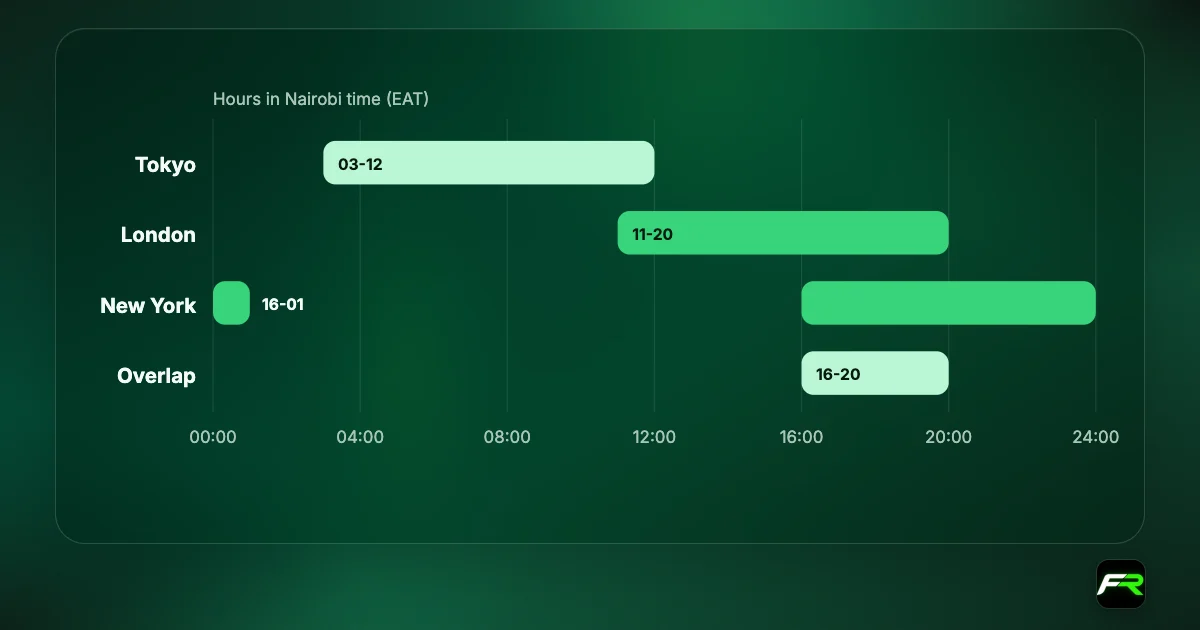
A trader in Nairobi holds 0.5 lots of GBP/JPY with a 30-pip stop into Christmas week. On the thin Tuesday before Christmas the spread widens to 15 pips at the rollover, and a quick yen move takes out the stop at a 45-pip loss. The following year, the trader closes short-term trades on 23 December and returns in the first full week of January.
Trading the holiday period
Some traders like the quiet range trading between the holidays; others stop completely. If you trade, use smaller sizes, wider stops and liquid pairs such as EUR/USD and USD/JPY, and avoid exotics and crosses, whose spreads widen most. Remember that data releases are few, so moves are often driven by thin order flow rather than news.
Payments and withdrawals over the holidays
Banks and card processors also slow down. Withdrawals requested just before Christmas can take longer than usual, and local bank holidays add delays on top of the broker's own processing time. If you need money from your trading account before the holidays, request it in the first half of December. Deposits made during the holidays may also take longer to clear, which matters if you are topping up margin.
Planning the year-end review
The quiet weeks are a good time to review the year rather than trade. Export your history, check win rate, average win and loss, and maximum drawdown, and decide what to change for the new year. Our guide to exporting MT5 trade history shows how to build the review in a spreadsheet, and tax records for the year should be saved before the January rush.
The first week of January
Liquidity usually returns during the first full trading week, which in 2027 starts on Monday 4 January. Year-start flows can bring strong moves as funds rebalance, and US employment data typically lands on the first Friday of the month. Check the economic calendar for the first week's releases.
Holiday hours in your time zone
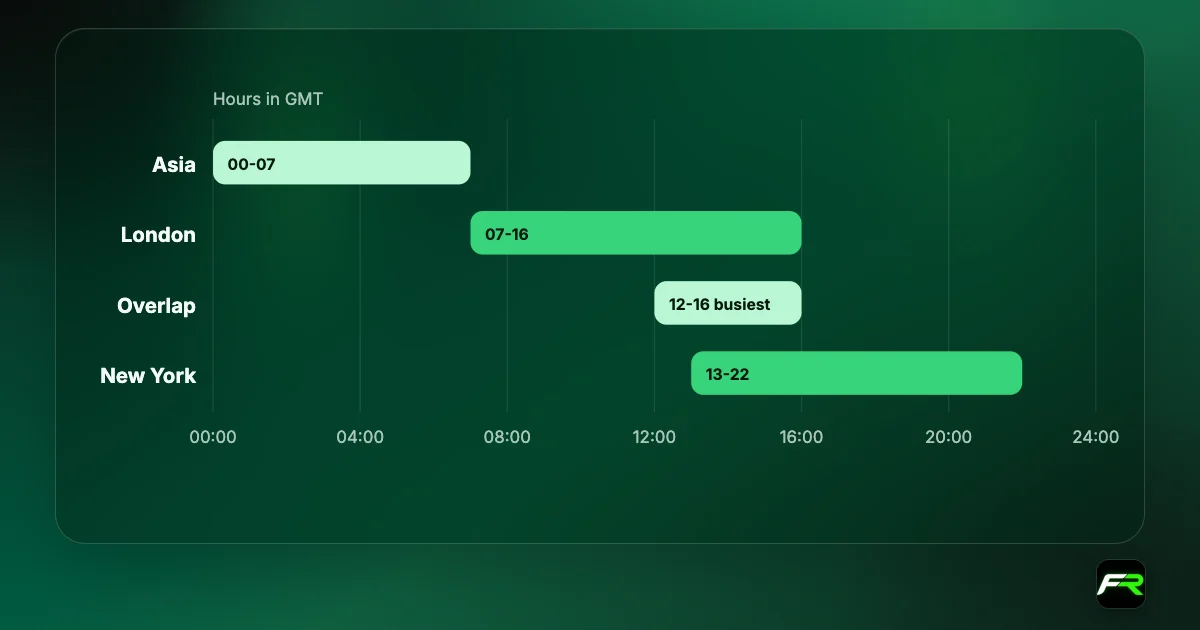
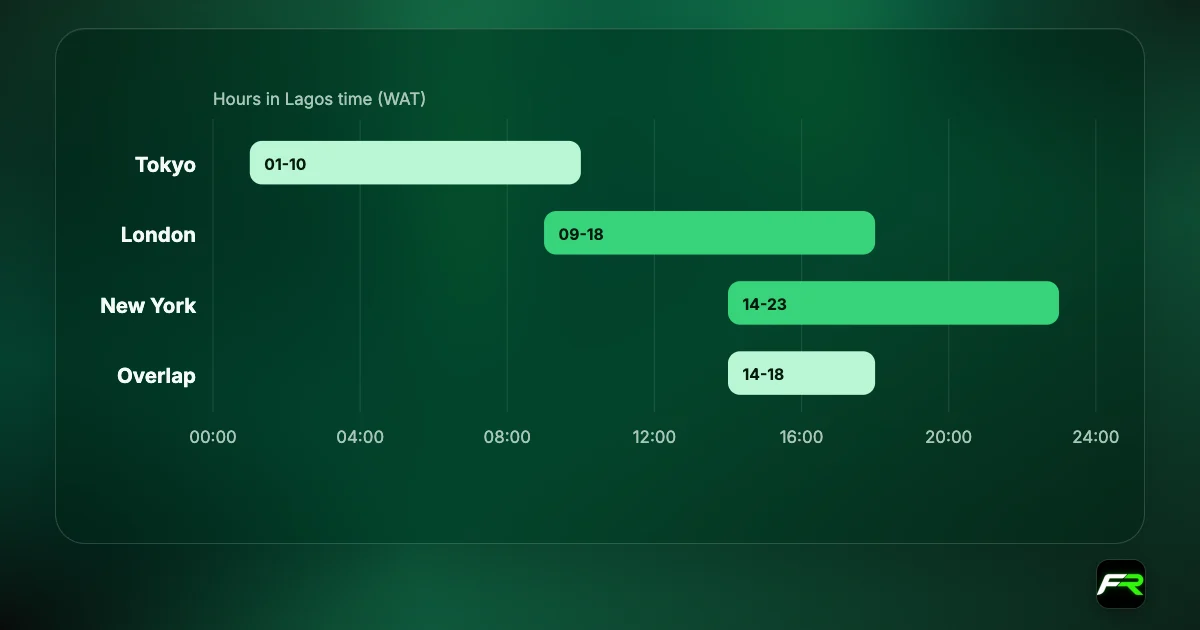
Closing times in holiday notices are usually given in server time or New York time. Our session-time guides for Nigeria, Kenya, Ghana and Egypt convert New York times into local time; the market hours tool does it for any location.
Take a screenshot of your broker's holiday schedule and set phone reminders for each early close. It is easy to forget on a quiet day.
Thin holiday markets can move sharply on small orders. A stop loss is not a guaranteed exit in those conditions, so size positions for the possibility of a gap.
Dates are from the UK government's bank holiday list and the 2026 calendar. Broker opening and closing times vary; your broker's holiday notice is the authority for your account.
Frequently asked
Is the forex market open on Christmas Day 2026?
Christmas Day is Friday 25 December 2026. Brokers typically close forex or quote very little that day, and gold and most indices are closed. Check your broker's holiday notice for exact times.
Is forex open on New Year's Day 2027?
New Year's Day is Friday 1 January 2027. Brokers usually close or limit trading that day. Liquidity usually returns gradually from Sunday evening, with the first full week starting Monday 4 January.
Why are spreads so wide at Christmas?
Many banks and dealing desks run with skeleton staff and the main centres close on the holidays, so fewer prices are quoted. Fewer quotes mean wider spreads and a higher chance of sudden moves.
Should I close my trades before Christmas?
Short-term trades with tight stops usually should, because thin markets and gaps add risk. Longer-term trades can be held at a size that can absorb wider spreads and a possible gap.
Is 28 December 2026 a holiday for forex?
It is the UK's Boxing Day substitute bank holiday, so London is closed. Forex still trades elsewhere, but liquidity is light and spreads wider than usual.
When does normal forex trading resume in January 2027?
Usually in the first full week, which starts Monday 4 January 2027. Spreads return to normal as the London and New York desks are fully staffed again.
Official sources: GOV.UK: UK bank holidays · CME Group: gold futures fact card
Related reading
The team behind this guide
Researched, checked and approved by five forex specialists
Every guide is written, fact-checked and edited before it goes live, and updated when the facts change. Spotted an error? Tell us.