IC Markets






















Funding a Forex Account from Bangladesh (bKash, Nagad)
Online forex trading isn't permitted for residents of Bangladesh. What people do, why the 'agent' route loses money, and the least-bad options.
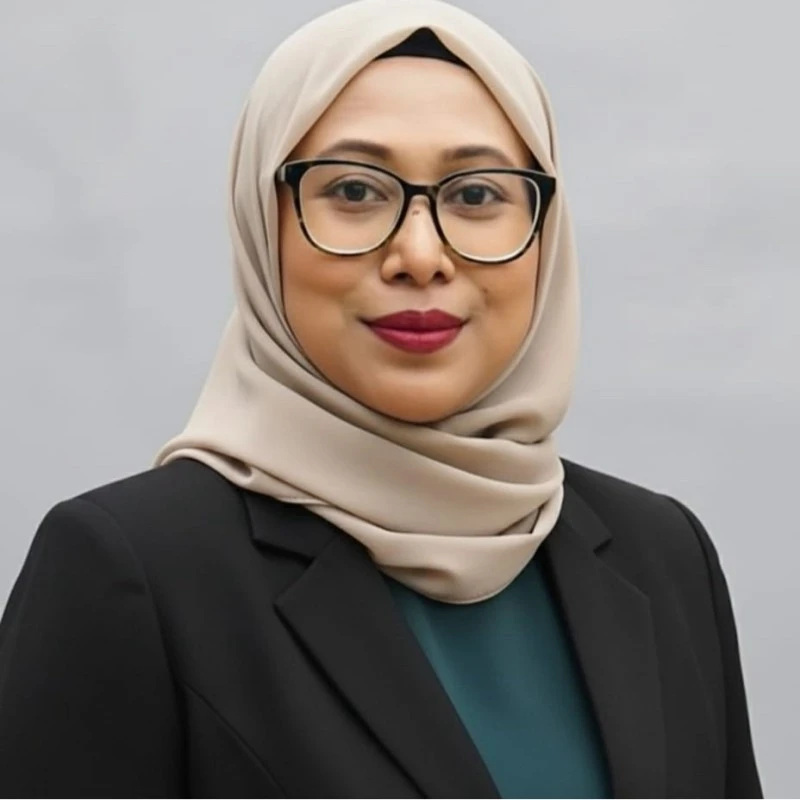
 WriterAbir KhanWriterWrites the guides · checks every figure against primary sources View profileAbout Abir →
 Market analysisTanbir Habib RiyadForex & Crypto AnalystForex and crypto analyst · technical and fundamental analysis View profileAbout Tanbir →
 Fact-checking & riskJannatul FerdaushFact-Checker & Risk AnalystFact-checks every figure · risk analysis · Applied Statistics, University of Dhaka View profileAbout Jannatul →
 Trading reviewJowel RanaCo-Founder & Forex TraderCo-founder · forex trader · reviews guides from a trader's view View profileAbout Jowel →
 Final approvalRanjan NiskrityFounder, Owner & Forex TraderFounder and owner · forex trader · signs off every guide View profileAbout Ranjan →
Start with the context that shapes everything else: Bangladesh Bank has stated online forex trading is not permitted for residents, and currency-control law does not allow sending money abroad for margin trading. There is no licensed local broker and no clean way to fund an account. This guide is a description of what happens, and where it goes wrong, not a green light. For the firms themselves, see our best forex brokers in Bangladesh guide.
How money moves
There are three common routes, and two of the three share one dangerous feature: they put a person between you and the broker. The exception is buying USDT yourself and depositing it directly, which is more effort to set up but removes the middleman entirely.
- bKash or Nagad to a local “agent” who says they will credit your offshore account in USD. This is the most common method and the most dangerous.
- USDT bought from a local seller and sent to the broker directly. Removes the agent, adds crypto and seller risk.
- A relative abroad who funds the account and is repaid in taka at home.
The “agent” route is where most Bangladeshi traders lose money, not on a trade, but because the agent credits part of the deposit, blames “fees and rate”, and stops replying. You never dealt with the broker, so there is no dispute process.
Tanvir sent BDT 20,000 to a Telegram agent who promised to credit his broker account. The agent credited about 70%, cited fees, and went silent when Tanvir asked to withdraw. There was no broker complaint to file because Tanvir had only ever dealt with the agent. The money was gone, and reporting it was not realistic given the activity itself is not permitted.
Where to Report an Agent Scam, Even If Recovery Is Unlikely
Tanvir’s situation, and every version of it, feels like a dead end because there is no broker to complain to. That does not mean there is nowhere to report it. Bangladesh Police’s CID runs a dedicated Cyber Crime Investigation Division, also known as the Cyber Police Centre, that takes reports of exactly this kind of online financial fraud.
Recovering the money is genuinely unlikely once an anonymous Telegram or Facebook agent has gone silent. Reporting is still worth doing: it puts the agent’s account details, phone number and payment trail on record, which is what eventually lets investigators connect one agent to their other victims. Bring your transaction screenshots, the agent’s contact details and any chat history when you file the report through the CID Cyber Police Centre.
The least-bad version
- Deal directly with a broker that has a verifiable ASIC, CySEC or FCA licence. Never through an agent.
- If using USDT, buy from the most established local channel you can, send it straight to the broker, and screenshot everything.
- Keep deposits tiny. Treat the money as at risk from the moment it leaves your account.
- Understand that withdrawals back into Bangladesh are slow, sometimes blocked, and may only be possible through the same informal channel.
Why the agent route dominates, and why it should not
Agents are everywhere in the Bangladeshi forex scene for a simple reason: the clean channel does not exist, and buying USDT yourself feels complicated, so a person on Telegram who says “send me bKash and I will handle it” removes the friction. That convenience is exactly the trap. You have handed your money to someone with no licence, no obligation to you, and no consequences if they keep it. Compare that to dealing with the broker directly, where at least the broker has a licence abroad it wants to keep and a reputation that a pattern of theft would damage.
If you are determined to trade, learn to buy USDT from an established channel and deposit to the broker yourself. It is one afternoon of learning, and it removes the single most dangerous link in the chain. The agent is never worth the fee they take plus the risk they carry.
The honest alternative
Demo-trade. It costs nothing, moves no money across the border, and, over three months of disciplined use, teaches you the platform, spreads, order types and whether you can follow a plan. It cannot teach you how you handle a real loss, which is a genuine gap. But that gap is smaller than the one you create by wiring BDT 20,000 to a Telegram agent and losing all of it before you have learned anything. If the rules change, or your residency does, you will be ready to trade properly. If they do not, you have lost nothing but time you would have spent anyway.
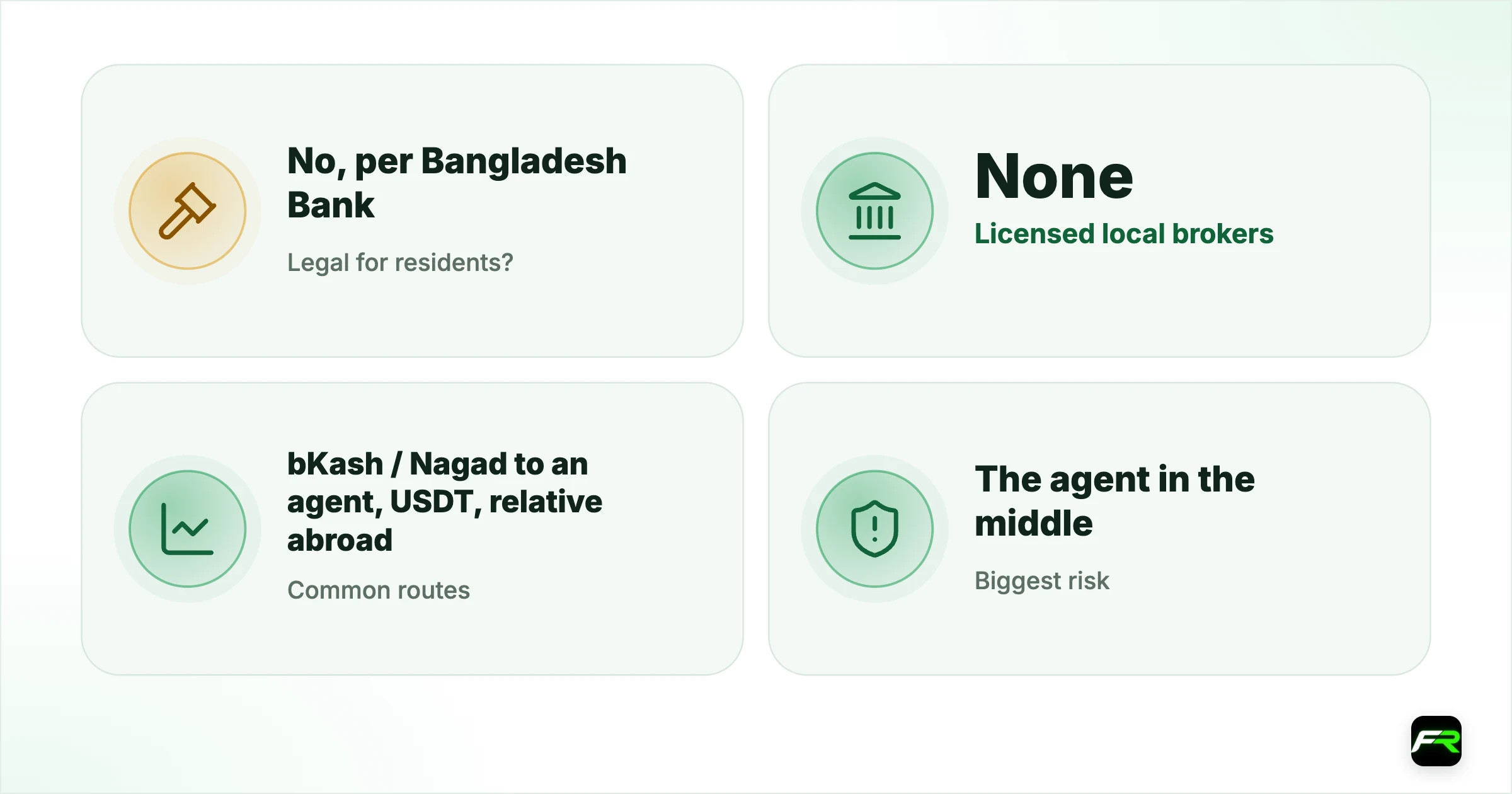
| Legal for residents? | No, per Bangladesh Bank |
|---|---|
| Licensed local brokers | None |
| Common routes | bKash/Nagad to an agent, USDT, relative abroad |
| Biggest risk | The agent in the middle |
| Safest use of your time | A disciplined demo account |
Any Facebook or Telegram “forex agent” who offers to credit your MT4 or MT5 account is a single point of failure with your money. There is no legitimate version of this.
Frequently asked
Can I fund a forex account with bKash or Nagad?
Only through informal channels, because online forex trading is not permitted for residents and there is no licensed local broker. Mobile money usually goes to an “agent”, which is where most people lose money.
Is USDT a safer way to fund from Bangladesh?
It removes the local agent if you deposit to the broker directly, but adds crypto price and network risk in transit and counterparty risk when buying USDT locally. It is a trade of one set of risks for another.
What happens if a forex agent takes my money?
There is usually no dispute process to use, because you dealt with the agent, not the broker. Recovery is unlikely, but reporting the agent to CID’s Cyber Crime Investigation Division is still worth doing, see the reporting section above.
Can I withdraw forex profits into Bangladesh?
It is difficult and slow, and usually only possible back to the same informal channel you funded with, which reintroduces the agent risk.
Is there any legal way to trade forex from Bangladesh?
Not as a resident retail margin trader. Demo trading is unrestricted. If your residency changes, the rules of your new country of residence apply instead.
Can I learn to buy USDT myself instead of using an agent?
Yes, and it is worth the afternoon it takes. Buying from an established channel and depositing to the broker directly removes the agent, who is the single most dangerous link in the chain. You still carry crypto and seller risk, but not the risk of a middleman keeping the lot.
What if I already have money stuck with an agent?
Recovery is unlikely. You dealt with the agent, not a broker, so there is no dispute process to use. It is still worth reporting it to CID’s Cyber Crime Investigation Division, treating it as a lesson, warning others, and never paying anyone who offers to get it back for a fee.
Is there any authority I can report a forex agent scam to, even if getting my money back is unlikely?
Yes. Bangladesh Police’s CID Cyber Crime Investigation Division, also called the Cyber Police Centre, takes reports of this kind, even where the money is unlikely to be recovered. Reporting still matters: it creates a record, can help identify a repeat scammer, and adds to the pattern investigators use to warn others.
The team behind this guide
Researched, checked and approved by five forex specialists
Every guide is written, fact-checked and edited before it goes live, and updated when the facts change. Spotted an error? Tell us.