

 EUR/USD
  GBP/USD
  USD/ZAR
  EUR/INR
  EUR/GBP
  XAU/USD (Gold)
  XAG/USD (Silver)
  XM Global
  AvaTrade
  RoboForex
  IC Markets
  LiteFinance
  IUX Markets
  FP Markets
  South Africa
  Thailand
  Singapore
  Japan
Japan  Pakistan
  Malaysia
  Philippines
  Brazil
  Bangladesh
  Vietnam
  India
India Trading Styles
Beginners’ Guide to Forex Day Trading Strategies and Styles
Discover the most effective forex trading strategies and learn how to use tools, indicators, and psychology to trade smarter. A complete beginner’s guide to mastering forex trading styles, risk management, and building consistency.
Start Reading
Educational content. Not financial advice.
26 min read
264 views
Published 7 months ago
Updated 1 months ago
5,046 words




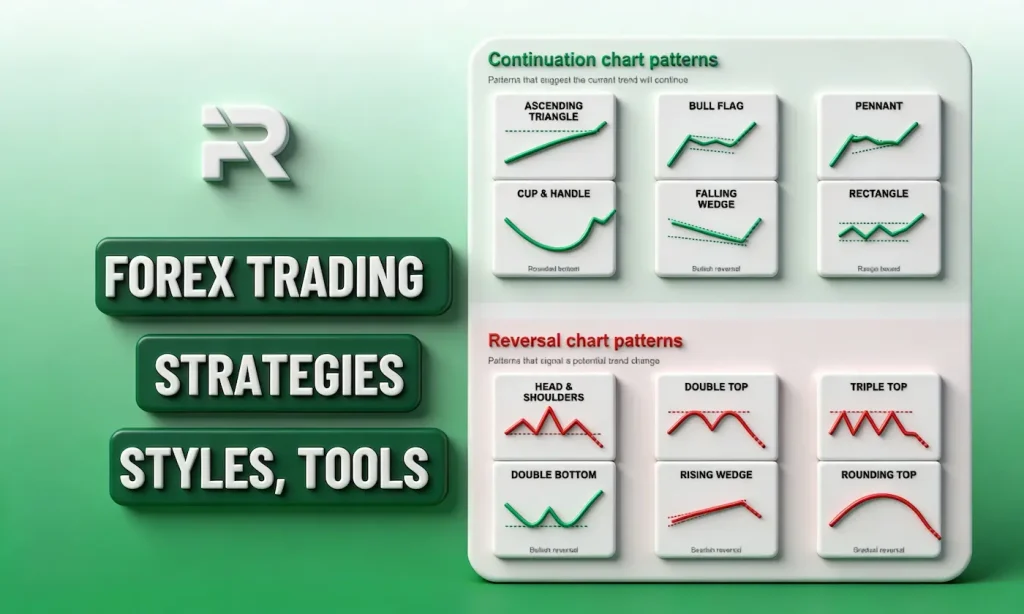
So you have taken the plunge into the forex market. The foreign exchange market, like an ocean, is unpredictable and full of treacherous currents. Without a real plan or clear target, it is easy to wander off course.
Many traders before you have felt exactly that disorientation, carried along by the same capricious tides. The good news is that you are not navigating blind. You have something real to work with: a strategy, the right knowledge, and the discipline to see it through.
You have different trading approaches to pick from, ranging from scalping for short-term profits, trading in defined zones, or catching the bigger trend and staying with it. Every style has its own rhythm and tailored opportunities that depend on your risk tolerance and schedule.
The core of the matter is finding an approach that lines up with your objectives, lifestyle, and trading temperament. Consistency, not luck, is what keeps successful traders steady in the storm. Not only does it require a plan, but seeing that plan through with self-control and patience.
As you gain experience, keep refining your approach based on what the market teaches you. What produces profits today may produce losses tomorrow if you do not adapt wisely. That is why every serious trader is always honing skills, studying market conditions, and keeping an open mind.
What Is Forex Trading and Why Strategy Matters
Forex is a business. You buy and sell currencies, and every trade represents a real expectation about the future value of one currency against another. The collective weight of these transactions is what drives the global currency market.
According to the Bank for International Settlements (BIS) 2022 Triennial Survey, the forex market reached an average daily turnover of US$7.5 trillion, making it the most liquid financial market in the world. The sheer scale of that number explains why even small price movements, measured in pips, can translate into significant profits or losses depending on position size.
If you are new to how price is quoted or want a clear breakdown of what a pip actually means and how it affects your trade results, that is a good foundation to build on before anything else.
Market efficiency is not the issue at stake here. The real question is whether you have a framework for making decisions under uncertainty. A sound strategy defines when to enter, when to exit, how much risk to accept from any single position, and how to handle the psychological pressure that comes with live money.
Without that structure, even sharp instincts get overwhelmed by noise. A strategy places reason above emotion and gives your trading a backbone.
What Actually Moves Forex Prices
Before building any strategy, it helps to understand the forces behind price movement. Forex prices do not move randomly. They reflect real-world information being priced in continuously.
Central bank decisions are among the most powerful price drivers. When the U.S. Federal Reserve, the European Central Bank, or the Bank of Japan changes interest rates or signals a policy shift, currency pairs react sharply and sometimes trend for weeks.
Economic data releases also matter enormously. U.S. Non-Farm Payrolls, inflation reports (CPI), GDP figures, and retail sales numbers regularly cause spikes in volatility. Traders who understand the expected versus actual figures can position accordingly, though news trading carries its own risks.
Geopolitical events, trade balances, and broader risk sentiment round out the picture. When investors globally move toward safe-haven assets, currencies like the Japanese yen and Swiss franc tend to strengthen. When risk appetite returns, higher-yielding currencies attract flows.
Knowing these drivers does not mean predicting them. It means understanding the environment your technical setups are playing out in.
Understanding Forex Trading Styles
Your strategy has to match your tools, your schedule, and your temperament. There is no single correct approach because traders are not identical. A night shift worker and a full-time trader sitting at multiple screens have fundamentally different constraints.
The forex market is unpredictable. What works today may not work tomorrow. That is why staying aware, continuing to learn, and adapting to new conditions is not optional. It is part of the job.
No single trading method guarantees profit. Successful trading demands adaptability and discipline in equal measure.
Scalping
Scalpers take many small trades throughout the day, targeting just a few pips per trade. The time commitment is high, the pace is intense, and this style demands fast execution and tight spreads. Most scalpers work on the 1-minute or 5-minute charts.
It suits traders who can handle rapid decision-making without second-guessing themselves and who have access to a broker with competitive spreads and fast order execution.
Day Trading
Day traders open and close all positions within a single trading session, avoiding overnight exposure. They typically work on 15-minute to 1-hour charts and aim to capture intraday price swings.
This style requires a solid block of focused time each day and the ability to manage multiple positions without letting emotions take over mid-session.
Swing Trading
Swing traders hold positions from a few days to a few weeks, aiming to capture medium-sized price moves. They typically work on 4-hour and daily charts, which reduces the number of decisions needed and suits traders who cannot monitor screens all day.
Swing trading is often a better starting point for newer traders because it gives more time to think through each trade. If you want to understand which style fits your situation, FXrecap has a detailed breakdown of scalping vs day trading vs swing trading worth reading through.
Position Trading
Position traders hold trades for weeks, months, or even longer, basing their decisions primarily on fundamental analysis and the macro picture. They look at interest rate differentials, economic outlook, and long-term trend structure. This style requires the patience to sit through drawdowns and the conviction to hold when short-term noise moves against you.
Core Forex Trading Strategies Explained
Once you have settled on a trading style, you need to decide what the actual trade mechanics look like. Here are the main strategic frameworks used by forex traders.
Trend Trading
Trend trading is among the most time-tested methods in forex. The idea is to identify the direction the market is already moving in and trade with it, not against it. The trend is your ally until it ends.
Traders use tools like moving averages, trendlines, and the Average Directional Index (ADX) to confirm direction. A rising 50-day moving average on a daily chart, for instance, gives you a basic filter. You only look for buy setups until that condition changes.
The practical challenge with trend trading is entries. Jumping in mid-trend feels risky, and waiting for pullbacks to key levels requires patience. But entering with the trend puts the statistical weight of market momentum behind you.
Range Trading
When prices are contained between a ceiling (resistance) and a floor (support), range trading comes into its own. You sell near the top of the range and buy near the bottom, repeating the cycle until price breaks out decisively in one direction.
Range trading works best during quieter market periods, particularly in currency pairs that do not trend strongly. The risk is a breakout trapping you on the wrong side, which is why stop losses placed just outside the range are essential.
Breakout Strategy
Breakout traders watch for price to escape a period of compression, whether that is a tight consolidation, a triangle pattern, or a well-defined support or resistance level that price has tested multiple times.
The logic is that when price finally pushes through a significant level, it often continues in that direction with momentum. The key challenge is distinguishing genuine breakouts from false ones. Volume confirmation and waiting for a candle close beyond the level, rather than reacting to a wick, helps filter out noise.
An engulfing candle at a key level, breaking through resistance, is one of the cleaner signals a breakout trader can act on.
News and Event-Driven Trading
Some traders orient themselves entirely around the economic calendar. Major releases like U.S. Non-Farm Payrolls, CPI data, central bank rate decisions, and GDP figures can cause sharp, fast moves in affected currency pairs.
Trading these events is not simply about knowing what the number is. It is about knowing what the market was expecting versus what actually came in. A better-than-expected jobs report can strengthen the dollar sharply, while a miss can reverse weeks of positioning in minutes.
This style rewards traders who understand macroeconomics, can process information fast, and are comfortable with wider spreads and unpredictable slippage that often accompany major releases.
Carry Trade Strategy
The carry trade exploits interest rate differentials between countries. You borrow in a low-interest-rate currency and invest in a higher-yielding one, pocketing the difference, known as the carry, while also benefiting if the higher-yield currency appreciates.
Historically popular pairs include shorting the Japanese yen (long a period of near-zero rates) and going long the Australian dollar or New Zealand dollar. The risk is a sudden reversal in risk sentiment, which can unwind carry trades rapidly and cause large losses.
The carry trade also ties closely to the concept of forex leverage, since most retail traders use borrowed capital to amplify their carry position.
Hedging Strategy
Hedging is about protecting existing positions from adverse moves, not generating profit directly. If you hold a long position on a currency pair and you are uncertain about an upcoming news event, you might open a smaller short position on a correlated pair to offset potential losses.
Think of it like insurance for your open trades. It does not eliminate risk entirely, but it limits the downside on specific scenarios. Many professional traders and institutions use hedging as part of their overall risk framework rather than as a standalone strategy.
Arbitrage Strategy
Arbitrage involves exploiting tiny price differences between the same currency pair across different brokers or markets. In theory, a pair priced at 1.1050 on one platform and 1.1052 on another creates a risk-free profit opportunity by buying on one and selling on the other simultaneously.
In practice, this requires automated execution, extremely low latency connections, and access to multiple liquidity providers. Pure arbitrage has largely been reduced by algorithmic trading and tighter market integration. Most retail traders encounter it only through academic study or as inspiration for statistical arbitrage, which uses correlated pairs rather than identical prices.
Algorithmic and Automated Trading
Automated trading, sometimes called algorithmic trading or running an Expert Advisor (EA), lets software execute trades based on pre-set rules. Platforms like MetaTrader 4 and MetaTrader 5 support this natively. If you want to understand which platform suits your approach, the FXrecap breakdown of MT4 vs MT5 covers the differences clearly.
Automated strategies remove emotional decision-making and can scan multiple pairs simultaneously without fatigue. But even a well-coded robot needs a solid underlying strategy and proper risk management settings. A broken strategy executed flawlessly is still a broken strategy.
Reading Price Action and Candlestick Patterns
Price action is the raw language of the market. Every candlestick on your chart represents a battle between buyers and sellers during that time period. The colors, sizes, wicks, and sequences of those candles tell a story. Learning to read it fluently is one of the more useful skills a trader can develop. FXrecap has a detailed guide on candlestick patterns in forex if you want to go deeper.
Key Patterns to Know
A Doji candle, where the open and close are at nearly the same level, reflects indecision. Neither side has clearly won. Depending on where it appears in a trend, it can signal a pause or a potential reversal.
A Hammer candle has a small body near the top and a long lower wick. It suggests buyers stepped in strongly after an initial sell-off, often appearing at support levels and hinting at a reversal upward.
An Engulfing Pattern occurs when a candle completely contains the body of the prior candle. A bullish engulfing at support signals buyers overpowering sellers. A bearish engulfing at resistance suggests the opposite. These are among the more reliable single-pattern signals, particularly when they align with other technical factors.
A Morning Star is a three-candle pattern: a large bearish candle, a small-bodied candle reflecting indecision, and then a large bullish candle. It often marks the end of a downtrend. Its bearish counterpart, the Evening Star, does the same at the top of an uptrend.
Why Context Matters More Than the Pattern Itself
A hammer at a major support level after a prolonged downtrend carries far more weight than the same candle appearing mid-chart with no structural significance. Patterns derive their power from context.
Confirmation from trendlines, clearly defined support and resistance zones, or convergence with technical indicators turns a signal into a tradeable idea. Without this wider context, candlestick signals are open to misreading and false entries.
Reading price movements is like listening to a conversation between the market participants. When you learn to put these signals together, you can sense momentum shifting before it becomes obvious, and that is where real trading foresight begins.
Forex Indicators and Technical Analysis
Technical indicators process price and volume data to surface patterns and conditions that might not be visible on a raw chart. Used well, they sharpen your decision-making. Used poorly, they add noise. FXrecap covers the full range of forex indicators if you want a thorough reference, and the learning forex charts guide covers the visual foundations.
Moving Averages
Moving averages smooth price data over a defined period, making the direction of a trend easier to see. The 50-day and 200-day simple moving averages are widely watched on higher timeframes. A crossover of a shorter moving average above a longer one is often interpreted as a bullish signal, while the reverse suggests bearish pressure.
The Exponential Moving Average (EMA) gives more weight to recent price data, making it more responsive to recent moves. Many traders use a combination of a fast EMA (like the 9 or 20 period) and a slower one (like the 50 or 100 period) to identify momentum shifts.
Relative Strength Index (RSI)
The RSI measures the speed and magnitude of recent price changes on a scale from 0 to 100. Readings above 70 are conventionally considered overbought territory, suggesting price may be due for a pause or pullback. Readings below 30 suggest oversold conditions.
Where RSI becomes particularly useful is in divergence. If price makes a new high but RSI makes a lower high, that divergence can signal weakening momentum before the reversal is visible on the price chart itself.
MACD
The Moving Average Convergence Divergence indicator tracks the relationship between two exponential moving averages. When the MACD line crosses above its signal line, it often reflects building bullish momentum. When it crosses below, bearish momentum may be growing.
The histogram, which shows the gap between the MACD line and signal line, helps visualize whether momentum is accelerating or fading.
Bollinger Bands
Bollinger Bands place two standard deviation bands above and below a moving average. When price approaches the upper band, the market is statistically extended. When it nears the lower band, it is statistically compressed. This does not guarantee reversal, but it gives context about where price sits relative to recent volatility.
Band squeezes, where the upper and lower bands narrow significantly, often precede sharp breakout moves in either direction.
Fibonacci Retracements
Fibonacci retracement levels mark potential areas of support or resistance based on the Fibonacci sequence. The key levels, 23.6%, 38.2%, 50%, 61.8%, and 78.6%, are drawn between a significant swing high and swing low. Traders watch price as it pulls back toward these levels within a larger trend.
When price reaches the 61.8% level, RSI is approaching 30, and the MACD begins to turn upward, those three signals converging creates a high-probability buy setup. That kind of confluence is the foundation of a solid strategy, not guessing.
Building Your Indicator Stack Without Overdoing It
Adding more indicators does not produce better trading. Stacking ten tools on a chart creates confusion, not clarity. Each indicator you add should serve a distinct purpose: one for trend direction, one for momentum, one for volatility context.
More importantly, understanding your indicators also helps you recognize your own behavioral patterns. You may see that you rush entries, hesitate at perfectly valid signals, or let a losing streak push you into revenge trades. Identifying those patterns and developing a method to correct them compounds your improvement over time.
Backtesting: Your Private Forex Time Machine
Backtesting lets you run your trading plan against historical price data before risking a single cent of real capital. It is the closest thing to a time machine a trader has: you can go back months or years and walk through every trading day under real market conditions.
Platforms like MetaTrader 4 (MT4), MetaTrader 5 (MT5), and TradingView all have built-in backtesting tools that make this process straightforward. If you want to get comfortable with the mechanics first, forex demo trading is the natural starting point before moving to backtesting on historical data.
How Backtesting Actually Works
Say you are testing a moving average crossover strategy on EUR/USD. You scroll back to a specific period and mark every instance where your entry conditions were met. You record whether each trade would have been profitable, where you would have placed your stop loss, and how price behaved afterward.
After reviewing a large enough sample, say 100 to 200 setups, patterns begin to emerge. You might find that the strategy performed well during trending conditions but produced consistent losses during consolidating, range-bound markets. That is not a failure of backtesting. That is exactly the kind of insight that saves you from real losses later.
What Backtesting Gives You
Backtesting answers three questions. First, does this strategy have a genuine statistical edge over a long sample? Second, under what market conditions does it work best, and when does it break down? Third, how psychologically prepared are you to follow its signals when it is in a drawdown phase?
That last point matters more than traders expect. A strategy with a 40% win rate but a 3:1 reward-to-risk ratio is mathematically profitable, but it means losing more than half your trades. Backtesting helps you experience that reality without financial consequences, so it does not shock you when the strategy is live.
Backtesting is not the final word. Markets evolve, and a strategy that worked well from 2018 to 2021 may need adjustment for a different interest rate environment. Treat backtesting as a starting point for strategy development, then validate further with forward testing on a demo account before going live.
Risk Management and Trading Psychology
Risk management is the most underrated part of trading and usually the first thing new traders skip over. FXrecap has a dedicated guide on forex risk management that is worth treating as required reading, not optional background.
Position Sizing and the 1-2% Rule
The standard starting point for position sizing is risking no more than 1% to 2% of your account balance on any single trade. If your account is $5,000, that means risking $50 to $100 per trade. This might feel small, but it means you can absorb 20 to 30 consecutive losses before running out of capital, which gives your strategy time to play out statistically.
Understanding how lot sizes work in forex is directly connected to position sizing. A standard lot moves $10 per pip. A micro lot moves $0.10 per pip. Your stop loss distance, account size, and risk percentage together determine your correct lot size for any given trade.
Stop Loss and Take Profit
Every trade needs a stop loss set before it opens. Not when price starts moving against you. Before. A stop loss placed at a technically logical level, such as just below a support zone or beyond a recent swing low, protects your capital when your analysis is simply wrong. FXrecap covers stop loss and take profit placement in detail if you want a structured approach.
Take profit targets define your reward. The ratio between your stop loss distance and take profit distance is your reward-to-risk ratio. Many experienced traders target at least 2:1, meaning they aim to make twice what they are willing to lose on each trade. Even with a 40% win rate, that ratio keeps you profitable over a large sample.
Leverage: Power and Danger in the Same Tool
Leverage amplifies both profits and losses. At 100:1 leverage, a 1% move against you wipes out your entire margin. At 10:1, the same move costs you 10% of your account. Most brokers offer leverage well beyond what is prudent for a new trader. Start with lower leverage until your strategy is proven on real money. FXrecap explains how forex leverage works and also covers forex margin requirements, both of which are essential to understand before you size up any position.
Trading Psychology
Even the best technical setup fails when emotion takes over. Revenge trading after a loss, doubling down on a losing position because you are convinced you are right, cutting profits short because you are afraid they will evaporate: these are not character flaws. They are normal human responses to financial risk. But they reliably destroy accounts.
The core discipline is this: every trading decision should come after following your rules, not after an emotional reaction. Before placing a trade, ask whether you are acting based on your setup criteria or based on how you feel about the market right now.
Keeping a trading journal where you record not just your entries and exits but your emotional state at the time of each decision is one of the more practical tools for improving your psychology over time. Patterns become visible. You start to see which conditions cause you to deviate from your plan.
Choosing a Safe and Regulated Forex Broker
A good broker does far more than execute your orders. They are the custodians of your funds and your trading records. Before you go further, it is worth reading FXrecap’s full guide on how to identify the best forex broker to understand what to look for and what to avoid.
Regulation Is Your First Line of Defense
Check whether a broker is licensed and regulated before you deposit anything. Regulation is not a formality. It is the mechanism that protects your money.
A fully regulated broker operates under strict oversight from authorities such as the UK’s Financial Conduct Authority (FCA), the Australian Securities and Investments Commission (ASIC), the U.S. Commodity Futures Trading Commission (CFTC), or the Cyprus Securities and Exchange Commission (CySEC). These regulators review broker policies, capital reserves, and operational integrity on an ongoing basis.
Segregated Client Funds
Reputable regulated brokers are required to hold client funds in segregated accounts, kept entirely separate from the broker’s own operating capital. This means that even if the broker faces financial difficulty, your money is protected. Non-regulated brokers have no such obligation.
Negative Balance Protection and Compensation Schemes
Negative balance protection ensures you can never lose more than what is in your account, even during extreme market events where price gaps beyond your stop loss. Many top-tier brokers in regulated jurisdictions offer this as standard.
Investor compensation schemes, such as the Financial Services Compensation Scheme (FSCS) in the UK, provide a safety net if a regulated broker fails. Coverage limits vary by jurisdiction, but they offer a meaningful layer of protection.
Warning Signs to Watch For
If a broker talks about guaranteed profits, zero-risk opportunities, or sure-thing trading systems, that is a red flag. In foreign exchange, if something sounds too good to be true, it reliably is. Legitimate brokers are transparent about risks.
A trustworthy broker protects your capital, is transparent about costs including spreads and commissions, and does not manufacture obstacles when you want to withdraw. By trading through a properly regulated broker, you protect not just your funds but your peace of mind.
Discipline Over Perfection: The Real Key to Forex Success
Perfection is a trap in forex. Too many traders search endlessly for the perfect system or the one strategy that will produce guaranteed profits without losses. That strategy does not exist. Without consistent discipline and emotional control, even a genuinely solid strategy will eventually fail.
The market rewards patience. Not perfection.
Think about trading like piloting an aircraft. You do not design a flight plan for every possible storm. You prepare, train, and stay composed when conditions change. Traders like Paul Tudor Jones or George Soros did not build their records by avoiding mistakes. They built them through risk control, following their execution process, and keeping clear heads when the market moved against them.
The Herd Mentality Problem
Many new traders still fall into the trap of herd mentality, buying or selling simply because everyone around them seems to be doing the same thing. This is dangerous for a simple reason: by the time a move is obvious to everyone, it is usually too late to enter with a favorable risk-to-reward ratio. The smart money has often already positioned itself.
Most retail traders do not fail because their strategies are bad. They fail by abandoning their plans at the first sign of fear or greed. A strategy that is followed imperfectly but consistently will outperform a better strategy that is abandoned under pressure.
How to Build Real Consistency
Set your stop loss before you enter. Pay attention to your risk on every trade. Follow your trading plan the way a pilot follows instruments when visibility is poor. It is not a single loss that defines a trader. It is breaking your own rules.
Keeping a trading journal, recording every trade with your reasoning and outcome, helps you identify where your discipline is slipping. Over time, it becomes a feedback loop that tightens your process. FXrecap’s resources on forex trading strategies and the forex glossary are both worth bookmarking as you build and refine your approach.
Forex is among the fairest and most ruthless teachers available. It does not care about your background, your credentials, or your conviction. The disciplined trader finds a way through. The headstrong one meets defeat on terms set by the market.
Last Words
Becoming a consistently profitable trader is not a three-day process. It takes time, persistence, and a willingness to keep learning from both wins and losses.
Every element of your trading system works together. A trader who reads technical indicators well but has no risk management framework might string together a few profitable trades, then get wiped out in a single unforeseen event. Technical skill and capital preservation have to exist together.
Emotional control is equally non-negotiable. Chasing back a loss, entering a trade out of excitement rather than setup criteria, letting a drawdown convince you to deviate from your plan: these responses wreck otherwise solid systems. Before acting on any trading decision, take a breath and approach it analytically.
A trader who waits for a clear, objective signal before entering or exiting, rather than reacting to the noise of the crowd, generally produces more stable and predictable results over time.
Rigorous testing and honest record-keeping are the only ways to know whether your edge is real. By backtesting your ideas, keeping detailed records of every transaction, and studying the reasons behind your losses, you are building a trading operation rather than gambling. The trader who finds that profits disappear outside of high-liquidity periods and then adjusts trading hours accordingly is doing exactly the right kind of work.
Keep learning, keep testing, and treat every losing trade as information rather than failure. That combination of continuous improvement and steady process is what the long-term foundation of profitable trading is built on.
About the Authors

Senior Contributor
FX Recap helps you find a trusted forex broker that keeps your trades secure and guides you through everything you need to know about FX instruments.
Forex
Brokers
Analysis

Crypto & Forex Expert
Ranjan Niskrity is a seasoned Crypto and Forex expert at FX Recap with over a decade of market experience. He specialises in verifying broker data, regulatory frameworks, and cryptocurrency trading insights. His rigorous fact-checking ensures every article meets the highest standards of accuracy.
Crypto
Regulation
DeFi
Keep Reading
Related Articles
 Education
22 min read
Education
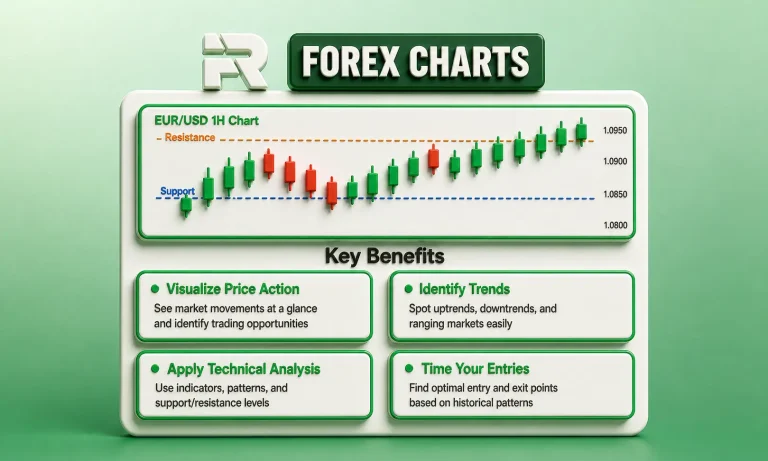
22 min readHow to Read Forex Charts: A Practical Guide for Traders
Forex charts are the clearest window into market behavior, showing not just where price has been but why...

Dec 26, 2025
 Education
8 min read
Education
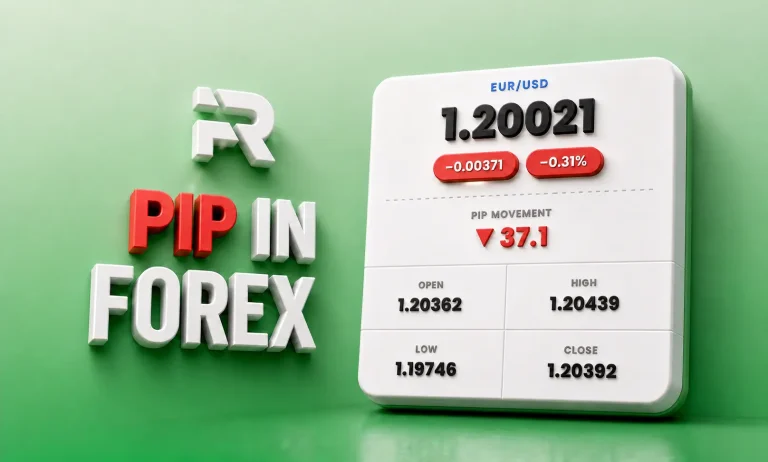
8 min readWhat is a Pip in Forex? Full Guide to Forex Basics
A single unit of movement of the price of a currency pair is referred to as a pips...
Dec 18, 2025
 Education
13 min read
Education
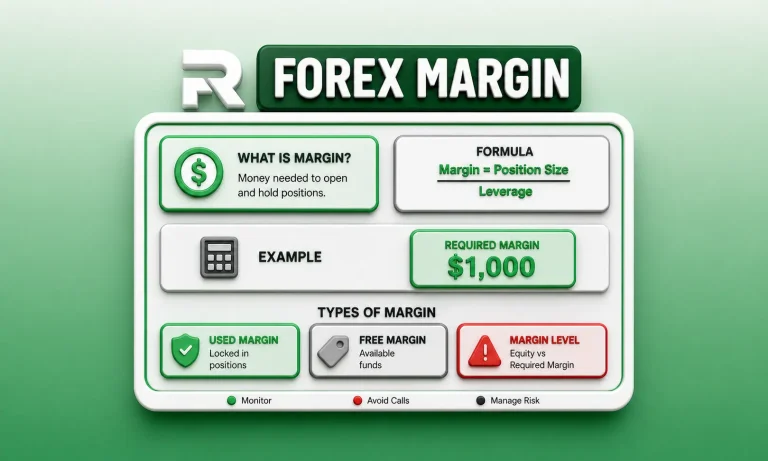
13 min readFair Use of Forex Margin in Trading
Forex margin is the portion of your funds a broker sets aside as collateral when you open a...
Dec 18, 2025
 Education
25 min read
Education
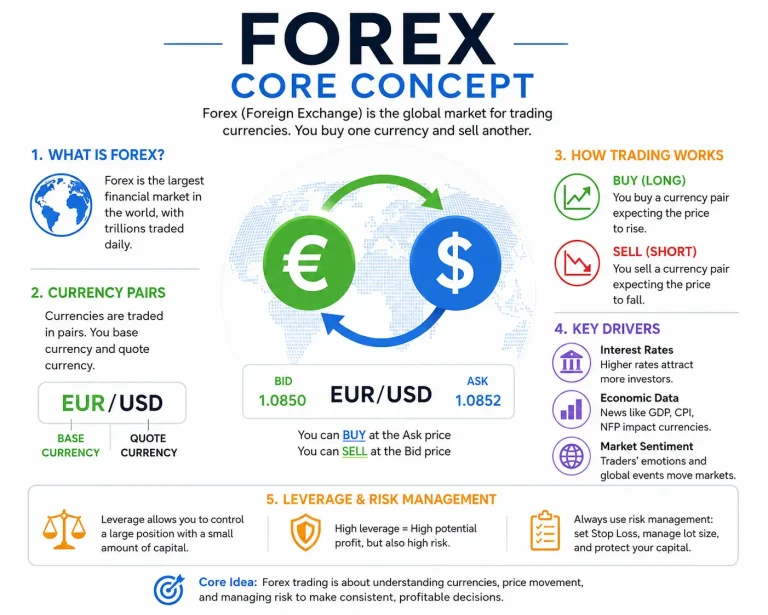
25 min readForex Trading for Beginners: The Core Concepts
Every day, over $7.5 trillion moves through the Forex market. That's more than any other market on the...
Dec 18, 2025
