
 XM Global
  AvaTrade
  RoboForex
  IC Markets
  LiteFinance
  IUX Markets
  FP Markets
  South Africa
  Thailand
  Singapore
  Japan
Japan  Pakistan
  Malaysia
  Philippines
  Brazil
  Bangladesh
  Vietnam
  India
India Fundamentals
Understanding Currency Pairs: Major, Minor, and Exotic Pairs Explained

 EUR/USD
 GBP/USD
 USD/ZAR
 EUR/INR
 EUR/GBP
 XAU/USD (Gold)
 XAG/USD (Silver)
Forex trading is the international financial market through which currencies are traded to gain profit on fluctuations in exchange rates. Traders can only understand how economic indicators, interest rates, and geopolitical events influence the value of currencies. The forex market is available 24 hours a day and 5 days a week. This framework of forex trading explains the mechanics involved and the reasons why it has become the largest and most convenient trading system for traders worldwide. This trading system offers significant advantages to traders worldwide.



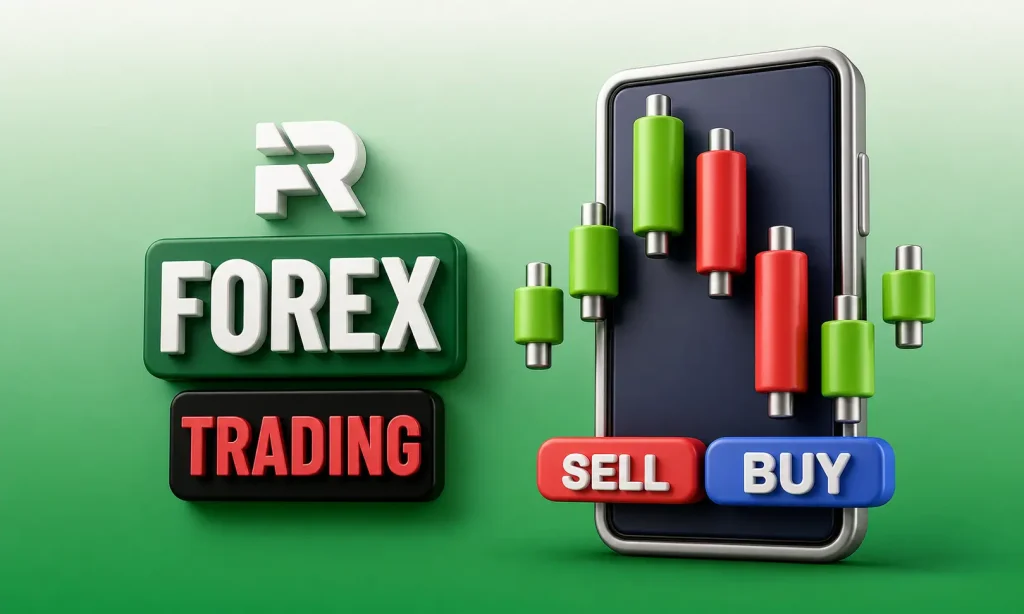
Foreign exchange trading, which is also known as forex trading, is the process of transacting the sale of a currency and simultaneously transacting the purchase of another currency. It takes place in the international forex market, where the currencies are bought and sold in pairs, e.g., EUR/USD or GBP/JPY. The main agenda is to take advantage of the volatility of the exchange rates.
The forex market is the largest financial market in the globe; it records a turnover of over 6 trillion per day. Unlike the stock markets, the forex is over the counter (OTC), i.e., the transaction between the two parties is carried out with the assistance of brokers or banks. This system allows the market to be open 24 hrs on 5 days of the week.
Forex is a topic that draws a lot of attention, as it is accessible and flexible. Launching it doesn’t require a significant amount of capital, and there are online platforms available where individuals can experiment with demo accounts. Real traders normally begin small by tracking the market trading so that at some time they feel at ease with their method.
The first moves appear to be a scary experience to certain traders, and becoming a master at reading the movements of money is analogous to second language learning. Each currency pair represents a story about the global economies, and understanding this story is essential for successful trading.
[modern_toc_animated]Currency pairs always consist of two parts: the first is the base currency and the second is the quote currency. For example, in EUR/USD, the euro is the base and the U.S. dollar is the quote.
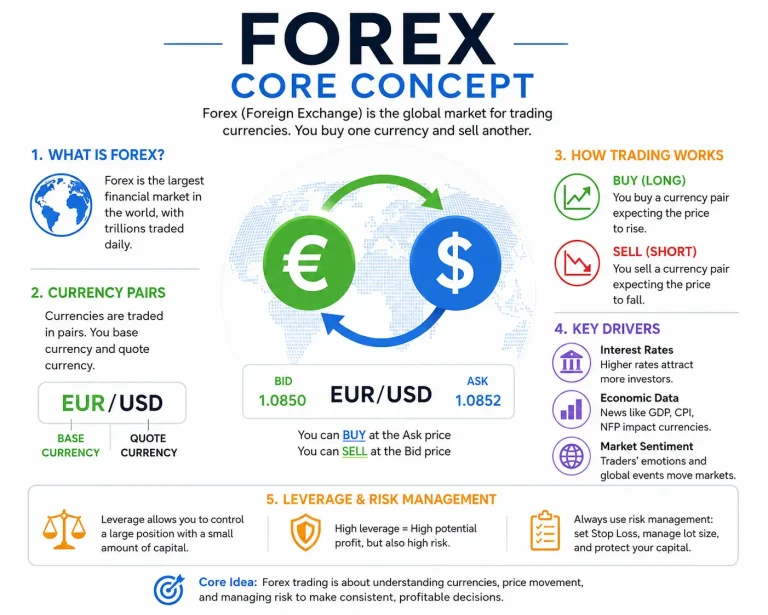
When transacting in forex, the currencies are never traded with fewer than two partners. The former is the base currency and the latter is the quote currency. In the case of EUR/USD, the base and the quote part are the euro and the US dollar respectively. The exchange rate illustrates the number of units of the quote currency that one needs to acquire a unit of the base.
The most actively traded include major pairs i.e. EUR/USD or GBP/USD since they are very liquid. Minor pairs, such as EUR/GBP or AUD/NZD are not overtraded but may be a swing trade.
Exotic pairs involve the currency of a minor economy, e.g. USD/TRY and they are subject to volatility.There are numerous factors that influence currency movements.
Prices are all affected by economic indicators, interest rates, and political events. Even market sentiment, or how traders feel about the future movements, can be a cause of rapid changes.
Forex trading involves buying and selling of a currency. When you are convinced that the euro will appreciate against the US dollar, then you ought to buy the EUR/USD.
It can be resold in the future to make a profit should there be an increase in price. If you believe the euro will fall, you can sell EUR/USD and later buy it back at a lower price.
The forex market is 5 working days and 24 hours per day. It operates three large trading blocs, including Asian, European, and North American. The trading session of every day may either be volatile or slow, and hence the trading strategy must be based on the type of session under observation.
Consider the example of a trader in Tokyo, who is holding the EUR/USD overnight. Most parts of Europe have slower markets since most of the traders are sleeping.
Because the London market opens in the morning, the trend may change without prior warning at the hand of the European market and the trader must react very fast. It is very important when there are overlaps of the sessions.
A tiniest move in any direction of price in a currency pair is referred to as a pip. For most pairs, one pip equals 0.0001.
A lot refers to trade size. The standard lots are 100,000 of the underlying currency, the mini lots are 10, 000 and the micro lots are 1,000.
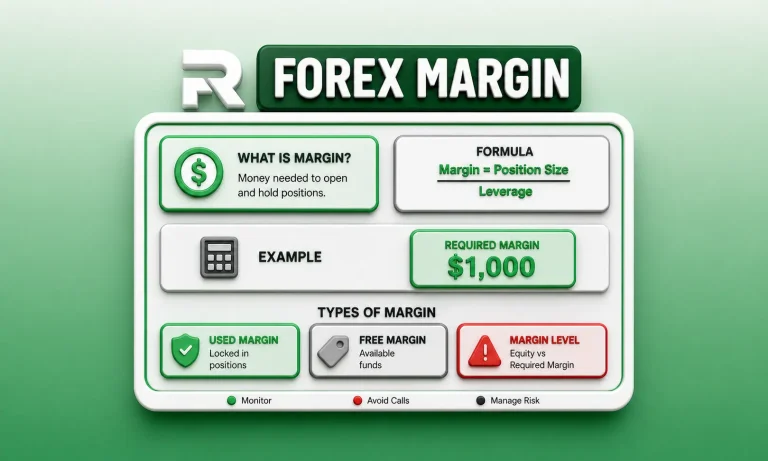
Leverage can be used to extract more value using less capital. For example, with 1:100 leverage, a $1,000 deposit allows you to control $100,000 worth of currency.. The leverage increases the potential of the profit and loss.
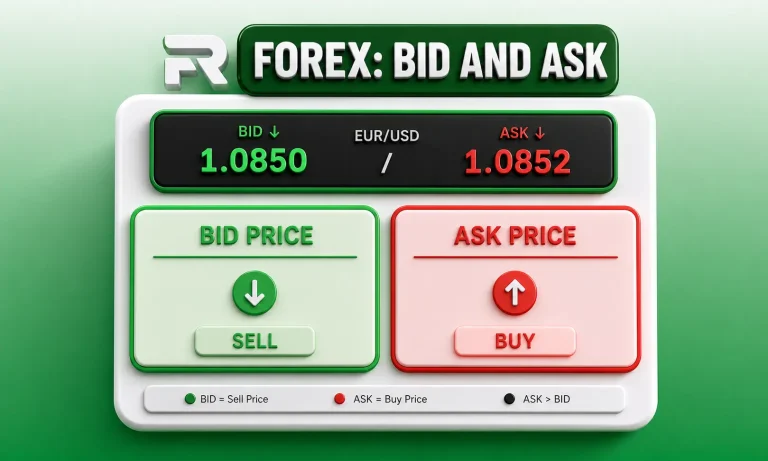
The spread between the seller price and the buy price is referred to as the spread. A point spread minimizes the cost of business and a wide spread devours profits. Here you can read the full Forex terms.
The first step is to select an entry managed broker, offering a convenient system, low spreads and customer sensitive customer service. Before one starts Forex trading, he/she will have to open a demo account to get a feel of it.
You will have to acquire the fundamentals of currency pairs, pips, lots and leverage, and spreads. The ideas will aid in making better trading decisions, and also minimizing the errors.
Write a trading plan, which includes the objectives, risks and the trading plan. Also, remember what you want to achieve even when you are tempted to go deviant. Discipline does not have less importance than luck.
You must not sell a lot at once until at home. Hedging against risk in order to avoid devastating losses; use stop loss orders. The value of trade to be traded should also be increased progressively following learning.
David is a UK trader who started with high hopes and had 500 dollars in his account to trade forex. He was ambitious and over-gambling and had disregard for the general rules of risk. He lost almost 70 percent of his capital within a week.
David did not give up but examined his errors. He learned about the School of Pipsology from Babypips, worked on a study account, and created a severe risk management strategy. Over time, he regained his confidence and began to consistently record minor profits.
David is a part-time trader today and says that it was the discipline and patience that made him successful. He recommends newcomers learn and practice without trying to make a quick profit.
Novices tend to over-allocate, putting their money on a single trade. It’s not the way of trading at all, and this can empty accounts in a short timeframe. Most also do not have stop-loss orders, and they end up getting into heavy losses.
Another pitfall is in chasing the losses. Attempting to heal fast usually makes the circumstances worse. Forex trading involves taking losses and proceeding.
Education deprivation is dangerous. Without knowing the market, it is possible to become frustrated with trading. Always keep in mind that it is critical to learn, practise and reflect on something on a long-term basis in order to achieve success.
Yes, but it’s not guaranteed. Professional traders always combine their skill, discipline, and experience. The majority of them begin by trading part-time and gradually increase the trading with time as they gain experience.
Profitability is a key to success, rather than one successful trade. According to real traders, it is patience, emotional regulation, and a trading plan that are of greater importance than winning in the short run.
Suppose you are scrolling your timeline and you have noticed that changes in the European Central Bank interest rate are indicated in the news headlines. EUR/USD starts drifting fast.
A trader who has a proper plan will also react calmly and modify the positions based on the strategy. Another trader who has not prepared himself panics and closes it before realizing possible gains. It is all in preparation and discipline.
Forex trading is the trading of currencies with a view of making profits based on the fluctuations in the exchange rates. It is the biggest financial market that operates 24/5. Novices ought to learn, work on risk management, and use demo accounts. There is nothing like actual experience and patience.
Forex trading is an opportunity for people who are ready to learn and practice. Through effective learning, a good trading strategy, and good risk management, novices can become good traders. It takes time, reflection and effort to attain something in a realistic manner as opposed to by chance.The task now is to open a demo account today and begin to experiment in the forex market but with zero risk. Trade, experiment, develop your experience until you can trade successfully.

FX Recap helps you find a trusted forex broker that keeps your trades secure and guides you through everything you need to know about FX instruments.

Ranjan Niskrity is a seasoned Crypto and Forex expert at FX Recap with over a decade of market experience. He specialises in verifying broker data, regulatory frameworks, and cryptocurrency trading insights. His rigorous fact-checking ensures every article meets the highest standards of accuracy.
 Education
25 min read
Education
25 min read

 Education
16 min read
Education
16 min read
 Education
13 min read
Education
13 min read
